Langtang Gosaikunda Trek – 11 Days
The Langtang Gosaikunda Trek is one of Nepal’s most rewarding Himalayan adventures, combining the breathtaking beauty of the Langtang Valley with the sacred alpine lakes of Gosaikunda. This unforgettable journey offers a perfect balance of dramatic mountain scenery, authentic Tamang culture, ancient Buddhist monasteries, glacier-fed rivers, lush forests, and one of Nepal’s most important pilgrimage destinations.
Located just north of Kathmandu within Langtang National Park, the trek is ideal for travelers seeking a quieter alternative to the Everest and Annapurna regions. Unlike the busier trekking routes, the Langtang Gosaikunda Trek provides peaceful trails, welcoming local communities, and spectacular Himalayan panoramas throughout the journey.
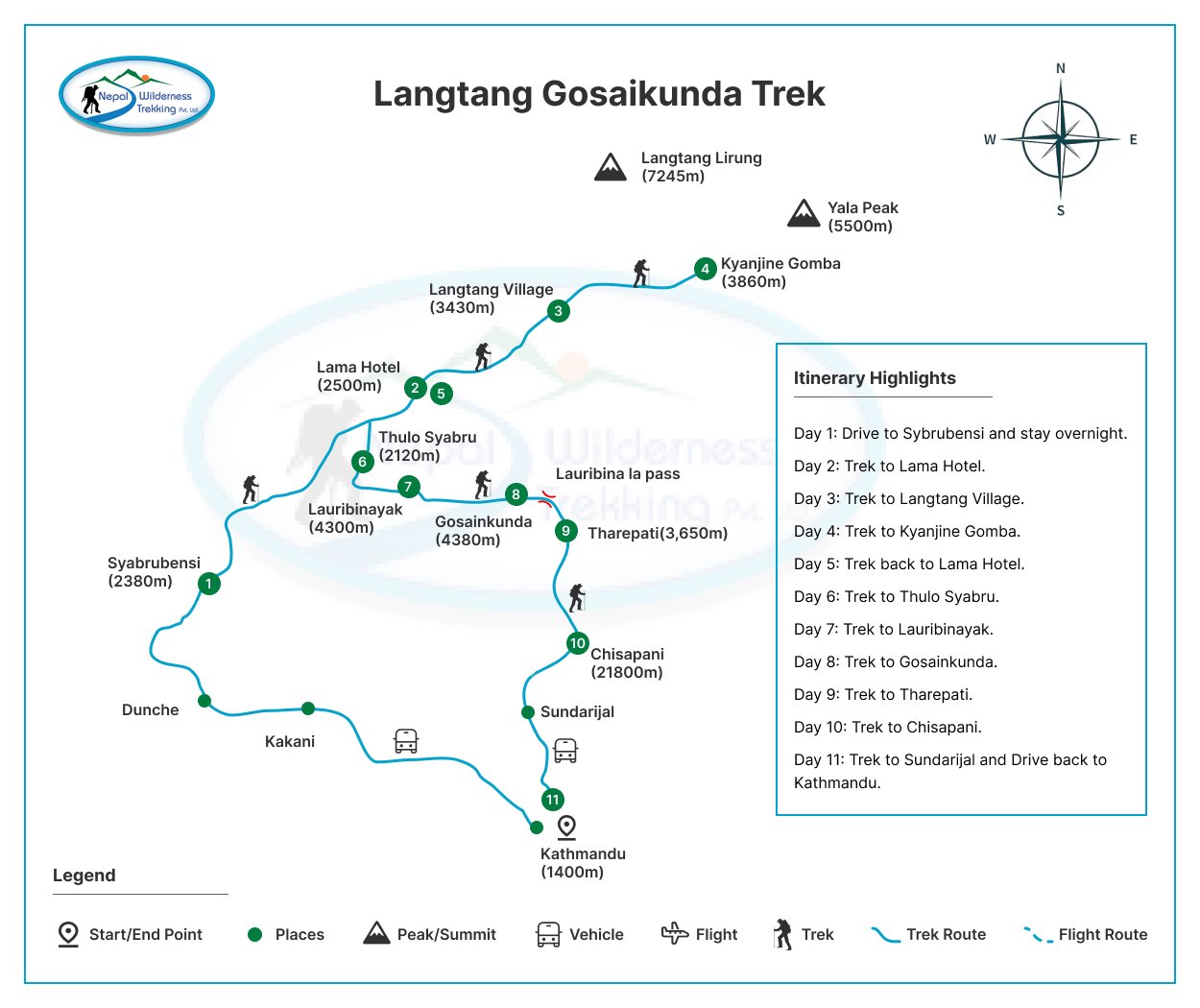
The adventure begins with a scenic drive from Kathmandu to Syabrubesi, the gateway to the Langtang region. Following the Langtang Khola through dense forests of rhododendron, oak, bamboo, and pine, the trail passes traditional Tamang villages, yak pastures, cascading waterfalls, and alpine meadows before reaching the beautiful village of Kyanjin Gompa (3,870m).
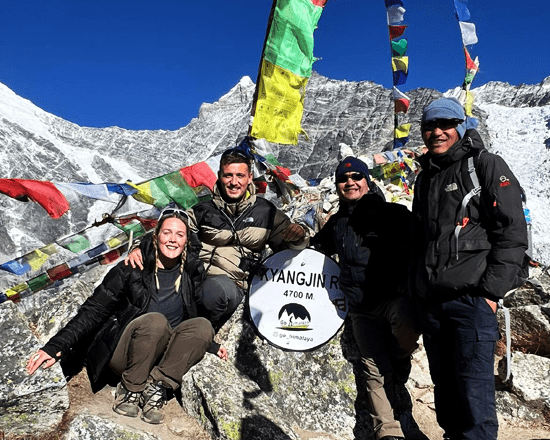
One of the highlights is the hike to Kyanjin Ri (4,773m), a spectacular viewpoint offering panoramic views of Langtang Lirung (7,227m), Dorje Lakpa, Gangchempo, Yala Peak, Naya Kanga, and many other snow-covered Himalayan peaks. The peaceful monastery, traditional yak cheese factory, and surrounding glaciers make Kyanjin Gompa one of the most memorable destinations in Nepal.
Leaving the Langtang Valley behind, the trail climbs through remote alpine landscapes toward Lauribina La Pass (4,610m), the highest point of the trek. Crossing this scenic mountain pass rewards trekkers with breathtaking views before descending to the crystal-clear waters of Gosaikunda Lake (4,380m). Revered by both Hindus and Buddhists, Gosaikunda is one of Nepal’s holiest pilgrimage sites and is surrounded by dozens of pristine glacial lakes that create a truly magical Himalayan setting.
Beyond its natural beauty, the Langtang Gosaikunda Trek offers an opportunity to experience the rich culture and traditions of the Tamang people. Visitors can explore centuries-old monasteries, spin colorful prayer wheels, observe Buddhist ceremonies, and enjoy the warm hospitality of mountain communities that have rebuilt their villages with remarkable resilience following the 2015 earthquake.
The trek is suitable for anyone with good physical fitness and a spirit of adventure. Although it reaches elevations above 4,600 meters, the route is non-technical and follows well-established mountain trails. With proper acclimatization and guidance from experienced local guides, it is an achievable and highly rewarding journey for both first-time Himalayan trekkers and experienced hikers.
At Nepal Wilderness Trekking, our experienced local guides, carefully planned itineraries, and personalized service ensure a safe, comfortable, and memorable adventure. Whether you are traveling solo, with friends, or as part of a private group, we are committed to providing an authentic trekking experience while supporting local communities throughout the Langtang region.
If you are looking for a Himalayan trek that combines spectacular mountain scenery, sacred lakes, rich cultural heritage, peaceful trails, and unforgettable landscapes, the Langtang Gosaikunda Trek is one of the finest trekking experiences Nepal has to offer.
Why Choose the Langtang Gosaikunda Trek?
The Langtang Gosaikunda Trek is one of Nepal’s most diverse trekking adventures, combining spectacular Himalayan landscapes, authentic Tamang culture, ancient Buddhist monasteries, high mountain passes, and the sacred alpine lakes of Gosaikunda. Unlike many trekking routes that focus on either mountain scenery or cultural experiences, this journey offers the best of both in a single itinerary.
Located inside Langtang National Park, just north of Kathmandu, the trek passes through peaceful forests, traditional villages, glacier valleys, yak pastures, and pristine alpine lakes before crossing the spectacular Lauribina La Pass (4,610m). Every day presents a different landscape, making the trek feel fresh and rewarding from start to finish.
One of the journey’s highlights is the beautiful Langtang Valley, often called the “Valley of Glaciers.” Here, trekkers can explore the charming village of Kyanjin Gompa, visit the famous yak cheese factory, and hike to Kyanjin Ri for breathtaking panoramic views of Langtang Lirung, Dorje Lakpa, Gangchempo, Naya Kanga, and surrounding Himalayan peaks.
After exploring the valley, the trail climbs into the alpine wilderness toward the sacred lakes of Gosaikunda. Revered by Hindus and Buddhists, these glacial lakes attract thousands of pilgrims during the Janai Purnima festival. Surrounded by rugged mountains and colorful prayer flags, Gosaikunda is one of Nepal’s most spiritual and photogenic destinations.
Another reason to choose this trek is its rich cultural experience. The trail passes through welcoming Tamang villages where visitors can observe traditional stone houses, Buddhist monasteries, prayer wheels, mani walls, and centuries-old customs that remain an important part of daily life. The warm hospitality of the local people adds a memorable human connection to the journey.
Nature lovers will also appreciate the incredible biodiversity of Langtang National Park. Dense forests of rhododendron, bamboo, pine, oak, fir, and maple provide habitat for rare wildlife such as the Red Panda, Himalayan Black Bear, Musk Deer, Himalayan Tahr, Langur Monkey, and numerous Himalayan bird species. During spring, the hillsides burst into vibrant rhododendron blooms, creating one of Nepal’s most colorful trekking seasons.
Compared to popular routes like the Everest Base Camp Trek and the Annapurna Base Camp Trek, the Langtang Gosaikunda Trek remains relatively uncrowded. Trekkers can enjoy peaceful trails, quieter tea houses, and a more intimate connection with nature while still benefiting from comfortable accommodation and well-established trekking infrastructure.
This trek is also an excellent option for travelers wishing to explore more of the Langtang region. It can easily be combined with the Tamang Heritage Trek for a deeper cultural experience or extended toward the Helambu Trek through Lauribina Pass for a longer Himalayan adventure. Those with limited time may also consider the classic Langtang Valley Trek or the shorter Gosaikunda Lake Trek, both of which showcase different highlights of the region.
Whether you are seeking breathtaking mountain panoramas, sacred pilgrimage sites, diverse landscapes, rich Tamang culture, or a quieter alternative to Nepal’s busiest trekking routes, the Langtang Gosaikunda Trek delivers an unforgettable Himalayan experience. It is a journey that combines adventure, spirituality, culture, and natural beauty into one remarkable trek that will leave lasting memories long after you return home.
Langtang Gosaikunda Trek Overview
The Langtang Gosaikunda Trek is a spectacular Himalayan journey that combines the scenic beauty of the Langtang Valley with the sacred alpine lakes of Gosaikunda. Over 15 days, the trek takes you through lush forests, traditional Tamang villages, glacier valleys, high mountain passes, and one of Nepal’s most revered pilgrimage sites. It is an excellent choice for trekkers seeking a quieter alternative to the Everest and Annapurna regions while still enjoying world-class mountain scenery and rich cultural experiences.
Your adventure begins with a scenic drive from Kathmandu to Syabrubesi (1,550m), the traditional gateway to the Langtang region. The drive follows winding mountain roads alongside the Trishuli River, passing terraced hillsides, rural villages, and beautiful river valleys before reaching the trailhead.
From Syabrubesi, the trail follows the Langtang Khola through dense forests of rhododendron, bamboo, oak, pine, and maple. Along the way, you’ll cross suspension bridges, walk beside cascading waterfalls, and pass small settlements such as Bamboo, Rimche, and Lama Hotel. These forests are part of Langtang National Park, where lucky trekkers may spot wildlife including the Red Panda, Himalayan Tahr, Musk Deer, Langur Monkeys, and the colorful Himalayan Monal.
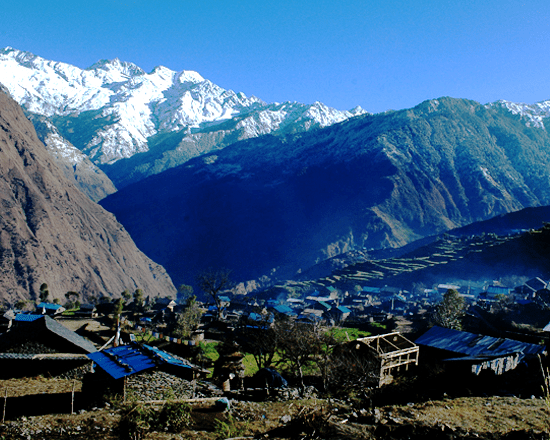
As you continue higher, the valley gradually opens to reveal dramatic snow-capped peaks. You’ll pass through the rebuilt Langtang Village, a resilient community that has become a symbol of recovery following the 2015 earthquake. Today, visitors can experience the warm hospitality of the Tamang people while learning about their unique traditions, Buddhist heritage, and mountain lifestyle.
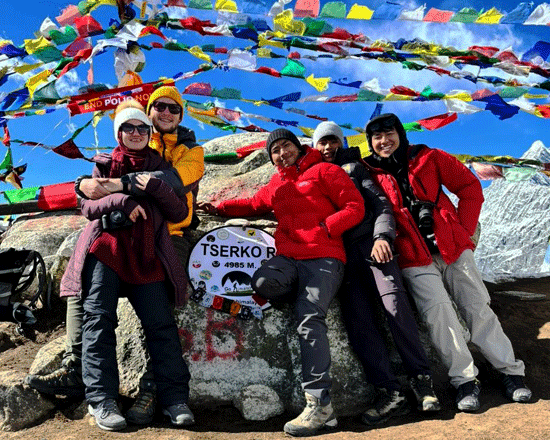
The trek then reaches Kyanjin Gompa (3,870m), one of the most beautiful villages in the Langtang region. Surrounded by towering Himalayan peaks and glaciers, Kyanjin Gompa is famous for its centuries-old monastery, traditional yak cheese factory, and peaceful mountain setting. A day is dedicated to acclimatization, allowing you to hike to Kyanjin Ri (4,773m) or Tsergo Ri (4,984m) for unforgettable sunrise views over Langtang Lirung, Dorje Lakpa, Gangchempo, Yala Peak, Naya Kanga, and many other Himalayan giants.
After exploring the upper Langtang Valley, the route returns toward Lama Hotel before climbing through forests and alpine meadows to Thulo Syabru, a traditional Tamang village known for its cultural heritage and spectacular mountain views. The trail then ascends to Sing Gompa (Chandanbari), where trekkers can visit another famous yak cheese factory before continuing toward the sacred lakes.
One of the most rewarding days of the trek is the ascent to Gosaikunda Lake (4,380m). According to Hindu mythology, Lord Shiva created the lake by striking the mountains with his trident to obtain water after swallowing poison. Every year during Janai Purnima, thousands of pilgrims visit the lake to take a holy bath, believing its waters have spiritual and healing significance. Surrounded by rugged peaks, prayer flags, and crystal-clear glacial waters, Gosaikunda is one of the most iconic destinations in the Nepal Himalayas.
The adventure continues across Lauribina La Pass (4,610m), the highest point of the trek. Crossing the pass rewards trekkers with breathtaking panoramic views before descending through alpine landscapes into the beautiful Helambu region. This section of the trail showcases a completely different landscape, with peaceful forests, traditional Sherpa and Hyolmo villages, and scenic mountain ridges.
For trekkers with extra time, the journey can be extended into the Helambu Trek, offering additional cultural experiences and quieter mountain trails. Likewise, those interested in exploring more of the Langtang region often combine this itinerary with the Tamang Heritage Trek, while shorter alternatives such as the Langtang Valley Trek or the Gosaikunda Lake Trek are excellent choices for travelers with limited time.
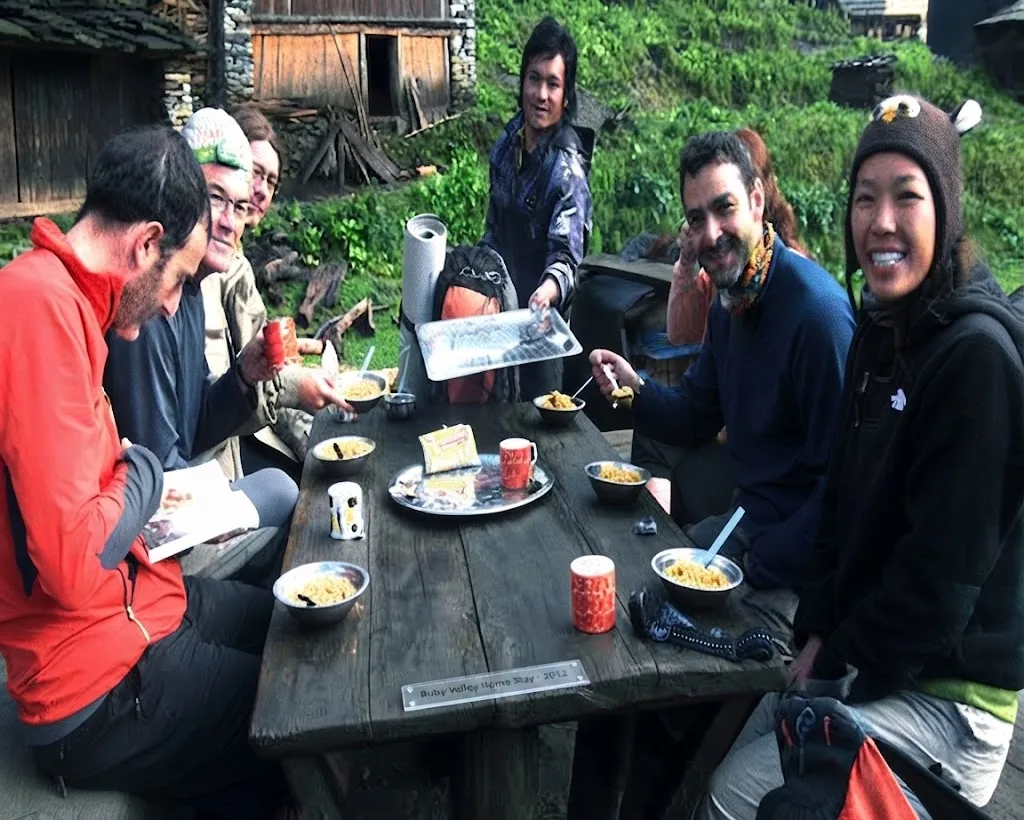
Throughout the journey, comfortable tea houses provide warm hospitality, freshly prepared meals, and cozy accommodation, allowing trekkers to experience authentic mountain life while enjoying spectacular Himalayan scenery. Whether you are drawn by the glaciers of Langtang Valley, the sacred waters of Gosaikunda, or the rich traditions of the Tamang people, the Langtang Gosaikunda Trek offers one of Nepal’s most complete trekking experiences.
Mountains Seen During the Langtang Gosaikunda Trek
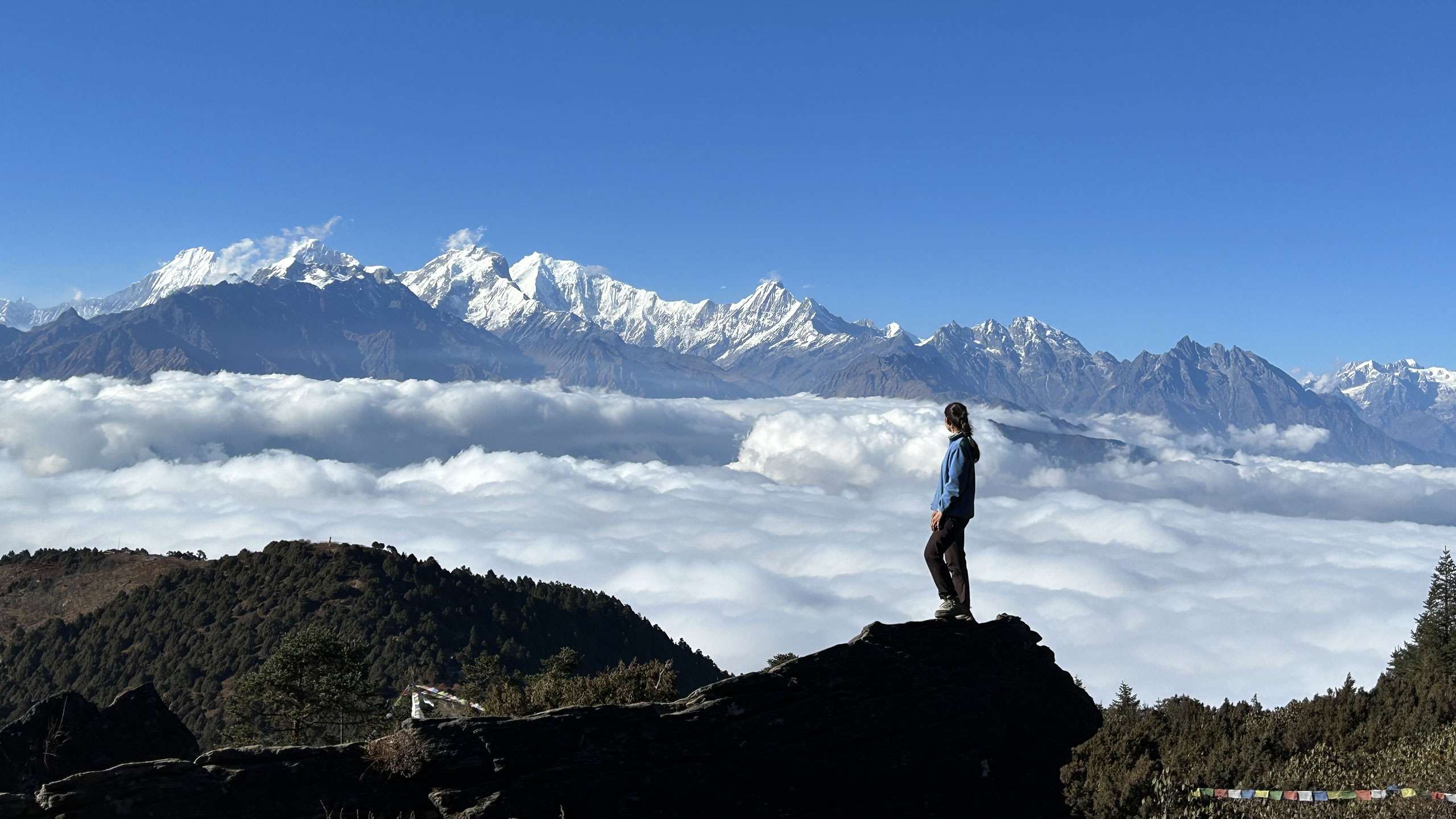
One of the greatest rewards of the Langtang Gosaikunda Trek is the ever-changing panorama of snow-capped Himalayan peaks. From the forests of Langtang National Park to the viewpoints of Kyanjin Ri and Lauribina La Pass, trekkers are treated to spectacular mountain scenery throughout the journey. On clear days, the views stretch across the Langtang Himal, Ganesh Himal, Jugal Himal, and even into Tibet.
Langtang Lirung (7,227m)
The highest mountain in the Langtang region, Langtang Lirung dominates the skyline throughout much of the trek. Rising dramatically above Kyanjin Gompa, its towering ice walls and hanging glaciers create one of the most impressive mountain views in Nepal.
Dorje Lakpa (6,966m)
Located on the southern side of the Langtang Valley, Dorje Lakpa is easily recognized by its elegant snow-covered pyramid shape. It is especially beautiful at sunrise when the first rays of light illuminate its icy summit.
Gangchempo (6,388m)
Also known as Fluted Peak, Gangchempo stands prominently above the upper Langtang Valley. Its steep rock faces and glaciers make it one of the region’s most striking mountains and a favourite subject for photographers.
Yala Peak (5,500m)
Yala Peak is one of Nepal’s most popular trekking peaks. Although it is suitable for beginner climbers with proper guidance, trekkers can enjoy excellent views of the peak without climbing it. It forms a beautiful backdrop to Kyanjin Gompa and the surrounding glaciers.
Naya Kanga (5,844m)
Formerly known as Ganja La Chuli, Naya Kanga lies south of the Langtang Valley and is another well-known trekking peak. It can be seen from several viewpoints during the trek, particularly from Kyanjin Ri.
Ganesh Himal Range
To the west, the magnificent Ganesh Himal range rises above deep river valleys and forested ridges. Named after the Hindu god Ganesh because one of its peaks resembles an elephant’s head, this mountain range adds to the dramatic panorama visible from higher elevations.
Shishapangma (8,027m)
On exceptionally clear days, trekkers may catch a distant glimpse of Shishapangma, the world’s 14th-highest mountain. Located just across the border in Tibet, it is the only 8,000-meter peak situated entirely within Tibetan territory.
Views from Kyanjin Ri and Lauribina La Pass
The finest mountain panoramas are enjoyed from Kyanjin Ri (4,773m) and Lauribina La Pass (4,610m). These viewpoints offer sweeping 360-degree vistas of snow-covered peaks, glaciers, alpine valleys, and rugged Himalayan landscapes. Watching sunrise over the Langtang Himal from Kyanjin Ri is considered one of the unforgettable highlights of the entire trek and a perfect reward for the climb.
Langtang National Park: Wildlife and Flora
The Langtang Gosaikunda Trek passes through Langtang National Park, Nepal’s first Himalayan national park, established in 1976 to protect the region’s unique mountain ecosystems, wildlife, and cultural heritage. Covering approximately 1,710 square kilometres, the park stretches from subtropical river valleys to alpine meadows, glaciers, and snow-covered peaks along the border with Tibet.
As you trek from Syabrubesi to Kyanjin Gompa and onward to the sacred Gosaikunda Lakes, you’ll experience an incredible variety of landscapes. Each change in altitude brings different vegetation, climates, and opportunities to observe Himalayan wildlife, making the journey just as rewarding for nature enthusiasts as it is for mountain lovers.
Wildlife in Langtang National Park
Although many of the park’s animals are naturally shy, Langtang National Park is home to a remarkable diversity of wildlife. Early morning and late afternoon are often the best times to spot animals along the quieter sections of the trail.
Red Panda
The Red Panda is one of the park’s most iconic and endangered mammals. These elusive animals inhabit the dense bamboo forests of the lower Langtang Valley, where they spend much of their time feeding and resting in the trees. While sightings are rare, knowing that one of the world’s most treasured species lives here adds a special sense of excitement to the trek.
Himalayan Tahr
The agile Himalayan Tahr is frequently seen grazing on steep rocky slopes above the tree line. With its thick reddish-brown coat and impressive climbing ability, this mountain goat is perfectly adapted to the rugged Himalayan terrain.
Musk Deer
The shy Musk Deer prefers quiet forests and alpine scrublands. It is best known for the musk gland found in males, which has historically made the species vulnerable to illegal hunting. Today, the park plays an important role in protecting its habitat.
Himalayan Black Bear
Although encounters are uncommon, the Himalayan Black Bear also inhabits Langtang National Park. These bears typically remain deep within the forests and avoid human activity, making sightings rare during the main trekking seasons.
Langur Monkeys and Other Mammals
Trekkers often encounter playful Himalayan Langur Monkeys moving through the forest canopy near Syabrubesi, Bamboo, and Lama Hotel. Other wildlife found within the park includes wild boar, Himalayan goral, yellow-throated martens, pikas, and several species of mountain foxes and small mammals.
Birdlife
Langtang National Park is a paradise for birdwatchers, with more than 250 recorded bird species. Colourful Himalayan birds frequently seen along the trekking trail include:
- Himalayan Monal (Danphe), Nepal’s national bird
- Blood Pheasant
- Snow Partridge
- Golden Eagle
- Himalayan Griffon Vulture
- Fire-tailed Sunbird
- Various woodpeckers, laughingthrushes, and finches
Spring and autumn are particularly rewarding seasons for birdwatching, as the forests become lively with birdsong and seasonal migration.
Forests and Alpine Vegetation
One of the unique features of the Langtang Gosaikunda Trek is the dramatic transition of vegetation as you gain elevation.
The lower valleys are covered with lush forests of oak, pine, maple, alder, and bamboo, creating a cool and peaceful environment for the first days of the trek. During spring, these forests burst into colour as thousands of rhododendron trees bloom in shades of red, pink, and white, transforming the hillsides into vibrant natural gardens.
As the trail climbs higher toward Kyanjin Gompa and Gosaikunda, dense forests gradually give way to juniper shrubs, alpine grasslands, rocky terrain, and glacial landscapes. The high-altitude meadows are grazed by yaks and provide spectacular views of the surrounding Himalayan peaks.
A Protected Himalayan Ecosystem
Langtang National Park is much more than a trekking destination—it’s one of Nepal’s most important conservation areas. By trekking responsibly, staying on designated trails, respecting wildlife, and supporting locally owned tea houses, visitors contribute to preserving this remarkable ecosystem for future generations.
From ancient forests and colourful wildflowers to rare wildlife and towering snow-capped mountains, the natural beauty of Langtang National Park is one of the defining highlights of the Langtang Gosaikunda Trek.
Tamang Culture and Buddhist Heritage
Beyond its spectacular mountain scenery, the Langtang Gosaikunda Trek offers a fascinating journey into the rich culture and spiritual traditions of the Tamang people. Living in the Langtang region for centuries, the Tamang community has preserved its unique language, customs, architecture, and Tibetan Buddhist heritage, making this trek as culturally rewarding as it is naturally beautiful.
Throughout the journey, trekkers pass through traditional villages such as Syabrubesi, Langtang Village, Thulo Syabru, and Sing Gompa (Chandanbari). These settlements are home to friendly local families who continue to live according to age-old Himalayan traditions. Their stone-built houses, colourful prayer flags, carved wooden windows, and terraced fields reflect a lifestyle that has remained closely connected to nature and the mountains.
The Tamang People
The Tamang are one of Nepal’s largest indigenous ethnic groups, with most communities in the Langtang region following Tibetan Buddhism. Their culture shares deep historical and spiritual ties with neighbouring Tibet, which is reflected in their language, traditional dress, religious ceremonies, and daily way of life.
Hospitality is an important part of Tamang culture. As you stay in locally owned tea houses, you’ll have the opportunity to enjoy traditional home-cooked meals, learn about local customs, and experience the genuine warmth of mountain communities. For many visitors, these personal interactions become some of the most memorable moments of the trek.
Buddhist Monasteries and Sacred Landmarks
Buddhism is woven into every stage of the trek. Ancient monasteries, mani walls, chortens, and colourful prayer flags line the trails, reminding trekkers of the region’s strong spiritual traditions.
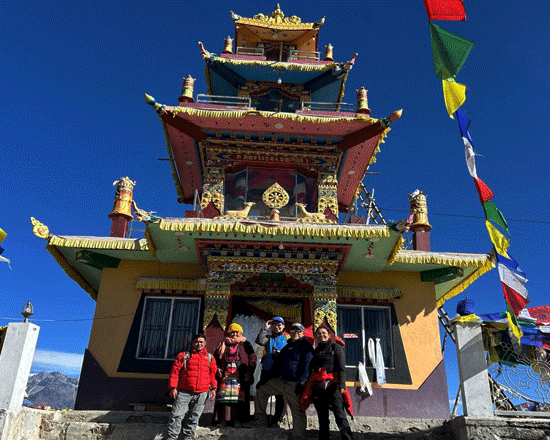
One of the cultural highlights is Kyanjin Gompa, a centuries-old monastery surrounded by dramatic Himalayan peaks. This peaceful monastery remains an active place of worship where monks perform daily prayers and local residents gather for religious ceremonies. Visitors are welcome to explore the monastery respectfully while appreciating its beautiful murals, prayer wheels, and tranquil atmosphere.
Further along the trail, Sing Gompa (Chandanbari) is another important Buddhist settlement. In addition to its monastery, the village is well known for its traditional yak cheese production, a long-standing livelihood that supports many local families.
Prayer Flags, Mani Walls, and Chortens
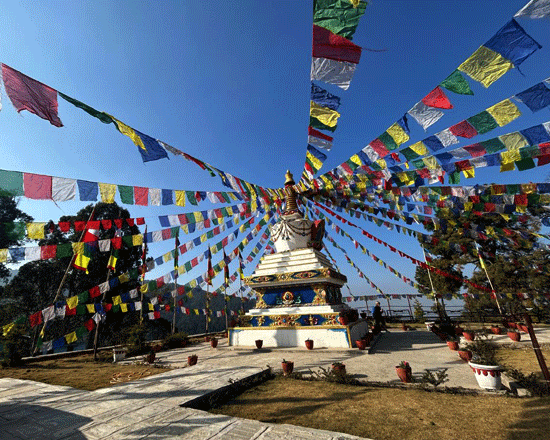
As you walk through the Langtang region, you’ll frequently encounter colourful prayer flags fluttering in the mountain wind. According to Buddhist belief, the prayers printed on these flags are carried by the wind to spread peace, compassion, and good fortune.
The trekking trail also passes numerous mani walls, built from carefully stacked stones carved with sacred Buddhist mantras, particularly the well-known prayer Om Mani Padme Hum. Trekkers traditionally pass these walls and nearby chortens (stupas) on the left as a sign of respect for local customs.
Langtang Village: A Story of Resilience
The modern Langtang Village stands as a powerful symbol of hope and resilience. Following the devastating earthquake and avalanche of 2015, the original village was almost completely destroyed. Through determination, community support, and responsible tourism, the village has been rebuilt, and today it once again welcomes trekkers from around the world.
Visiting Langtang Village not only offers stunning mountain scenery but also provides an opportunity to support local families whose livelihoods depend on sustainable tourism. Every stay in a local tea house and every meal enjoyed along the trail contributes directly to the region’s continued recovery and future development.
A Cultural Experience Beyond the Mountains
The Langtang Gosaikunda Trek is much more than a journey through the Himalayas. It is an opportunity to connect with communities that have preserved their traditions for generations while living in one of the world’s most spectacular mountain environments. The combination of warm hospitality, ancient Buddhist heritage, sacred monasteries, and breathtaking landscapes creates an experience that is both inspiring and unforgettable.
Whether you are admiring centuries-old monasteries, sharing stories with local families over a cup of traditional butter tea, or walking beneath colourful prayer flags against a backdrop of snow-covered peaks, the cultural richness of the Langtang region adds a unique dimension to this remarkable Himalayan adventure.
Gosaikunda Lake: History, Mythology, and Religious Significance
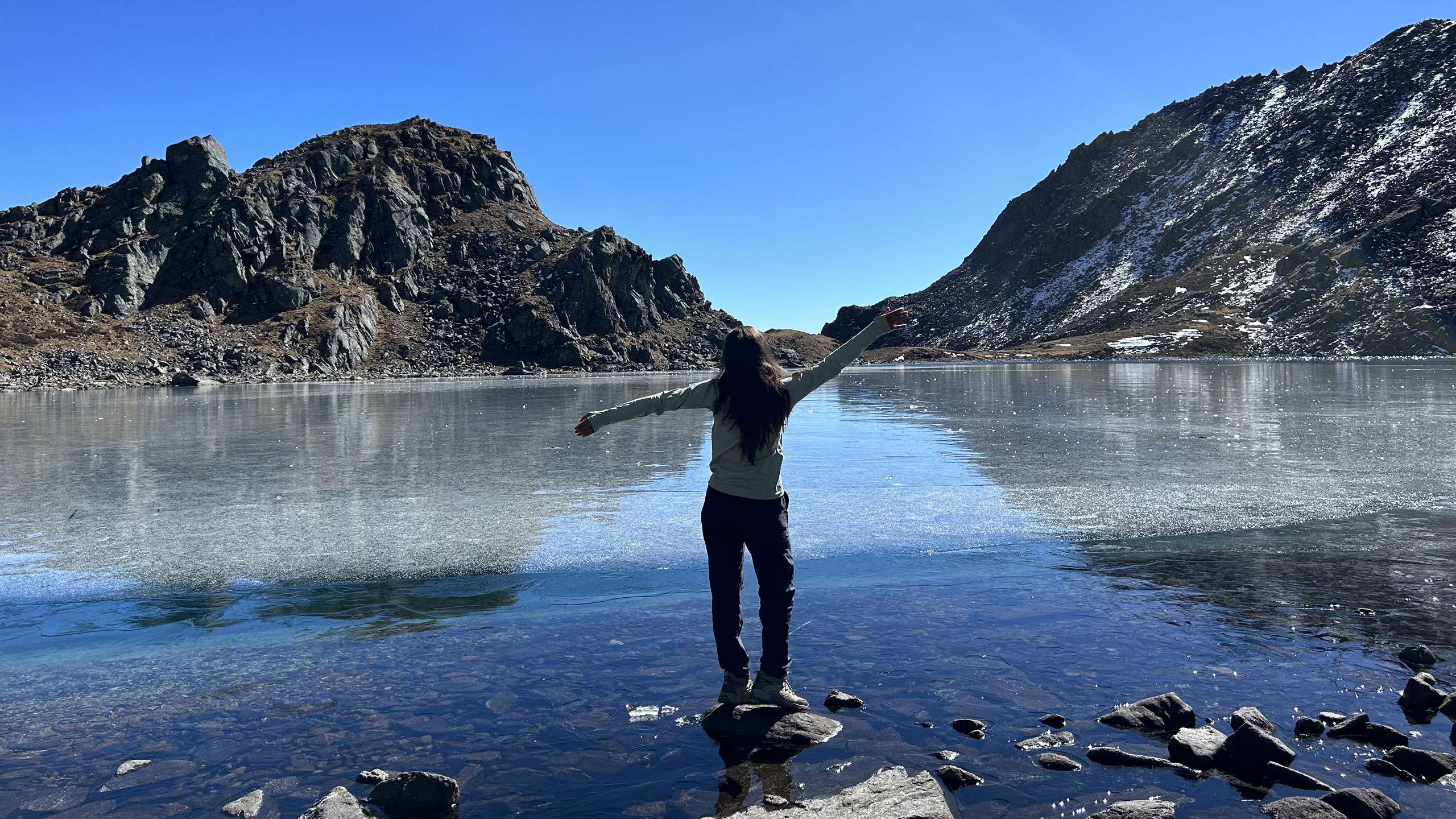
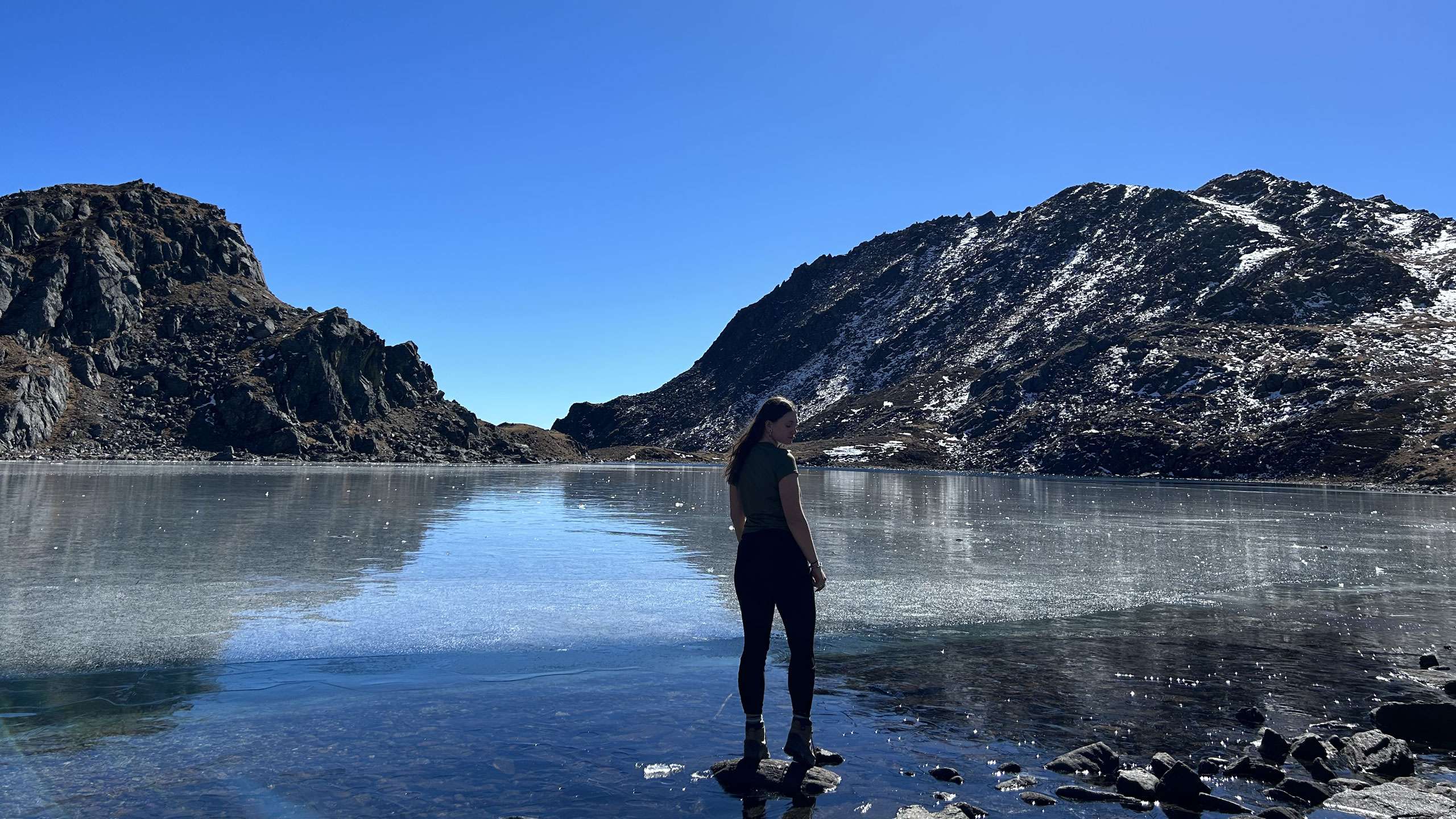
One of the most unforgettable highlights of the Langtang Gosaikunda Trek is visiting the sacred Gosaikunda Lake (4,380m), a pristine alpine lake nestled beneath rugged Himalayan peaks in Rasuwa District. Revered by both Hindus and Buddhists, Gosaikunda is among Nepal’s most important pilgrimage destinations, attracting thousands of devotees and trekkers each year.
Surrounded by dramatic mountain scenery, prayer flags, and glacial landscapes, the lake is celebrated not only for its breathtaking beauty but also for its deep spiritual and cultural importance. Whether you come for adventure, photography, or pilgrimage, standing beside the crystal-clear waters of Gosaikunda is an experience that leaves a lasting impression.
The Legend of Lord Shiva
According to Hindu mythology, Gosaikunda was created by Lord Shiva after he consumed the deadly poison known as Halahala during the cosmic event called Samudra Manthan (the Churning of the Ocean). Overcome by the intense heat of the poison, Shiva struck the mountains with his trident, causing pure water to emerge from the earth. This sacred spring formed Gosaikunda Lake, where he quenched his thirst and restored his strength.
Because of this legend, the lake is regarded as one of the holiest sites dedicated to Lord Shiva. Many pilgrims believe that bathing in its icy waters washes away sins, brings spiritual purification, and grants blessings for health, peace, and prosperity.
A Sacred Pilgrimage Destination
Every year during the Janai Purnima festival, usually held in August, thousands of Hindu and Buddhist pilgrims make the challenging journey to Gosaikunda. Devotees gather before sunrise to take a ritual bath in the lake, offer prayers, light butter lamps, and perform religious ceremonies along its shoreline.
The atmosphere during the festival is vibrant and deeply spiritual, with monks, shamans, local villagers, and pilgrims from Nepal and India coming together in celebration. Colourful prayer flags flutter across the landscape, while chants and prayers echo through the surrounding mountains, creating a unique cultural experience.
The Gosaikunda Lake System
Although Gosaikunda is the most famous lake, it is part of a remarkable network of high-altitude glacial lakes scattered across the Lauribina region. Local tradition speaks of 108 sacred lakes, many of which are connected by streams flowing through the alpine landscape.
Some of the best-known lakes include:
- Bhairab Kunda
- Saraswati Kunda
- Surya Kunda
- Ganesh Kunda
These crystal-clear lakes are fed by snowmelt and glaciers, creating an extraordinary mountain environment that is both ecologically significant and spiritually revered.
A Place of Peace and Reflection
Even outside the pilgrimage season, Gosaikunda offers an atmosphere of tranquillity rarely found in the Himalayas. Early mornings often reveal perfectly calm waters reflecting the surrounding peaks, while the crisp mountain air and peaceful surroundings invite quiet reflection.
Many trekkers choose to spend extra time beside the lake to enjoy the sunrise, capture stunning photographs, or simply appreciate the silence of this remarkable alpine setting. The combination of natural beauty and spiritual significance makes Gosaikunda one of the most memorable destinations in Nepal.
Responsible Travel at Gosaikunda
As one of Nepal’s most sacred natural sites, visitors are encouraged to respect local customs and help protect the fragile mountain environment. Avoid leaving litter, minimise the use of plastic, and follow designated trails to reduce environmental impact.
Simple acts such as respecting religious ceremonies, walking quietly around the lakes, and supporting locally owned tea houses contribute to preserving both the cultural traditions and natural beauty of Gosaikunda for future generations.
Whether you visit as a trekker, photographer, or pilgrim, Gosaikunda offers a rare combination of breathtaking Himalayan scenery, living spiritual traditions, and timeless legends. It is this unique blend of nature and culture that makes the Langtang Gosaikunda Trek one of Nepal’s most rewarding trekking adventures.
Langtang Gosaikunda Trek Difficulty
The Langtang Gosaikunda Trek is considered a moderately challenging Himalayan trek. Although it does not require technical climbing or mountaineering experience, it involves several consecutive days of walking, significant altitude gain, and crossing the high Lauribina La Pass (4,610m). With good physical fitness, proper preparation, and a sensible walking pace, the trek is achievable for most healthy trekkers.
Compared to the Everest Three Passes Trek or the Manaslu Circuit Trek, this route is less demanding. However, it is generally more challenging than shorter treks such as the Poon Hill Trek or the Mardi Himal Trek due to its higher elevation and longer itinerary.
Daily Walking Distance and Duration
Trekkers usually walk between 5 and 7 hours each day, depending on the itinerary and trail conditions. Most days cover approximately 8 to 15 kilometres, allowing plenty of time to enjoy the scenery, rest, and acclimatise.
The longest and most demanding day is the crossing of Lauribina La Pass, where the trail climbs steadily before descending toward the Helambu region. Although physically demanding, the breathtaking mountain views make the effort worthwhile.
Trail Conditions
The trails are well established and easy to follow throughout most of the journey. Expect a combination of:
- Stone-paved village paths
- Forest trails through rhododendron and pine woodland
- Suspension bridges across mountain rivers
- Rocky alpine terrain
- Glacial moraines near Kyanjin Gompa
- Steep ascents and descents around Lauribina La Pass
No ropes, climbing equipment, or technical skills are required, making the trek suitable for anyone with reasonable fitness and trekking experience.
Altitude and Acclimatisation
The highest point of the trek is Lauribina La Pass (4,610m), while Kyanjin Ri (4,773m) is a popular optional viewpoint. At these elevations, the air contains significantly less oxygen than at sea level, making proper acclimatisation essential.
A well-planned itinerary includes an acclimatisation day at Kyanjin Gompa, giving your body time to adjust before ascending higher. Walking at a steady pace, staying hydrated, eating nutritious meals, and getting enough rest all help reduce the risk of altitude sickness.
Is This Trek Suitable for Beginners?
Yes. Motivated beginners with a good level of fitness can successfully complete the Langtang Gosaikunda Trek. Regular walking, hiking, or cardiovascular exercise before your trip will make the journey much more enjoyable.
If you have never trekked at high altitude before, choosing a professionally guided trek is recommended. An experienced guide will help manage the pace, monitor your wellbeing, and ensure safe acclimatisation throughout the journey.
Recommended Fitness Level
To prepare for the trek, we recommend:
- Walking or hiking 8–12 kilometres several times a week
- Building endurance through cycling, swimming, or jogging
- Strengthening your legs with stair climbing or hill walks
- Carrying a light backpack during training hikes
- Practising balance and flexibility through regular stretching
Starting your training at least six to eight weeks before your trek will help improve your stamina and confidence.
Who Is This Trek Best Suited For?
The Langtang Gosaikunda Trek is ideal for:
- First-time trekkers seeking a rewarding high-altitude adventure
- Experienced hikers looking for a quieter alternative to Nepal’s busier trekking routes
- Nature lovers interested in Himalayan wildlife and alpine landscapes
- Cultural travellers wanting to experience authentic Tamang villages and Buddhist heritage
- Photographers seeking dramatic mountain scenery and glacial lakes
Our Advice
The Langtang Gosaikunda Trek is not a race. Walking at a comfortable pace, taking regular breaks, drinking plenty of water, and allowing time to appreciate the incredible scenery will make your experience safer and far more enjoyable. With proper preparation and an experienced guide, this trek is both achievable and immensely rewarding for trekkers of all ages who enjoy active outdoor adventures.
Altitude Sickness and Acclimatisation
As the Langtang Gosaikunda Trek reaches elevations above 4,600 metres, understanding altitude sickness is an important part of preparing for your adventure. While most trekkers complete the journey without any serious problems, the reduced oxygen levels at higher elevations can affect anyone, regardless of age or fitness level.
The key to a safe and enjoyable trek is allowing your body enough time to acclimatise naturally as you gain altitude. Our carefully designed itinerary includes gradual elevation gain and an acclimatisation day at Kyanjin Gompa, helping to minimise the risk of altitude-related illness before continuing toward Lauribina La Pass (4,610m).
What is Altitude Sickness?
Altitude sickness, also known as Acute Mountain Sickness (AMS), occurs when the body has difficulty adjusting to lower oxygen levels at high elevations. Symptoms usually begin above 2,500 metres, although not everyone experiences them.
Most cases are mild and improve with rest, proper hydration, and a slower ascent. Recognising the early signs is the best way to prevent more serious complications.
Common Symptoms
Watch for the following symptoms as you gain altitude:
- Headache
- Dizziness or light-headedness
- Loss of appetite
- Nausea or vomiting
- Unusual tiredness
- Difficulty sleeping
- Shortness of breath while resting
If symptoms become more severe, descending to a lower altitude is the safest and most effective treatment.
How to Prevent Altitude Sickness
Although altitude sickness cannot be completely avoided, you can significantly reduce the risk by following these simple precautions:
- Walk slowly and maintain a steady pace.
- Drink at least 3 to 4 litres of water each day.
- Eat regular, nutritious meals to maintain your energy.
- Avoid alcohol and smoking while at higher elevations.
- Get enough rest each night.
- Listen to your guide and avoid rushing the itinerary.
- Inform your guide immediately if you begin feeling unwell.
Following these guidelines allows your body to adapt naturally to the changing altitude.
Acclimatisation During the Trek
One of the advantages of this itinerary is the scheduled acclimatisation day at Kyanjin Gompa (3,870m). Instead of resting completely, trekkers take a short hike to Kyanjin Ri before returning to sleep at the lower elevation. This “climb high, sleep low” approach is widely recommended for improving acclimatisation and preparing for higher sections of the trek.
Should You Take Diamox?
Some trekkers choose to use Diamox (Acetazolamide) to help prevent altitude sickness. While it can be effective for certain individuals, it should only be taken after consulting your doctor or travel health professional before your trip. It should never be viewed as a substitute for proper acclimatisation or a gradual ascent.
Our Safety Approach
At Nepal Wilderness Trekking, your safety is always our highest priority. Our experienced guides are trained to recognise the early signs of altitude sickness and continuously monitor the wellbeing of every trekker throughout the journey.
If necessary, the itinerary can be adjusted to allow additional acclimatisation or a safe descent. We encourage all trekkers to communicate openly with their guide, as reporting symptoms early is the best way to ensure a safe and enjoyable experience.
With sensible preparation, a gradual pace, and professional guidance, most trekkers successfully complete the Langtang Gosaikunda Trek while enjoying the incredible scenery, rich culture, and unforgettable Himalayan landscapes.
Trek Safely and Enjoy Every Step
Altitude should never discourage you from experiencing the beauty of the Langtang Gosaikunda Trek. With a well-planned itinerary, proper acclimatisation, a steady walking pace, and the support of experienced local guides, most trekkers complete this adventure safely and comfortably.
At Nepal Wilderness Trekking, your safety and enjoyment are our top priorities. Our professional guides monitor your health throughout the trek, provide advice on acclimatisation, and are prepared to adjust the itinerary if necessary. By following your guide’s recommendations, staying hydrated, and listening to your body, you can focus on what truly matters—enjoying the spectacular Himalayan scenery, the warm hospitality of the Tamang people, and the unforgettable experience of reaching the sacred Gosaikunda Lake.