Kakani to Jhor Hiking Trail – A Perfect Day Hike
Kakani is one of the finest hiking destinations near Kathmandu, offering an ideal combination of Himalayan mountain views, peaceful forest trails, rich biodiversity, and authentic countryside experiences—all within a short drive from Nepal’s capital. Whether you are visiting Nepal for a few days or looking to escape the busy city for a refreshing outdoor adventure, the Kakani to Jhor Hiking trail provides an unforgettable day immersed in nature.
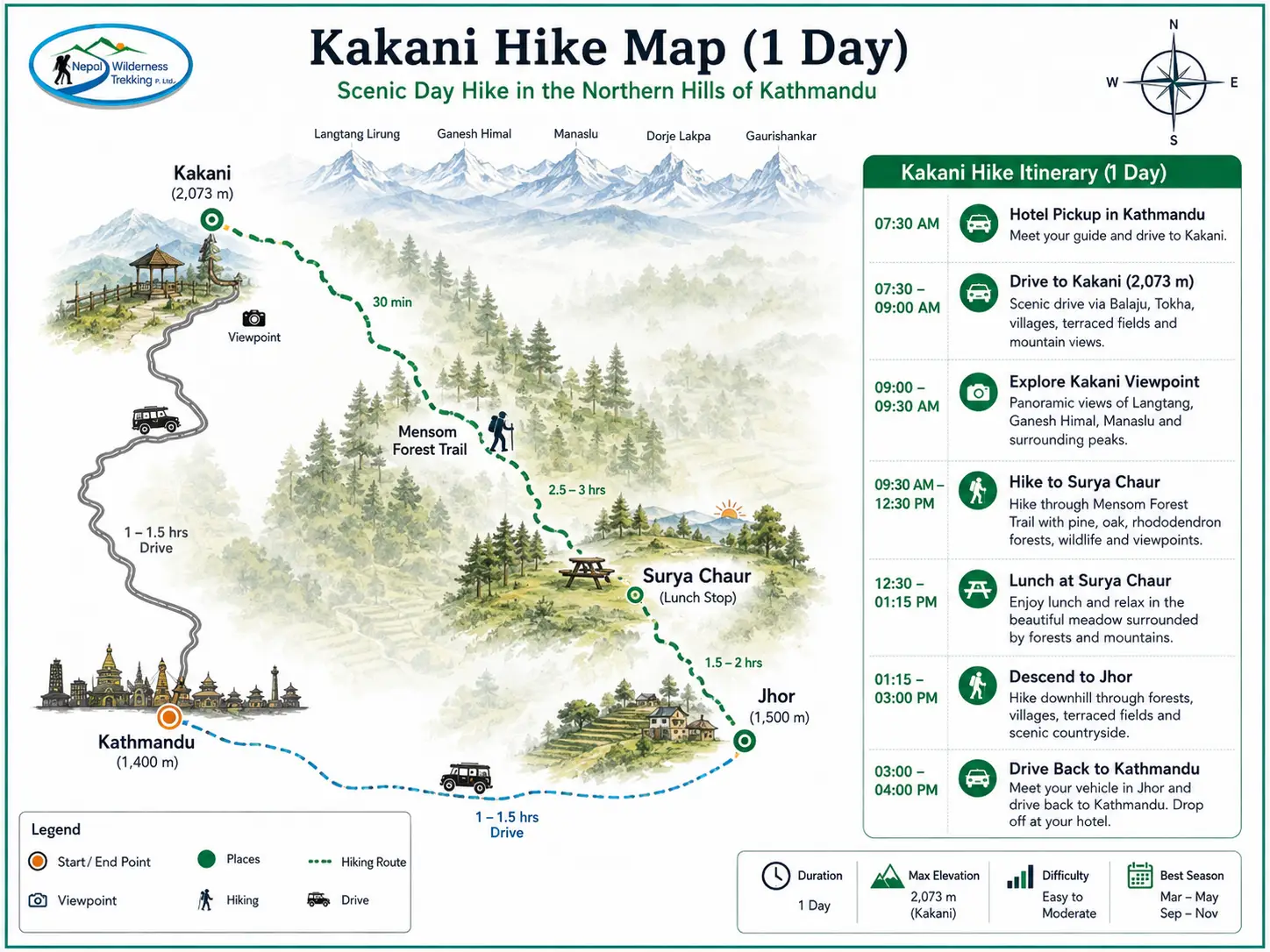
Located approximately 23 kilometers (14 miles) northwest of Kathmandu, Kakani sits at an elevation of 2,073 meters (6,801 feet). The drive from Kathmandu takes around 1 to 1.5 hours by private vehicle, passing through Balaju, Tokha, and scenic hillside villages before climbing into the cool pine forests of Kakani. As you leave the city’s bustle behind, the air becomes noticeably fresher, and spectacular Himalayan panoramas begin to unfold.
Unlike many popular hiking routes around Kathmandu that are becoming increasingly busy, the Kakani to Jhor trail remains relatively peaceful and less commercialized. The route follows quiet forest paths, old village trails, and natural ridgelines through one of the greenest landscapes surrounding the Kathmandu Valley. The hike is suitable for beginners, families, photographers, birdwatchers, and experienced hikers seeking a relaxing day in nature.
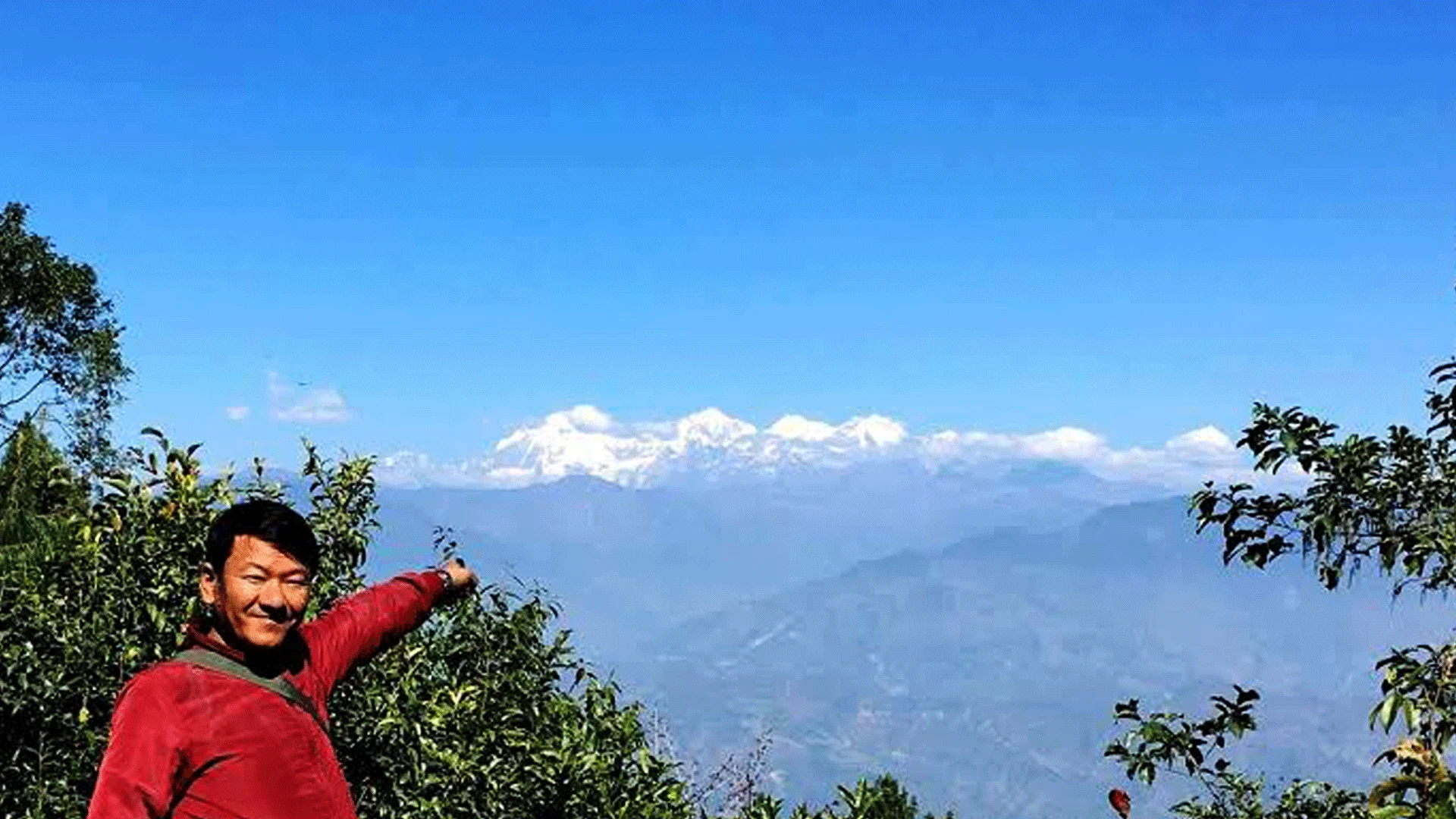
One of the greatest highlights of this hike is the remarkable diversity of scenery encountered in a single day. The journey begins at Kakani’s famous viewpoint, where on clear mornings the snow-covered peaks of the Langtang, Ganesh Himal, Manaslu, Dorje Lakpa, and Gaurishankar mountain ranges dominate the northern skyline. After enjoying these breathtaking views, the trail gradually enters dense Himalayan forests where towering pine, oak, and rhododendron trees create cool, shaded pathways.
As the hike continues toward Surya Chaur, the landscape changes from panoramic hilltops to tranquil woodland, with colorful butterflies, singing birds, seasonal wildflowers, and occasional wildlife adding to the experience. The route finally descends through traditional farming villages and terraced fields before reaching Jhor, where your private vehicle awaits for the comfortable drive back to Kathmandu.
Unlike destination-focused treks, this hike is about enjoying the journey itself. Every section of the trail reveals something different—magnificent mountain vistas, peaceful forests, hidden clearings, rural life, and diverse flora and fauna. It is an excellent introduction to Nepal’s natural beauty for travelers with limited time, while also offering a rewarding outdoor escape for local residents.
The Kakani to Jhor Hiking Trail is more than just a walk through the hills. It is an opportunity to experience the peaceful side of Nepal, breathe fresh mountain air, discover Himalayan forests, observe local wildlife, and enjoy one of the country’s most beautiful short hiking routes without traveling far from Kathmandu.
Scenic Drive from Kathmandu to Kakani – From the City to the Himalayan Foothills
Your Kakani Hiking adventure begins with a scenic drive from Kathmandu, leaving behind the bustling streets of Nepal’s capital and gradually entering the peaceful hills of Nuwakot District. Although Kakani is only about 23 kilometers (14 miles) from Kathmandu, the journey feels like traveling to a completely different world. Within just over an hour, the noise of the city is replaced by fresh mountain air, quiet forests, and panoramic Himalayan scenery.
Most trips start early in the morning, allowing you to avoid city traffic and enjoy the clearest mountain views. After your guide picks you up from your hotel, the drive heads northwest through Balaju and Tokha, passing traditional neighborhoods, local markets, and expanding residential areas. As the road begins to climb, the scenery quickly changes. Concrete buildings give way to terraced farmland, small villages, and forest-covered hillsides.
The winding mountain road offers several beautiful viewpoints overlooking the northern edge of the Kathmandu Valley. During clear weather, you can enjoy sweeping views back toward the city while watching the green hills gradually rise toward the snow-capped Himalayas. Along the roadside, you’ll notice farmers tending vegetable fields, grazing livestock, and working on the terraces that have supported local communities for generations.
One of the unique features of Kakani is its pleasantly cool climate. Sitting at more than 2,000 meters (6,500 feet) above sea level, the area remains noticeably cooler than Kathmandu throughout most of the year. During summer, it provides a refreshing escape from the city’s heat, while autumn and winter offer crisp mountain air and exceptional visibility.
Kakani – A Peaceful Hill Station
Kakani has long been a favorite weekend destination for residents of Kathmandu seeking fresh air, beautiful scenery, and outdoor recreation. Unlike more commercial tourist destinations, Kakani has retained its peaceful atmosphere and natural charm. Visitors come here not only for hiking but also to relax among the forests, enjoy mountain views, and experience the slower pace of life in the hills.
The small settlement is surrounded by forests, farmland, and open meadows. Traditional homes, local tea shops, and family-run restaurants welcome visitors with warm Nepali hospitality. The relaxed environment makes Kakani an excellent starting point for hiking, birdwatching, photography, and nature walks.
The Famous Himalayan Panorama
One of the first highlights after arriving in Kakani is the breathtaking Himalayan panorama. On clear mornings, visitors can admire a spectacular chain of snow-covered peaks stretching across the northern horizon.
Depending on weather conditions, mountains visible from Kakani include:
- Langtang Lirung (7,227 m) – the highest mountain in the Langtang region.
- Ganesh Himal (7,422 m) – a beautiful mountain range named after the Hindu god Ganesh.
- Dorje Lakpa (6,966 m) – an elegant peak east of Langtang.
- Gaurishankar (7,134 m) – one of eastern Nepal’s most sacred mountains.
- Manaslu (8,163 m) – the world’s eighth-highest mountain.
- On exceptionally clear days, distant sections of the Annapurna Himal may also be visible.
These spectacular mountain views make Kakani one of the best viewpoints near Kathmandu without requiring a multi-day trek.
Strawberry Farms – Kakani’s Sweet Reputation
Kakani is famous throughout Nepal for its fresh strawberries. Thanks to its cool climate and fertile soil, the area has become one of the country’s leading strawberry-growing regions. If you visit during the harvesting season, usually from late winter to early spring, roadside stalls and local farms offer freshly picked strawberries, homemade jams, juices, and seasonal desserts.
Many visitors enjoy stopping to sample locally grown strawberries before or after their hike. The farms also add vibrant colors to the surrounding countryside and contribute to Kakani’s unique agricultural identity.
Fresh Trout Farming
Another interesting attraction in Kakani is its rainbow trout farming. The cool mountain streams and clean spring water provide ideal conditions for raising trout, making the area well known for fresh fish. Several local restaurants serve delicious grilled or fried trout prepared in traditional Nepali style.
For hikers looking to enjoy a hearty lunch after completing the trail, tasting locally farmed trout is a memorable culinary experience and supports the local community.
Thai Memorial Park
Before beginning the hike, many visitors stop briefly at the Thai Memorial Park, a peaceful monument built in memory of the victims of the tragic Thai Airways Flight TG311 accident in 1992. Surrounded by pine trees and beautifully maintained gardens, the memorial provides a quiet place for reflection while also offering impressive mountain views.
Its serene setting blends naturally into Kakani’s tranquil environment and serves as one of the area’s notable landmarks.
Beginning the Hike
After enjoying the mountain scenery and preparing your hiking gear, the trail begins by leaving the roadside behind and entering the peaceful forests that cover the surrounding hills. Almost immediately, the atmosphere changes. The sounds of traffic disappear, replaced by birdsong, rustling leaves, and the gentle breeze flowing through the pine trees.
From here, the real adventure begins as you set off on one of the most scenic and rewarding day hikes near Kathmandu, following forest trails toward Surya Chaur before descending through beautiful countryside to Jhor, where your vehicle will meet you for the comfortable return drive to Kathmandu.
Kakani to Jhor Hiking Trail
The Kakani to Jhor Hiking Trail is one of the most rewarding day hikes in the Kathmandu Valley, offering an ideal balance of natural beauty, moderate walking, and peaceful surroundings. Unlike many hiking routes that follow roads or pass through busy settlements, this trail spends most of its time inside beautiful Himalayan forests, making it an excellent choice for nature lovers, photographers, birdwatchers, and anyone seeking a quiet escape from city life.
After enjoying the mountain views in Kakani and making final preparations, the hike begins on a gentle trail leading away from the village. Within minutes, the landscape transforms into dense woodland where tall pine trees, Himalayan oak, rhododendrons, and other native species create a cool, shaded environment. The fresh mountain air, the scent of pine needles, and the sounds of birds immediately make you forget that Kathmandu is only a short drive away.
The first section of the trail follows wide forest paths that are easy to walk and suitable for hikers of all ages. The gradual terrain allows you to enjoy the scenery without feeling rushed. Along the way, sunlight filters through the trees, creating beautiful patterns on the forest floor, while small clearings occasionally reveal distant views of the surrounding hills and the snow-capped Himalayas.
As you continue deeper into the forest, the trail becomes even more peaceful. The route passes through quiet ridges, gentle slopes, and natural meadows that remain largely untouched. Unlike Nepal’s high-altitude trekking routes, this hike offers the opportunity to fully appreciate the smaller details of nature—towering trees, moss-covered rocks, ferns, mushrooms during the rainy season, colorful wildflowers, and countless butterflies dancing between patches of sunlight.
One of the highlights of this route is that more than 70% of the hike passes through natural forest. The canopy provides welcome shade during warmer months, making Kakani one of the most comfortable hiking destinations near Kathmandu, even during spring and early summer. The forest also protects the trail from strong winds, creating a calm and relaxing atmosphere throughout the walk.
The path is generally well-defined, with a mixture of soft forest soil, pine needles, grassy sections, and a few rocky stretches. There are no technical climbing sections, making the hike suitable for beginners with a reasonable level of fitness. Several open viewpoints along the route provide excellent opportunities to rest, take photographs, and admire the surrounding landscapes.
As the trail approaches Surya Chaur, the dense forest gradually opens into rolling grasslands and wide meadows. This hidden hilltop offers a dramatic change in scenery. Surrounded by green hills and framed by the distant Himalayas, Surya Chaur is one of the most peaceful places on the entire route. It is an ideal location to relax, enjoy a packed lunch, and simply absorb the beauty of Nepal’s middle hills.
After leaving Surya Chaur, the trail gently descends toward Jhor, passing through small farming communities, terraced fields, and patches of woodland. The descent is comfortable and provides a different perspective of the surrounding landscape, allowing hikers to experience both mountain forests and rural village life in a single day.
By the time you reach Jhor, you’ll have experienced an impressive variety of landscapes—mountain viewpoints, dense forests, peaceful meadows, traditional villages, and fertile farmland—all within a single day hike. This remarkable diversity is what makes the Kakani to Jhor route one of the finest hiking experiences close to Kathmandu and an excellent choice for travelers who want to explore Nepal’s natural beauty without committing to a multi-day trek.
Hiking Through Mensom Forest – The Green Heart of the Kakani to Jhor Trail
One of the highlights of the Kakani to Jhor Hiking Trail is walking through the peaceful Mensom Forest, a beautiful community-managed woodland that protects one of the healthiest natural ecosystems in the hills north of Kathmandu. The forest forms the central section of the hike and offers visitors a refreshing escape into nature, surrounded by towering trees, birdsong, and cool mountain air.
After leaving Kakani, the trail gradually enters the forest, where the atmosphere changes completely. The sounds of vehicles disappear, replaced by the gentle rustling of leaves, the calls of Himalayan birds, and the occasional flutter of colorful butterflies. The wide, well-maintained trail winds through dense pine, oak, and rhododendron forests, providing welcome shade for most of the hike.
Mensom Forest is an excellent example of successful community forest conservation in Nepal. Local communities actively protect the woodland, helping preserve native trees, wildlife, and water sources while also promoting eco-friendly tourism. By hiking through this forest, visitors not only enjoy its natural beauty but also contribute to its long-term conservation through the entrance fee collected at the gate.
Butterfly Paradise Near Kathmandu
Kakani is becoming increasingly known as one of the best places near Kathmandu for butterfly watching. The combination of healthy forests, wildflowers, open grasslands, and clean mountain air creates an ideal habitat for many butterfly species.
From March to October, hikers can often see butterflies flying along sunny sections of the trail, forest edges, and flowering shrubs. The variety is especially impressive during spring and after the monsoon, when blooming plants provide abundant nectar. Whether you are a wildlife photographer or simply enjoy nature, the colorful butterflies add another memorable dimension to the hike.
A Haven for Birdwatchers
The forest is also a rewarding destination for bird lovers. Early mornings are filled with birdsong, and patient hikers may spot woodpeckers, barbets, minivets, laughingthrushes, drongos, flycatchers, bulbuls, and many other Himalayan bird species. Bringing a pair of binoculars can greatly enhance the experience.
Forest Flora
The vegetation changes with the seasons. In spring, rhododendrons bloom with brilliant shades of red, pink, and white, while summer and the monsoon transform the forest into a lush green landscape rich in ferns, mosses, orchids, and wildflowers. During autumn, the clear skies create ideal conditions for hiking, while winter offers crisp air and excellent visibility through the leafless sections of the forest.
Mensom Forest Entrance Fee
To help maintain the forest and support local conservation efforts, visitors are required to pay an entrance fee at the Mensom Forest entry point.
| Visitor Category |
Entrance Fee |
| Nepali Citizens |
NPR 100 per person |
| Foreign Visitors |
NPR 1,000 per person |
Please note that entrance fees are determined by the local forest management committee and may change without prior notice.
Surya Chaur – The Hidden Meadow Between Kakani and Jhor
One of the most rewarding highlights of the Kakani to Jhor Hiking Trail is reaching the beautiful open grassland of Surya Chaur. Hidden among the forested hills north of Kathmandu, this peaceful meadow offers a completely different landscape from the dense woodland that surrounds it. After walking through cool pine and oak forests, hikers suddenly emerge into a wide, sunlit clearing where rolling green hills stretch in every direction and the snow-covered Himalayas dominate the northern skyline.
The name Surya Chaur comes from two Nepali words: Surya, meaning “sun,” and Chaur, meaning an open meadow or grassland. True to its name, the area receives abundant sunshine throughout the day, making it a pleasant resting place even during the cooler months. The open landscape also creates uninterrupted views of the surrounding hills and distant mountain ranges.
For many hikers, Surya Chaur is the most memorable part of the entire journey. The peaceful atmosphere, fresh mountain breeze, and wide-open scenery create the perfect setting to relax before continuing the descent toward Jhor.
A Natural Viewpoint of the Central Himalayas
On clear days, Surya Chaur provides magnificent views of Nepal’s central Himalayan range. Depending on weather and visibility, hikers may enjoy panoramic views of:
- Langtang Lirung (7,227 m)
- Ganesh Himal (7,422 m)
- Manaslu (8,163 m) – the world’s eighth-highest mountain
- Dorje Lakpa (6,966 m)
- Gaurishankar (7,134 m)
- Other surrounding Himalayan peaks and ridgelines
The mountain scenery changes throughout the day. Early mornings often offer the clearest visibility, while late afternoons bathe the surrounding hills in warm golden light, creating excellent conditions for landscape photography.
The Perfect Place for Lunch
Surya Chaur is an ideal location to stop for lunch during the hike. The open meadow provides plenty of space to sit comfortably and enjoy the peaceful surroundings while taking in the Himalayan views.
Many hiking groups choose this location for a picnic lunch prepared by their trekking company or enjoy light snacks while resting before continuing the journey. Unlike crowded picnic areas near Kathmandu, Surya Chaur remains quiet, allowing visitors to fully appreciate the sounds of nature.
The cool breeze, open sky, and surrounding forests make it one of the most enjoyable places to relax during the entire hike.
Photography Opportunities
Photographers will find countless opportunities at Surya Chaur.
The contrast between green hills, blue skies, dense forests, and snow-covered mountains creates beautiful compositions throughout the year. During spring, colorful wildflowers bloom around the meadow, while autumn offers exceptional visibility after the monsoon rains.
Popular photography subjects include:
- Himalayan mountain panoramas
- Rolling green hills
- Forest landscapes
- Wildflowers and butterflies
- Traditional grazing fields
- Sunrise and morning light
- Local village scenery
- Portrait photography against mountain backdrops
Whether you are using a professional camera or simply a smartphone, Surya Chaur provides some of the most photogenic scenery found on any day hike near Kathmandu.
Seasonal Beauty Throughout the Year
Every season gives Surya Chaur a different character.
During spring (March to May), the surrounding forests come alive with blooming rhododendrons and fresh green vegetation. Butterflies become increasingly active, while birds fill the forest with their songs.
The summer and monsoon months (June to August) transform the meadow into a vibrant green landscape covered with wild grasses and flowering plants. Mist drifting across the hills creates a magical atmosphere.
Autumn (September to November) is considered the best season for hiking. Clear skies provide outstanding Himalayan views, comfortable temperatures, and excellent visibility for photography.
In winter (December to February), the crisp mountain air creates crystal-clear views of the surrounding peaks. On rare occasions, light snowfall may dust the nearby hills, adding another layer of beauty to the landscape.
A Peaceful Escape from the Crowds
Unlike some popular viewpoints around Kathmandu, Surya Chaur remains relatively undiscovered by international visitors. The peaceful environment allows hikers to enjoy nature without the noise and crowds often found at more commercial destinations.
The meadow is also used by local communities as seasonal grazing land for cattle and buffalo. Seeing livestock peacefully grazing against a backdrop of Himalayan peaks adds a charming rural atmosphere and offers visitors a glimpse into everyday life in Nepal’s hill villages.
For those seeking fresh air, quiet surroundings, and spectacular scenery, Surya Chaur is one of the hidden gems of the Kathmandu Valley.
Continuing the Journey to Jhor
After a relaxing break at Surya Chaur, the trail continues downhill toward Jhor. The descent follows a combination of forest paths, village trails, and terraced farmland, offering a new perspective of the surrounding countryside.
As you leave the open meadow behind, the route once again enters peaceful woodland before gradually descending through traditional settlements where local farmers continue centuries-old agricultural practices. The final section of the hike is gentle and enjoyable, allowing you to appreciate the transition from mountain forests to the fertile foothills on the northern edge of Kathmandu Valley.
By the time you arrive at Jhor, you will have experienced an impressive variety of landscapes in a single day—from Himalayan viewpoints and dense forests to butterfly-filled meadows, peaceful villages, and beautiful countryside. It is this diversity that makes the Kakani to Jhor Hiking Trail one of the finest day hikes near Kathmandu.
Kakani – Nepal’s Butterfly Paradise
While Kakani is widely known for its breathtaking Himalayan views and refreshing climate, it is also gaining recognition as one of the finest destinations for butterfly watching near Kathmandu. The healthy mountain forests, diverse native plants, open meadows, and mild climate create an ideal habitat for hundreds of insects, including a remarkable variety of butterflies.
For hikers, this means that every season brings a different display of colors and movement along the trail. Instead of simply walking through the forest, visitors become immersed in a living ecosystem where butterflies flutter among wildflowers, birds sing from the treetops, and nature thrives in every direction.
Why Kakani Supports So Many Butterflies
Butterflies depend on healthy ecosystems to survive. They need native plants for nectar, host plants where caterpillars can feed, clean water, and undisturbed habitats to complete their life cycle.
The forests around Kakani provide all of these conditions.
The area combines pine forests, broadleaf forests, flowering shrubs, natural grasslands, and cultivated farmland within a relatively small area. This variety of habitats supports butterflies throughout different stages of their development and allows many species to coexist.
The elevation of around 2,000 metres is another important factor. The moderate climate is neither too hot nor too cold, creating suitable conditions for butterflies during much of the year.
Walking Through a Living Forest
As you hike from Kakani toward Surya Chaur, you’ll quickly notice that the forest is full of life. Brightly colored butterflies drift across the trail, settle on wildflowers, or bask on sunlit rocks before taking flight again.
Unlike a botanical garden or butterfly park, this is their natural habitat. Every butterfly seen along the trail is part of a healthy mountain ecosystem that has developed over centuries.
Because much of the hike follows quiet forest paths with little vehicle traffic, butterflies can often be observed at close range without disturbance.
Nature photographers frequently pause along the trail to capture these beautiful insects as they feed on flowers or rest with their wings spread open in the morning sunshine.
Best Time for Butterfly Watching
Although butterflies can be seen during much of the year, some seasons provide especially rewarding opportunities.
Spring (March to May)
Spring is one of the best seasons for butterfly watching. As temperatures rise, forests and meadows become covered with fresh vegetation and flowering plants. Butterflies become highly active while searching for nectar and mates.
This season also coincides with blooming rhododendrons, making the forests particularly colourful.
Summer and Monsoon (June to August)
After the seasonal rains, the hills around Kakani become lush and vibrant.
Wildflowers bloom across open meadows, streams flow through the forest, and butterflies appear in impressive numbers whenever sunshine breaks through the clouds.
Although afternoon showers are common, mornings often provide excellent opportunities for photography.
Autumn (September to November)
Autumn combines pleasant temperatures with crystal-clear skies.
Butterflies remain active during sunny afternoons, while hikers also enjoy outstanding Himalayan views.
Many photographers consider autumn the ideal season because the combination of mountain scenery and wildlife creates exceptional photographic opportunities.
More Than Butterflies
The Kakani forests support an impressive diversity of wildlife beyond butterflies.
Birdwatchers often spot:
- Himalayan Bulbuls
- Woodpeckers
- Barbets
- Flycatchers
- Minivets
- Drongos
- Laughingthrushes
- Sunbirds
- Eagles soaring above the valleys
Small mammals such as Himalayan squirrels, langur monkeys, and barking deer occasionally inhabit the surrounding forests, although they are naturally shy and rarely seen.
The area is also rich in bees, dragonflies, moths, spiders, and other beneficial insects that play an essential role in pollinating flowers and maintaining the health of the forest ecosystem.
A Paradise for Nature Photography
The Kakani to Jhor Hiking Trail offers outstanding opportunities for nature photography.
Professional photographers and hobbyists alike can capture:
- Butterflies feeding on wildflowers
- Morning dew on forest plants
- Birds resting among pine branches
- Colorful mushrooms during the rainy season
- Rhododendron blossoms in spring
- Panoramic Himalayan landscapes
- Forest trails disappearing beneath towering trees
Because the trail receives relatively few visitors compared to other hiking destinations near Kathmandu, photographers can work patiently without large crowds.
Conservation Matters
Butterflies are often considered indicators of a healthy environment. A rich butterfly population usually reflects clean air, healthy forests, diverse vegetation, and well-balanced ecosystems.
Community-managed forests around Kakani play an important role in protecting these habitats.
Local residents have worked to conserve woodland, reduce illegal logging, and encourage sustainable tourism. Visitors who hike responsibly, avoid littering, and stay on designated trails help preserve this remarkable ecosystem for future generations.
Every visit to Kakani is not only an opportunity to enjoy nature but also a chance to support local conservation efforts and appreciate the delicate balance that allows so many species to flourish.
Experience Nature Beyond the Mountains
Many visitors come to Kakani expecting beautiful Himalayan views, but they leave with something even more memorable—a deeper appreciation of Nepal’s rich biodiversity.
From colourful butterflies dancing through sunlit clearings to birds calling from ancient pine trees, every step along the Kakani to Jhor trail reveals another reason why this peaceful corner of Nepal is so special.
Whether you are a hiker, photographer, birdwatcher, student of nature, or simply someone looking to spend a relaxing day outdoors, Kakani offers an experience that goes far beyond a typical day hike. It is a destination where forests, wildlife, mountain scenery, and rural life come together to create one of the most rewarding natural escapes near Kathmandu.
Best Time for Kakani Hiking
One of the greatest advantages of the Kakani to Jhor Hiking Trail is that it can be enjoyed throughout the year. Every season offers a unique experience, from colorful spring flowers and active butterflies to crystal-clear Himalayan views in autumn and peaceful winter landscapes. Since the trail remains at a moderate elevation of around 2,000 meters, it is accessible in all four seasons without the challenges associated with high-altitude trekking.
Although hiking is possible year-round, each season has its own highlights depending on your interests, whether you enjoy mountain photography, birdwatching, butterflies, or simply walking through peaceful forests.
Spring (March to May) – Flowers, Butterflies, and Pleasant Weather
Spring is considered one of the finest seasons for Kakani Hiking. As winter fades, the forests come alive with fresh greenery, blooming rhododendrons, wildflowers, and active wildlife. The comfortable temperatures make walking enjoyable throughout the day, while the forests are filled with birdsong and colorful butterflies.
The surrounding hills become especially beautiful during this season, with flowering trees adding vibrant shades of red, pink, and white to the landscape. Butterfly activity increases significantly as nectar-producing flowers bloom along the trail, making spring one of the best times for nature photography.
Typical daytime temperatures range from 15°C to 24°C, while mornings remain cool and refreshing.
Spring is highly recommended for:
- Nature lovers
- Butterfly enthusiasts
- Birdwatchers
- Families with children
- First-time hikers
- Landscape photographers
Summer and Monsoon (June to August) – The Green Season
During the monsoon, Kakani transforms into one of the greenest landscapes near Kathmandu. Regular rainfall nourishes the forests, creating lush vegetation, flowing streams, and vibrant meadows covered with wild grasses and seasonal flowers.
Although afternoon showers are common, mornings often remain clear enough for enjoyable hiking. Mist drifting through the pine forests creates a magical atmosphere rarely experienced during other seasons.
This is also an excellent time to observe butterflies, insects, fungi, mosses, and other forest life that thrives in moist conditions.
Because fewer visitors choose to hike during the rainy season, those who do often enjoy the trail almost entirely to themselves.
If hiking during summer, waterproof clothing and hiking shoes with good grip are recommended.
Autumn (September to November) – The Best Season for Mountain Views
Autumn is widely regarded as the best overall season for hiking in Nepal, and Kakani is no exception.
Following the monsoon rains, dust and haze disappear from the atmosphere, revealing spectacular panoramic views of the Himalayas. Blue skies, comfortable temperatures, and dry trails create ideal hiking conditions.
This season is perfect for travelers who want to combine forest hiking with breathtaking mountain scenery. Visibility is often excellent throughout the day, allowing hikers to admire Langtang, Ganesh Himal, Manaslu, Gaurishankar, and surrounding peaks.
Autumn is also one of the busiest trekking seasons in Nepal, making Kakani an excellent option for visitors with limited time who still wish to experience Nepal’s natural beauty.
Average daytime temperatures range from 16°C to 23°C, with pleasantly cool mornings.
Winter (December to February) – Clear Skies and Peaceful Trails
Winter offers a completely different experience. The air becomes crisp, visibility reaches its highest level, and the forests become wonderfully quiet.
Although mornings can be chilly, daytime hiking remains comfortable under clear sunshine. The snow-covered Himalayan peaks appear exceptionally bright against the deep blue winter sky, creating some of the best photography conditions of the year.
The forests are peaceful during winter, making it an excellent season for hikers seeking solitude and relaxation away from the crowds.
Warm clothing is recommended, particularly during early morning departures.
Weather at a Glance
| Season |
Temperature |
Trail Condition |
Mountain Views |
Butterfly Activity |
| Spring (Mar–May) |
15–24°C |
Excellent |
Excellent |
★★★★★ |
| Summer (Jun–Aug) |
18–26°C |
Wet in places |
Fair to Good |
★★★★★ |
| Autumn (Sep–Nov) |
16–23°C |
Excellent |
★★★★★ |
★★★★☆ |
| Winter (Dec–Feb) |
8–18°C |
Excellent |
★★★★★ |
★★☆☆☆ |
Which Season Should You Choose?
If your priority is flowers, butterflies, and vibrant forests, visit during spring. If you want the clearest Himalayan views and the most comfortable hiking weather, choose autumn.If you prefer peaceful trails, fewer visitors, and excellent visibility, winter is an excellent option.
For travelers who enjoy lush green landscapes and rich biodiversity, the monsoon season offers a unique and rewarding experience, provided you are prepared for occasional rain.
No matter when you visit, the Kakani to Jhor Hiking Trail offers a refreshing escape from Kathmandu, combining mountain scenery, forest walks, local culture, and abundant natural beauty in every season.
Why Choose the Kakani to Jhor Hiking Tour?
If you’re looking for a refreshing outdoor adventure without spending several days trekking in the Himalayas, the Kakani to Jhor Hiking Tour is one of the best choices near Kathmandu. In just one day, you’ll experience spectacular Himalayan mountain views, peaceful forests, rich biodiversity, traditional villages, and scenic countryside—all within a short drive from the capital.
This carefully designed hiking route combines the best of nature and culture. From the cool pine forests of Kakani to the open meadows of Surya Chaur and the gentle descent to Jhor, every section of the trail offers something unique. Along the way, you’ll enjoy fresh mountain air, observe colorful butterflies and birds, discover native Himalayan flora, and experience the quiet beauty of Nepal’s mid-hills.
Unlike crowded tourist destinations, the Kakani to Jhor trail remains peaceful and less commercialized, making it ideal for travelers seeking an authentic hiking experience. Whether you’re a solo traveler, couple, family, group of friends, photographer, or nature enthusiast, this hike offers an enjoyable and rewarding day in the outdoors.
At Nepal Wilderness Trekking, our experienced local hiking guides know the trail intimately and share insights into the region’s history, culture, forests, wildlife, and mountain landscapes. We take care of transportation, logistics, and safety, allowing you to relax and fully enjoy your hiking adventure.
Join us for an unforgettable day exploring one of the most beautiful hiking trails near Kathmandu and discover why Kakani continues to be a favorite destination for both local and international hikers.
Explore More Hiking Trails Near Kathmandu
Looking for more hiking adventures around Kathmandu? Nepal offers a variety of scenic day hikes through lush forests, traditional villages, and breathtaking Himalayan viewpoints. Whether you’re a beginner or an experienced hiker, these carefully selected trails provide unforgettable outdoor experiences within easy reach of the capital.
Our Recommended Hiking Tours
- Shivapuri Hiking – Explore Shivapuri National Park with peaceful forest trails, rich wildlife, and panoramic views of the Kathmandu Valley.
- Nagarkot Hiking – Enjoy one of Nepal’s most popular hiking routes, famous for spectacular sunrise views over the Himalayas and charming countryside.
- Chisapani Trek – A rewarding short trek through Shivapuri National Park, offering beautiful forests, Tamang villages, and mountain scenery.
- Champadevi Hiking – Hike to the sacred hill of Champadevi for magnificent views of Kathmandu Valley and the surrounding Himalayan ranges.
- Phulchowki Hiking – Discover the highest hill around Kathmandu, renowned for birdwatching, rhododendron forests, and exceptional biodiversity.
- Nagarjun (Jamacho) Hiking – Walk through the peaceful forests of Nagarjun National Park to Jamacho Monastery and enjoy panoramic views of Kathmandu Valley.
- Champadevi Hiking – Enjoy a peaceful day hike through forest trails to Champadevi Hill, with panoramic views of Kathmandu Valley, surrounding hills, and the Himalayan range.
Whether you choose the Kakani to Jhor Hiking Trail or another hiking adventure near Kathmandu, our experienced local guides will ensure a safe, enjoyable, and memorable experience in Nepal’s beautiful natural landscapes. We also offer customized hiking itineraries tailored to your interests, fitness level, and available time.