Annapurna Base Camp Trek – 5 Days
The Annapurna Base Camp Trek is one of Nepal’s most rewarding Himalayan adventures, taking you through traditional mountain villages, lush forests, cascading waterfalls and spectacular mountain scenery to the heart of the Annapurna Sanctuary at 4,130 m (13,550 ft). This five-day itinerary is designed for travelers who want to experience the beauty of the Annapurna region without spending one or two weeks on the trail.
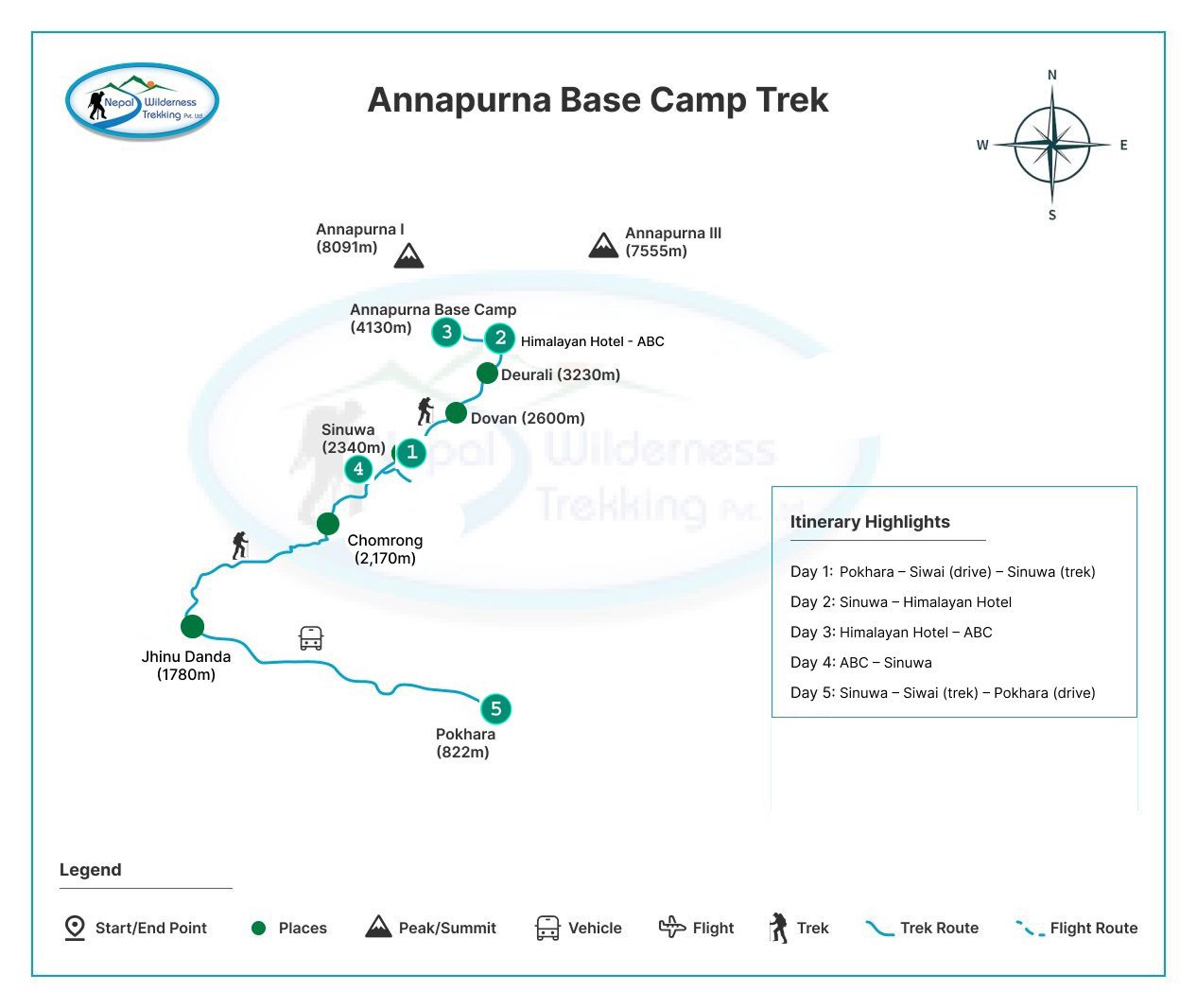
Starting and ending in Pokhara, the journey begins with a shared jeep ride to Jhinu Danda. From there, the trail climbs through Chhomrong and Sinuwa before continuing through the forests of Bamboo, Dovan and Himalaya. As you gain altitude, the green landscape gradually changes into an impressive alpine valley surrounded by towering cliffs, glaciers and snow-covered Himalayan peaks.
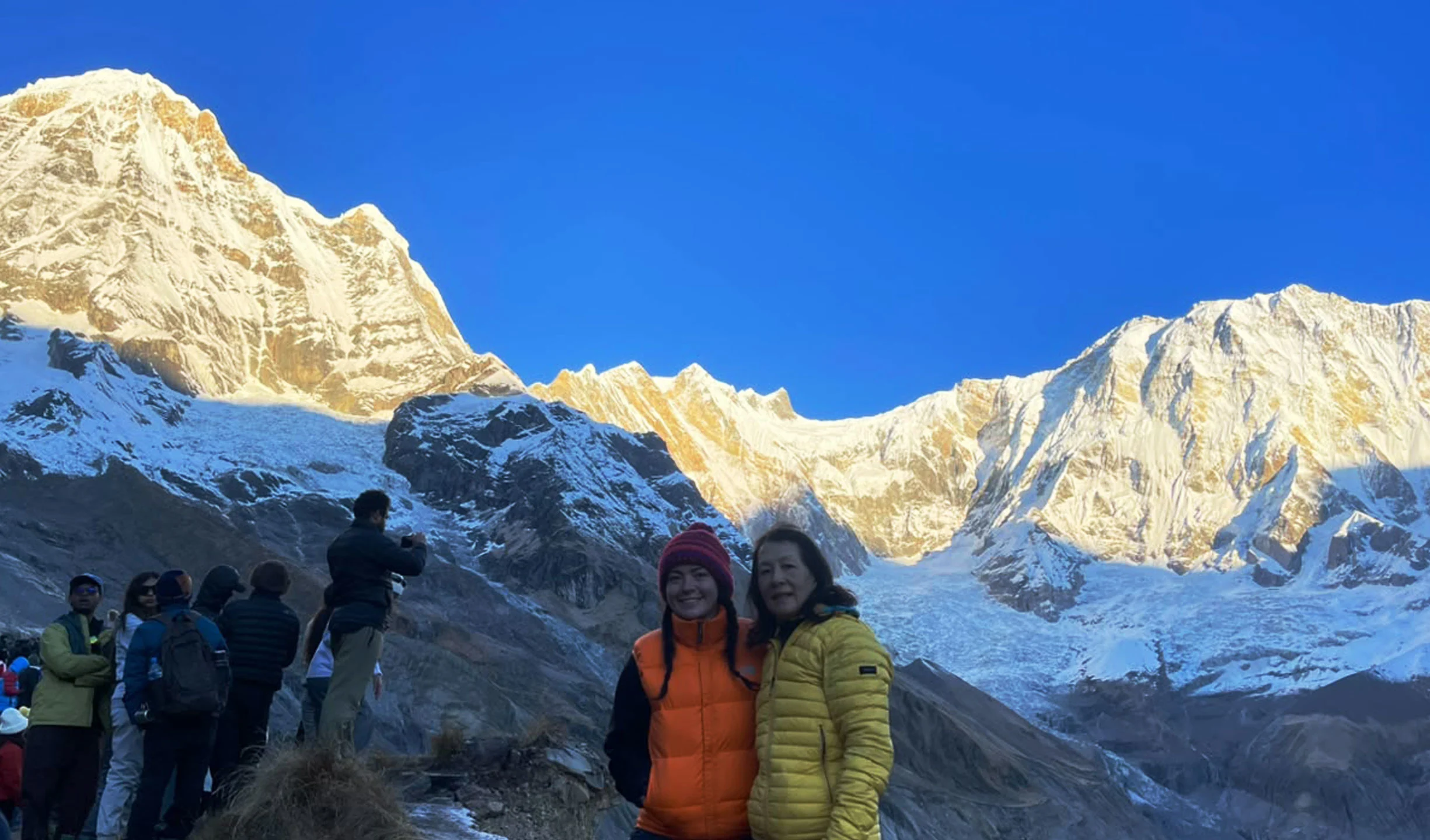
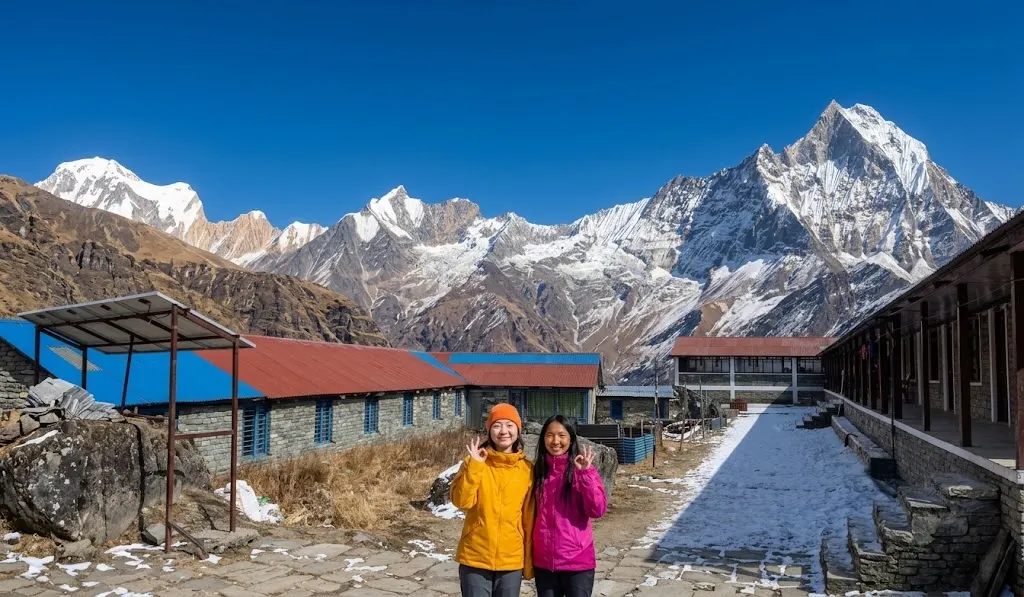
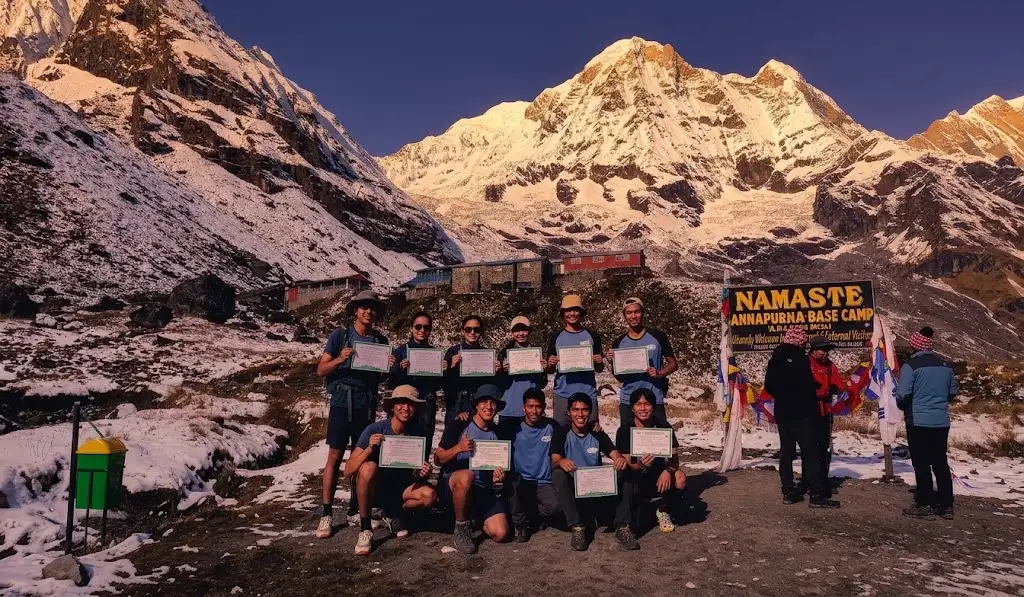
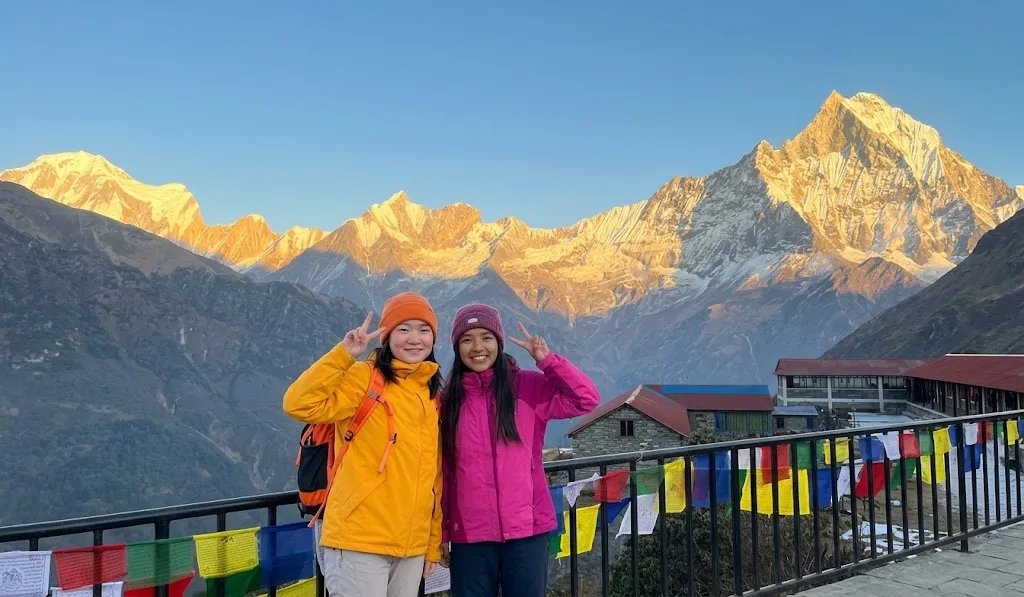
The highlight is reaching Annapurna Base Camp, where you stand beneath the magnificent Annapurna massif and enjoy close-up views of Annapurna I (8,091 m), Annapurna South (7,219 m), Hiunchuli (6,441 m) and Machhapuchhre (6,993 m). The surrounding mountains create an extraordinary natural amphitheater that makes this destination one of the most memorable places in the Himalayas.
Organized by Nepal Wilderness Trekking Pvt. Ltd., this short itinerary includes an experienced local trekking guide, teahouse accommodation and the necessary trekking arrangements. Although no technical climbing is required, the rapid ascent and consecutive walking days make the trek physically demanding. Good fitness, appropriate preparation and attention to altitude are essential.
If you have limited time in Nepal but want to experience the Annapurna Sanctuary, this five-day route offers an exciting way to explore the mountains, discover local culture and enjoy the natural beauty of the Annapurna Conservation Area.
Why Choose the Annapurna Base Camp Trek in 5 Days?
The five-day Annapurna Base Camp Trek is designed for fit travelers who want to reach the Annapurna Sanctuary on a shorter schedule. By traveling from Pokhara to Jhinu Danda by shared jeep, you can skip some of the lower-altitude walking sections and concentrate on the most scenic parts of the route.
During the trek, you will experience several different landscapes. The lower trail passes through traditional villages, terraced fields, bamboo forests and rhododendron woodland. Higher up, the vegetation becomes thinner and the scenery opens into a dramatic alpine valley surrounded by enormous Himalayan peaks.
Reaching Machhapuchhre Base Camp (3,700 m) is a memorable moment, as the trail enters the high mountain landscape. From there, the route continues to Annapurna Base Camp at approximately 4,130 m, where the surrounding peaks create breathtaking views.
This short itinerary is best suited to trekkers who are comfortable walking for several hours each day and can manage a demanding schedule. Beginners with good fitness may be able to complete it, but the fast pace is not ideal for everyone. Travelers who prefer shorter walking days or more time to adjust to the altitude should consider a longer itinerary.
Whether you are traveling alone, as a couple or with friends, Nepal Wilderness Trekking can help organize the trek around your travel dates and provide guidance on preparation, equipment and current trail conditions.
Annapurna Base Camp Trek: Trip Overview
| Trip information |
Details |
| Trek name |
Annapurna Base Camp Trek |
| Destination |
Annapurna Region, Nepal |
| Duration |
5 days |
| Starting point |
Pokhara |
| Ending point |
Pokhara |
| Maximum altitude |
Annapurna Base Camp, 4,130 m |
| Trekking grade |
Moderate to strenuous |
| Walking time |
Approximately 5–8 hours per day, depending on the section |
| Total walking distance |
Approximately 55–60 km; confirm against the final route |
| Transportation |
Shared jeep between Pokhara and Jhinu Danda |
| Accommodation |
Local teahouses |
| Meals |
Breakfast, lunch and dinner, according to the booked package |
| Permit |
Annapurna Conservation Area Permit (ACAP) |
| Guide |
Licensed English-speaking trekking guide |
| Porter |
Optional, subject to arrangement |
| Group size |
Private arrangements and group departures, as confirmed at booking |
| Best seasons |
Spring (March–May) and autumn (September–November) |
| Trek style |
Guided teahouse trek |
| Technical climbing |
Not required |
Best Time for the Annapurna Base Camp Trek
The best seasons for the Annapurna Base Camp Trek are spring and autumn. Both generally offer favorable trekking conditions, although mountain weather can change quickly at any time of year.
Spring: March to May
Spring is an excellent time to explore the Annapurna region. The lower forests become colorful with blooming rhododendrons, and the hillsides turn green as temperatures rise.
Mornings often offer clear views of Annapurna South, Hiunchuli and Machhapuchhre. Afternoon clouds can develop, so starting early helps you make the most of the mountain scenery.
Autumn: September to November
Autumn is one of the most popular trekking seasons in Nepal. Following the monsoon, the air is often clear, the landscapes are fresh and the mountain views can be excellent.
October and November are particularly popular, so teahouses may become busy. Booking ahead and starting your walks early can help make the experience more comfortable.
Winter: December to February
Winter trekking is possible, but temperatures can be very cold near Machhapuchhre Base Camp and Annapurna Base Camp. Snowfall, icy trails and changing weather may affect the route or make the upper sections unsafe.
Proper winter clothing and suitable footwear are essential. Microspikes may be useful when icy conditions are expected.
Monsoon: June to August
The monsoon brings frequent rain, cloudy skies, slippery trails and an increased risk of landslides and leeches at lower elevations. Mountain views may be limited, and road transportation can be disrupted.
The trek may still be possible during suitable weather windows, but current trail conditions should be checked before departure.
Annapurna Base Camp Trek Difficulty
The Annapurna Base Camp Trek is generally considered moderate to strenuous, particularly when completed in only five days. It does not require technical climbing skills, but the long walking days, stone staircases and rapid increase in altitude make it physically demanding.
Trekkers should be prepared for several hours of walking on consecutive days, often over uneven terrain. The route between Chhomrong and Bamboo involves repeated uphill and downhill sections. Higher up, the trail becomes more exposed and the air contains less available oxygen.
The final ascent from Machhapuchhre Base Camp to Annapurna Base Camp is not a technical climb, but it can feel strenuous because of the altitude. A slow, steady pace is important.
Who Can Do This Trek?
The short itinerary may suit:
- Fit travelers who can walk for several hours each day.
- Trekkers who have previous hiking experience.
- Active travelers with limited time in Nepal.
- Couples, solo travelers and small groups seeking a guided Himalayan adventure.
Beginners may be able to complete the route if they are physically prepared, but the five-day schedule is not the easiest introduction to high-altitude trekking. Families should assess each child’s fitness and ability to manage long walking days rather than assuming the itinerary is suitable for all ages.
If you are uncertain about your fitness or altitude tolerance, ask our team about a longer itinerary with shorter walking days.
Mountain Views and Natural Highlights
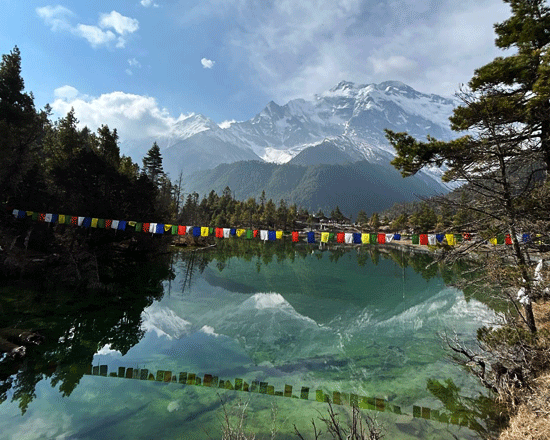
The Annapurna Base Camp route offers a remarkable range of scenery, from subtropical forests and traditional villages to glaciers and high mountain peaks.
Highlights include:
- Annapurna I (8,091 m): The world’s tenth-highest mountain, rising above the sanctuary.
- Annapurna South (7,219 m): A prominent peak visible from many parts of the route.
- Machhapuchhre (Fishtail Mountain): A distinctive mountain known for its dramatic twin summit.
- Hiunchuli (6,441 m): An impressive peak overlooking the sanctuary.
- Modi Khola valley: A beautiful river valley that leads toward the Annapurna Sanctuary.
- Rhododendron and bamboo forests: Particularly attractive in the lower and middle sections of the trail.
- Waterfalls and mountain streams: Scenic features along the forested route.
- Traditional villages: Opportunities to observe local architecture, food and everyday life in the Annapurna region.
Wildlife also inhabits the wider Annapurna Conservation Area. However, animals such as snow leopards and red pandas are rarely seen on this busy trekking route, so sightings should never be expected or guaranteed.
Local Culture and Villages
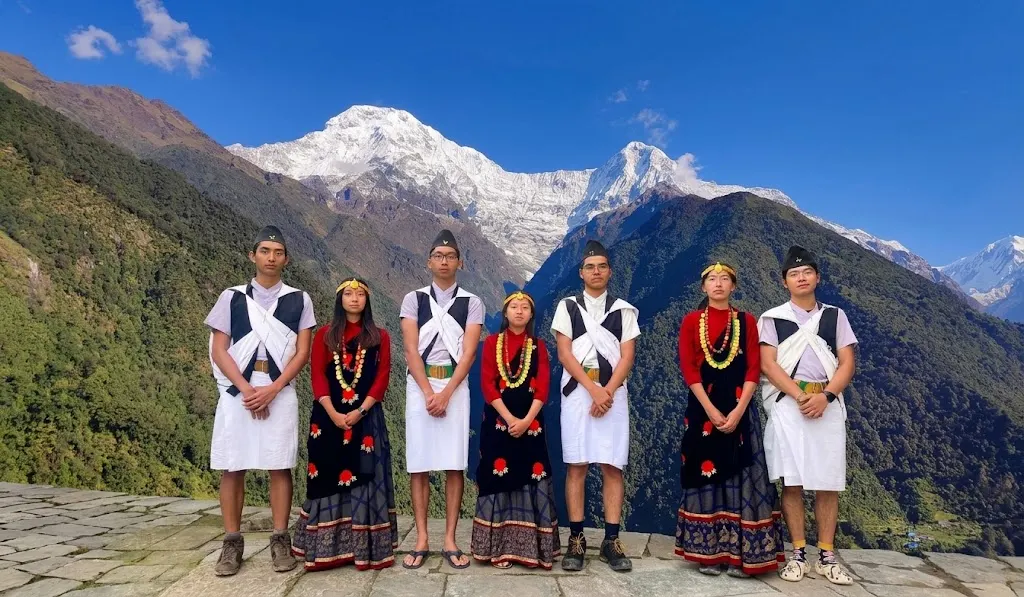
The trail passes through villages where Gurung and other local communities have maintained their traditions, languages, food and ways of life.
Chhomrong is one of the best-known settlements on the route. Along the way, you can observe terraced fields, traditional houses, local teahouses and mountain farming practices.
The experience is not only about reaching the base camp. Staying in local lodges and meeting people along the trail also provides insight into life in the Annapurna region.
Please respect local customs, ask permission before photographing people and follow your guide’s advice when visiting culturally important places.
Transportation for the Annapurna Base Camp Trek
Nepal Wilderness Trekking arranges the ground transportation included in your booked package.
The trek starts with a shared jeep journey from Pokhara to Jhinu Danda, where you begin walking toward the Annapurna Sanctuary. After completing the trekking route, you return to Jhinu Danda or the agreed road-access point and travel back to Pokhara by shared jeep.
Shared transportation may involve waiting for other passengers and can be affected by road conditions, traffic and weather. Please confirm the departure time, pickup location, luggage arrangements and return transfer with our team before traveling. Domestic flights to or from Pokhara are not included unless they are specifically listed in your booking confirmation.
Meals During the Trek
Teahouses along the route serve a variety of meals designed to provide energy for long walking days. Common options include dal bhat, rice, noodles, pasta, soup, potatoes, vegetables, eggs, bread and other simple local or international dishes.
Hot drinks such as tea and coffee are widely available. Soft drinks and packaged snacks may also be sold along the route, although prices generally increase at higher elevations.
Food choices may become more limited in the upper sanctuary because supplies must be transported into the mountains. Tell your guide in advance if you have dietary restrictions or food allergies.
Your package includes breakfast, lunch and dinner if specified in the confirmed inclusions. Additional drinks, snacks and personal purchases may cost extra.
Accommodation on the Annapurna Base Camp Trek
Accommodation is in local teahouses and mountain lodges. Most provide simple rooms, usually with twin beds and basic bedding. Bathrooms may be shared, and facilities vary between villages.
At higher elevations, rooms are often colder and amenities are more basic. Hot showers, Wi-Fi and device charging may be available for an additional fee, but availability is not guaranteed everywhere.
Teahouses can become busy during spring and autumn. Your guide will help arrange suitable accommodation along the route, subject to availability and the day’s walking conditions.
A warm sleeping bag is recommended, particularly in colder months. Ask our team whether sleeping bags and trekking poles are included in your package or can be arranged separately.
Flora and Fauna
The Annapurna Conservation Area supports a wide range of plants and wildlife because of its varied elevation and climate.
Plant Life
The lower sections of the trail pass through bamboo groves, oak woodland and other subtropical vegetation. During spring, rhododendrons may bloom in the forested sections. Higher up, trees become less common and the landscape transitions into alpine vegetation, rocky slopes and glacial terrain.
Wildlife
The wider region provides habitat for Himalayan thar, musk deer and other mountain wildlife. Snow leopards and red pandas are also associated with the broader Himalayan ecosystem, but sightings are uncommon, especially along the main trekking trail.
Please observe wildlife from a distance and avoid feeding or disturbing animals.
Altitude Sickness on the Annapurna Base Camp Trek
Annapurna Base Camp stands at approximately 4,130 m, where altitude sickness can occur. Even healthy and physically fit trekkers can develop symptoms as they ascend.
The five-day itinerary gains altitude relatively quickly, so it is important to recognize the warning signs and communicate openly with your guide.
Common Symptoms
Symptoms of acute mountain sickness can include:
- Headache.
- Nausea or loss of appetite.
- Dizziness.
- Unusual tiredness or weakness.
- Difficulty sleeping.
Severe symptoms can include confusion, difficulty walking straight, or breathlessness at rest. These may indicate a medical emergency.
How to Reduce the Risk
- Walk slowly and maintain a comfortable pace.
- Tell your guide immediately if you feel unwell.
- Avoid ascending further when symptoms of altitude sickness develop.
- Drink regularly and eat enough food.
- Avoid alcohol and smoking during the trek.
- Follow your guide’s advice about the route and altitude.
If serious symptoms develop, immediate descent and urgent medical assistance are necessary. Do not continue ascending simply to reach the planned destination.
Our guides monitor trekkers throughout the journey and can help assess symptoms and arrange a descent when necessary. However, no trekking itinerary can eliminate altitude risk, and appropriate travel insurance with high-altitude helicopter rescue coverage is strongly recommended.
Annapurna Conservation Area Permit (ACAP)
Trekkers on this route must follow the applicable Annapurna Conservation Area entry and permit requirements. The Annapurna Conservation Area is managed by the National Trust for Nature Conservation and protects the region’s mountain landscapes, forests, wildlife and communities.
Nepal Wilderness Trekking can arrange the applicable permit for your trek. Before departure, we will confirm the current requirements, fees and documents needed for your nationality and travel arrangements.
Do You Need a TIMS Card?
TIMS requirements and enforcement can change. We will confirm whether a TIMS card or any additional documentation is required for your particular trek under the current regulations.
Documents to Prepare
Please provide the documents requested by our team, which may include:
- A valid passport.
- Passport details and a photograph.
- Relevant Nepal visa and entry information.
Carry your trekking permits during the trek, as officials may request to see them at checkpoints.
What Is Included in the Annapurna Base Camp Trek Package?
The exact inclusions depend on the package selected. Before booking, please review your quotation and confirm the following arrangements with Nepal Wilderness Trekking.
Package Arrangements to Confirm
- Licensed English-speaking trekking guide.
- Shared jeep transportation between Pokhara and Jhinu Danda.
- Teahouse accommodation during the trek.
- Breakfast, lunch and dinner as stated in the package.
- Required trekking permits.
- Guide’s wages, meals, accommodation and applicable transport costs.
- Assistance with trip preparation and route information.
Expenses That May Be Extra
Unless explicitly included in your quotation, you should budget separately for:
- Domestic flights to or from Pokhara.
- Personal drinks, snacks and bottled beverages.
- Hot showers, Wi-Fi and device charging.
- Personal trekking equipment and clothing.
- Porter services.
- Travel insurance and helicopter rescue coverage.
- Tips for the guide and porter.
- Additional accommodation or transportation caused by itinerary changes.
Please use your confirmed booking inclusions rather than assuming every service is included in the advertised price.
Why Book with Nepal Wilderness Trekking?
Nepal Wilderness Trekking Pvt. Ltd. is a locally owned trekking company based in Kathmandu. Our team organizes guided treks throughout Nepal, including the Annapurna, Everest, Langtang, Manaslu and other Himalayan regions.
We focus on practical planning, knowledgeable local guides and personal service from the initial inquiry through the end of your trek.
When you book with us, you can expect:
- Experienced, appropriately licensed local trekking guides.
- Help preparing for altitude, weather and walking conditions.
- Assistance arranging permits and transportation.
- Teahouse accommodation according to the confirmed itinerary.
- Clear information about package inclusions and additional expenses.
- Support before departure and during your trek.
- Flexible arrangements based on your travel dates and requirements.
Our priority is to organize a well-planned trek that balances the excitement of reaching Annapurna Base Camp with responsible decisions about weather, health and trail conditions.
Book Your Annapurna Base Camp Trek
The Annapurna Base Camp Trek combines traditional mountain villages, beautiful forests, glacier-fed valleys and spectacular Himalayan scenery in one memorable journey. Reaching the sanctuary at 4,130 m offers a close-up view of some of Nepal’s most impressive mountains. If you have five days available and are prepared for a demanding walking schedule, our team can help you plan this short adventure from Pokhara.
Contact Nepal Wilderness Trekking Pvt. Ltd. to confirm your dates, current trail conditions, package price and inclusions. We will help you prepare for your journey and make practical arrangements for a rewarding experience in the Annapurna region.
Ready to plan your trek? Contact our team to check availability and book your Annapurna Base Camp Trek.
Departure Information
Departure dates and availability are confirmed at the time of booking. If the published dates do not match your travel plans, contact us to discuss a private trek on your preferred dates.
We can help you review the itinerary, transport arrangements, equipment and fitness requirements before confirming your trip. All departures remain subject to suitable trail conditions, weather and safe operating arrangements.