Everest Base Camp Trek with Gokyo Lake 15-day Itinerary
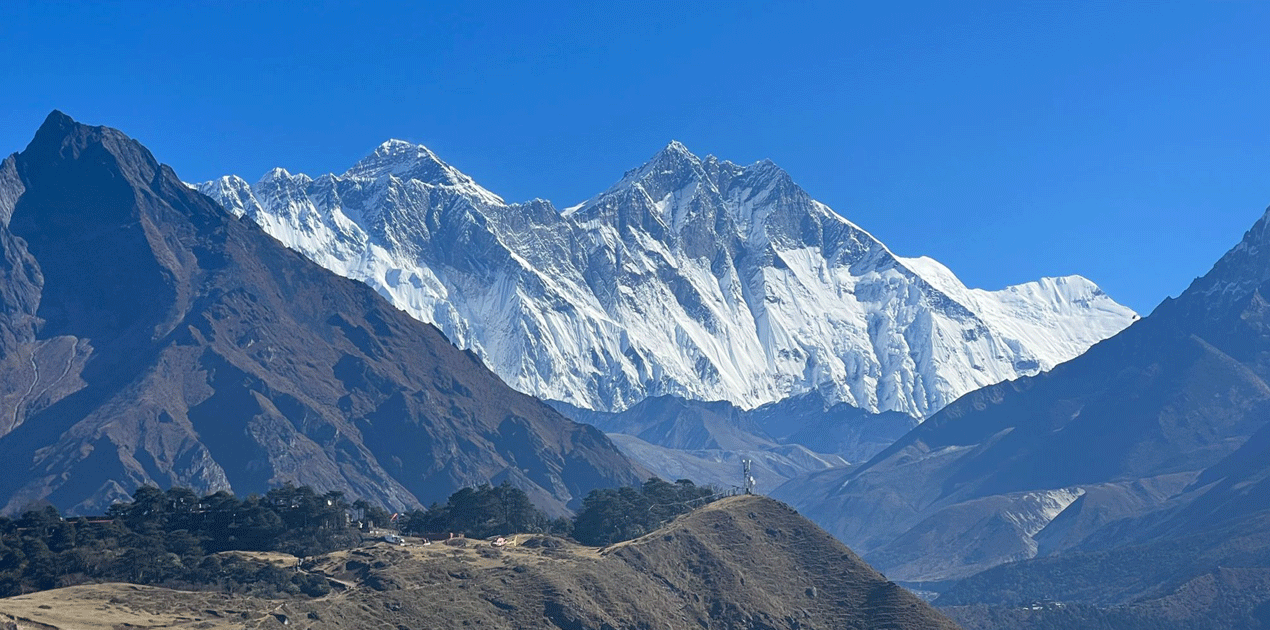
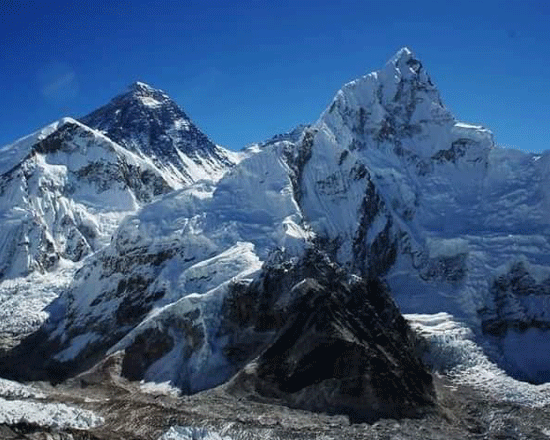
The Everest Base Camp and Gokyo Lake trek offers breathtaking views of the world’s highest mountains, including Mount Everest, Lhotse, Nuptse, and Ama Dablam. The trek features diverse landscapes and six stunning glacial lakes with waters surrounded by snow-capped peaks. You will also see one of Nepal’s largest glaciers, Ngozumpa Glacier. Passing through traditional Sherpa villages like Namche Bazaar and Khumjung provides a glimpse into the rich Sherpa culture. The colorful prayer flags, mani stones, and ancient monasteries add cultural depth to the natural beauty. The trekkers have to do the Chola pass (5420m) between Gokyo Lake and Everest Base Camp during the Everest Base Camp Gokyo Lake trek.
During the EBC Gokyo Lake trek
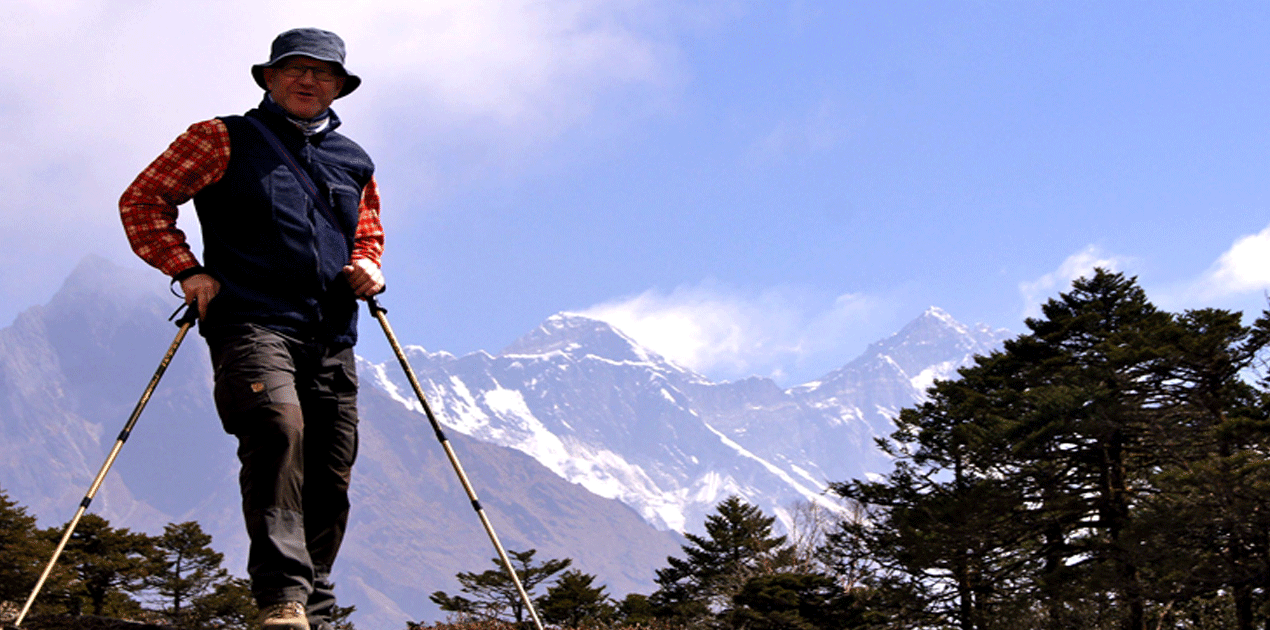
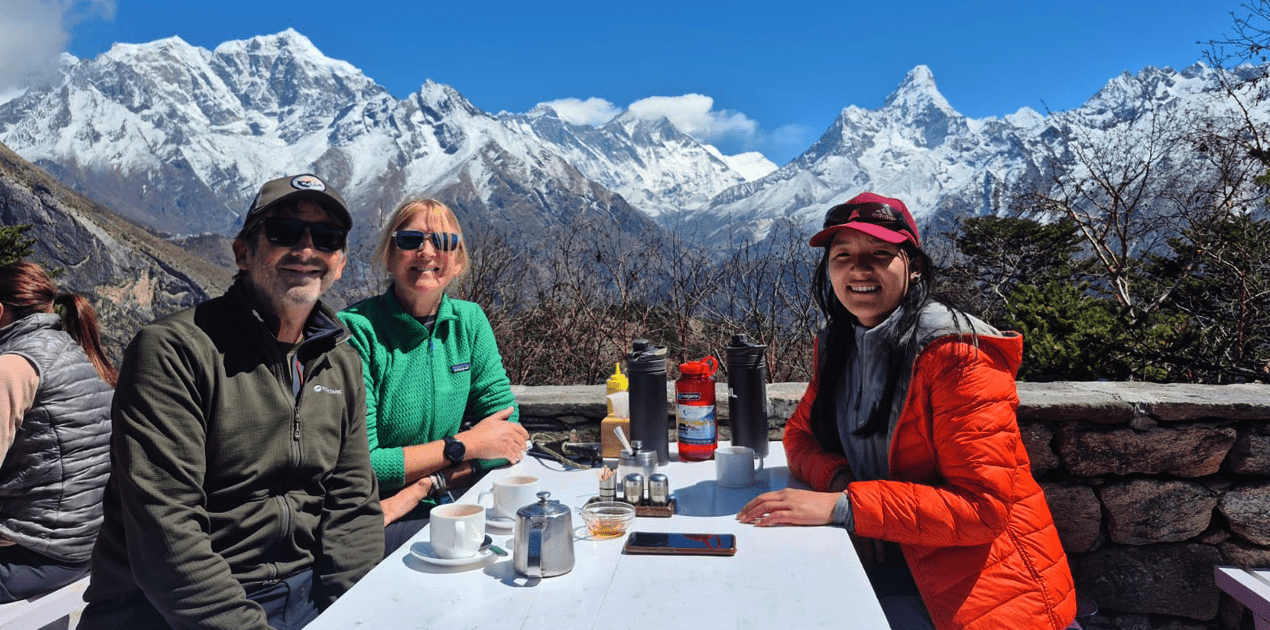
There are three outstanding photographic spots during your Everest Base Camp and Gokyo Lake trek in Nepal: Gokyo Ri Peak (5,357 m), Kala Patthar (5,643 m), and Tengboche Monastery (3,860 m). Each offers beautiful views of the Himalayas from different angles. Everest Base Camp is also one of the most famous attractions of the trek.
Everest Base Camp, Gokyo Lake with the Chola Pass trek, Nepal
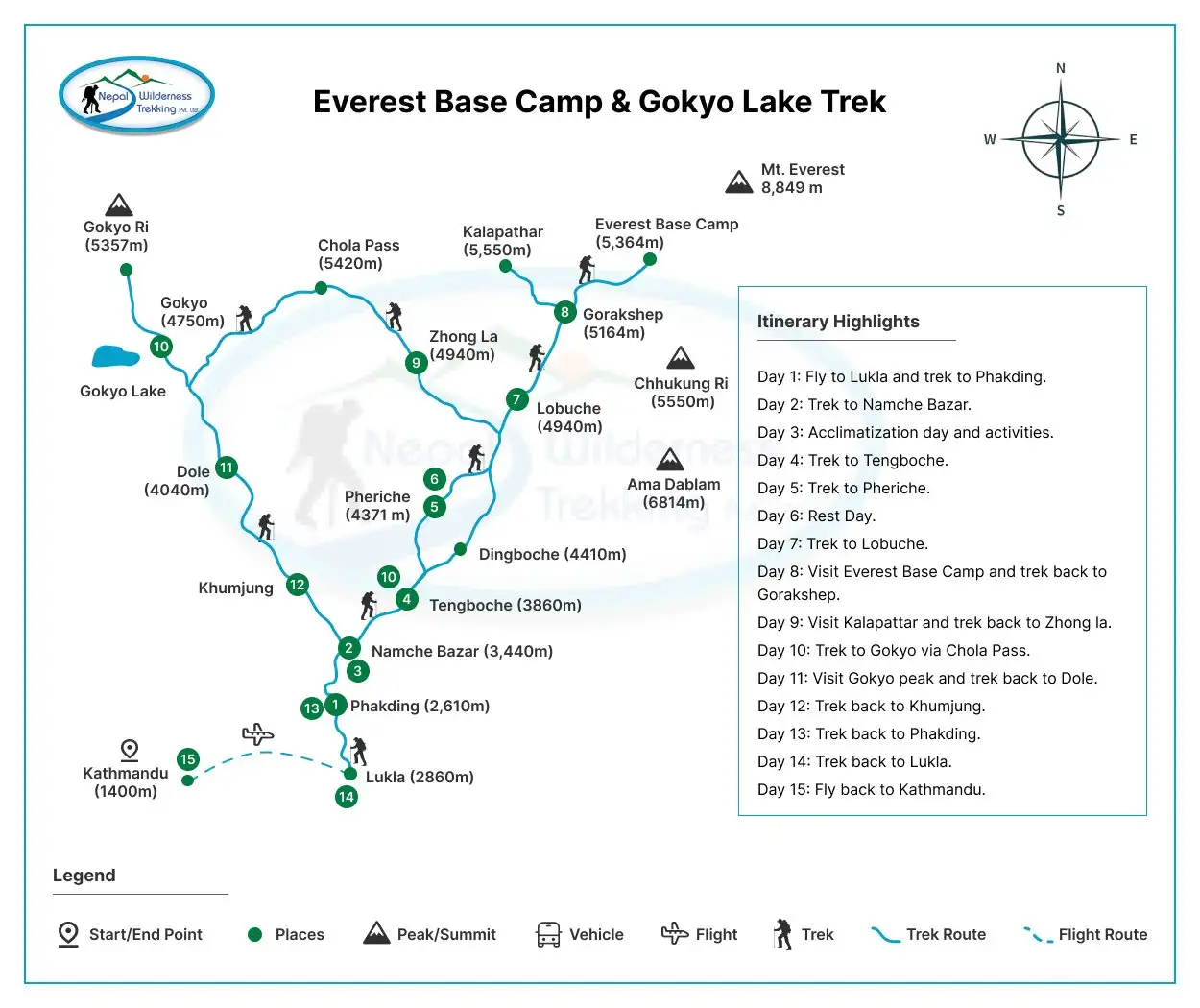
The Everest Base Camp and Gokyo Lake trek itinerary begins with a flight to Lukla Hillary Airport at an altitude of 2,837 meters. Furthermore, on the same day, we trek three hours to Phakding. We will trek to Namche Bazaar on the second day. A small but beautiful Sherpa village, “Namche,” rises 3,440 meters above sea level. Afterwards, we will trek to Tengboche, the famous Guru Rimpoche monastery of the valley. In addition, this trek shows the Tibetan-style Gompa, the Tengboche monastery, which opens at 3 p.m. for prayer time (puja). The next day, we trek to Pheriche, Lobuche, and EBC.
During the 15 days of the Everest Base Camp and Gokyo Lake trek, we will climb Kalapatthar Peak, 5,643 meters above sea level, and trek back to Zhong la. On day 10, we will climb the Gokyo Peak, which is 5,420 m. Afterward, we will go to Dole and Khumjung. Last but not least, after reaching Phakding and then Lukla, we will fly back to Kathmandu. There is also an old route which is called the classical Jiri to Everest base camp trek, which was used on the Everest expedition team in the early Hilary and Tenzing Norgay Sherpa.
Everest Base Camp & Gokyo Lake trek Trails
Trekking to the Gokyo lakes and Everest base camp with Chola Pass through little mountain villages grouped under towering glaciers. The Chola Pass is also called the Gokyo Pass by locals in Nepal. Trek through the legendary Khumbu region of Nepal and enjoy the breathtaking views. It is a place where ancient culture combines with unparalleled natural beauty to create an atmosphere of unparalleled beauty within the world’s most extreme sport.
Gokyo–EBC combined trek is an adventurer’s melting pot
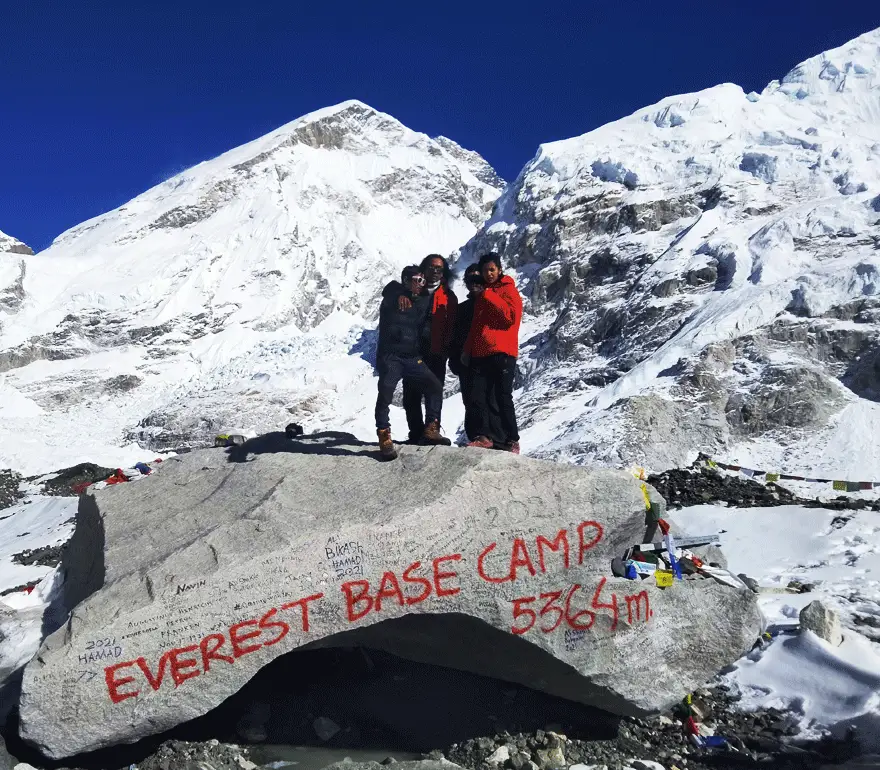
The Everest Base Camp is located 5,364 meters above sea level. During the Everest Base Camp Gokyo trek, you never feel that you have taken enough pictures of the beautiful Himalayan and Everest views. Also, the trek draws mountain lovers from around the world. During the autumn and spring trekking season, you can expect to hear a variety of languages along the trail. In tea houses, strangers from all over the world can discuss and exchange travel experiences with each other. You rarely encounter such diversity on treks.
Gokyo Lake is a piece of heaven!
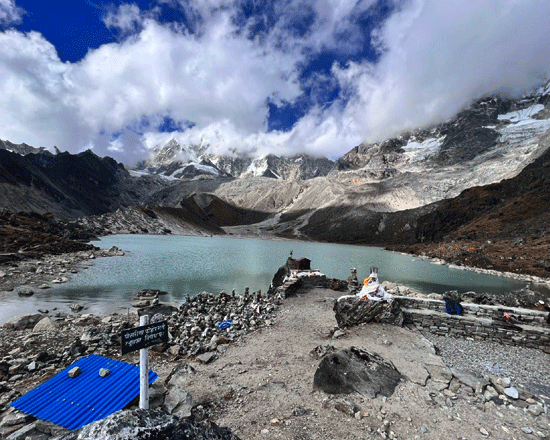
The Gokyo Lakes are located in the Sagarmatha region and the Solukhumbu district of Nepal. The lake is 4,700-5,000 meters (15,400-16,000 feet) above sea level within Everest National Park. Six lakes in the region are among the highest freshwater lakes in the world. Thonak Lake is the largest of these lakes. Since 2007, an area of 7,770 hectares (approximately 30 square kilometers) around Gokyo Lake has been declared a Ramsar site. Who would not be captivated by the beauty of the white mountains surrounding a deep blue lake, lovely ducks floating in love, and luxurious hotels and resorts located in one corner of the Gokyo Lake?
Gokyo Valley Nepal
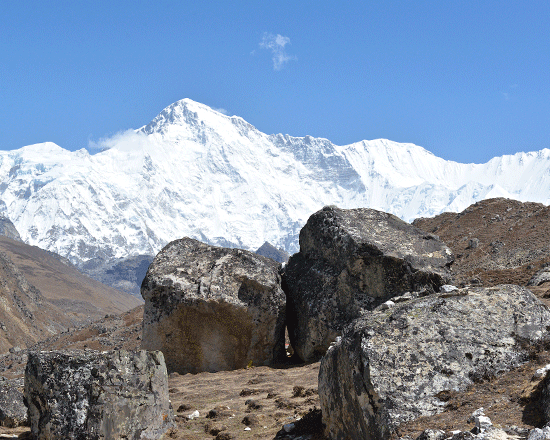
Everyone who visits Gokyo Lake. Earth’s rhythm fulfills, to some extent, those who wish to experience heaven while living. Due to fatigue and altitude, getting here may cause physical and mental problems. However, once you see the beauty of solitary lakes, blue skies, white mountains, and solitary valleys of the Gokyo Pass, Nepal, it also see the beautiful Gokyo Lakes and the challenging Chola Pass. By trekking to Everest Base Camp before crossing the Cho La, you will benefit from the best acclimatization possible and have a greater chance of completing the trek successfully. The side of Gokyo Valley also has beautiful, blue-sky lakes. To combine these with incredible mountain views, a trek in the Gokyo Valley is one of the most beautiful and exciting journeys of a lifetime. It has delightful and clean blue-colored lakes. In addition,
During the 15-day Everest Base Camp Gokyo Lake trek, adventure meets altitude amidst Nepal’s breathtaking Himalayas. Extend your journey with an additional 2 to 3 days to conquer the famed Three Passes, unlocking unparalleled vistas and a profound sense of achievement in this iconic alpine playground.
When is the best time of year to trek to EBC and Gokyo Lake?
There is no doubt that the best time to visit Everest Base Camp with Gokyo Lake is either side of the monsoon season, which lasts from late May to mid-September. September through November, as well as February through May, there is generally good weather, as well as good visibility, and temperatures at Base Camp can reach about -6°C during these periods. When you trek to Everest Base Camp with Gokyo Lake in late April or early May, you may also encounter groups of climbers who are preparing for their summit attempts. Although temperatures in this area are extremely cold between late November and February, around -15°C during the day and even colder at night, clear skies are the norm, with quieter trails and teahouses adding to the sense of unspoiled wilderness during this period
The most suitable SIM card for the EBC Gokyo Trek
A Ncell SIM card is very useful for the Gokyo–EBC combined trek and can be purchased almost anywhere in Kathmandu. Ncell’s network coverage is excellent throughout the trek, except at Gokyo Lake.
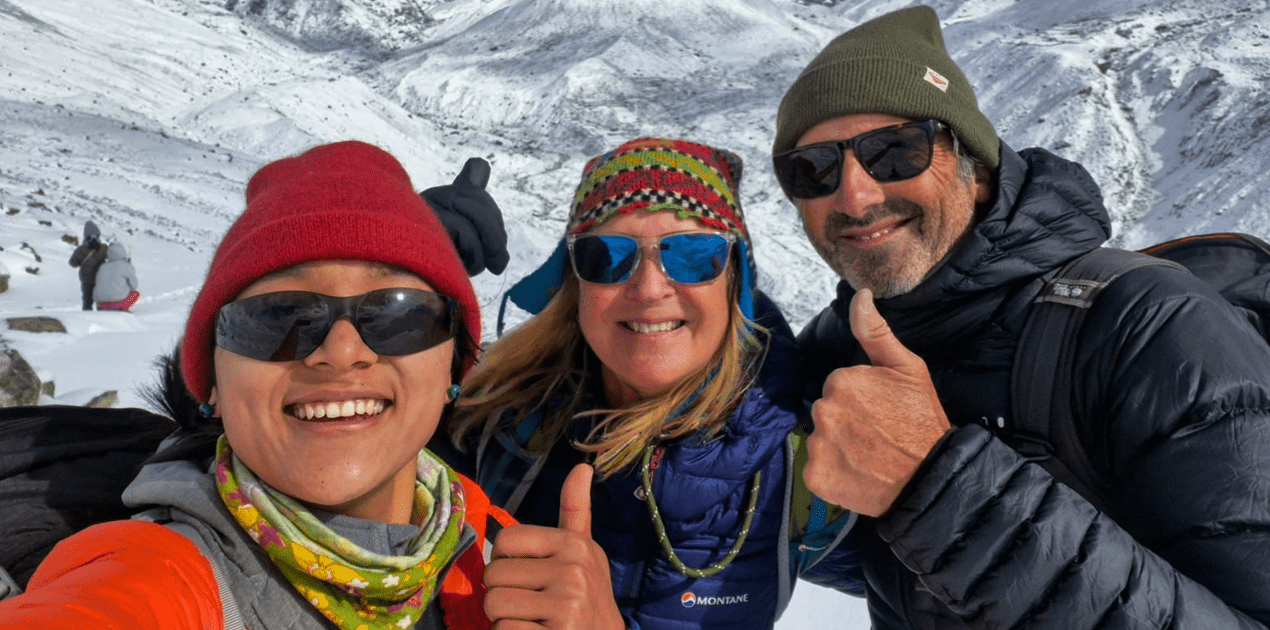
Nepal Wilderness Trek will provide you with a guide who was born in the Everest region. The guide speaks fluent English and is well-educated, ensuring you are in good hands if you need any assistance. We will also provide the necessary permits for entering the Everest Base Camp and the Gokyo Lake trek. Get ready for one of the most memorable journeys of your life with us.
Drinking Water for Your EBC & Gokyo Lake Trek
Please remember to bring or buy Piyush, which is a natural water purification device. You need to drink 3 drops (0.2 ML)per liter and 3 liters a day during the trek, and it is widely accepted in rural trekking contexts for water purification. Piyush was prepared to serve as a chlorination method for disinfecting drinking water to make it fit for trekkers’ consumption.
Departure Note
All published departure dates listed below are 100% guaranteed to operate.
If the scheduled departure dates do not align with your travel plans, we would be pleased to arrange a private trek on your preferred dates at the same cost. Whether you are traveling solo, with family, friends, or as part of a group, we can customize the itinerary to suit your schedule, interests, and trekking experience.
Our team will be delighted to design a personalized itinerary and help you create an unforgettable trekking experience in Nepal.