Upper Mustang Trek – Explore the Hidden Kingdom of Lo Manthang
The Upper Mustang Trek is one of Nepal’s most extraordinary trekking adventures, taking you into the ancient Kingdom of Lo. Tibetan culture, centuries-old monasteries, and dramatic desert landscapes remain remarkably well preserved. Once a restricted kingdom closed to foreign visitors until 1992, Upper Mustang offers a rare opportunity to experience a unique blend of history, spirituality, and breathtaking mountain scenery unlike anywhere else in Nepal.
Located in the rain shadow of the Annapurna and Dhaulagiri mountain ranges, Upper Mustang receives far less rainfall than most trekking regions, making it one of Nepal’s best destinations for trekking during the summer monsoon. The journey follows the Kali Gandaki Valley through traditional villages, colorful cliffs, deep canyons, ancient cave dwellings, and sacred Buddhist monasteries before reaching the legendary walled city of Lo Manthang (3,840 m), the cultural heart of the former Kingdom of Mustang.
Unlike the lush green trails of the Annapurna Base Camp or Everest Base Camp, the Upper Mustang Trek features a striking high-altitude desert landscape shaped by wind and erosion over millions of years. Every day reveals spectacular rock formations, painted cliffs, expansive valleys, and panoramic views of Nilgiri, Annapurna, Dhaulagiri, and other snow-capped Himalayan peaks.
Beyond its natural beauty, the trek offers an authentic cultural experience. Trekkers can visit centuries-old monasteries, spin prayer wheels, walk beneath colorful prayer flags, and interact with the local Loba people, whose traditions, language, architecture, and Buddhist heritage have remained deeply influenced by neighboring Tibet. Depending on your travel dates, you may also witness the vibrant Tiji Festival, one of the Himalayas’ most significant Buddhist celebrations.
Quick Trek Overview
- Trek Region: Upper Mustang, Nepal
- Duration: 14 Days
- Maximum Altitude: Lo Manthang (3,840 m)
- Trek Difficulty: Moderate
- Accommodation: Teahouses / Lodges
- Meals: Breakfast, Lunch & Dinner during the trek
- Best Seasons: March–November (including the monsoon season)
- Restricted Area Permit: Required
- Annapurna Conservation Area Permit (ACAP): Required
- Transportation: Flight or drive between Pokhara and Jomsom
- Trek Start / Finish: Pokhara – Jomsom – Lo Manthang – Pokhara
- Average Walking Time: 5–7 hours per day
Why Choose the Upper Mustang Trek?
While many Himalayan treks are known for towering mountains and alpine forests, Upper Mustang offers an extraordinary journey through a landscape shaped by ancient history, Tibetan Buddhist culture, and dramatic desert scenery. It is one of the few places in the Himalayas where travelers can experience a former Himalayan kingdom that has preserved its traditions, architecture, and way of life for centuries.
The region was once the independent Kingdom of Lo, maintaining close cultural and religious ties with Tibet. The local Loba people continue to practice traditional Tibetan Buddhism, speak their own dialect, and celebrate festivals that have remained largely unchanged for generations. Walking through villages such as Kagbeni, Ghami, Tsarang, and Lo Manthang feels like stepping back in time, where whitewashed houses, ancient monasteries, prayer flags, mani walls, and centuries-old customs are part of everyday life.
The trek is also one of Nepal’s best options during the summer monsoon. While heavy rainfall affects many trekking routes between June and August, Upper Mustang remains relatively dry because the surrounding mountains block most of the monsoon clouds. This makes it one of the few Himalayan trekking destinations suitable for trekking during the rainy season.
Unlike many high-altitude expeditions, the Mustang Trek does not require technical climbing or mountaineering skills. The trails are generally well-established, with gradual ascents and comfortable teahouse accommodation throughout the journey. This makes the trek suitable for active travelers with a good level of fitness seeking a rewarding cultural and scenic adventure rather than an extreme mountaineering challenge.
Upper Mustang Treks Route Overview
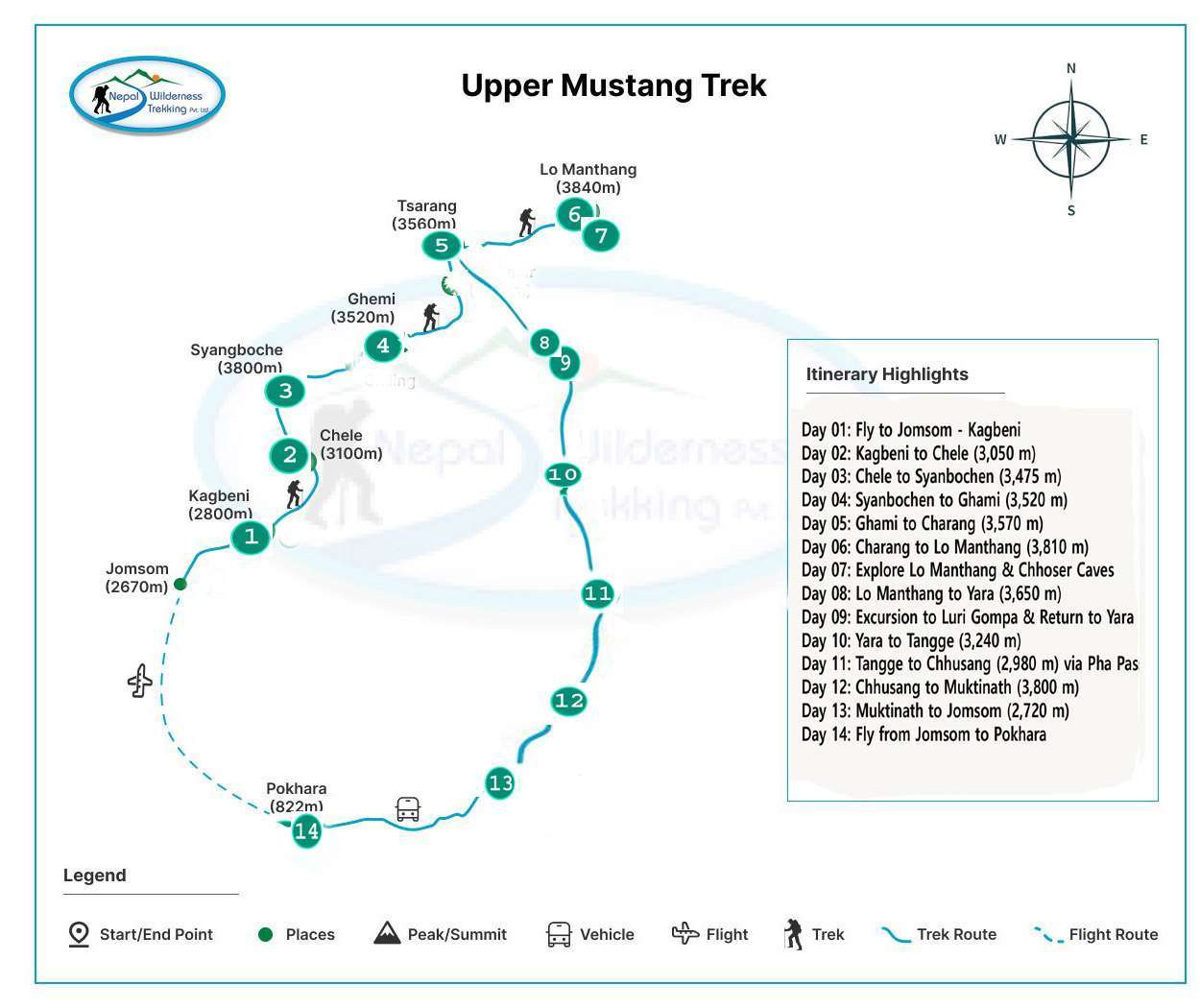
The Upper Mustang trail follows an ancient Himalayan trade route that once connected Nepal with Tibet, leading trekkers through dramatic desert landscapes, traditional Tibetan villages, centuries-old monasteries, and the historic walled city of Lo Manthang. Starting from Pokhara, the journey combines a scenic flight or drive to Jomsom before entering the restricted Upper Mustang region via Kagbeni, the official gateway to the former Kingdom of Lo.
As you ascend northward along the Kali Gandaki Valley, the scenery gradually transforms from rugged river gorges into a spectacular high-altitude desert of colorful cliffs, deep canyons, wind-eroded rock formations, and vast open plateaus. Along the way, you’ll pass remote villages where the traditions, language, architecture, and Buddhist culture of the local Loba people have remained largely unchanged for centuries.
The route is carefully designed to allow gradual altitude gain while providing enough time to explore the region’s unique cultural and natural attractions. Although the highest overnight stop is Lo Manthang (3,840 m), the moderate daily walking distances and well-established teahouse network make the trek accessible to most physically fit travelers.
Pokhara to Jomsom Along the Route
Your adventure begins with a scenic mountain flight to the administrative center of the Mustang District. Surrounded by Nilgiri and Dhaulagiri, Jomsom marks the transition from the green hills of central Nepal to the dry landscapes of the Himalayan rain shadow.
Kagbeni – Gateway to the Hidden Kingdom
Kagbeni serves as the official entry point to the restricted Upper Mustang region. Designed with comfortable walking days and gradual altitude gain, the itinerary allows ample time to appreciate both the landscapes and cultural treasures of this remarkable region.
Whether you are seeking spectacular Himalayan scenery, rich Tibetan Buddhist culture, fascinating history, or a less-crowded trekking experience, the Upper Mustang Trek promises an unforgettable journey into one of the last remaining Himalayan kingdoms.
Through Traditional Mustang Villages
As the trek continues north, you’ll walk through picturesque settlements including Chele, Syangboche, Ghami, and Tsarang. Each village has its own distinctive character, offering opportunities to visit centuries-old monasteries, interact with local families, and experience the rich cultural heritage of the Loba people.
Lo Manthang – The Walled City
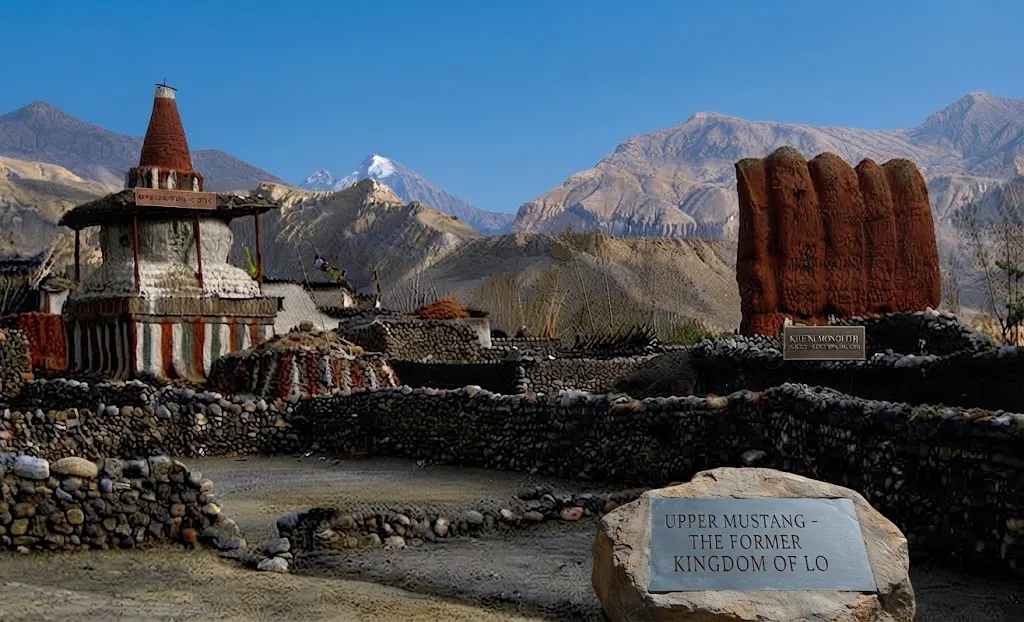
The trek’s highlight is reaching Lo Manthang, the capital of the former Kingdom of Lo. Surrounded by centuries-old defensive walls, the city is home to royal palaces, historic monasteries, traditional homes, and vibrant Tibetan Buddhist culture. Exploring its narrow streets offers a fascinating glimpse into one of the Himalayas’ best-preserved cultural treasures.
Chhoser and the Ancient Sky Caves
Many itineraries include an excursion to Chhoser, where visitors can explore mysterious cliffside caves carved into towering rock formations. Archaeologists believe these caves were used as homes, meditation retreats, and burial chambers dating back thousands of years.
Return Journey
After exploring Lo Manthang and its surrounding attractions, the trek returns through different Mustang villages, offering fresh perspectives of the spectacular landscapes before reaching Jomsom and returning to Pokhara.
Upper Mustang Trek Difficulty
The Trek is considered moderately challenging, making it suitable for trekkers with a reasonable level of fitness and some previous hiking experience. Unlike demanding high-altitude expeditions such as the Everest Three Passes Trek or the Dhaulagiri Circuit Trek, the Mustang Trek does not require technical climbing, mountaineering skills, or use of specialized equipment. However, the combination of high altitude, long walking days, and the region’s dry, windy environment still presents a rewarding physical challenge.
Most trekking days involve 5 to 7 hours of walking, with a few longer days reaching 7 to 8 hours, depending on the itinerary. The trails are generally well-established and easy to follow, passing through traditional villages, open valleys, rocky paths, and gentle mountain passes. While there are occasional steep ascents and descents, there are no dangerous cliff sections or technical obstacles, making the trek accessible to most active travelers.
One of the biggest challenges is the high altitude. The trek gradually ascends to Lo Manthang (3,840 m), and some side trips, such as the ancient sky caves of Chhoser, reach slightly higher elevations. Although the risk of altitude sickness is lower than on treks above 5,000 meters, some trekkers may still experience mild symptoms such as headaches, fatigue, or shortness of breath. A well-planned itinerary with gradual elevation gain, proper hydration, and adequate rest significantly reduces these risks.
Is the Mustang Trek Suitable for Beginners?
Yes, the Upper Mustang Trek can suit beginners who are in good physical condition and prepared for several consecutive days of hiking. Previous trekking experience is helpful but not essential. If you exercise regularly, enjoy long walks, and participate in hiking, cycling, or running, you will find the trek manageable.
For beginner trekkers, hiring an experienced local guide is highly recommended. A guide provides valuable assistance with navigation, altitude awareness, local culture, and daily logistics, allowing you to enjoy the journey with greater confidence and safety.
What Makes the Trek Challenging?
Although the trek is considered moderate, several factors contribute to its difficulty:
- High altitude, with overnight stays up to 3,840 m.
- Walking 5–7 hours daily for nearly two weeks.
- Rocky and uneven trails in some sections.
- Strong afternoon winds, especially in the Kali Gandaki Valley.
- Dry climate that requires regular hydration.
- In remote areas, medical facilities and services are limited.
Fitness Required for the Upper Mustang Trek
You do not need to be an athlete, but good overall fitness will make the trek more enjoyable. We recommend preparing for at least 6 to 8 weeks before your trip by focusing on activities that improve endurance and leg strength.
Helpful training includes:
- Regular hiking on hills or uneven trails.
- Walking 10–15 km several times a week.
- Stair climbing or uphill walking.
- Cycling, swimming, or jogging to improve cardiovascular fitness.
- Light strength training for your legs and core.
- Practicing with a daypack similar to what you’ll carry during the trek.
Tips to Make the Trek Easier
- Walk at a slow, steady pace instead of rushing.
- Drink 3–4 liters of water each day to stay hydrated.
- Start trekking early in the morning to avoid strong afternoon winds.
- Eat balanced meals to maintain your energy levels.
- Get plenty of rest each night.
- Inform your guide immediately if you notice symptoms of altitude sickness.
- Follow your guide’s advice on acclimatization and pacing.
- Wear comfortable, well-broken-in trekking boots with good ankle support.
Upper Mustang Trek Difficulty at a Glance
- Overall Difficulty: Moderate
- Maximum Altitude: 3,840 m (Lo Manthang)
- Trek Duration: 14 Days
- Daily Walking Time: 5–7 Hours
- Trail Condition: Well-established with some rocky sections
- Technical Climbing: Not Required
- Suitable for Beginners: Yes, with good fitness
- Altitude Sickness Risk: Moderate
- Best Preparation: Cardiovascular fitness and endurance training.
Who Is the Trek Suitable For?
The Upper Mustang Trek is an excellent choice for travelers seeking a unique combination of Himalayan scenery, ancient Tibetan culture, and a less-crowded trekking experience. Although the trek reaches an altitude of 3,840 meters (12,598 ft) at Lo Manthang, it follows a gradual route with comfortable teahouse accommodation, making it achievable for most physically fit trekkers.
Whether you are trekking in Nepal for the first time or have already explored famous routes like the Annapurna Circuit or Everest Base Camp, the Upper Mustang Trek offers a completely different experience through one of the Himalayas’ most culturally preserved regions.
First-Time Trekkers
If you are new to trekking but maintain a good level of fitness, the Upper Mustang Trek is a rewarding introduction to high-altitude trekking. The route does not involve technical climbing, glaciers, or dangerous mountain passes, allowing beginners to enjoy the adventure with proper preparation and the support of an experienced guide.
Experienced Trekkers
For experienced hikers, Upper Mustang offers something beyond mountain scenery. Its ancient monasteries, medieval villages, hidden valleys, and rich Tibetan Buddhist heritage create a cultural journey unlike any other trekking destination in Nepal.
Photographers and Nature Lovers
Upper Mustang is a paradise for photographers. The region’s colorful rock formations, dramatic canyons, traditional mud-brick villages, ancient monasteries, and panoramic Himalayan views provide endless opportunities for landscape, architecture, wildlife, and cultural photography.
Culture and History Enthusiasts
Travelers interested in history, archaeology, and local traditions will find Upper Mustang particularly fascinating. From the ancient walled city of Lo Manthang and centuries-old monasteries to mysterious sky caves and former salt trade routes, the region preserves a remarkable cultural heritage that has changed very little over time.
Solo Travelers
Solo trekkers looking for a safe and well-organized adventure will appreciate the welcoming local communities, established teahouse network, and the expertise of licensed local guides. Since Upper Mustang is a restricted area, trekking with a registered guide is mandatory, ensuring a safer and more informative experience.
Couples and Friends
Whether celebrating a special occasion or simply exploring the Himalayas together, couples and groups of friends often choose Upper Mustang for its peaceful trails, breathtaking scenery, and authentic cultural encounters. The quieter atmosphere compared to Nepal’s busier trekking routes creates a more relaxed and personal experience.
Senior Trekkers
Many active travelers in their 50s, 60s, and even 70s complete the Upper Mustang Trek each year. As long as you are in good health and comfortable walking several hours a day at a steady pace, with a well-planned itinerary and regular rest stops, the journey will be enjoyable.
Families with Older Children
Families with teenagers who enjoy hiking and outdoor adventures can also consider the Upper Mustang Trek. The fascinating culture, unique landscapes, and historical sites make the journey both educational and memorable. Children should have previous hiking experience and be comfortable with multiple days of walking at high altitude.
Is the Upper Mustang Trek Right for You?
The Upper Mustang Trek is an ideal choice if you want to:
- Experience authentic Tibetan Buddhist culture in Nepal.
- Explore the ancient walled city of Lo Manthang.
- Trek through spectacular desert landscapes and colorful canyons.
- Enjoy a quieter trekking route with fewer crowds.
- Travel during the summer monsoon in one of Nepal’s driest trekking regions.
- Discover ancient monasteries, sky caves, and centuries-old trade routes.
- Combine cultural exploration with moderate Himalayan trekking.
If these experiences match what you’re looking for, the Upper Mustang Trek is one of Nepal’s most rewarding and unforgettable adventures.
Upper Mustang Trek Altitude, Acclimatization & Altitude Sickness
Although the trek reaches a maximum altitude of 3,840 meters (12,598 ft) at Lo Manthang, it is generally considered a moderate-altitude trek with a lower risk of altitude sickness than routes such as the Everest Base Camp Trek, Manaslu Circuit Trek, or Annapurna Circuit Trek. Nevertheless, trekking above 3,000 meters can affect anyone, regardless of age or fitness level, making proper acclimatization and responsible trekking essential.
Our itinerary is carefully designed to increase altitude gradually, giving your body sufficient time to adapt to the thinner air. Combined with a steady walking pace, regular hydration, and experienced local guides, this approach significantly reduces the risk of Acute Mountain Sickness (AMS) while allowing you to fully enjoy the spectacular landscapes and rich cultural heritage of Upper Mustang.
Upper Mustang Trek Altitude Profile
Pokhara
Jomsom
Kagbeni
Chele
Syangboche
Ghami
Tsarang
Lo Manthang
Chhoser (Optional Excursion)
The gradual ascent through these villages allows most trekkers to acclimatize naturally, making the journey safer and more comfortable than itineraries with rapid altitude gain.
What Is Acute Mountain Sickness (AMS)?
Acute Mountain Sickness (AMS) is a condition that can occur when ascending to higher elevations faster than your body can adapt to lower oxygen levels. Symptoms usually appear above 2,500–3,000 meters, although not everyone is affected.
Common symptoms include:
- Headache
- Loss of appetite
- Nausea or mild vomiting
- Dizziness
- Fatigue or unusual tiredness
- Difficulty sleeping
- Shortness of breath during physical activity
These symptoms are often mild if recognized early and managed properly. The most effective treatment is to stop ascending, rest, and descend if symptoms worsen.
How to Prevent Altitude Sickness
The majority of trekkers complete the Trek without serious altitude-related problems by following a few simple precautions:
- Walk at a slow and comfortable pace.
- Drink 3–4 liters of water each day to stay well hydrated.
- Eat regular, nutritious meals even if your appetite decreases.
- Avoid excessive alcohol and smoking while trekking.
- Get adequate sleep each night.
- Listen to your body rather than trying to keep up with faster trekkers.
- Inform your guide immediately if you experience any symptoms of AMS.
Your guide monitors your condition throughout the trek and can adjust the pace or recommend additional rest if necessary.
Our Approach to Safe Acclimatization
At Nepal Wilderness Trekking, your safety is our highest priority. Our itineraries are planned to provide a gradual ascent with sensible daily walking distances, allowing your body to adapt naturally to the increasing altitude.
Our experienced guides are trained to recognize the early signs of altitude sickness and will regularly check on your health throughout the trek. If any symptoms develop, they will advise the appropriate course of action, whether that means slowing the pace, taking additional rest, or descending if required.
This careful approach helps ensure a safe, enjoyable, and memorable trekking experience for all participants.
Who Is More Likely to Experience AMS?
Altitude sickness can affect anyone, regardless of age, fitness level, or previous trekking experience. Even experienced mountaineers can develop AMS if they ascend too quickly.
You may have a higher risk if you:
- Ascend too rapidly without proper acclimatization.
- Become dehydrated.
- Ignore early symptoms.
- Have recently recovered from illness.
- Continue climbing despite feeling unwell.
Being physically fit is beneficial for trekking, but it does not make you immune to altitude sickness.
Essential Tips for a Safe Trek
To help you stay healthy throughout the Upper Mustang Trek, we recommend:
- Begin each day with a relaxed and steady pace.
- Carry a reusable water bottle or hydration bladder.
- Protect yourself from the strong mountain sun by wearing sunscreen, sunglasses, and a wide-brimmed hat.
- Dress in layers, as temperatures can change quickly between morning and afternoon.
- Avoid overexertion, especially during the first few days.
- Follow your guide’s instructions at all times.
Key Takeaway
The Upper Mustang Trek is one of Nepal’s most accessible high-altitude adventures, offering a gradual ascent, comfortable teahouse accommodation, and a well-established trekking route. While the possibility of altitude sickness should never be overlooked, following a sensible itinerary, maintaining proper hydration, and trekking with experienced local guides greatly reduce the risk.
Remember that every trekker adapts differently to altitude. The key to a safe and enjoyable journey is to walk at a comfortable pace, listen to your body, and allow enough time for acclimatization. By respecting the altitude and following your guide’s advice, you can fully appreciate the extraordinary landscapes, ancient monasteries, and unique culture of the Hidden Kingdom of Mustang.
Best Time for the Mustang Trek
The Mustang Trek can be enjoyed for most of the year, but the best seasons are spring (March to May) and autumn (September to November), when the weather is generally stable, skies are clear, and mountain views are at their finest. Unlike many other trekking destinations in Nepal, Upper Mustang is located in the rain shadow of the Annapurna and Dhaulagiri mountain ranges, making it one of the few Himalayan regions that receives very little rainfall during the summer monsoon.
Because of this unique geographical location, the Upper Mustang Lo Manthang Trek is also an excellent choice for trekking between June and August, when heavy rain affects popular routes such as the Everest Base Camp Trek, Annapurna Base Camp Trek, and Langtang Valley Trek. Each season offers its own advantages, and the best time ultimately depends on your interests, preferred weather, and travel schedule
Spring (March to May) – The Most Popular Season
Spring is widely regarded as one of the best times to visit Upper Mustang. The weather is generally dry, temperatures are comfortable, and visibility is excellent, offering breathtaking views of Dhaulagiri, Nilgiri, Annapurna, and the surrounding Himalayan peaks.
The colorful desert landscapes contrast beautifully with the snow-covered mountains, making this season especially popular among photographers and nature lovers. Villages are lively, trails are in good condition, and the pleasant daytime temperatures create ideal trekking conditions.
If you plan your visit in May, you may also have the opportunity to witness the famous Tiji Festival in Lo Manthang, a vibrant three-day Buddhist celebration featuring traditional masked dances, religious ceremonies, and cultural performances.
Highlights of Spring
- Clear mountain views
- Comfortable daytime temperatures
- Colorful landscapes
- Excellent photography conditions
- Opportunity to experience the Tiji Festival (dates vary)
Summer / Monsoon (June to August) – One of Nepal’s Best Monsoon Treks
While the monsoon season brings heavy rainfall to much of Nepal, Upper Mustang remains relatively dry because it lies within the Himalayan rain shadow. This makes it one of the country’s best destinations for trekking during the summer months.
The trails are generally dry, the air is fresh, and the surrounding mountains often enjoy clear mornings. However, strong afternoon winds are common, so early starts are highly recommended.
This is an excellent season for travelers who prefer quieter trails and want to avoid the crowds found in more popular trekking regions.
Highlights of Summer
- Minimal rainfall
- Fewer trekkers
- Comfortable temperatures
- Unique opportunity to trek during Nepal’s monsoon season
- Dry desert landscapes with dramatic scenery
Autumn (September to November) – Stable Weather and Crystal-Clear Views
Autumn is another outstanding season for the Mustang Trek. Following the monsoon, the atmosphere is exceptionally clear, providing spectacular panoramic views of the Himalayas.
Daytime temperatures remain pleasant, making trekking comfortable, while evenings and mornings become cooler as winter approaches. This is one of the busiest trekking seasons in Nepal, so early booking is recommended.
Highlights of Autumn
- Outstanding mountain visibility
- Stable weather
- Pleasant trekking temperatures
- Ideal conditions for photography
- Excellent trail conditions
Winter (December to February) – A Quiet Himalayan Experience
Winter offers a peaceful trekking experience with very few visitors. The landscapes remain spectacular, but temperatures drop significantly, especially during the mornings and evenings.
Higher villages may experience snowfall, and some local families temporarily move to lower elevations during the coldest months. While trekking is still possible, warm clothing and good preparation are essential.
Winter is best suited for experienced trekkers who enjoy solitude and are comfortable trekking in colder conditions.
Highlights of Winter
- Peaceful trails
- Beautiful winter scenery
- Excellent for experienced trekkers seeking solitude
- Crisp mountain views on clear days
Upper Mustang Weather by Month
January
February
March
April
May
-
Weather: Warm, stable weather, Tiji Festival often held
-
Trekking Conditions: Excellent
June
July
August
September
October
November
-
Weather: Cool, dry, and clear
-
Trekking Conditions: Excellent
December
Accommodation During the Trek
Accommodation is provided in traditional teahouses and family-run lodges located in villages along the trekking route. Most rooms are simple, clean, and comfortable, typically featuring twin beds, mattresses, pillows, blankets, and basic furniture.
Bathrooms are usually shared, although some lodges in larger villages such as Jomsom, Kagbeni, and Lo Manthang may offer private rooms with attached bathrooms depending on availability.
While luxury accommodation is limited in Upper Mustang, the teahouses provide everything needed for a comfortable night’s rest after a day of trekking.
Typical accommodation facilities include:
- Comfortable twin-sharing rooms
- Warm dining halls with heating during colder months
- Shared or private bathrooms (depending on the lodge)
- Basic mattresses, pillows, and blankets
- Friendly family-run hospitality
- Charging facilities (usually available for an additional fee)
Meals on the Upper Mustang Trek
One of the highlights of trekking in Nepal is enjoying freshly prepared meals each day. The teahouses along the Upper Mustang route serve a mix of Nepali, Tibetan, and simple international dishes, providing plenty of options for vegetarians and non-vegetarians alike.
Popular meals include:
Breakfast
- Tibetan bread with honey or jam
- Chapati
- Pancakes
- Porridge
- Eggs (boiled, fried, scrambled, or omelets)
- Muesli with milk or yogurt
- Tea, coffee, or hot chocolate
Lunch and Dinner
- Dal Bhat (rice, lentil soup, vegetables, and pickles)
- Fried rice
- Vegetable or egg noodles
- Thukpa (Tibetan noodle soup)
- Momo (dumplings)
- Pasta and macaroni
- Pizza (available in some villages)
- Fried potatoes
- Seasonal vegetable dishes
Dal Bhat is the most popular trekking meal because it is nutritious, freshly prepared, and often comes with free refills at many teahouses.
Drinking Water
Safe drinking water is available throughout the trek.
Trekkers can purchase:
- Boiled drinking water
- Bottled mineral water (available in most villages)
- Filtered or purified water at some teahouses
To reduce plastic waste, we recommend carrying a reusable water bottle and using water purification tablets or a portable water filter whenever possible.
Staying well hydrated is especially important in Upper Mustang’s dry climate. Most trekkers should aim to drink 3–4 liters of water per day.
Electricity & Charging Facilities
Electricity is available in nearly all villages along the Upper Mustang Trek.
Most teahouses offer charging facilities for:
- Mobile phones
- Cameras
- Smartwatches
- Power banks
- Other small electronic devices
Charging is usually available for a small additional fee, particularly in remote villages. Bringing a high-capacity power bank is highly recommended, especially if you plan to take many photos or videos.
WiFi & Mobile Network
Internet access has improved considerably in Upper Mustang, although speeds and reliability vary from village to village.
Most larger villages, including Jomsom, Kagbeni, and Lo Manthang, offer WiFi through local teahouses, usually for an additional charge. Connections are suitable for basic messaging and emails but may be slow for video calls or large file uploads.
Mobile coverage is available in many parts of the trek through Nepal Telecom (NTC), while Ncell coverage is more limited in remote sections. Signal strength can change depending on your location and weather conditions.
Hot Showers
Many teahouses provide hot showers, especially in larger villages.
Depending on the lodge, showers may be:
- Gas-heated
- Solar-heated
- Bucket showers with hot water
A small fee is usually charged for hot showers in remote areas.
Dietary Requirements
Vegetarian meals are widely available throughout the trek, and many teahouses can also prepare vegan dishes with advance notice.
If you have food allergies or special dietary requirements, please let us know before your trek so we can inform your guide and make appropriate arrangements whenever possible.
Tips for Food & Accommodation
To make your trekking experience more comfortable, we recommend:
- Carry a reusable water bottle and purification tablets.
- Bring snacks such as energy bars, nuts, or dried fruit for longer walking days.
- Carry a power bank for charging electronic devices.
- Keep small cash available for WiFi, charging, and hot showers.
- Inform your guide of any dietary requirements before the trek begins.
- Try local specialties such as Tibetan bread, thukpa, and freshly prepared Dal Bhat for an authentic Himalayan dining experience.
What to Expect
Although the facilities in Upper Mustang are more basic than those found in cities, they are clean, welcoming, and perfectly suited to the region’s remote environment. Comfortable teahouses, freshly cooked meals, warm hospitality, and the opportunity to experience traditional Mustang culture make each overnight stay an enjoyable part of the adventure.
Upper Mustang Trek Permits & Entry Requirements
The Upper Mustang Trek is one of Nepal’s restricted area treks, requiring special permits issued by the Government of Nepal. These regulations help preserve the region’s unique Tibetan culture, ancient heritage, and fragile environment while promoting responsible and sustainable tourism.
Before entering Upper Mustang, all trekkers must obtain the required permits through a government-registered trekking agency and travel with a licensed trekking guide. At Nepal Wilderness Trekking, we take care of the entire permit application process, ensuring a smooth and hassle-free experience so you can focus on enjoying your adventure.
Upper Mustang Restricted Area Permit (RAP)
The Restricted Area Permit (RAP) is mandatory for all foreign trekkers entering Upper Mustang beyond Kagbeni.
Permit Fee (Effective from 2026)
- USD 50 per person per day
The permit is issued by Nepal’s Department of Immigration and is required for all days spent within the restricted area between Kagbeni and Lo Manthang.
Annapurna Conservation Area Permit (ACAP)
As the trek passes through the Annapurna Conservation Area, all trekkers must also obtain an Annapurna Conservation Area Permit (ACAP).
Permit Fee
- NPR 3,000 per person for foreign nationals
- NPR 1,000 per person for SAARC nationals
The ACAP fee supports conservation projects, trail maintenance, wildlife protection, and sustainable tourism initiatives throughout the Annapurna region.
Can I Trek Upper Mustang Solo?
Yes. Since 2026, the Government of Nepal has allowed solo travelers to trek in Upper Mustang without requiring a minimum group of two people.
However, solo trekking without a guide is still not permitted. Whether you are traveling alone, with a friend, or as part of a group, you must:
- Obtain the required permits through a registered Nepali trekking agency.
- Be accompanied by a licensed trekking guide throughout the trek.
- Carry your valid permits while trekking in the restricted area.
This updated regulation gives solo travelers greater flexibility while continuing to ensure visitor safety and the protection of Upper Mustang’s unique cultural and natural heritage.
Is a Licensed Guide Mandatory?
Yes. All trekkers visiting Upper Mustang must be accompanied by a government-licensed trekking guide. Independent trekking without a guide is not permitted in the restricted area.
Beyond meeting the legal requirement, an experienced guide enhances your journey by sharing local history, Tibetan Buddhist traditions, cultural insights, and ensuring your safety throughout the trek. Your guide also assists with logistics, communication, and any unexpected situations that may arise along the trail.
Documents Required for Permit Processing
To arrange your permits, we generally require:
- A clear copy of your passport
- A valid Nepal visa
- One recent passport-sized photograph (digital copy is acceptable)
- Your planned trekking dates and itinerary
We recommend sending these documents before your arrival in Nepal so we can prepare your permits in advance.
How Long Does Permit Processing Take?
Permit processing is usually completed within one business day, provided all required documents have been submitted. During the busy spring and autumn trekking seasons, applying a few days in advance is recommended.
Our team handles all permit applications and government formalities on your behalf, saving you time and ensuring everything is ready before your trek begins.
Why Are These Permits Required?
Upper Mustang remained closed to foreign visitors until 1992, helping preserve its remarkable cultural heritage, traditional way of life, and fragile Himalayan environment.
Today, permit fees contribute to:
- Preserving the unique culture and traditions of the Loba people.
- Protecting centuries-old monasteries, villages, and archaeological sites.
- Supporting sustainable tourism and local communities.
- Conserving the fragile ecosystem of the Upper Mustang region.
- Managing tourism responsibly while maintaining the region’s cultural authenticity.
Permit Summary
- Upper Mustang Restricted Area Permit (RAP): USD 50 per person per day
- Annapurna Conservation Area Permit (ACAP): NPR 3,000 (Foreign Nationals) / NPR 1,000 (SAARC Nationals)
- Licensed Trekking Guide: Required for all trekkers
- Registered Trekking Agency: Permit processing handled by the agency
Note: Permit fees and trekking regulations are determined by the Government of Nepal and may change. We recommend confirming the latest requirements before your trip. Our team will always provide you with the most up-to-date information when planning your Upper Mustang Trek.