Upper Mustang Jeep Tour: Discover the Last Forbidden Kingdom of Nepal without Trekking
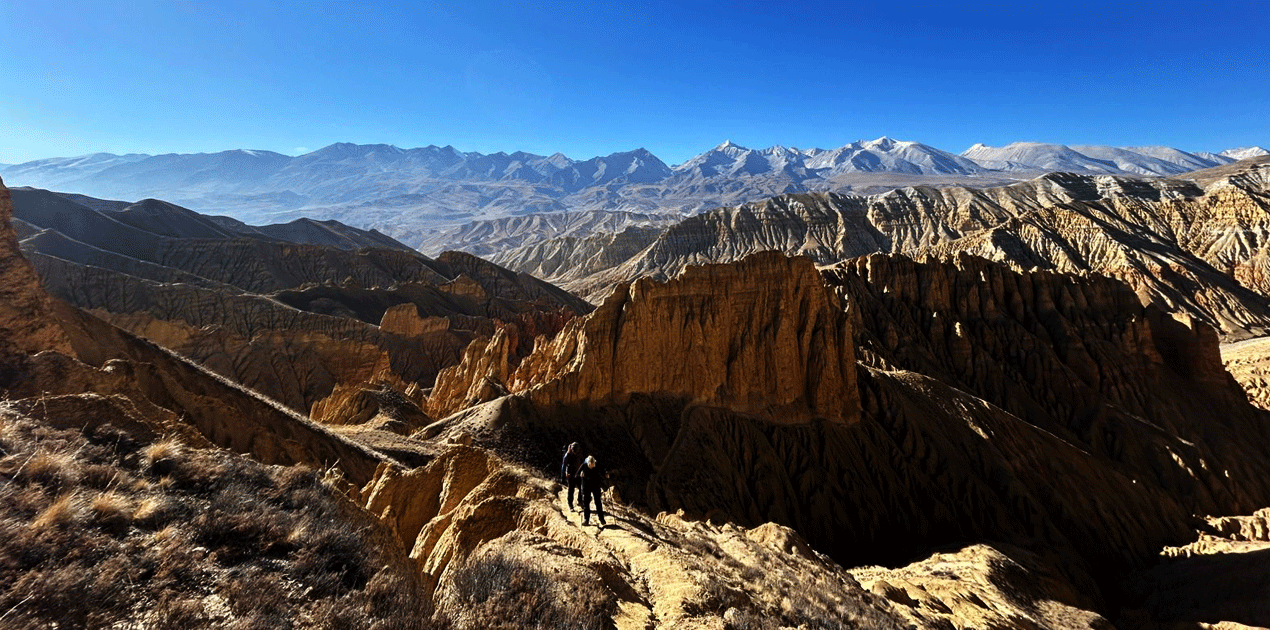
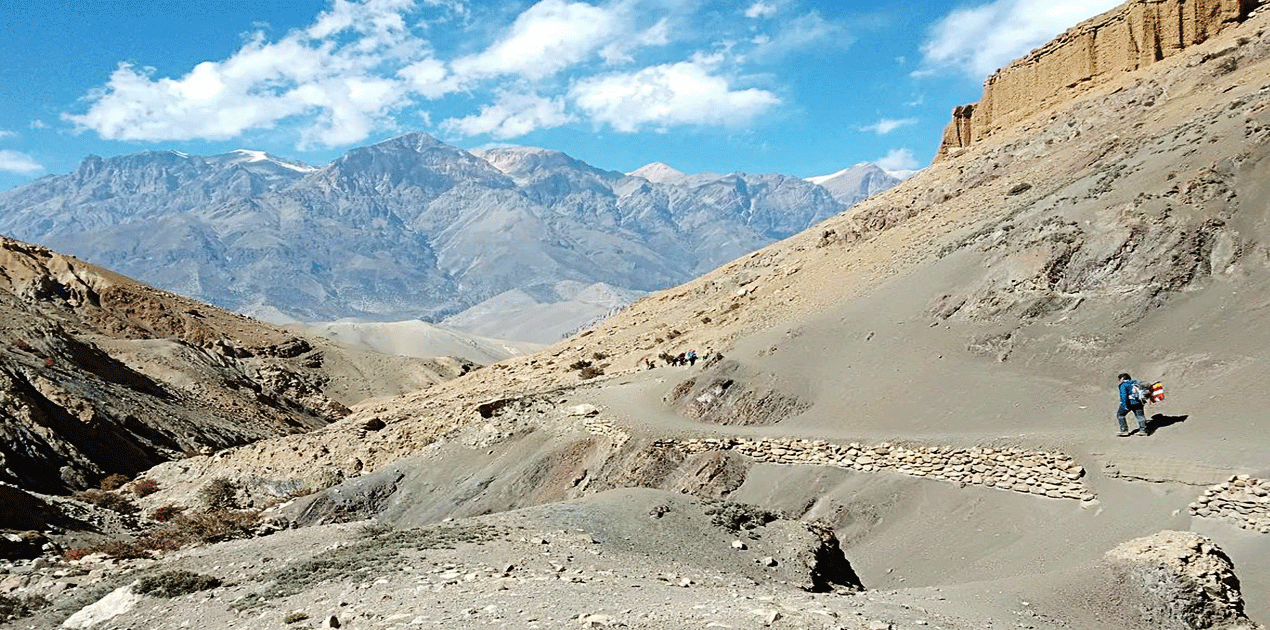
The Upper Mustang Jeep Tour is a comfortable and time-efficient way to explore the remote trans-Himalayan region of Upper Mustang, once known as the Kingdom of Lo. Located north of the main Himalayan range in a rain shadow, this restricted region has preserved its ancient Tibetan-influenced culture, traditional villages, and unique desert-like landscapes for centuries. The journey offers a striking contrast of arid cliffs, deep canyons, and colorful rock formations, combined with a rich spiritual heritage seen in its monasteries, chortens, and prayer walls.
The tour usually begins from Pokhara or Kathmandu and follows the scenic Kali Gandaki Valley, passing through Jomsom and Kagbeni, which serve as the official gateway to Upper Mustang. From Kagbeni, the route continues northward into the restricted region, gradually ascending toward Lo Manthang, the ancient walled capital of the former Kingdom of Lo.
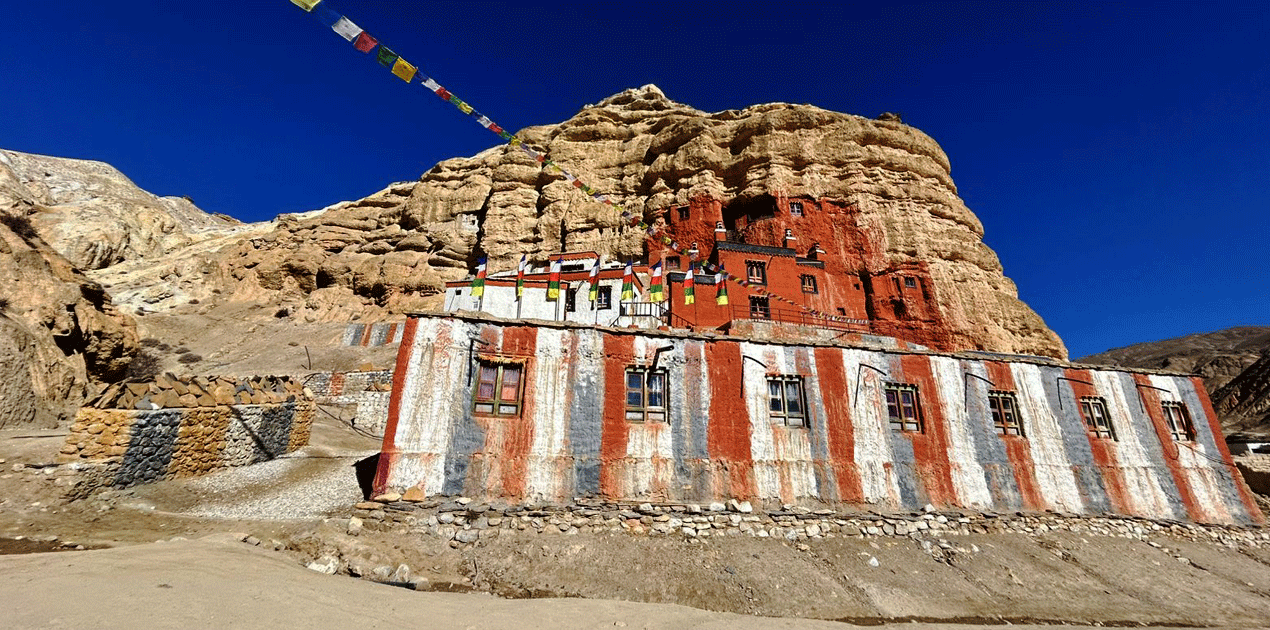
The Upper Mustang Jeep Tour offers an opportunity to experience a remote region in a short time compared to a traditional trekking route while still allowing meaningful stops at important cultural and historical sites. Key highlights include centuries-old monasteries such as Ghar Gompa, traditional settlements, sacred stupas, and the fascinating sky caves of Chhoser, carved high into the cliffs. This journey offers a rare opportunity to explore one of Nepal’s most preserved Himalayan cultural landscapes while traveling in relative comfort.
Why choose an Upper Mustang Jeep Tour?
-
Fast access: Reach Lo Manthang in days rather than the week that trekking requires. Jeep travel is ideal for families, groups with limited time, or travelers who prefer comfort while still seeing remote landscapes. Reach Lo Manthang in days rather than the week that trekking requires. Jeep travel is ideal for families, groups with limited time, or travelers who prefer comfort while still seeing remote landscapes. The drive distance from Jomsom/Kagbeni to Lo Manthang can take many hours on rough tracks and requires experienced drivers.
-
Cultural immersion: Visit Lo Manthang’s walled city, ancient monasteries, and caves; book the trip with the Tiji festival for a rare, living ritual performance.
-
Accessibility across seasons: Rain-shadow, which results in dry land, but roads remain seasonal and can be rough; plan for a rugged ride.
Short history
Upper Mustang was historically the Kingdom of Lo, ruled by hereditary kings (Gyelpo) and culturally tied to Tibet. The area remained largely closed to outsiders until the early 1990s; this restriction preserved the Tibetan language, monastic traditions, and medieval architecture that visitors see today. Lo Manthang served as the kingdom’s capital and still houses palaces and monasteries dating back centuries.
The Kingdom of Lo (Upper Mustang) existed as a separate and sovereign Himalayan kingdom because of a rare combination of geography, trade power, political timing, and Tibetan cultural alignment. When Nepal was unified from the Gorkha Palace under Prithvi Narayan Shah, Lo was not conquered militarily. Instead, it entered into a special relationship with the Shah monarchy, retaining its king and internal autonomy while acknowledging Kathmandu’s sovereignty.
Permits, regulations & fees
For the Upper Mustang Jeep Tour, foreign visitors must obtain the Restricted Area Permit (RAP) and the Annapurna Conservation Area Project (ACAP) Permit. Permit rules and fees are set by Nepal’s immigration and conservation authorities. For families and groups, start the permit process early, as group paperwork and local contact can add processing time.
Cultural Highlights & Festivals
The annual Tiji Festival, usually held in mid-May, brings Lo Manthang to life with a three-day ritual drama that reenacts the victory of good over evil. To attend the Tiji Festival, you need to plan well in advance, as festival dates are fixed and permits are limited and highly sought after.
Practical experience: vehicles, drivers, and safety
-
Use high-clearance 4×4 jeeps and local drivers experienced with Mustang tracks.
-
Carry extra fuel, spare tires, water, and an emergency medical kit; phone/internet coverage is intermittent.
-
The temperature can be extreme; pack layered clothing and sun protection.
-
Respect local rules (photography restrictions in monasteries, ask permission before photographing people).
Responsible Travel & Conservation
Upper Mustang faces climate and water stresses; villages are adapting to changing conditions and migration. Encourage low-impact travel, support local homestays, hire local guides and drivers, and respect cultural norms. Mention carbon-offset or community projects your company supports, if applicable; this resonates strongly with eco-conscious travelers.
Historical Highlights Along the Upper Mustang Jeep Tour Route
Kagbeni: Ancient Gateway to the Forbidden Kingdom
Kagbeni has served for centuries as the traditional entry point to the former Kingdom of Lo (Upper Mustang).
Key historical notes:
-
Located at the confluence of the Kali Gandaki and Jhong Rivers, Kagbeni controlled the ancient salt and barley trade routes that connected Tibet with the lower Himalayan foothills.
-
The town still preserves its 15th-century monastery (Kag Chode Thupten Samphel Ling Gompa), established under the Sakya Buddhist school.
-
Its narrow corridors and fortified settlement layout reflect its former role as a checkpoint for movement between Lower Mustang and the restricted Upper Mustang region.
Lo Manthang: The Walled Capital of the Kingdom of Lo
Lo Manthang is the historical and cultural heart of the Upper Mustang Jeep Tour, a well-protected medieval capital city founded in 1380 by King Ame Pal.
Key historical, rich local culture:
-
The Royal Palace (Mustang Raja’s Palace):
A five-storey mud-brick structure that served as the seat of the Mustang monarchy. From here, rulers managed trade and tax collection, and were supported by Buddhist rulers for over 600 years.
-
Ancient City Walls:
Lo Manthang’s walls were built to protect the city from attackers from the Tibetan plateau and the southern valleys. The closed grid layout is unique in the Himalayan region.
-
Monasteries from the 15th century:
-
Jampa Lhakhang (God House) – one of the oldest active monasteries in Nepal, famous for its massive 3-storey Buddha statue and 1,000 frescos.
-
Thubchen Gompa – built with patronage from Mustang royalty, containing rare, restored wall paintings of Tantric gods.
-
Chode Gompa – the monastic seat of the Mustang king’s spiritual teacher.
-
Tiji Festival Origins:
This ritual is based on the ancient myth of Dorje Shönu defeating a destructive demon. Mustang kings traditionally sponsored the festival, emphasizing the connection between the monarchy and Tibetan Buddhism.
Lo Manthang’s remote location until 1992 preserved its medieval architecture and social structure, making it one of the most historically famous Himalayan towns.
Chhoser Caves: Prehistoric Human Settlements
North of Lo Manthang lies Chhoser, home to the famous sky caves, which are carved high into the cliff faces.
Their history spans multiple eras:
-
2,500–3,000 years old:
Archaeological research has shown humans carved these caves long before the formation of the Mustang kingdom.
-
Burial and meditation use:
Some caves contained mummified remains and ancient artifacts. And the other was used by a Buddhist monk for isolation and tantric practice.
-
Jhong Cave:
A five-storey cave with over 40 interconnected rooms still exists today, showing signs of habitation, storage, and worship.
-
Medieval refuge:
During local conflicts and attacks, villagers used these caves as defensive hideouts.
For travelers, the caves are the richest archaeological features in the Upper Mustang Jeep Tour itinerary.
Ghemi: Center of Mustang’s Ancient Trade and Religion
Ghemi, once a major route for the salt trade, is historically known for:
-
The Longest Mani Wall in Mustang:
Hundreds of carved prayer stones create a wall that stretches across the valley, believed to have been constructed in honor of Guru Rinpoche.
-
Red Cliff Monasteries and Caves:
Ghemi’s red cliffs have been a meditation house for monks since the 14th century.
-
Role in the Mustang Kingdom:
Ghemi was one of the wealthiest villages due to its position on the trade route; its taxes supported Lo Manthang’s royal treasury.
Tsarang (Charang): Former Seat of Power
Before Lo Manthang rose to dominance, Tsarang (Charang) was a central political and religious hub.
Historical importance:
-
Tsarang Palace (nearly 500 years old) was the royal residence before the capital moved north.
-
Tsarang Gompa, founded in the 16th century, is one of Mustang’s most powerful religious institutions, housing ancient scriptures, statues, and Himalayan Buddhist art.
-
The village controlled a large portion of Mustang’s land taxes and trade collections.
Today, Tsarang is a highlight stop on the Upper Mustang Jeep Tour for its monumental cultural architecture.
Accessibility and Comfort
Unlike the Upper Mustang trek, the jeep tour is suitable for travelers with limited time or those who prefer not to walk long distances. Roads are rough and adventurous, but modern 4WD(Four-Wheel Drive) vehicles make the journey manageable and rewarding.
Muktinath: Sacred Since Ancient Times
Muktinath lies at the boundary of Lower Mustang and can be explored at the start or the end of the Lower Mustang Trek.
Historical roots:
-
It has been sacred to both Buddhists and Hindus for over 2,000 years.
-
The Muktinath Temple (dedicated to Vishnu) is considered a Mukti Kshetra, a place of liberation.
-
The 108 water spouts and eternal flame represent the union of the five elements, making it one of the most significant pilgrimage sites in the Himalayas.
-
Tibetan Buddhists refer to it as Chumig Gyatsa, meaning “Hundred Waters,” and associate it with Guru Rinpoche’s meditative journey.
Why is rain shadow trekking special?
Nepal’s rain shadow regions lie north of the main Himalayan range, where high mountains block the monsoon clouds. These areas receive very little rainfall, making them ideal for trekking even during the monsoon season (June–August). Below are the rain shadow trekking areas in Nepal.
- Upper Dolpo Trek, one of Nepal’s most remote trekking regions, is located beyond the Dhaulagiri massif. The area includes Shey Phoksundo Lake, ancient Bon monasteries, and vast high-altitude plateaus.
- Nar Phu Valley, east of Manang and north of the Annapurna range. It remained closed to foreigners until 2003 and retains a strong Tibetan lifestyle with medieval villages, yak pastures, and high passes.
- Annapurna Circuit Trek lies behind the Annapurna massif and receives far less rainfall than the southern Annapurna routes. A part of the Annapurna Circuit, which is accessible without special restricted permits.
- Lower Mustang Trek lies south of Upper Mustang but still within the rain shadow of the Himalaya. It offers easier access, jeep roads, and a mix of Thakali and Tibetan-influenced culture.
Why Choose the Upper Mustang Jeep Tour?
-
The best region for monsoon trekking is due to the rain-shadow climate.
-
Experience the ancient Kingdom of Lo without long trekking days.
-
Perfect for travelers seeking culture, history, and comfort.
-
One of Nepal’s most unique restricted-area journeys.
Nepal Visa Information Center
Additionally, we have prepared a comprehensive guide on Nepal visa information to make the arrival process easier for travelers. The information explains everything you need to know about obtaining a visa on arrival at Tribhuvan International Airport.
It includes detailed information on the visa application process, the documents required are: current visa fees, and step-by-step instructions for completing the visa form and payment after you arrive. This information helps travelers save time at the airport and ensures a smooth entry process when arriving in Nepal.
Departure Note
All published departure dates listed below are 100% guaranteed to operate Upper Mustang Jeep.
If the scheduled departure dates do not align with your travel plans, we would be pleased to organize a private trek on your preferred dates at the same cost. Whether you are traveling solo, with family, friends, or as part of a group, we can customize the itinerary to suit your schedule, interests, and trekking experience.
Our team will be delighted to design a personalized itinerary and help you create an unforgettable trekking experience in Nepal.