Larke Pass Trek Nepal – 12 Days via the Spectacular Larkya La Pass
The Larke Pass Trek is one of Nepal’s most rewarding and scenic trekking adventures, offering an incredible journey through the remote Manaslu region and across the spectacular Larke La Pass (5,106m). Known for its dramatic mountain scenery, rich Tibetan-influenced culture, and pristine wilderness, the trek has become one of the finest alternatives to the crowded trekking routes of Everest and Annapurna.
Located in north-central Nepal near the border with Tibet, the Larke Pass Trek follows the famous Manaslu Circuit Trek route around Mount Manaslu (8,163m), the eighth-highest mountain in the world. This remarkable journey takes trekkers through deep river valleys, dense forests, traditional mountain villages, alpine meadows, and glacial landscapes before reaching the breathtaking Larke La Pass.
The trek is ideal for adventure seekers looking for an authentic Himalayan experience. Unlike many commercial trekking routes, the Manaslu region remains relatively untouched due to its restricted area status. As a result, visitors enjoy peaceful trails, genuine cultural encounters, and some of the most spectacular mountain scenery in Nepal.
Why Choose the Larke Pass Trek?
The Larke Pass Trek offers everything that trekkers dream about when visiting Nepal. The route combines high mountain passes, remote wilderness, traditional villages, ancient monasteries, and panoramic Himalayan views into one unforgettable adventure.
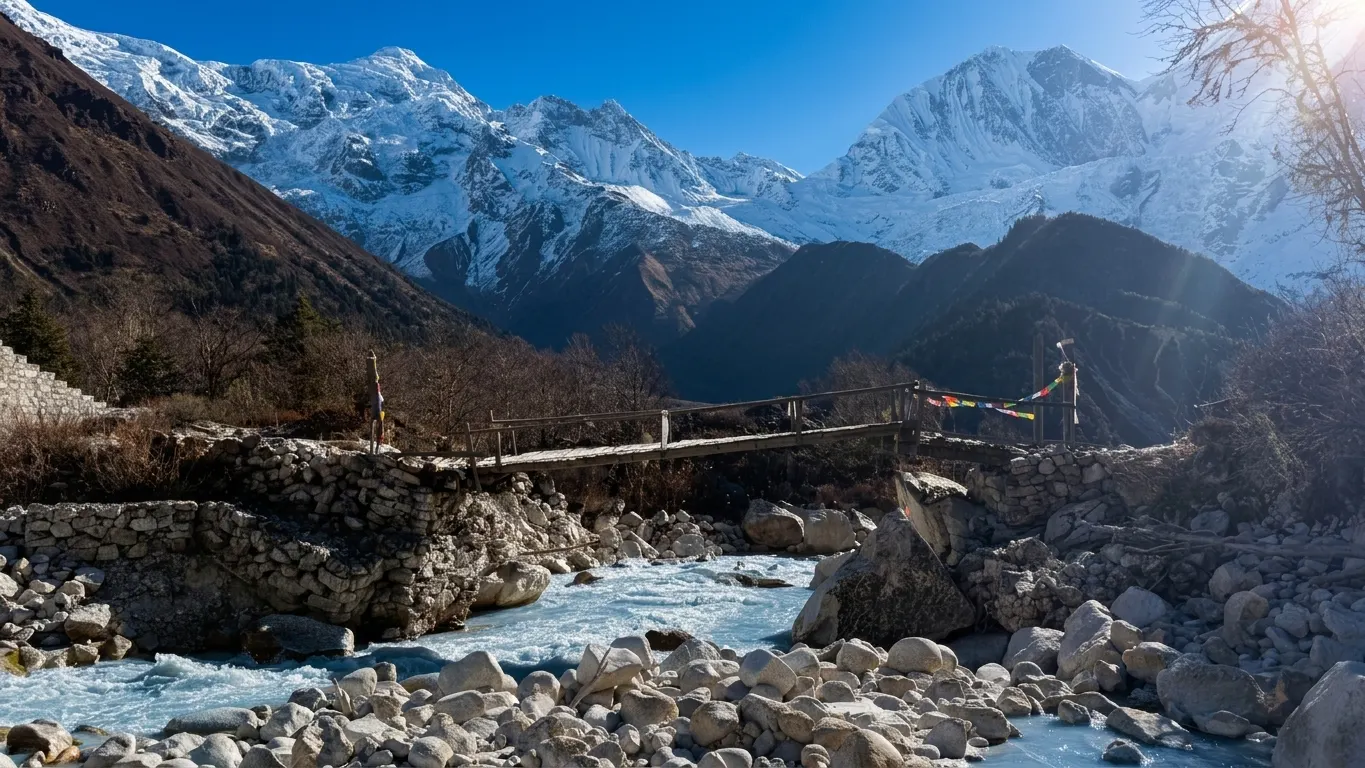
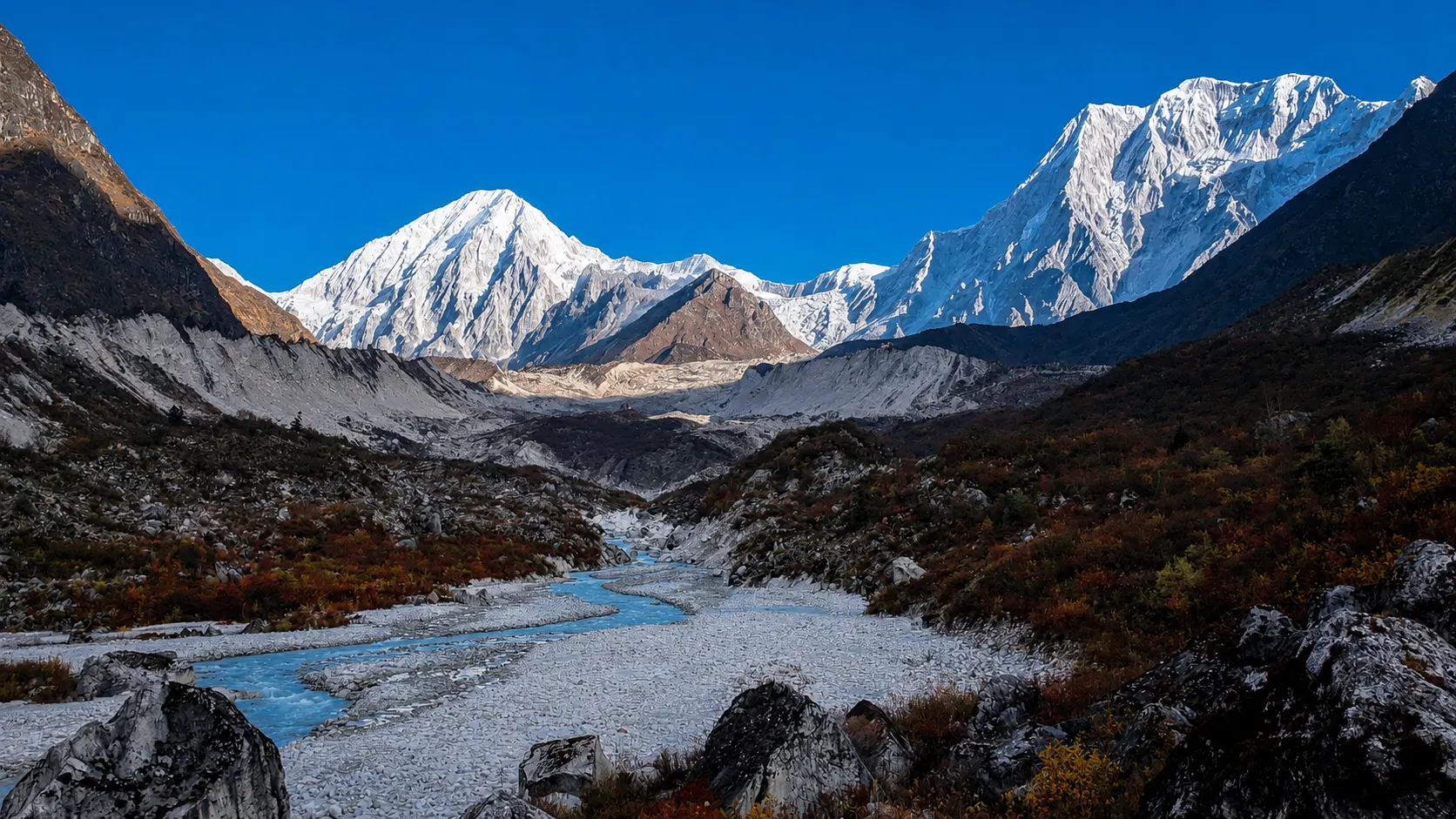
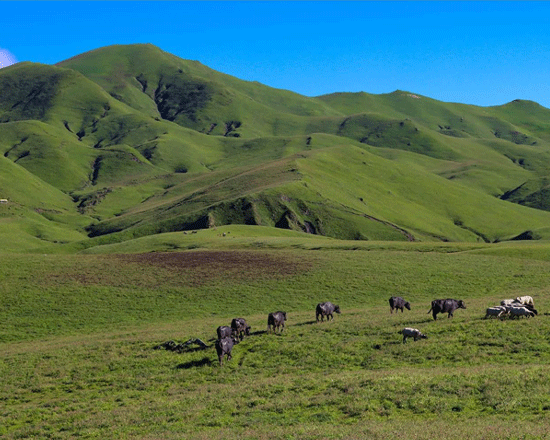
One of the biggest highlights is the diversity of landscapes encountered during the trek. The journey begins in the lower hills of the Budhi Gandaki Valley, where lush forests, waterfalls, and terraced farms dominate the scenery. As trekkers gain altitude, the environment gradually changes into alpine terrain characterized by rugged cliffs, yak pastures, glaciers, and snow-capped peaks.
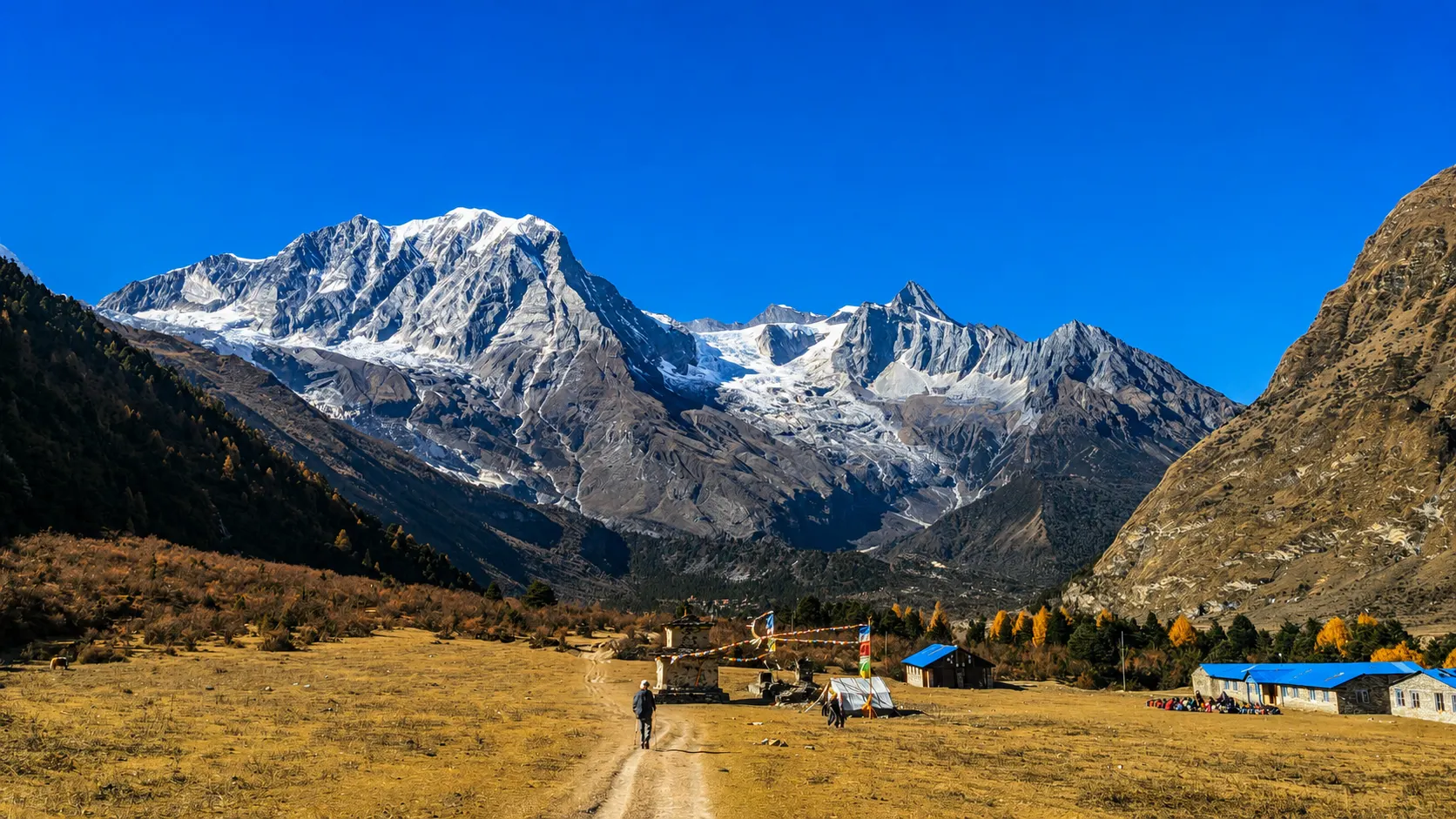
The cultural experience is equally impressive. The lower section of the trail is inhabited by Gurung communities, while the upper valleys are home to Tibetan-origin people whose traditions have remained remarkably preserved. Prayer flags flutter above villages, mani walls line the trails, and ancient monasteries provide insight into the spiritual life of the local communities.
Highlights of the Larke Pass Trek
- Cross the challenging and scenic Larke La Pass (5,106m)
- Trek around Mount Manaslu, the world’s eighth-highest mountain
- Explore traditional Tibetan-influenced villages
- Visit ancient Buddhist monasteries and cultural landmarks
- Enjoy panoramic views of Manaslu, Himlung Himal, Cheo Himal, Kang Guru, and Annapurna II
- Experience the remote Himalayan wilderness with fewer crowds
- best meditations Hub Serang gompa
- Walk through diverse ecosystems from subtropical forests to alpine landscapes
- Discover the authentic mountain culture and hospitality of Manaslu Tsum Valley
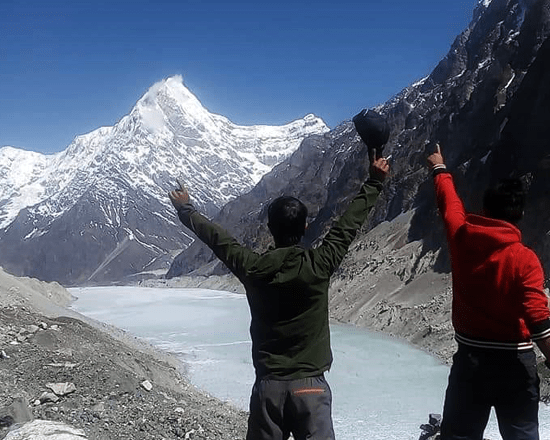
- Observe glaciers, high mountain lakes, and dramatic valleys
- Connect the Manaslu and Annapurna circuit trek.
The Journey Through the Manaslu Region
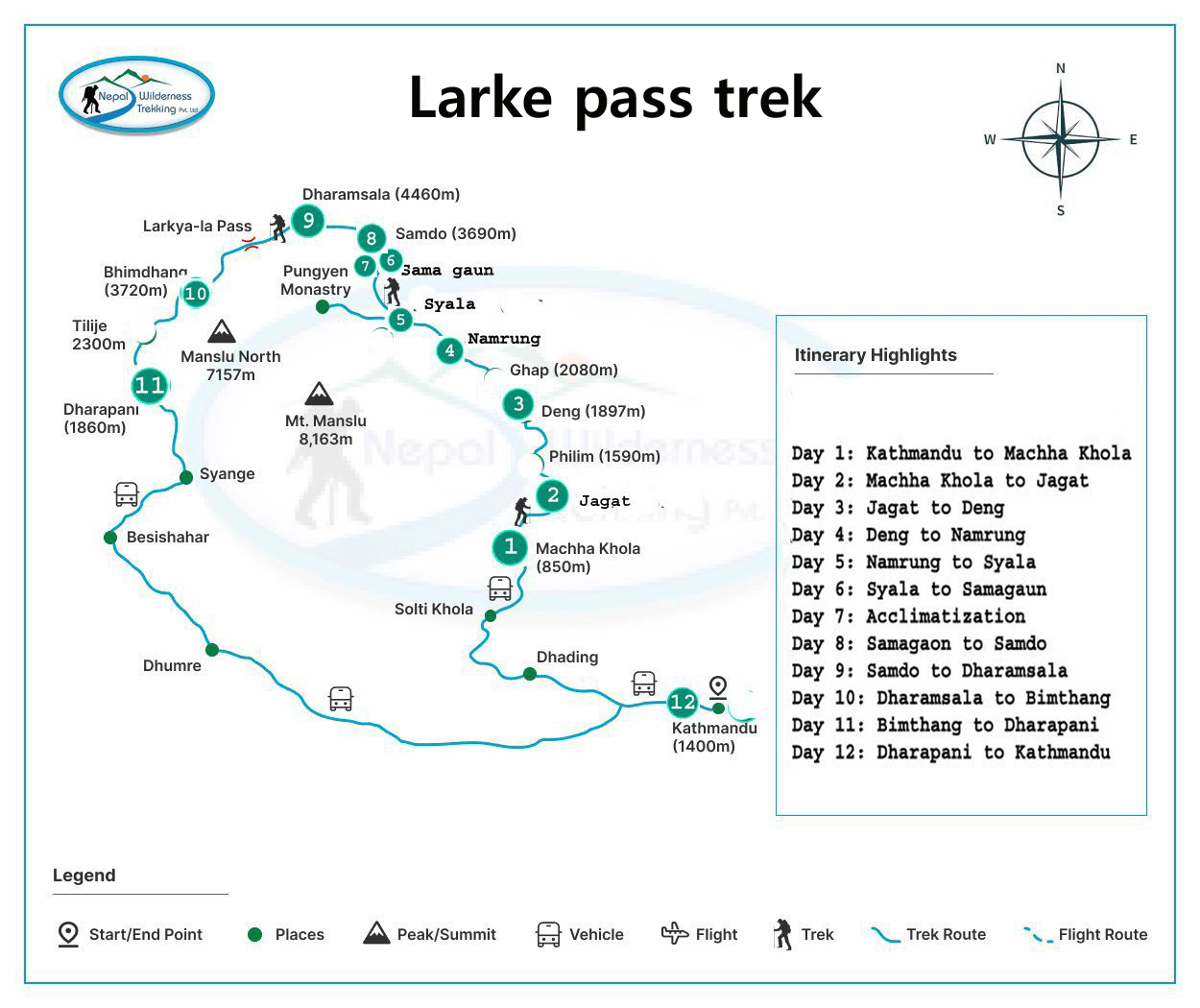
The adventure begins with a scenic drive from Kathmandu to Machha Khola. The trail follows the Budhi Gandaki River through a series of picturesque villages, suspension bridges, and forested paths.
Trekkers pass through Jagat, a traditional village that marks the entrance to the restricted Manaslu Conservation Area. From here, the trail gradually ascends through Deng and Namrung, where Tibetan cultural influences become increasingly visible.
One of the most beautiful villages along the route is Lho. Situated beneath Mount Manaslu, Lho offers spectacular mountain views and features an impressive monastery overlooking the valley. The nearby village of Shyala provides one of the best panoramic viewpoints on the entire trek.
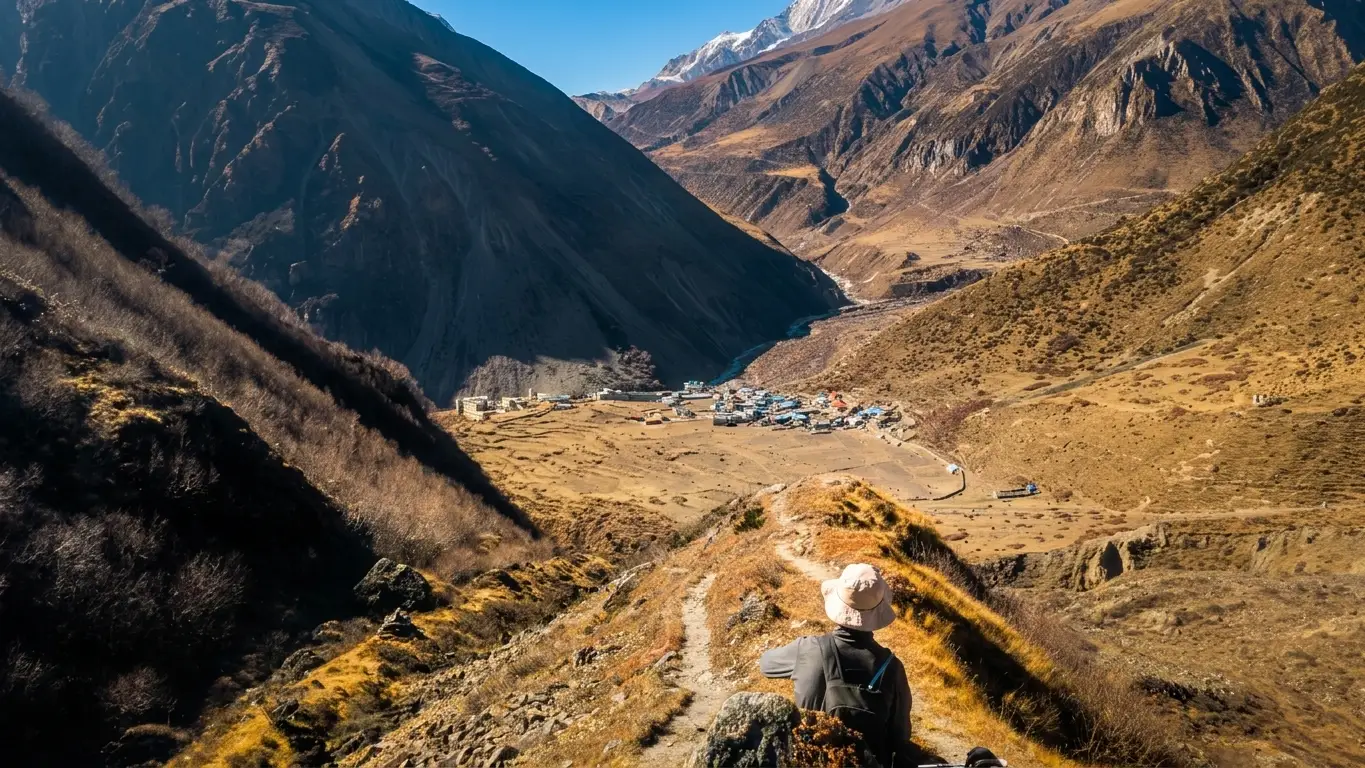
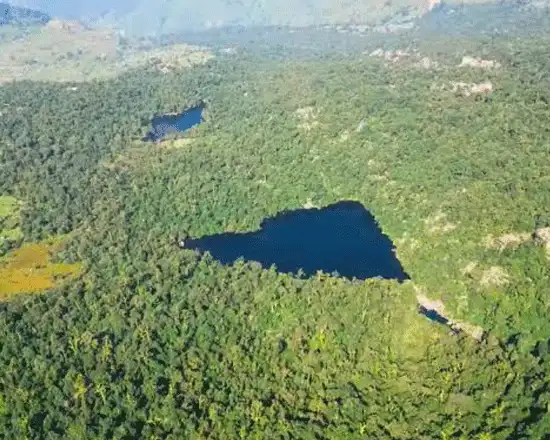
Further north lies Sama Gaun, the largest settlement in the upper Manaslu Valley. This traditional village serves as an important acclimatization stop and provides opportunities for side trips to Manaslu Base Camp, Birendra Lake, and Pungyen Gompa.
The trail then continues to Samdo, a small Tibetan refugee settlement located near the Nepal-Tibet border. From Samdo, trekkers ascend toward Dharamsala, also known as Larke Phedi, the final overnight stop before crossing the pass.
Crossing Larke La Pass
The crossing of the Larke La Pass is the highlight of the entire trek. Trekkers usually begin the ascent before sunrise to take advantage of stable weather conditions and clear mountain views.
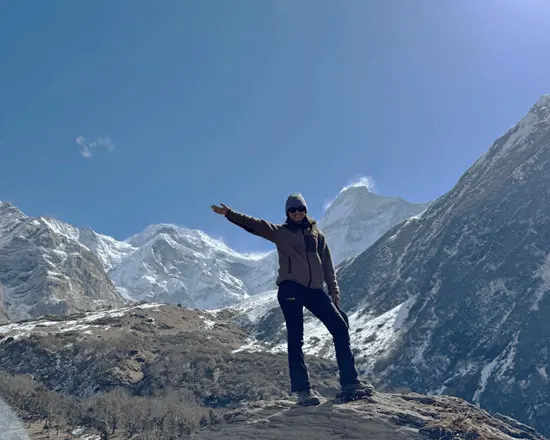
The trail climbs steadily through rocky terrain and glacial moraines before reaching the prayer-flag-covered summit of the pass at 5,106 meters. Standing atop Larke La Pass is an unforgettable experience. The surrounding panorama includes towering Himalayan peaks, massive glaciers, and vast alpine landscapes stretching in every direction.
From the summit, trekkers enjoy incredible views of Himlung Himal, Cheo Himal, Kang Guru, Larke Peak, Annapurna II, and numerous other mountains.
After celebrating the achievement, the trail descends through dramatic glacial valleys toward Bimthang, a beautiful alpine meadow surrounded by forests and snow-capped peaks.
Mountain Views During the Trek
The Larke Pass Trek is famous for its outstanding mountain scenery. Throughout the journey, trekkers are treated to constantly changing views of some of Nepal’s most spectacular peaks.
Major mountains visible during the trek include:
- Mount Manaslu (8,163m)
- Himlung Himal (7,126 m)
- Cheo Himal (6,820m)
- Kang Guru (6,981m)
- Annapurna II (7,937m)
- Ngadi Chuli (7,871m)
- Ganesh Himal Range (7,422m)
- Larke Peak(6,249m)
- Shringi Himal (7,187m)
- The views become increasingly dramatic as the trail approaches Sama Gaun, Samdo, and Larke La Pass.
Culture and Local Communities
One of the most fascinating aspects of the Larke Pass Trek is its rich cultural heritage. The upper Manaslu region has strong historical and cultural connections with Tibet.
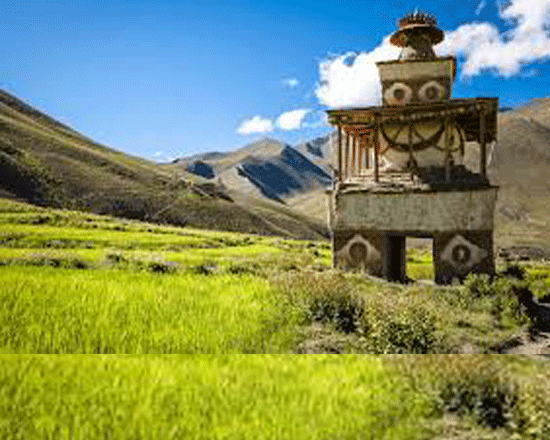
Villages such as Namrung, Lho, Sama Gaun, and Samdo feature traditional stone houses, ancient monasteries, prayer wheels, chortens, and mani walls. The local people practice Tibetan Buddhism and maintain customs passed down through generations.
Trekkers often witness monks performing religious ceremonies, villagers spinning prayer wheels, and yak caravans transporting goods along historic trade routes.
The warmth and hospitality of the local communities add a memorable cultural dimension to the trekking experience.
Best Time for the Larke Pass Trek
The best seasons for the Larke Pass Trek are spring and autumn.
Spring (March to May)
Spring is one of the most popular times for trekking in the Manaslu region. Temperatures are moderate, rhododendron forests bloom with vibrant colors, and mountain views are generally excellent.
Autumn (September to November)
Autumn offers stable weather, clear skies, and outstanding visibility. This season is considered ideal for crossing the Larke La Pass and enjoying panoramic Himalayan scenery.
Winter (December to February)
Winter trekking is possible but can be challenging. Heavy snowfall may occasionally block the pass, and temperatures at higher elevations can be extremely cold.
Monsoon (June to August)
The monsoon season brings rain, muddy trails, landslides, and reduced mountain visibility. This period is generally less favorable for trekking.
Difficulty of the Larke Pass Trek
The Larke Pass Trek is considered a moderately challenging to strenuous trek. The primary challenges include long walking days, steep ascents, and high altitude.
Trekkers typically walk between 5 and 8 hours per day. The crossing of the Larke La Pass is the most demanding section, requiring good physical fitness and proper acclimatization.
Previous trekking experience is beneficial but not essential. With adequate preparation, determination, and support from experienced guides, most healthy trekkers can complete the journey.
Accommodation and Food
Accommodation along the Larke Pass Trek is primarily provided in local teahouses. These mountain lodges offer simple but comfortable rooms and provide an excellent opportunity to interact with local communities.
Meals typically include:
- Dal Bhat
- Fried rice
- Noodles
- Tibetan bread
- Pancakes
- Soups
- Pasta
- Potatoes
- Tea and coffee
The quality of accommodation and food has improved significantly over the years while maintaining the authentic character of the region.
Permits Required for the Larke Pass Trek
Since the Manaslu region is a restricted trekking area, several permits are required:
- Manaslu Restricted Area Permit (RAP)
- Manaslu Conservation Area Permit (MCAP)
- Annapurna Conservation Area Permit (ACAP)
Trekkers must travel with a licensed guide and obtain permits through a registered trekking agency.
Why Trek with Nepal Wilderness Trekking?
Nepal Wilderness Trekking specializes in guided adventures throughout Nepal’s most spectacular mountain regions. Our experienced guides possess extensive knowledge of the Manaslu region, ensuring both safety and an enriching cultural experience.
We provide professional trek planning, permit arrangements, transportation, accommodation booking, and personalized support throughout the journey. Our commitment to responsible tourism helps preserve local cultures and protect the fragile mountain environment.
Whether you are an experienced trekker seeking a new challenge or an adventurous traveler looking to explore one of Nepal’s most beautiful regions, the Larke Pass Trek offers an unforgettable Himalayan experience.
The combination of remote wilderness, breathtaking mountain scenery, fascinating cultural encounters, and the thrill of crossing Larke La Pass makes this trek one of the finest trekking adventures in Nepal. Every step reveals new landscapes, new perspectives, and unforgettable memories that will remain with you long after you leave the Himalayas.
Departure Note
All published departure dates listed below are 100% guaranteed to operate for Larke Pass Trek.
If the scheduled departure dates do not align with your trekking plans, we would be pleased to organize a private trek on your preferred dates at the same cost. Whether you are traveling solo, with family, friends, or as part of a group, we can customize the itinerary to suit your schedule, interests, and trekking experience.
Our team will be delighted to design a personalized itinerary and help you create an unforgettable trekking experience in Nepal.