24 hours customer service +9779849693351

Cho La Pass Trek

Cho La Pass Trek

Everest Region
Everest Chola pass trek
Everest Chola pass
Chola pass

Trip Facts

Duration : 15 Days Max-Altitude : 5,420m Program Type : Tea House Best Season : April- May, Jun, and Sep-Oct-Nov-Dec Per Day Walking : 6/7 Hours Trek Grade : Grade 3:

Since the terrain can be hard and the days long, hikers on these treks should be in good physical condition and have some previous mountain walking experience. Steep climbing may be involved, although it is never necessary to use ropes. Treks at this level can he arranged for periods of 16 to 21 days. Typically, a gradual ascent through a green river valley will lead you up to a number of high passes, where you will reach the altitude of 5416m. Often times, you will get a close insight into the Tibetan culture. Participants should expect to trek above 5416m/17872ft.

100%

600 Reviews

Start From

All price inclusive
$ 1600 $ 1500
USD per person

Group Price

No. of Persons Price per Person
1 Pax $1500
2 Paxes $1400
3-4 Paxes $1390
5-6 Paxes $1380
7-10 Paxes $1370
11-15 Paxes $1360
16+Paxes $1360

Number of Travellers

Overview

Cho La Pass Trek – Everest Chola Pass Trek 15-Day Package Itinerary

Deep within the legendary Khumbu region of Nepal, the Cho La Pass Trek is one of the most adventurous and rewarding high-altitude trekking experiences in the Himalayas. Often known as the Everest Cho La Pass Trek, this 15-day journey connects the classic Everest Base Camp route with the stunning Gokyo Valley, crossing the challenging Cho La Pass at 5,420 meters.

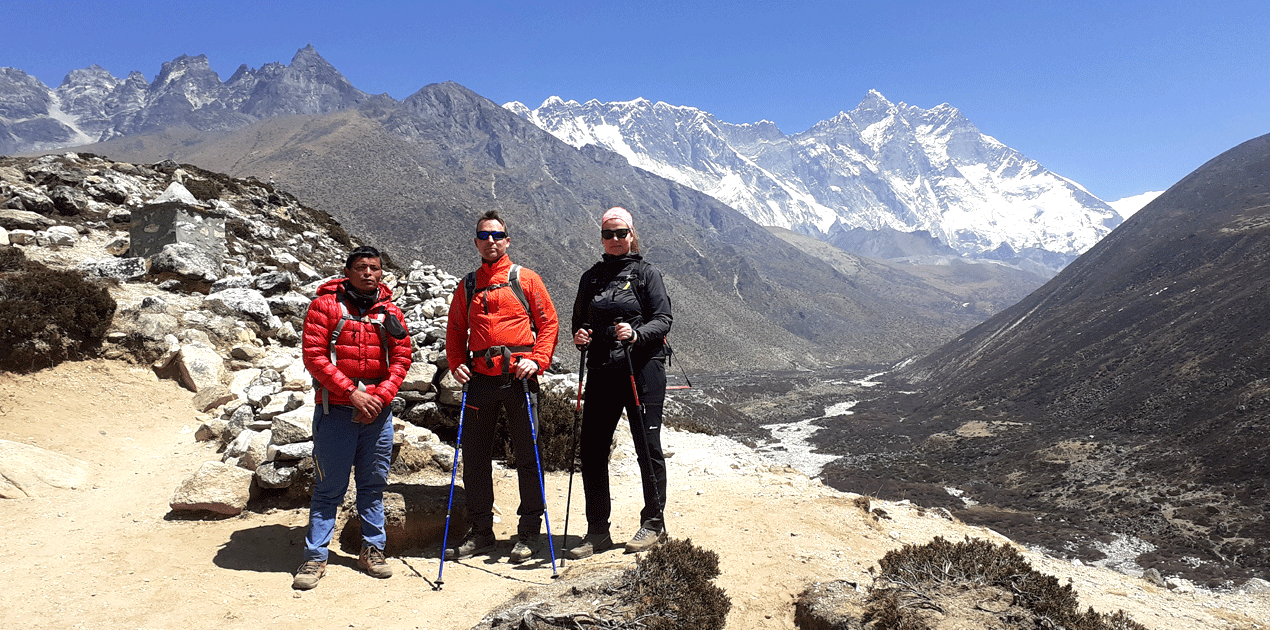
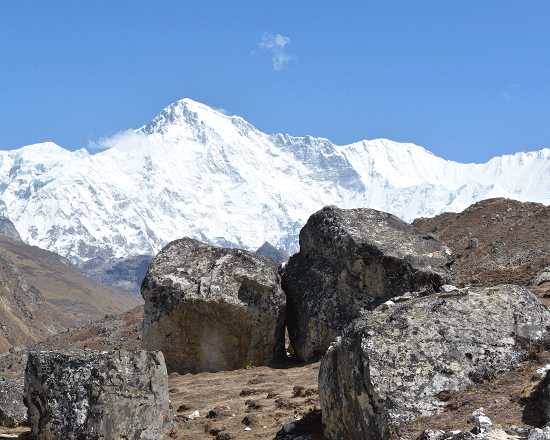
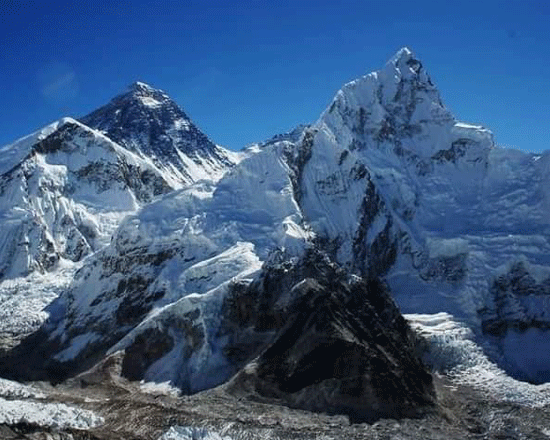
This trek is a true test of endurance and spirit, combining dramatic mountain scenery, ancient Sherpa culture, turquoise glacial lakes, and iconic Himalayan peaks such as Mount Everest (8,848 m), Lhotse (8,516 m), Nuptse (7,861 m), Ama Dablam (6,812 m), Cho Oyu (8,188 m), and Makalu (8,485 m).

Beginning the Adventure: Kathmandu to Lukla

The Cho La Pass Trek begins with an unforgettable scenic flight from Kathmandu to Tenzing-Hillary Airport in Lukla (2,860 m)—one of the world’s most thrilling mountain airports. As the aircraft soars above rolling hills and deep valleys, trekkers are rewarded with their first close-up views of the Himalayas.

Upon landing in Lukla, the gateway to the Everest region, the journey officially starts. The bustling village is filled with trekkers, porters, and yaks preparing for Himalayan adventures. From here, the trail descends gently through alpine forests, crosses suspension bridges over the Dudh Koshi River, and gradually climbs toward the heart of the Khumbu.

Sherpa Villages and Cultural Encounters

The early days of the Cho La Pass Trek offer rich cultural immersion. Passing through traditional Sherpa settlements such as Phakding, Namche Bazaar (3,440 m), and Khumjung (3,790 m), trekkers experience warm hospitality, prayer wheels, mani walls, and ancient monasteries.

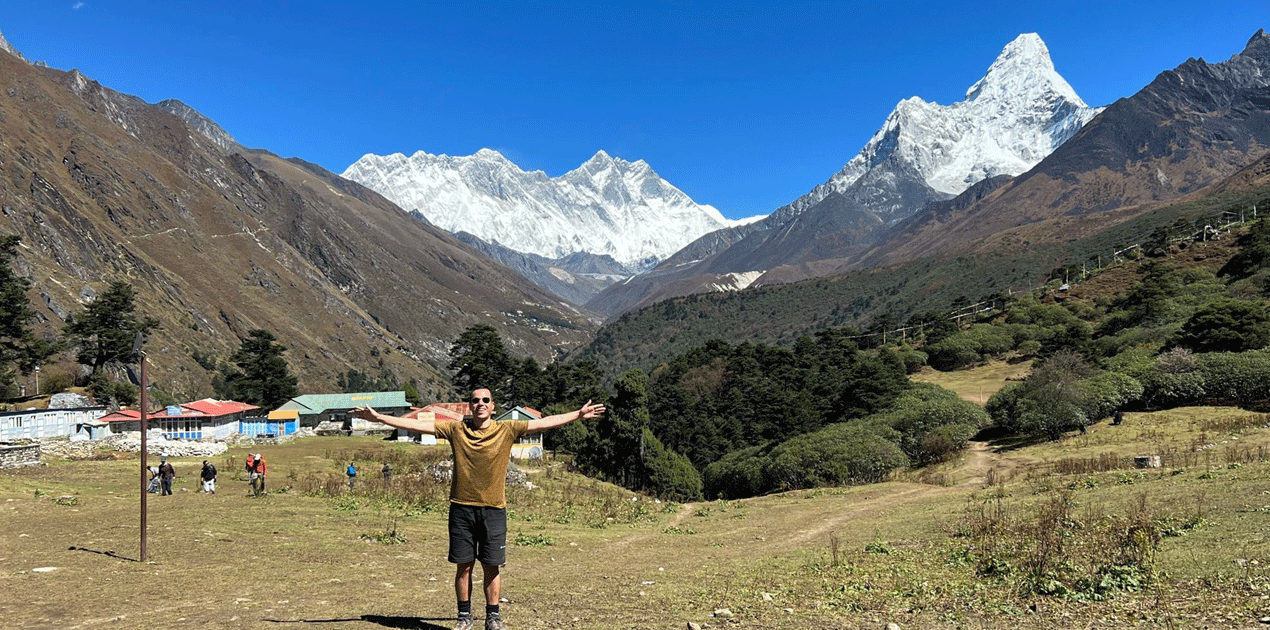
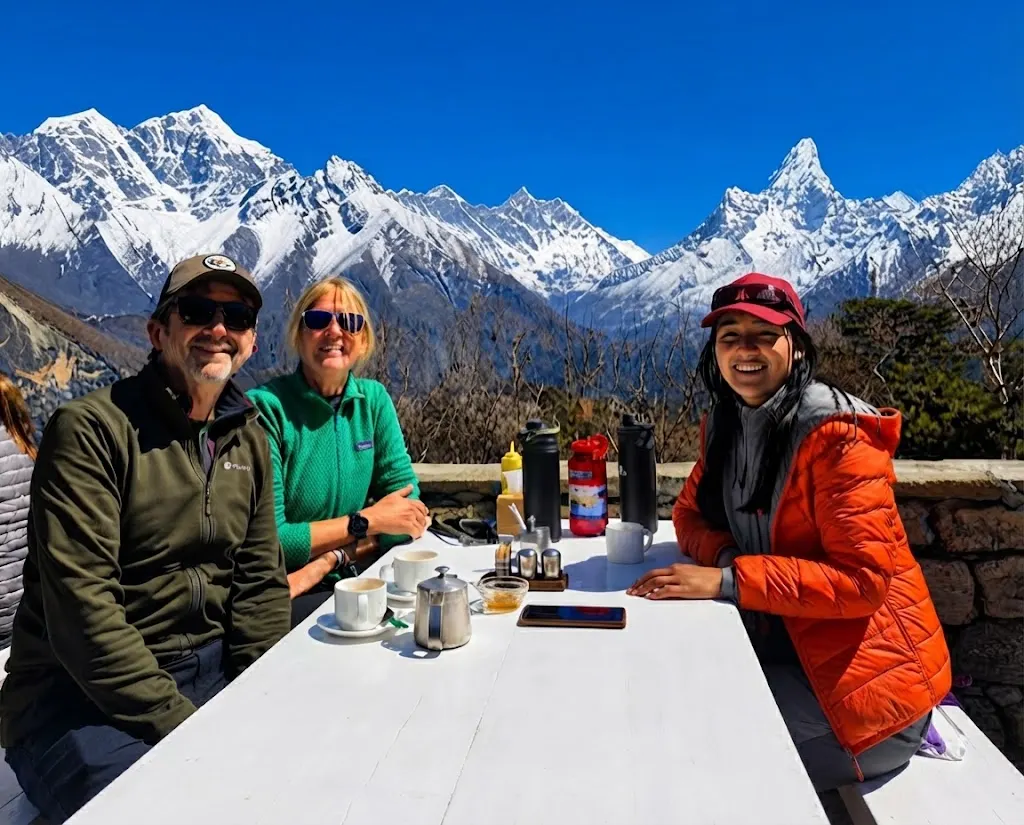
Namche Bazaar is the cultural and economic hub of the Everest region and a key acclimatization stop. Trekkers spend one or two nights here, exploring local markets, bakeries, museums, and the famous Everest View Hotel, which offers panoramic views of Everest and Ama Dablam. Interaction with the Sherpa community adds depth and authenticity to the trekking experience.

Acclimatization and Spiritual Highlights

Proper acclimatization is essential for a successful Cho La Pass Trek. Gradual altitude gain and rest days help the body adapt to thinner air while allowing trekkers to enjoy the surroundings.

The trail continues toward Tengboche Monastery (3,867 m), the spiritual heart of the Khumbu region. Set on a scenic ridge, the monastery offers breathtaking views of Everest, Ama Dablam, and the Khumbu Glacier. Attending the monks’ daily prayers provides a peaceful and reflective moment before heading into higher altitudes.

Gokyo Valley and the Sacred Lakes

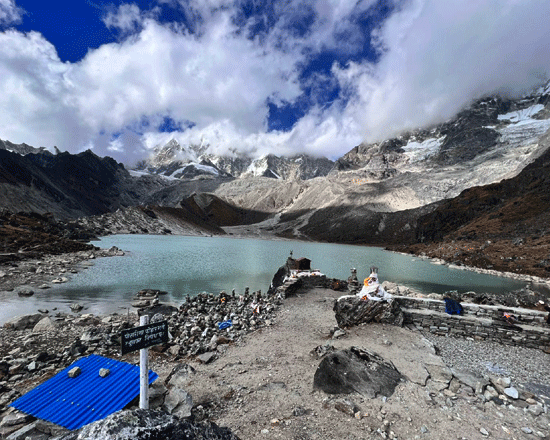
Leaving the main Everest Base Camp trail, the Cho La Pass Trek diverts toward the remote and stunning Gokyo Valley. This region is famous for the Gokyo Lakes, a series of pristine turquoise glacial lakes considered sacred by both Hindus and Buddhists.

The highlight here is the ascent of Gokyo Ri (5,357 m). Though physically demanding, the climb rewards trekkers with one of the finest panoramic views in Nepal—Everest, Lhotse, Makalu, Cho Oyu, and the vast Ngozumpa Glacier, the longest glacier in the Himalayas.

Life in the Gokyo Valley reflects the Sherpas’ deep connection to the land. Small stone villages, yak pastures, and centuries-old traditions create a tranquil atmosphere that contrasts beautifully with the rugged terrain.

Cho La Pass Trek: The Ultimate High-Altitude Challenge

Crossing Cho La Pass (5,420 meters) is the most challenging and rewarding section of the Cho La Pass Trek. This dramatic high-altitude pass connects the beautiful Gokyo Valley with the classic Everest Base Camp route near Dzongla, allowing trekkers to experience two iconic regions in a single journey.

Cho La Pass is one of the renowned Three High Passes of the Everest region, which include Renjo La Pass, Cho La Pass, and Kongma La Pass. Among them, Cho La is the middle pass and the most frequently crossed, making it a key highlight of the Three Passes trekking route.

The ascent involves steep rocky paths, glacial moraines, and often snow or ice, particularly during spring and autumn. The final climb demands steady pacing and proper equipment, but the reward is breathtaking views of surrounding peaks, frozen lakes, and rugged Himalayan landscapes. Crossing Cho La Pass is a true test of endurance and a defining moment of the trek.

The ascent involves steep trails, rocky terrain, and often snow and ice, particularly in early spring and late autumn. Proper trekking gear, careful pacing, and experienced guidance are essential. Reaching the top of Cho La Pass delivers an overwhelming sense of achievement and spectacular views of surrounding peaks and frozen lakes, including Thonak Lake.

Everest Base Camp and Kala Patthar

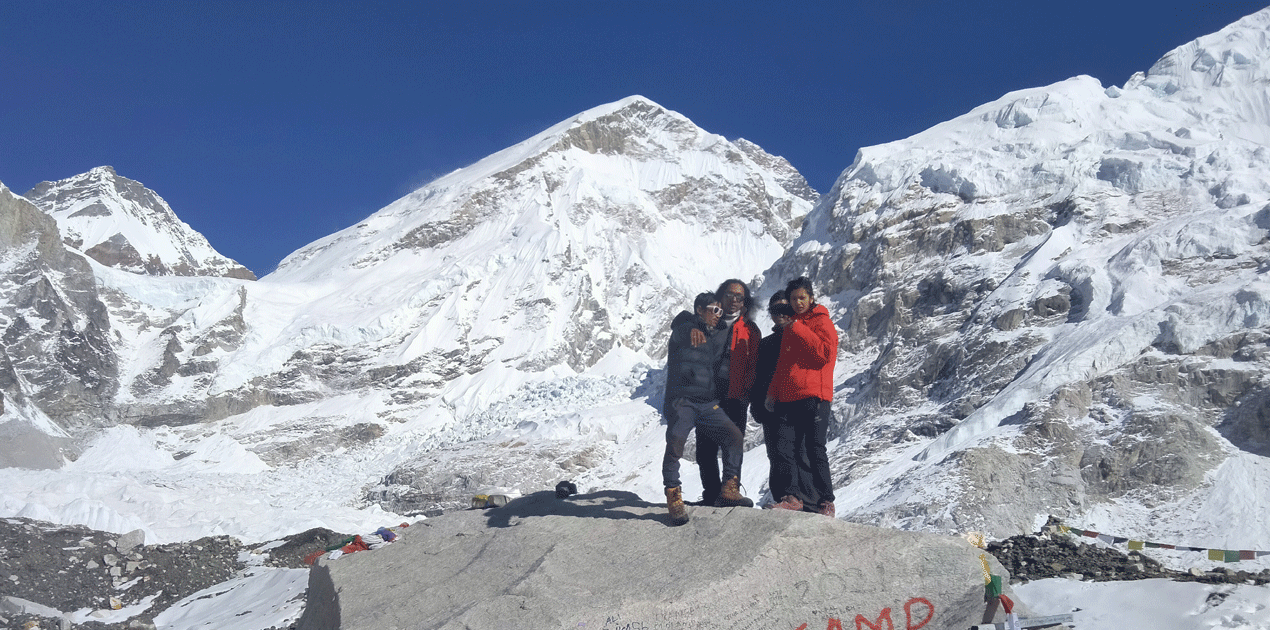
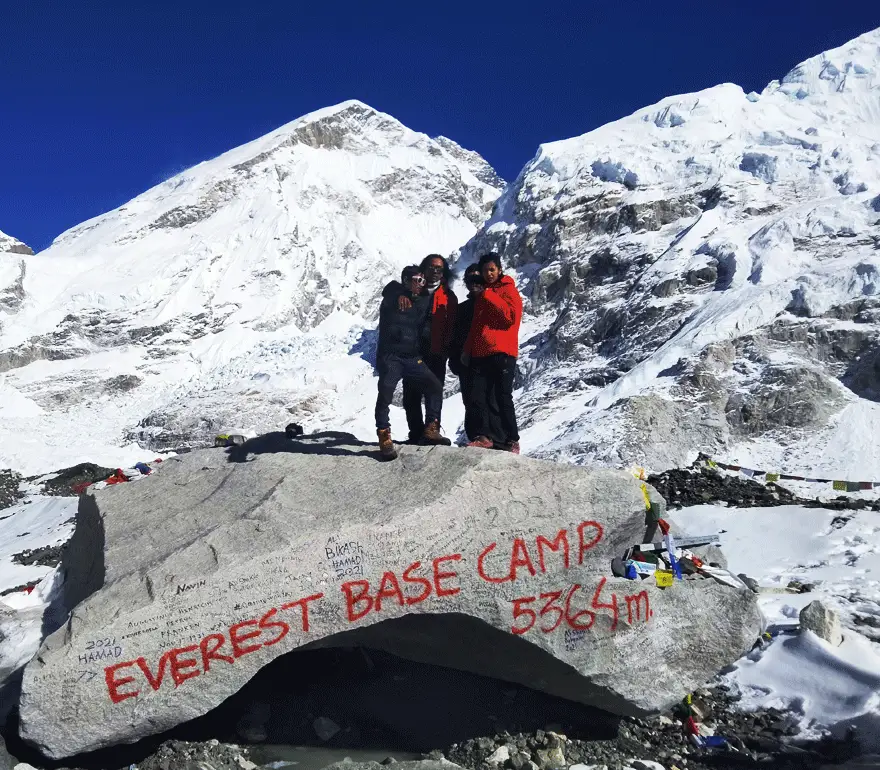
After crossing Cho La the route rejoins the classic Everest trail and leads toward Everest Base Camp (5,364 m). Walking alongside the Khumbu Glacier, trekkers arrive at this legendary destination beneath the dramatic Khumbu Icefall.

Everest Base Camp is especially lively during the climbing season, offering insight into high-altitude mountaineering expeditions. Nearby, the climb to Kala Patthar (5,545 m) provides the best close-up view of Mount Everest. Watching sunrise over Everest from Kala Patthar is one of the most unforgettable moments of the Cho La Pass Trek.

Best Time for the Cho La Pass Trek

The ideal seasons for the Cho La Pass Trek are:

  • Spring (March–May): Warmer temperatures, blooming rhododendrons, and active climbing expeditions
  • Autumn (September–November): Stable weather, clear skies, and crisp mountain views

During these seasons, trails are safer, visibility is excellent, and local festivals such as Mani Rimdu add cultural richness to the journey.


Physical Fitness and Preparation

The Cho La Pass Trek is a demanding high-altitude trek suitable for experienced trekkers. Prior physical preparation is strongly recommended. Activities such as hiking, running, stair climbing, and endurance training for at least 3–4 weeks help build stamina.

Mental preparedness is equally important. Trekking at altitude requires patience, flexibility, and respect for the environment. Proper acclimatization ensures safety and allows trekkers to fully enjoy the journey.

Gear and Equipment for Cho La Pass Trek

Essential gear includes:

  • Down jacket and insulated layers
  • Waterproof trekking boots (well broken-in)
  • Thermal base layers
  • Trekking poles
  • Snow glasses and gloves
  • Crampons (season-dependent)

Quality equipment plays a crucial role in comfort and safety, especially while crossing Cho La Pass.

Acclimatization and Safety

As altitude increases, oxygen levels decrease, increasing the risk of altitude sickness. Scheduled acclimatization days help reduce the risk of AMS, HAPE, and HACE. Experienced guides from Nepal Wilderness Trekking closely monitor trekkers’ health and ensure a safe ascent.

Conservation and Responsible Trekking

The Cho La Pass Trek takes place within Sagarmatha National Park, a UNESCO World Heritage Site. Trekkers are encouraged to practice responsible tourism by minimizing waste, respecting wildlife, and supporting local communities. The region is home to rare species such as the snow leopard, red panda, and Himalayan tahr.

Conclusion: A Trek of a Lifetime

The Cho La Pass Trek is more than a trek—it is a transformative Himalayan journey. From the vibrant streets of Kathmandu to the icy heights of Cho La Pass, every step offers adventure, cultural insight, and natural beauty.

Combining Everest Base Camp, Gokyo Lakes, and one of Nepal’s most thrilling high passes, this trek is ideal for those seeking challenge, inspiration, and unforgettable memories. With Nepal Wilderness Trekking, your Cho La Pass Trek becomes a safe, meaningful, and truly extraordinary experience.


Detail Itinerary

  • Day 01: Fly to Lukla (2,840m) and Trek to Phakding (2,652m / 8,700ft)
    Take an early morning scenic flight to Lukla. Begin your trek with a gentle descent through Sherpa villages and along the Dudh Koshi River.
    Overnight in Phakding.
  • Day 02: Trek to Namche Bazaar (3,440m / 11,283ft)
    Cross suspension bridges and follow the trail alongside the Dudh Koshi River. After a steep climb through pine forest, reach Namche Bazaar, the gateway to the Khumbu region.
    Overnight in Namche.
  • Day 03: Acclimatization Day in Namche Bazaar
    Spend a rest day to acclimatize. Explore the town, visit the Sherpa Culture Museum, and hike to Everest View Hotel for panoramas of Everest, Ama Dablam, and Thamserku.
    Overnight in Namche.
  • Day 04: Trek to Dole (4,038m)
    Climb above Namche, leaving the main Everest trail, and head toward Gokyo Valley. Pass through Mong La and descend to Phortse Tenga before climbing to Dole.
    Overnight in Dole.
  • Day 05: Trek to Machhermo (4,470m)
    Continue climbing through scenic alpine terrain with views of Cho Oyu. Reach the small settlement of Machhermo in the afternoon.
    Overnight in Machhermo.
  • Day 06: Trek to Gokyo (4,800m)
    Ascend gradually to the first of the Gokyo Lakes. Continue along the Ngozumpa Glacier to reach the third lake and the village of Gokyo beside it.
    Overnight in Gokyo.
  • Day 07: Hike Gokyo Ri (5,357m), Rest and Explore Gokyo Lakes
    Early morning climb to Gokyo Ri for breathtaking sunrise views of four 8,000-meter peaks: Everest, Lhotse, Makalu, and Cho Oyu. Explore other nearby lakes in the afternoon.
    Overnight in Gokyo.
  • Day 08: Trek to Thangnak (4,843m)
    Cross the glacier to reach Thangnak, the base for crossing the Cho La Pass. The trail is short but over rugged terrain.
    Overnight in Thangnak.
  • Day 09: Cross Cho La Pass (5,420m), Trek to Dzongla (4,830m)
    Start early for a challenging but rewarding climb over Cho La Pass. Icy and steep in places, the trail offers superb mountain scenery. Descend carefully to Dzongla.
    Overnight in Dzongla.
  • Day 10: Trek to Lobuche (4,910m)
    A short, scenic trek from Dzongla connects with the main Everest Base Camp trail. Enjoy close-up views of Nuptse and Pumori.
    Overnight in Lobuche.
  • Day 11: Trek to Gorak Shep (5,164m), Visit Everest Base Camp (5,364m)
    Follow the moraine trail to Gorak Shep. After lunch, hike to Everest Base Camp, the iconic site beneath the Khumbu Icefall. Return to Gorak Shep.
    Overnight in Gorak Shep.
  • Day 12: Hike to Kalapathar (5,545m), Trek to Pheriche (4,280m)
    Climb Kalapathar early for the best view of Everest at sunrise. Descend past Lobuche and continue to the lower-altitude village of Pheriche.
    Overnight in Pheriche.
  • Day 13: Trek to Namche Bazaar (3,440m)
    Continue descending through Pangboche and Tengboche, visiting the famous monastery along the way. Return to the lively town of Namche.
    Overnight in Namche.
  • Day 14: Trek to Lukla (2,800m)
    Retrace your steps along the Dudh Koshi River and make the final climb to Lukla. Celebrate the completion of your trek.
    Overnight in Lukla.
  • Day 15: Fly back to Kathmandu
    Take a morning flight to Kathmandu. Transfer to your hotel and enjoy the rest of the day at leisure.

Cost Included

  • Domestic flight tickets from Kathmandu to Lukla and Lukla to Kathmandu
  • Meals: Italian, Chinese, Nepali, Indian, and various European dishes are available three times a day breakfast, lunch, and dinner. One main course is provided per meal during the trek.
  • Accommodation in tea houses according to the itinerary
  • Kitbag for storing your belongings
  • Sleeping bag for a comfortable night's sleep on a trek in minus-25 degrees
  • Everest National Park Entrance Trekking Permit
  • Khumbu Pasang Lhamu Rural Municipality Entrance Permit
  • Experienced English-speaking trekking guide licensed by the government, familiar with the area.
  • One porter for every two to three participants. (Note: An additional cost applies for solo clients requiring a porter.)
  • Guide, and Porter meals, accommodation, salary, and insurance
  • Necessary paperwork, all government, and local taxes
  • A certificate of appreciation from Nepal Wilderness Trekking after a successful trek

Cost Excluded

  • Airfare for international flights
  • Upon arrival at Tribhuwan International Airport, Nepal entry visa fees vary by duration (15 days - $25-30, 30 days
  • Accommodations and meals in Kathmandu before and after our journey
  • Personal equipment for high and cold temperatures
  • Emergency high-altitude rescue and evacuation are covered by travel insurance
  • All beverages, Soft and coffee table drinks such as coke, beer,
  • Drinking water/mineral water, Dessert, etc. Hot shower, laundry
  • Tip for guide and porter
  • Excluded are all costs and expenses not listed under "cost includes"
  • Inclusion of costs or delays beyond the control of the management, such as landslides, weather conditions, itinerary modifications due to safety concerns, illness, changes in government policies, strikes, etc.
Trip Dates Trip Price Confirmed Pax Trip Status
February 12, 2026 US$ 1400 Join a Group Book Now
February 16, 2026 US$ 1400 Join a Group Book Now
February 20, 2026 US$ 1400 Join a Group Book Now
February 24, 2026 US$ 1400 Join a Group Book Now
February 28, 2026 US$ 1400 Join a Group Book Now
March 2, 2026 US$ 1400 Join a Group Book Now
March 6, 2026 US$ 1400 Join a Group Book Now
March 10, 2026 US$ 1400 Join a Group Book Now
March 14, 2026 US$ 1400 Join a Group Book Now
March 19, 2026 US$ 1400 Join a Group Book Now
March 25, 2026 US$ 1400 Join a Group Book Now
March 30, 2026 US$ 1400 Join a Group Book Now
April 2, 2026 US$ 1400 Join a Group Book Now
April 6, 2026 US$ 1400 Join a Group Book Now
April 10, 2026 US$ 1400 Join a Group Book Now
April 14, 2026 US$ 1400 Join a Group Book Now
April 18, 2026 US$ 1400 Join a Group Book Now
April 23, 2026 US$ 1400 Join a Group Book Now
April 28, 2026 US$ 1400 Join a Group Book Now
May 2, 2026 US$ 1400 Join a Group Book Now
May 6, 2026 US$ 1400 Join a Group Book Now
May 10, 2026 US$ 1400 Join a Group Book Now
May 15, 2026 US$ 1400 Join a Group Book Now
May 20, 2026 US$ 1400 Join a Group Book Now
May 25, 2026 US$ 1400 Join a Group Book Now
May 30, 2026 US$ 1400 Join a Group Book Now
June 3, 2026 US$ 1400 Join a Group Book Now
June 8, 2026 US$ 1400 Join a Group Book Now
June 12, 2026 US$ 1400 Join a Group Book Now
June 16, 2026 US$ 1400 Join a Group Book Now
June 20, 2026 US$ 1400 Join a Group Book Now
June 25, 2026 US$ 1400 Join a Group Book Now
June 30, 2026 US$ 1400 Join a Group Book Now
July 3, 2026 US$ 1400 Join a Group Book Now
July 8, 2026 US$ 1400 Join a Group Book Now
July 12, 2026 US$ 1400 Join a Group Book Now
July 16, 2026 US$ 1400 Join a Group Book Now
July 22, 2026 US$ 1400 Join a Group Book Now
July 26, 2026 US$ 1400 Join a Group Book Now
July 30, 2026 US$ 1400 Join a Group Book Now
August 5, 2026 US$ 1400 Join a Group Book Now
August 10, 2026 US$ 1400 Join a Group Book Now
August 20, 2026 US$ 1400 Join a Group Book Now
August 25, 2026 US$ 1400 Join a Group Book Now
August 30, 2026 US$ 1400 Join a Group Book Now
September 5, 2026 US$ 1400 Join a Group Book Now
September 10, 2026 US$ 1400 Join a Group Book Now
September 14, 2026 US$ 1400 Join a Group Book Now
September 18, 2026 US$ 1400 Join a Group Book Now
September 24, 2026 US$ 1400 Join a Group Book Now
September 29, 2026 US$ 1400 Join a Group Book Now
October 3, 2026 US$ 1400 Join a Group Book Now
October 8, 2026 US$ 1400 Join a Group Book Now
October 12, 2026 US$ 1400 Join a Group Book Now
October 16, 2026 US$ 1400 Join a Group Book Now
October 20, 2026 US$ 1400 Join a Group Book Now
October 24, 2026 US$ 1400 Join a Group Book Now
October 28, 2026 US$ 1400 Join a Group Book Now
October 30, 2026 US$ 1400 Join a Group Book Now
November 5, 2026 US$ 1400 Join a Group Book Now
November 8, 2026 US$ 1400 Join a Group Book Now
November 13, 2026 US$ 1400 Join a Group Book Now
November 17, 2026 US$ 1400 Join a Group Book Now
November 19, 2026 US$ 1400 Join a Group Book Now
November 23, 2026 US$ 1400 Join a Group Book Now
November 27, 2026 US$ 1400 Join a Group Book Now
November 30, 2026 US$ 1400 Join a Group Book Now
December 5, 2026 US$ 1400 Join a Group Book Now
December 8, 2026 US$ 1400 Join a Group Book Now
December 12, 2026 US$ 1400 Join a Group Book Now
December 16, 2026 US$ 1400 Join a Group Book Now
December 19, 2026 US$ 1400 Join a Group Book Now
December 22, 2026 US$ 1400 Join a Group Book Now
December 26, 2026 US$ 1400 Join a Group Book Now
December 30, 2026 US$ 1400 Join a Group Book Now

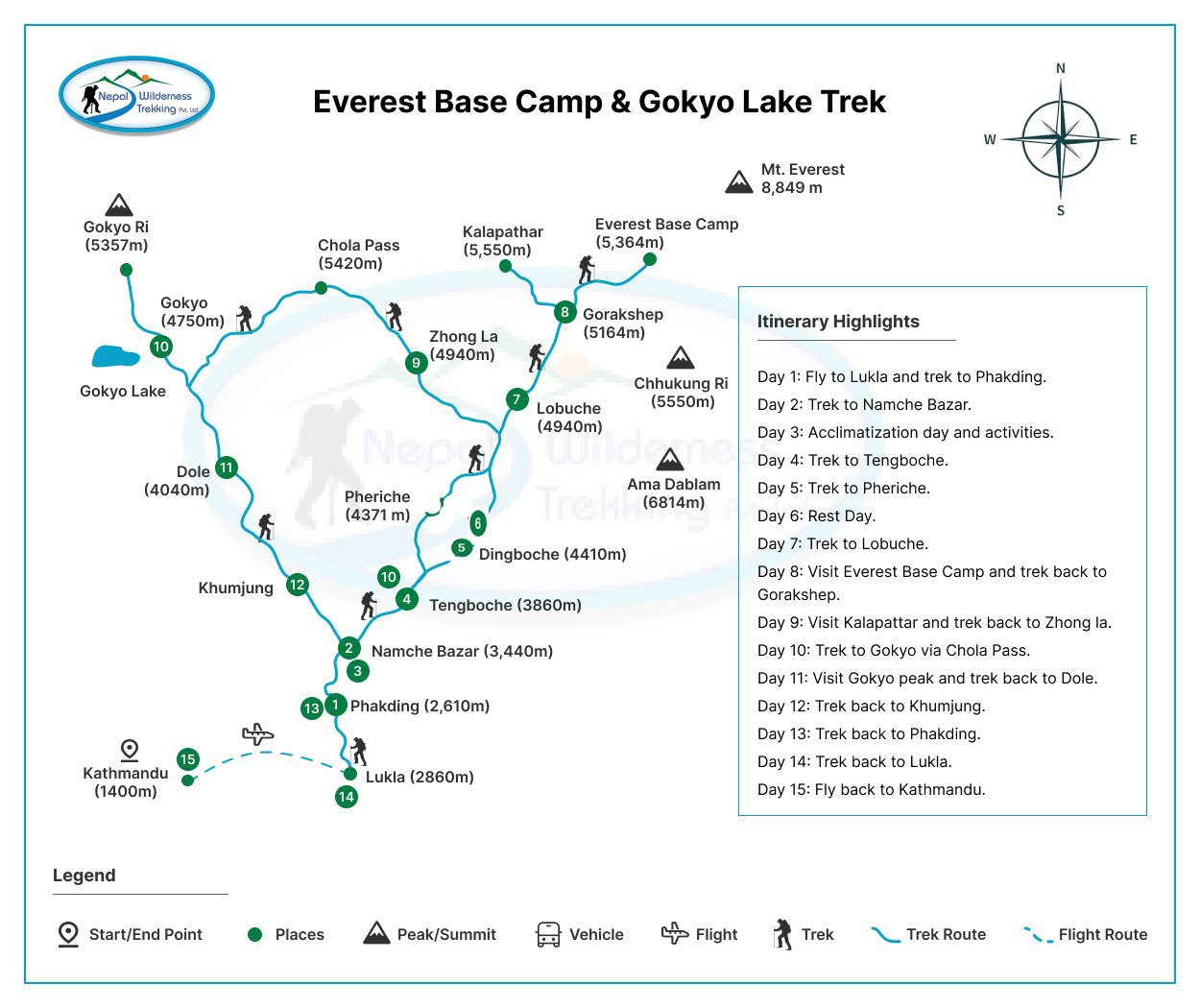
Trip Map

Frequently Asked Questions

The trek is rated as challenging due to high altitudes, steep climbs, and the crossing of Cho La Pass (5,420m). Prior trekking experience and good physical fitness are recommended.
The trek typically lasts between 14 to 18 days, depending on the itinerary and acclimatization days.
You’ll need: Sagarmatha National Park Entry Permit Khumbu Pasang Lhamu Rural Municipality Permit TIMS Card (if trekking without a guide)
The best times are: Spring (March to May): Clear views, blooming rhododendrons, and mild weather. Autumn (September to November): Crisp weather and excellent mountain views.
This trek is not recommended for beginners due to the challenging terrain and high altitude. Beginners can start with easier treks like the Ghorepani Poon Hill Trek.
Gokyo Lakes. Crossing Cho La Pass. Everest Base Camp. Kala Patthar sunrise views. Stunning views of Mount Everest, Lhotse, Nuptse, and Ama Dablam.
Bad weather is common at high altitudes. Be prepared for delays, especially with Lukla flights. Carry extra cash and buffer days for flexibility.
Yes. Most itineraries include both the Gokyo Lakes trek and Everest Base Camp along with the Chola Pass crossing. It’s a longer and more strenuous route but offers the most iconic views of the Khumbu region.
Lukla flights are weather-dependent and often delayed. Backup days are recommended in your itinerary in case of delays.

Altitude Chart

Enquiry


Similar Packages

Sign Up for free newsletter
Follow Us