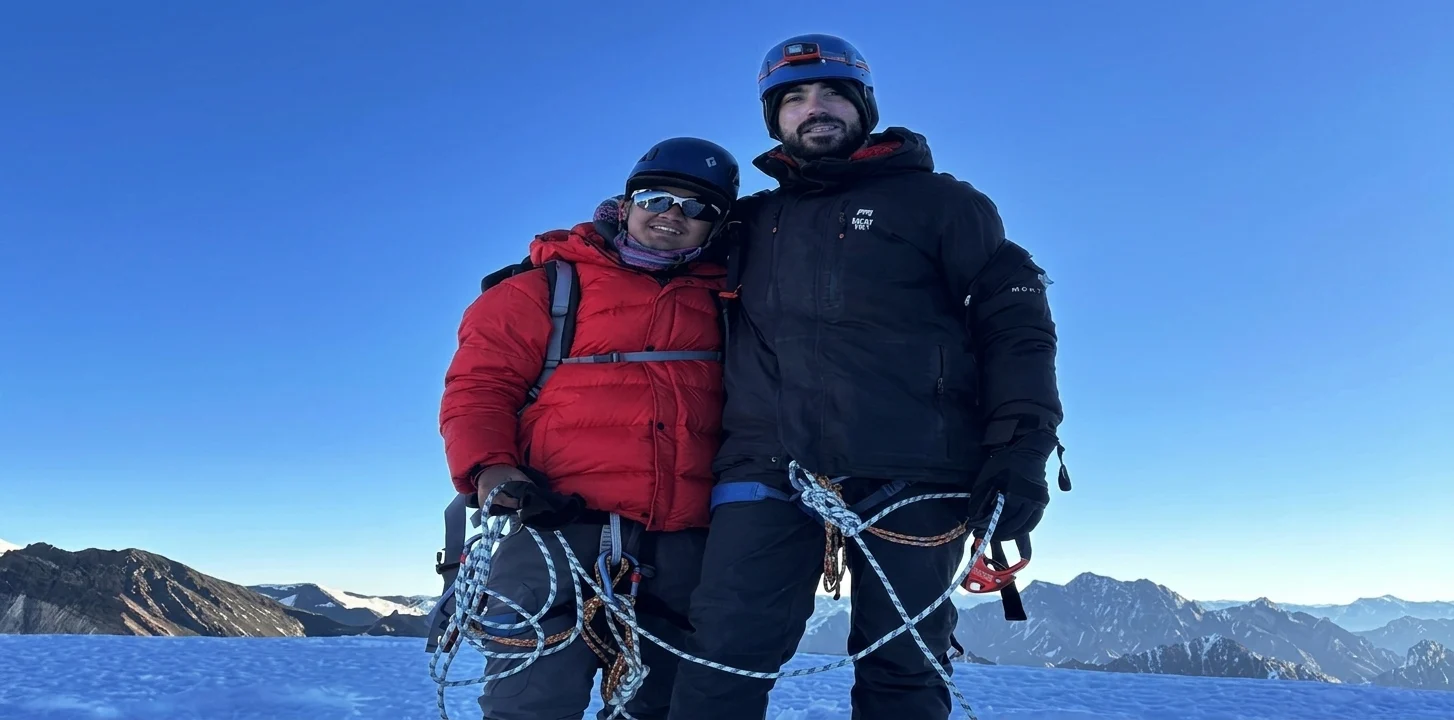
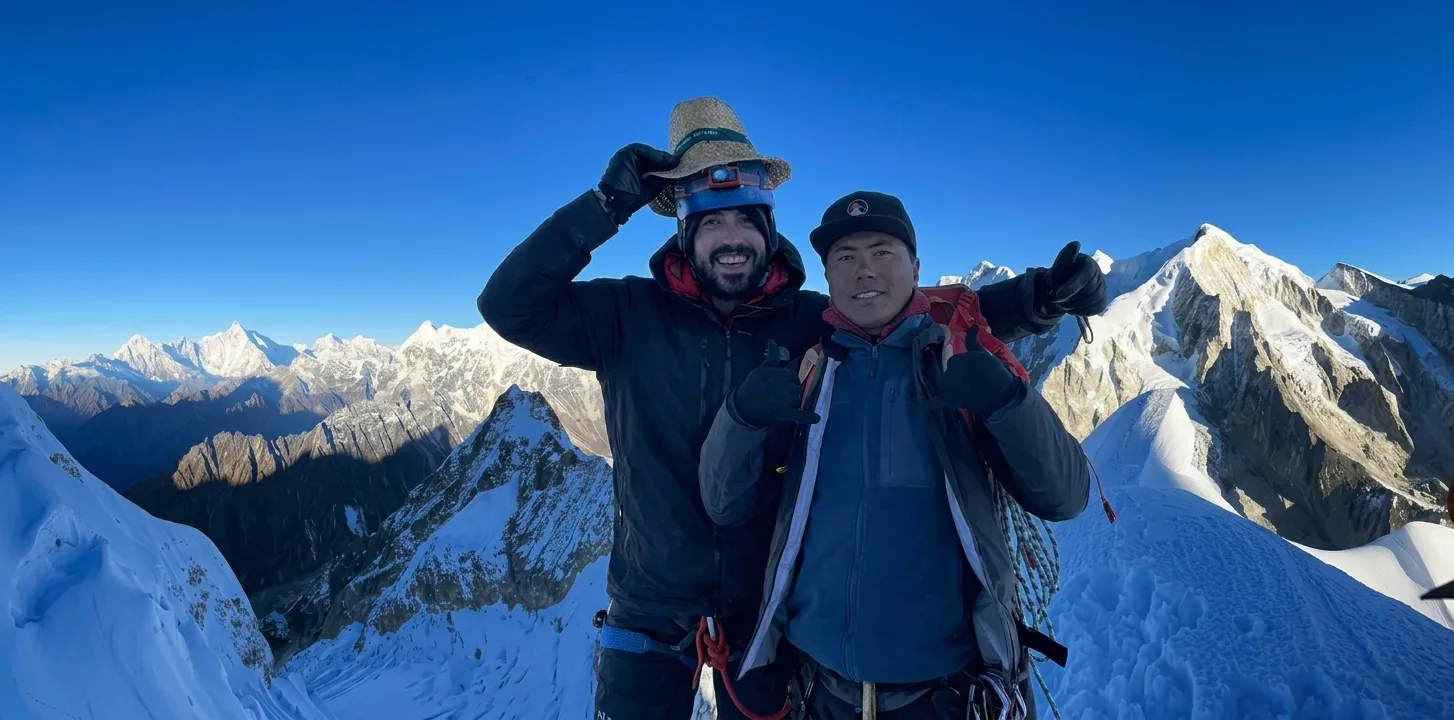
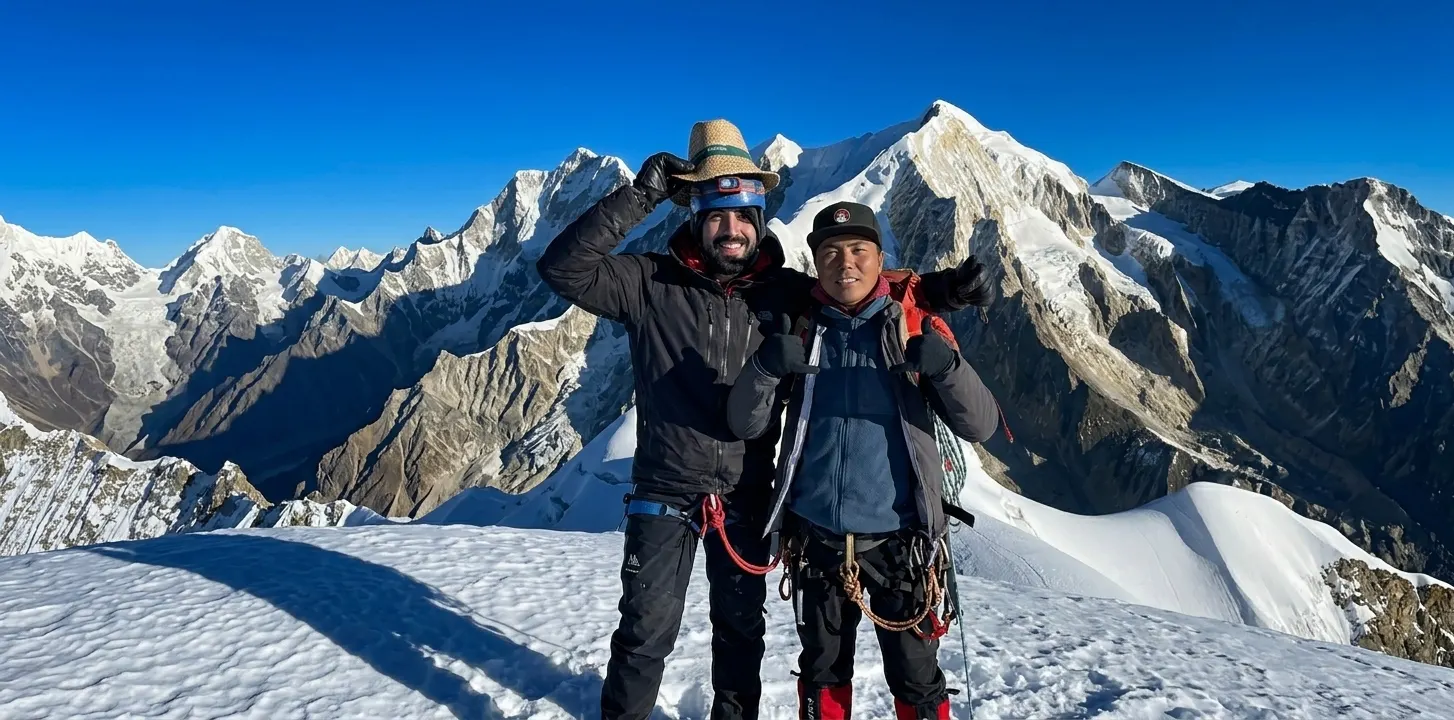
Larke Peak Climbing: Conquer a Spectacular Himalayan Summit in the Manaslu Region
Larke Peak, standing at an impressive 6,050 meters (19,849 feet), is one of Nepal’s most sought-after climbing destinations for trekkers and mountaineers to experience high-altitude adventure without the extreme technical challenge of an 8,000-meter peak. Located in the remote Manaslu region, Larke Peak offers breathtaking panoramas, challenging ice and snow slopes, and a thrilling experience for climbers seeking to combine trekking with mountaineering. This comprehensive guide explores everything you need to know about the Larke Peak summit, including itinerary, difficulty level, cultural highlights, best season, preparation, permits, and tips for a safe and successful ascent.
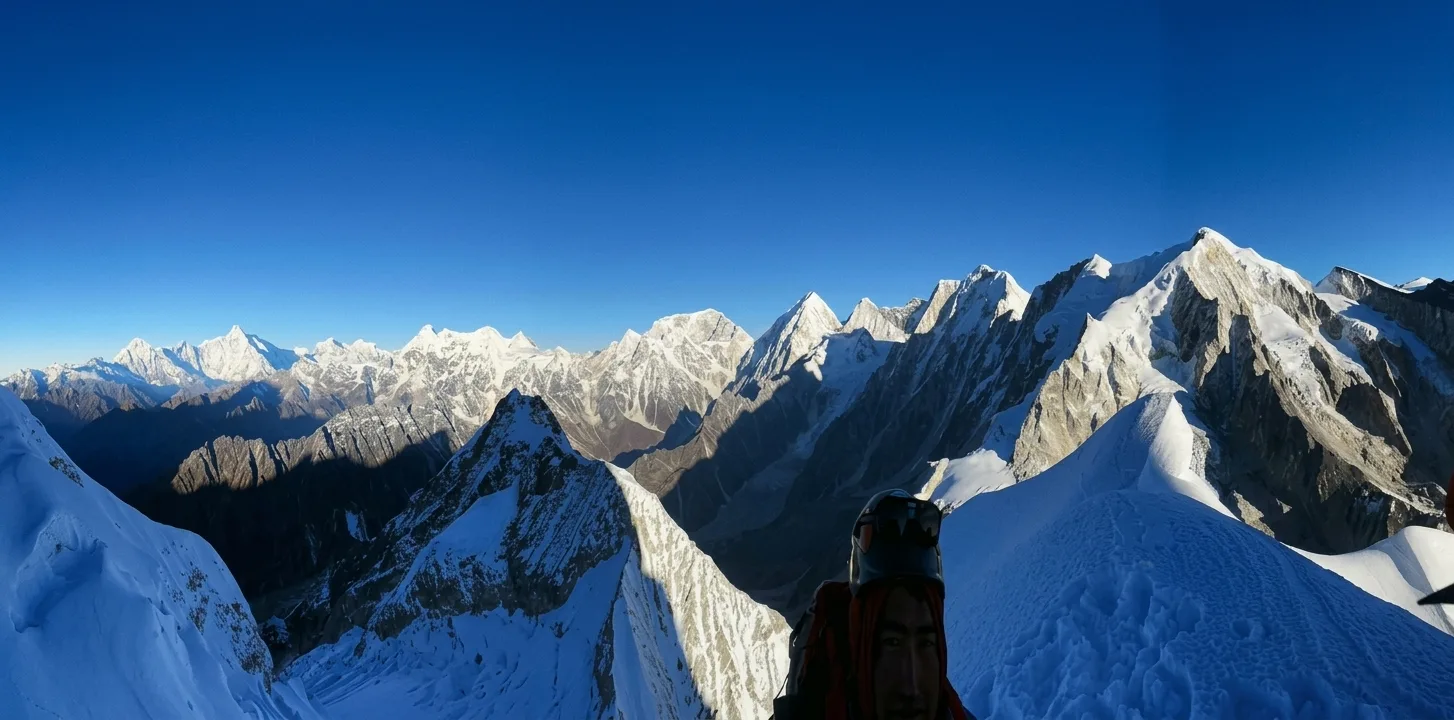
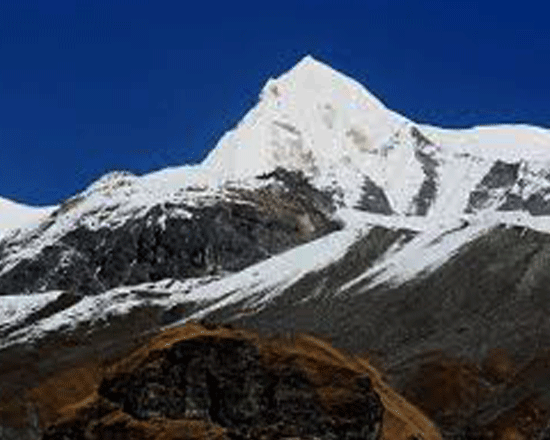
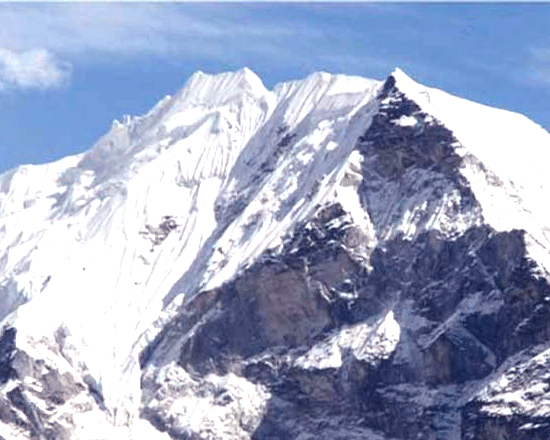
Larke Peak (6,249 m) is a newly opened trekking peak located near the Larke La Pass (5,106 m) on the Manaslu Circuit Trek route, within the Manaslu Conservation Area of Nepal. The peak lies close to the border of Tibet, offering exceptional panoramic views of Manaslu (8,163 m), the world’s eighth-highest mountain, along with Himalchuli, Cheo Himal, Kang Guru, Himlung, and Annapurna II.
Due to its strategic position and relatively moderate height, Larke Peak Climbing is considered one of the best introductory climbing peaks in the Manaslu region, combining a classic circuit trek with an alpine climbing experience.
Why Choose Larke Peak Climbing?
Larke Peak Climbing has gained popularity among climbers seeking a Himalayan adventure that is both challenging and accessible. Unlike more extreme Himalayan peaks, Larke Peak offers a unique combination of scenic trekking in the Manaslu region and technical climbing elements. Along the way, climbers encounter glacier travel, steep snow slopes, and, in some sections, use of fixed ropes, which together create a well-balanced and rewarding ascent.
Beyond the physical challenge, the appeal of climbing Larke Peak also lies in the cultural richness of the Valley. As the journey progresses, trekkers pass through traditional villages, where they can witness ancient monasteries and experience the warm hospitality of local Tibetan Buddhist communities. Therefore, the journey itself becomes just as meaningful as reaching the summit, ultimately making the Larke Peak climb a truly Himalayan experience.
Cultural Significance of the Region
The Manaslu region is home to a diverse range of communities, including the Gurung and Tamang, and, more recently, the Pani community. In particular, the Pani often venture into high-altitude areas to assist with expeditions, especially those focused on climbing Manaslu. Because of their resilience and deep knowledge of the rugged Himalayan terrain, the Pani have increasingly become guides or high-altitude support climbers on both Manaslu and the surrounding peaks. As a result, their presence has added a unique and valuable cultural dimension to treks and climbs throughout the region.
In addition to the local villages encountered along the Manaslu Circuit, the region offers even greater cultural immersion. Along the route, trekkers experience ancient monasteries, colourful prayer flags, mani walls, and seasonal festivals. At the same time, they can observe daily Buddhist rituals, explore small stupas, and engage closely with communities whose lives have been shaped by centuries of Himalayan tradition. Overall, this rich cultural landscape enhances the trekking experience and foster a deeper connection to the Manaslu region.
Tsum Valley and Trekking Alternatives
Travellers seeking a slightly different experience can choose the nearby Tsum Valley Trek as an excellent alternative. Often called the “Hidden Valley of Nepal,” Tsum Valley offers a rich spiritual and cultural heritage through its remote villages, traditional Buddhist monasteries, and ancient hermitages. Many climbers combine the Larke Peak climb with a Tsum Valley extension to explore this secluded region, allowing them to enjoy both high-altitude adventure and deep cultural discovery.
Similarly, some travellers prefer to complete the Manaslu Circuit Trek without attempting Larke Peak for the breathtaking scenery. Along the route, trekkers experience dramatic glaciers, high mountain passes, and authentic Himalayan culture. Both the Manaslu Circuit and Tsum Valley treks provide excellent opportunities for photography, wildlife observation, and meaningful interaction with local communities. As a result, these treks remain highly recommended for travellers who want to explore the natural beauty and cultural richness of Nepal.
Best Season for Larke Peak Climbing
Timing is crucial for a successful Larke Peak. In general, the best climbing seasons are the pre-monsoon period (March to May) and the post-monsoon period (late September to November).
During the pre-monsoon season (spring), climbers can expect clear skies, moderate temperatures, and blooming rhododendron forests along the lower trails. At the same time, snow conditions on the summit are generally stable, which makes the ascent safer and more predictable.
Highlights of Larke Peak Climbing
-
A combination of Manaslu and Annapurna region trekking and alpine climbing
-
Stunning views of Manaslu, Himlung, Cheo Himal, and the Annapurna range
-
Less crowded than popular peaks like Island Peak or Mera Peak
-
Cultural immersion with Tibetan-influenced villages in the Manaslu region
-
Adventure at one of Nepal’s newly promoted trekking peaks
Climbing Route & Difficulty Level and Required Skills
Larke Peak Climbing is moderate to advanced. While it does not involve extremely technical climbing, it requires:
- Experience with high-altitude trekking
- Basic ice and snow climbing skills
- Familiarity with crampons, ice axes, and rope techniques
- Physical fitness for long days at high elevations
Novice climbers can attempt Larke Peak with guidance from experienced mountaineering guides, especially from agencies like Nepal Wilderness Trekking.
-
Base Camp: Around 5,200 m near Larke Phedi
-
High Camp: ~5,800 m on snow slope (optional, depending on conditions)
-
Summit Route: Mixture of rock and snow; steep glacier ascent on the final section
Technical Grade
-
Moderate technical skills required
-
Use of crampons, an ice axe, a harness, and fixed ropes is essential
-
Suitable for experienced trekkers or beginner climbers with basic mountaineering training
Location and Access Route
-
Region: Manaslu Region, Gorkha District
-
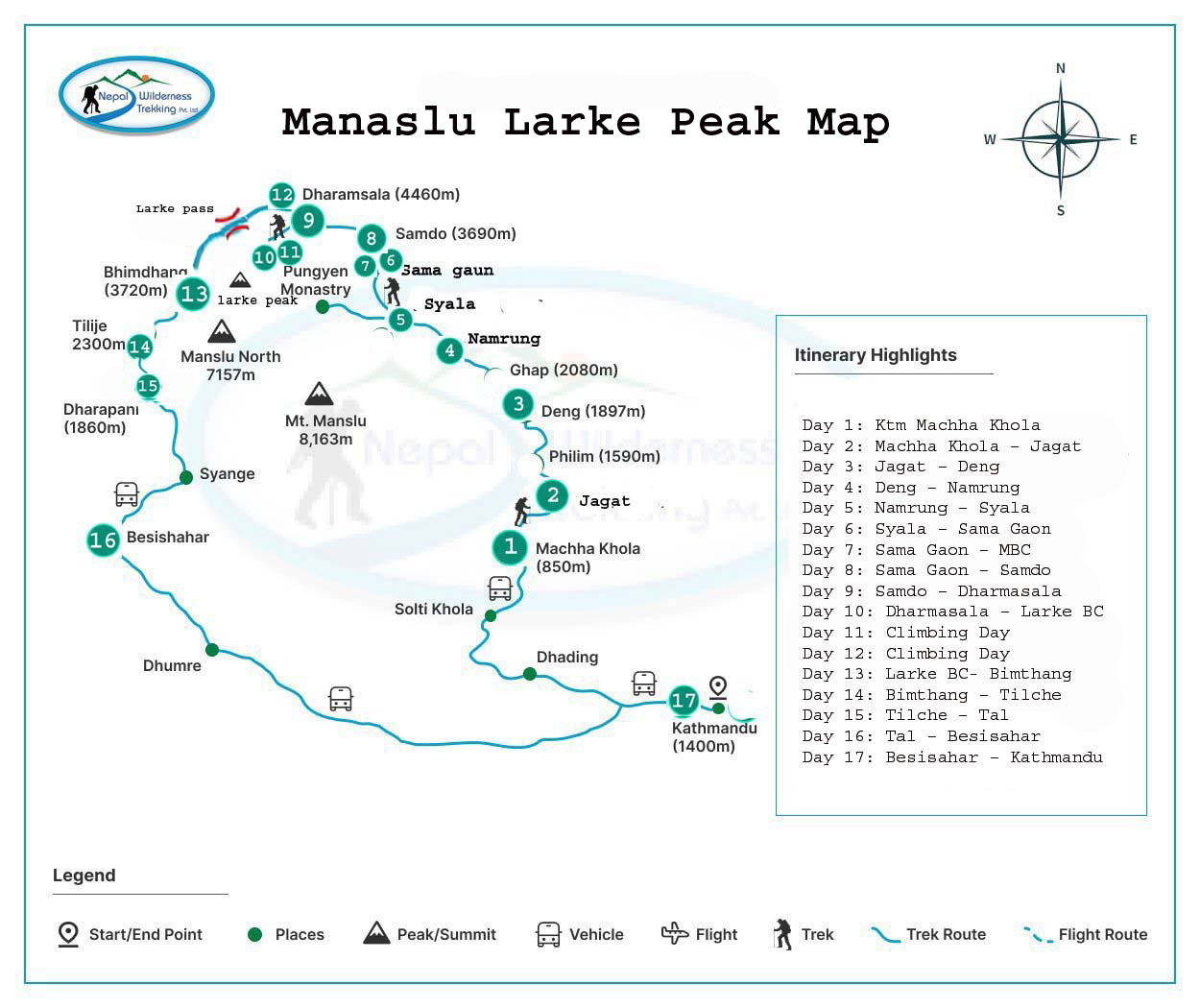
Starting Point: Soti Khola or Machha Khola ( Lower Manaslu Circuit starting trail)
-
Climbing Base Camp: Near Dharamsala (Larke Phedi)
-
Access: You follow the Manaslu Circuit Trek trail up to Larke Phedi (4,460 m) and then establish a base camp for the peak.
The Three Climbable Larke Peaks Details
There are three distinct Larke Peaks, each located in the Larke Himal range near Larke La. They are sometimes confusingly labelled as Larke Peak East, Larke Peak Central, and Larke Peak North (or West). Below is a breakdown:
Larke Peak (Main / Central) – 6,249 m
This is the highest and most commonly climbed summit of Larke Peak. It lies just north of Larke La Pass and is usually approached from Dharamsala (Larke Phedi). The Larke Peak is considered moderate to challenging and is popular among trekkers and climbers.
Larke Peak East – 6,142 m
Larke Peak East, situated to the east of the main ridge, is a comparatively less defined summit. In contrast to the main peak, the climbing difficulty is generally moderate, which makes it suitable for climbers with basic alpine experience. As a result, it sees a moderate number of ascents when compared to the main summit.
Larke Peak North (or West) – 6,166 m
This summit lies further northwest, toward the Cheo Himal ridge. Among the three peaks, Larke Peak is the most technical, as it requires sustained sections of both rock and ice climbing. Because of its challenging nature and the overall complexity of the trail, it is rarely climbed and is best suited for highly experienced mountaineers.
The Most Popular:
Larke Peak (Central / Main, 6,249 m)
This is under the “Group B” category.
-
It is the recognised and legal climbing route for trekkers and expedition groups.
-
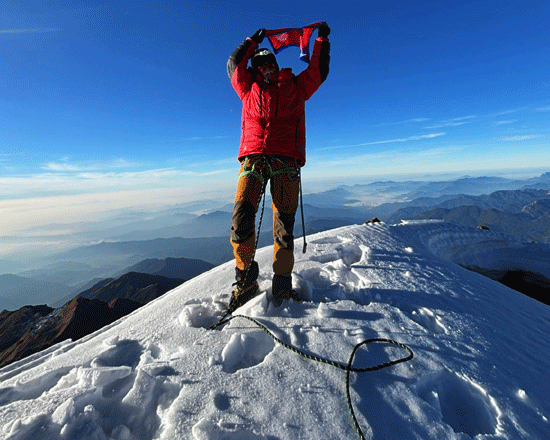
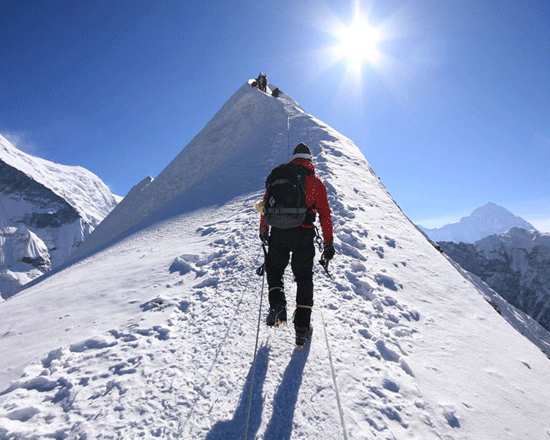
The route offers an organic alpine experience with snow slopes of 30–40 degrees, simple rope fixing, and beautiful exposure.
-
Most climbing permits issued for “Larke Peak” refer to this main 6,249m summit.
Permits and Regulations
Climbers need several permits:
- Manaslu Restricted Area Permit
- TIMS Card (Trekkers’ Information Management System)
- Climbing Permit for Larke Peak
- Annapurna Conservation Area Permit (ACAP)
The Manaslu permits should be arranged in advance. Nepal Wilderness Trekking provides complete assistance for permits and logistics.
Gear and Equipment
Essential gear includes:
- High-altitude boots and crampons
- Ice axe and climbing harness
- Helmet and headlamp
- Layered clothing for cold temperatures
- Sleeping bag rated for sub-zero temperatures
- Trekking poles and gloves
- Sunglasses and sunscreen
Nepal Wilderness Trekking offers gear rental to reduce your packing load.
Safety and Health Considerations
Safety is paramount. Key points:
- Acclimatisation: Prevent altitude sickness by gradually ascending and taking rest days.
- Weather Awareness: Snowstorms and high winds are common; delays may be necessary.
- Physical Fitness: Cardio training and endurance preparation are essential.
- Experienced Guides: Certified guides ensure safety, proper route selection, and emergency response.
Tips for a Successful Larke Peak Climb
- To begin with, it is strongly recommended to start training at least three months in advance.
- Pack smart, relying on porters for heavy loads.
- Hydrate and eat well at high altitudes.
- Listen to your body; altitude sickness can be a serious condition.
- Respect local customs and traditions.
Conclusion
Larke Peak climbing is more than just a summit attempt; it’s a journey into the heart of the Manaslu region, its culture, and its natural beauty. The presence of the Pani people, ancient monasteries, and the serene landscapes of Tsum Valley enrich the adventure. Whether combined with a Tsum Valley or Manaslu Circuit Trek, Larke Peak climbing offers a complete Himalayan experience for adventurers seeking both thrill and cultural immersion.
Choose Nepal Wilderness Trekking for a safe, organised, and unforgettable expedition. Your Himalayan adventure begins with the Larke Peak Climbing, and the memories will last a lifetime.
Departure Note
All published departure dates listed below are 100% guaranteed to operate for Larke Peak Climbing.
If the scheduled departure dates do not align with your trekking plans, we would be pleased to organize a private trek on your preferred dates at the same cost. Whether you are traveling solo, with family, friends, or as part of a group, we can customize the itinerary to suit your schedule, interests, and trekking experience.
Our team will be delighted to design a personalized itinerary and help you create an unforgettable trekking experience in Nepal.