
Uncategorized
January 9, 2026
Gaurishankar Conservation Area
 By admin
Gaurishankar Conservation Area: Nepal’s Untouched Himalayan Trekking Paradise
Hidden between the legendary Everest region and the scenic Langtang range lies one of Nepal’s most pristine and least explored protected areas — the Gaurishankar Conservation Area. This vast Himalayan landscape offers raw wilderness, dramatic mountain scenery, ancient villages, sacred peaks, and some of the most rewarding trekking routes in the country. Unlike crowded trekking destinations, Gaurishankar remains quiet, authentic, and deeply connected to nature and culture.
For trekkers seeking solitude, adventure, and genuine Himalayan experiences, Gaurishankar Conservation Area is a dream destination. Home to legendary trekking routes such as the Rolwaling Valley Trek, Tsho Rolpa Lake Trek, and sections of the historic Jiri to Lukla Trek, the region presents a perfect blend of trekking, biodiversity, spirituality, and cultural heritage.
Introduction to Gaurishankar Conservation Area
The Gaurishankar Conservation Area (GCA) is situated in central-eastern Nepal, spanning parts of the Dolakha, Ramechhap, and Sindhupalchok districts. Established to protect fragile mountain ecosystems while supporting sustainable livelihoods for local communities, the conservation area plays a vital role as an ecological corridor between Langtang National Park and Sagarmatha National Park.
The region takes its name from Mount Gaurishankar (7,134 meters), one of Nepal’s most sacred Himalayan peaks. Hindus and Buddhists revere Mount Gaurishankar as a symbol of Lord Shiva and Goddess Parvati. Local communities consider it a divine mountain, and pilgrims, monks, and villagers respect its spiritual power by traditionally avoiding climbing it.
What makes Gaurishankar Conservation Area unique is its extraordinary altitudinal variation, ranging from subtropical river valleys below 1,000 meters to alpine zones and permanent snowfields above 7,000 meters. This dramatic range supports an exceptional diversity of landscapes, climates, flora, and fauna, making GCA one of Nepal’s most biologically and geographically rich conservation areas.
Why Gaurishankar Conservation Area Is Special
Gaurishankar Conservation Area stands apart from other trekking regions in Nepal for several compelling reasons:
- Less crowded trekking routes compared to Everest and Annapurna
- Untouched forests, glaciers, and high alpine valleys
- Traditional villages with preserved mountain lifestyles
- Spectacular Himalayan views without mass tourism
- Rich biodiversity across multiple ecological zones
- Deep spiritual and cultural significance
Trekkers often describe this region as “Nepal before tourism,” where trails are quiet, villages are welcoming, and landscapes remain wild and unspoiled. For those who value authenticity over luxury, Gaurishankar offers an experience that feels deeply personal and immersive.
Biodiversity and Natural Environment
The natural environment of Gaurishankar Conservation Area is incredibly diverse. Lower elevations are characterized by dense forests of oak, pine, fir, bamboo, and rhododendron, resulting in lush, green landscapes in spring and summer. As altitude increases, these forests gradually give way to alpine meadows, rocky terrain, glaciers, and snow-covered passes.
The conservation area is home to a wide range of wildlife, including:
- Himalayan black bear
- Red panda
- Musk deer
- Himalayan thar
- Snow leopard (rare but present in higher regions)
- Numerous bird species, such as pheasants, eagles, and vultures
The region is also rich in medicinal plants and endemic species, which are traditionally used by local communities. Protecting this biodiversity is a key goal of the conservation area, balancing ecological preservation with sustainable use.
Cultural Diversity and Local Communities
Gaurishankar Conservation Area is culturally as rich as it is naturally beautiful. The region is home to several ethnic groups, including Sherpa, Tamang, Jirel, Chhetri, and Brahmin communities. Each group contributes unique traditions, languages, festivals, and architectural styles.
Villages along trekking routes feature Buddhist monasteries, prayer wheels, mani walls, chortens, and prayer flags fluttering in the mountain wind. Agriculture and livestock farming remain central to daily life, and seasonal migration to higher pastures is still practiced in many areas.
Hospitality in these villages is warm and sincere. Trekkers are often welcomed into homes and teahouses where traditional meals and stories are shared, offering a rare glimpse into authentic Himalayan life.
Major Trekking Routes in Gaurishankar Conservation Area
The conservation area offers a variety of trekking routes, ranging from moderate valley treks to demanding high-altitude adventures. Among these, three trekking trails stand out as the most significant and popular.
Rolwaling Valley Trek
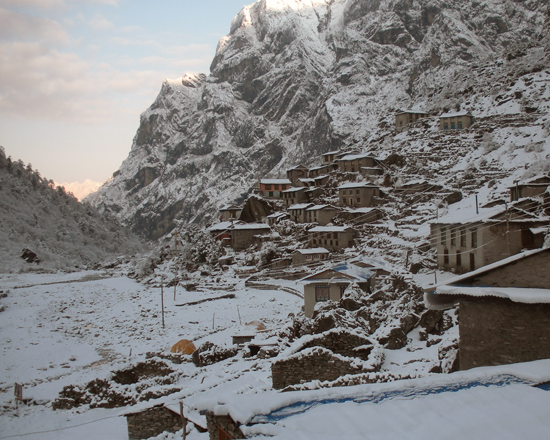
The Rolwaling Valley Trek is the most iconic and rewarding trekking route within the Gaurishankar Conservation Area. Often described as one of Nepal’s last truly wild trekking valleys, Rolwaling offers dramatic scenery, cultural depth, and a profound sense of isolation.
Overview of the Rolwaling Valley Trek
The trek typically begins in the Dolakha region and ascends through terraced farmland, forested hills, and suspension bridges before entering the deep and rugged Rolwaling Valley. The trail follows the Rolwaling River, gradually climbing into high alpine terrain surrounded by towering Himalayan peaks.
Key Highlights of the Rolwaling Valley Trek
- Traditional villages such as Simigaun, Beding, and Na
- Panoramic views of Mount Gaurishankar and surrounding peaks
- Remote landscapes with minimal trekking traffic
- Rich Sherpa culture and Buddhist heritage
- Access to glacial lakes and high-altitude viewpoints
Trekking Experience
The Rolwaling Valley Trek is considered moderate to challenging, mainly due to its remoteness and altitude. Accommodation ranges from basic teahouses and homestays in lower villages to simple lodges or camping in higher areas. The trek is ideal for experienced trekkers who want solitude, dramatic scenery, and a strong connection with nature.
Tsho Rolpa Lake Trek
The Tsho Rolpa Lake Trek is one of the most scenic glacial lake treks in Nepal and a major highlight of the Rolwaling region. Tsho Rolpa is among the largest glacial lakes in the country and a powerful symbol of Himalayan beauty.
About Tsho Rolpa Lake
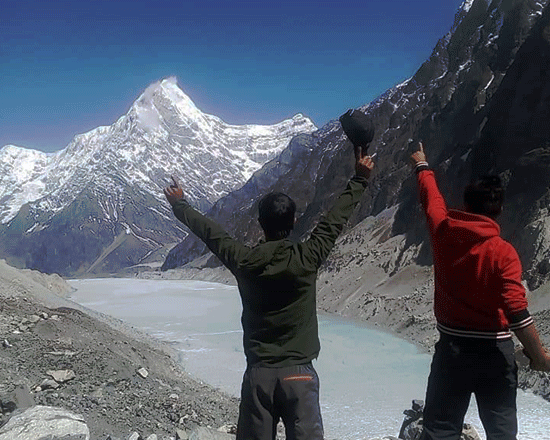
Located at an elevation of approximately 4,580 meters, Tsho Rolpa Lake is formed by glacial meltwater and enclosed by massive moraine walls. Surrounded by towering snow-covered peaks and glaciers, the lake’s turquoise waters create a breathtaking and serene atmosphere.
Why Trek to Tsho Rolpa Lake
- Stunning high-altitude glacial scenery
- Peaceful environment with very few trekkers
- Excellent acclimatization experience
- Ideal destination for photographers and nature lovers
The trek to Tsho Rolpa can be done as a standalone trek or combined with the Rolwaling Valley Trek. It provides an exceptionally high-altitude experience without requiring technical climbing skills.
Jiri to Lukla Trek (Historic Route)
The Jiri to Lukla Trek is one of Nepal’s most historic trekking routes and holds great cultural significance. Before the construction of Lukla Airport, this trail served as the primary access route to the Everest region. Parts of this classic trail pass through or near the Gaurishankar Conservation Area.
Trekking Peaks in the Gaurishankar Conservation Area
Ramdung Peak and Pachermo Peak lie within the pristine Gaurishankar Conservation Area of eastern Nepal. These trekking peaks offer stunning Himalayan views, rich biodiversity, and authentic Sherpa culture, making them ideal for climbers seeking quieter routes and a true wilderness experience.
Why Choose the Jiri to Lukla Trek
- Deep cultural immersion in rural Nepal
- Gradual altitude gain is ideal for acclimatization
- Scenic and varied landscapes
- Strong historical connection to early Everest expeditions
For trekkers who prefer walking into the Everest region rather than flying, this route offers a rewarding and meaningful experience.
Best Time to Trek in Gaurishankar Conservation Area
The best seasons for trekking in the Gaurishankar Conservation Area are spring and autumn.
Spring (March to May)
- Blooming rhododendron forests
- Mild temperatures
- Clear mountain views
Autumn (September to November)
- Stable weather conditions
- Excellent visibility
- Ideal trail conditions
Winter trekking is possible at lower elevations but becomes challenging at higher altitudes due to snow. The monsoon season is generally avoided because of heavy rainfall, landslides, and leeches in lower areas.
Permits and Regulations
Trekkers entering the Gaurishankar Conservation Area must obtain a Gaurishankar Conservation Area Permit and a TIMS card. Certain remote routes and high-pass crossings may require additional permits and a licensed guide.
These permits support conservation efforts, trail maintenance, and community development within the region.
Accommodation and Facilities
Accommodation in Gaurishankar Conservation Area is simple and traditional. Lower elevations offer teahouses and homestays, while higher sections may require camping. Facilities such as electricity, internet, and hot showers are limited, so proper preparation is essential.
Meals are typically local and nourishing, with staples such as dal bhat, noodles, soups, potatoes, and seasonal vegetables.
Trekking Difficulty and Preparation
Trekking in the Gaurishankar Conservation Area requires good physical fitness and careful preparation. Important factors include:
- High altitude and proper acclimatization
- Limited medical facilities
- Long walking days
- Rapid weather changes
Hiring a local guide or porter is strongly recommended, especially for first-time trekkers or those attempting remote routes.
Why Choose Gaurishankar Conservation Area for Trekking
Gaurishankar Conservation Area is ideal for trekkers who want:
- Authentic Himalayan trekking experiences
- Less crowded and peaceful trails
- Rich cultural and spiritual encounters
- Untouched natural landscapes
- Challenging yet deeply rewarding journeys
It offers everything Nepal is famous for — mountains, culture, wilderness — without the crowds found in more commercial trekking regions.
Conclusion
The Gaurishankar Conservation Area remains one of Nepal’s most underrated trekking destinations. With legendary routes such as the Rolwaling Valley Trek, breathtaking journeys to Tsho Rolpa Lake, and historic trails like the Jiri to Lukla Trek, the region delivers an unforgettable Himalayan adventure.
For travelers seeking solitude, authenticity, and raw natural beauty, Gaurishankar Conservation Area is not just a trekking destination — it is a journey into the heart of the Himalayas.
Trek Grade
Grade 1
Tap outside to close
Trekking is essentially day hiking and doesn't require any special training. However, good physical condition, a love of walking, and a desire to enjoy mountain views and village life are essential.
Grade 2
Tap outside to close
These treks are suitable for walkers looking for something more challenging and energetic. Hill-walking experience is desirable, with longer days and higher elevations.
Grade 3
Tap outside to close
Since the terrain can be hard and the days long, hikers should be in good physical condition and have previous mountain walking experience. High passes and extended trekking days may be involved.
Trek Grade
Grade 1
Tap outside to close
Trekking is essentially day hiking and doesn't require any special training. However, good physical condition, a love of walking, and a desire to enjoy mountain views and village life are essential.
Grade 2
Tap outside to close
These treks are suitable for walkers looking for something more challenging and energetic. Hill-walking experience is desirable, with longer days and higher elevations.
Grade 3
Tap outside to close
Since the terrain can be hard and the days long, hikers should be in good physical condition and have previous mountain walking experience. High passes and extended trekking days may be involved.