
June 2, 2026
Gorkha Durbar
 By admin
Gorkha Durbar:
Gorkha District is one of the most historically significant regions of Nepal. Known as the birthplace of modern Nepal, Gorkha is home to the legendary Gorkha Durbar, the ancient kingdom of the Ghale rulers, and the birthplace of King Prithvi Narayan Shah, the unifier of Nepal. Beyond its rich history, Gorkha is also famous for some of Nepal’s most spectacular trekking destinations, including the Manaslu Circuit Trek, Tsum Valley Trek, and the remote Rupina La Pass.
Nestled between the Middle Hills and the high Himalayas, Gorkha offers visitors a unique combination of culture, history, religion, and mountain adventure.
The History of Gorkha Durbar
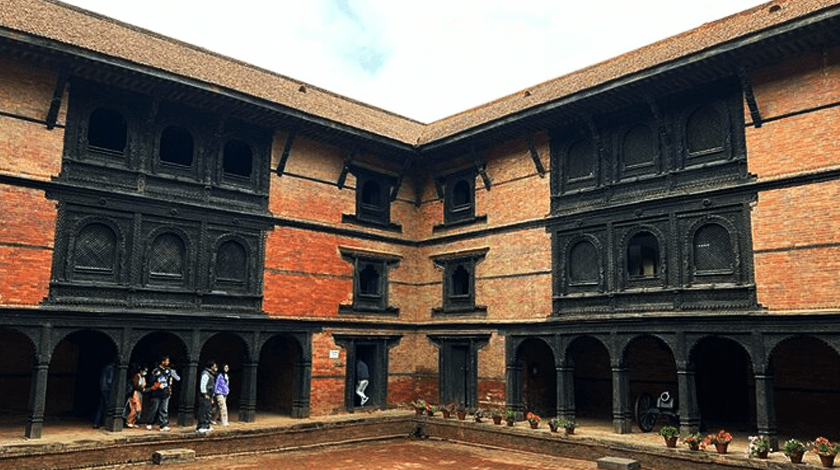
Gorkha Durbar is a historic hilltop palace located at an elevation of approximately 1,000 meters above sea level. The palace stands majestically on a ridge overlooking the valleys and hills of central Nepal.
The history of Gorkha Durbar dates back several centuries. Before the rise of the Shah dynasty, the region was ruled by local kings and tribal chiefs. Due to its strategic location, Gorkha became an important political and military center.
The palace complex includes:
- Gorkha Palace
- Gorakhnath Cave
- Kalika Temple
- Historic courtyards and royal residences
The architecture reflects traditional Nepalese craftsmanship, featuring beautifully carved wooden windows, stone walls, and pagoda-style temples.
Today, Gorkha Durbar remains one of Nepal’s most important historical landmarks and attracts visitors interested in Nepal’s royal history.
The Ghale Kings of Gorkha
Before the Shah dynasty established its rule, Gorkha was governed by the Ghale people, who were among the earliest rulers of the region.
The Ghales belong to the indigenous communities of the Himalayan region and are closely associated with the Gurung and other ethnic groups. Historical accounts suggest that the Ghale kings controlled much of the surrounding territory long before the Shah rulers arrived.
Several places around Gorkha still preserve stories and legends related to the Ghale rulers. The Ghale kings are remembered for:
- Establishing early settlements
- Maintaining trade routes
- Protecting local communities
- Preserving indigenous cultural traditions
Many historians believe that the Ghale rulers played a significant role in shaping the early political structure of the Gorkha Kingdom.
Even today, descendants of the Ghale community live throughout Gorkha District, preserving their unique traditions, language, and cultural heritage.
Prithvi Narayan Shah and the Unification of Nepal
No discussion of Gorkha is complete without mentioning King Prithvi Narayan Shah.
Born in Gorkha in 1723 AD, Prithvi Narayan Shah became the king of Gorkha and later launched the campaign that unified Nepal.
At that time, Nepal was divided into dozens of small kingdoms known as the Baise and Chaubise states. Recognizing the strategic importance of unity, Prithvi Narayan Shah began a series of military campaigns from Gorkha.
His conquest of Kathmandu Valley marked a turning point in Nepal’s history. Through diplomacy, military strategy, and determination, he successfully unified many fragmented kingdoms into a single nation.
For this reason, he is honored as the “Father of Modern Nepal.”
Visitors to Gorkha Durbar can still see places associated with his childhood and early life.
Rupina La Pass: A Hidden Himalayan Adventure
Rupina La Pass is one of Nepal’s least explored high mountain passes. Located in the northern part of Gorkha District, it connects remote valleys near the Manaslu region.
The pass lies in a rugged wilderness area characterized by:
- Glacial valleys
- Alpine meadows
- Remote settlements
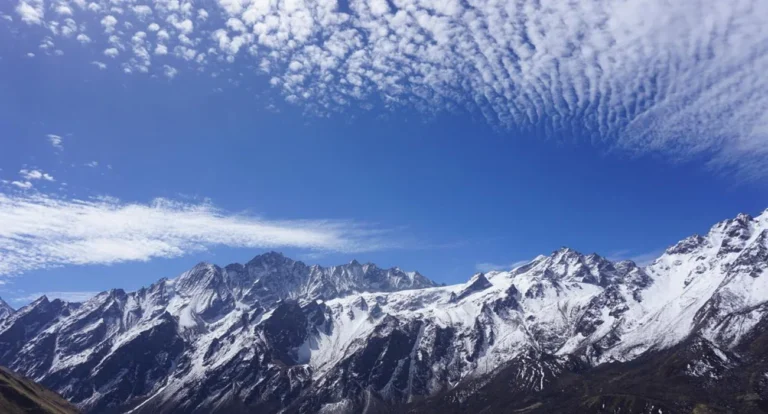
- Spectacular Himalayan scenery
The route is primarily used by experienced trekkers and mountaineering groups seeking alternatives to more crowded trekking trails.
Crossing Rupina La requires:
- Excellent physical fitness
- High-altitude trekking experience
- Proper camping equipment
- Professional guide support
The route offers magnificent views of:
- Manaslu (8,163 m)
- Himalchuli (7,893 m)
- Ngadi Chuli (7,871 m)
- Ganesh Himal Range
Because of its remoteness, Rupina La remains one of Nepal’s true wilderness trekking adventures.
Manaslu Region: The Jewel of Gorkha
The Manaslu region is undoubtedly one of the greatest attractions of the Gorkha District.
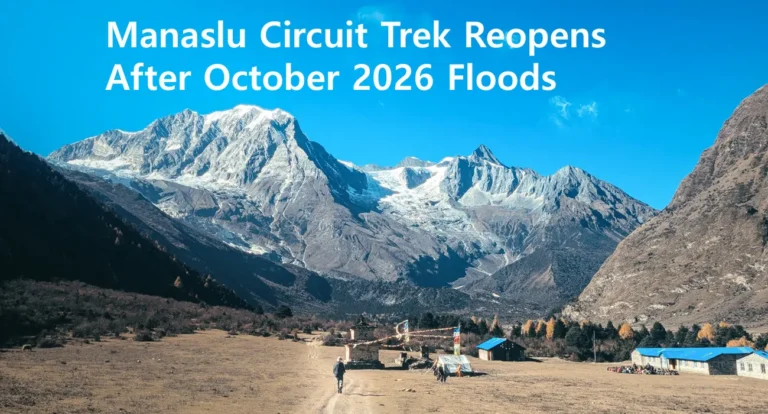
Centered around Mount Manaslu, the world’s eighth-highest mountain, the region combines dramatic landscapes, cultural diversity, and exceptional trekking opportunities.
Highlights of the Manaslu Region
- Mount Manaslu (8,163 m)
- Larkya La Pass (5,106 m)
- Traditional Tibetan villages
- Buddhist monasteries
- Deep river gorges
- Suspension bridges
- Glacial lakes
The Manaslu Circuit Trek has become one of Nepal’s finest trekking routes because it offers a less crowded alternative to the Annapurna Circuit while providing equally impressive mountain scenery.
Trekkers pass through diverse ecosystems ranging from subtropical forests to alpine landscapes and permanent glaciers.
Cultural Importance
The upper Manaslu region has strong Tibetan Buddhist influences. Ancient monasteries, prayer wheels, mani walls, and chortens can be found throughout the trail.
Villages such as Samagaon, Samdo, and Lho preserve centuries-old traditions that remain largely unchanged.
Tsum Valley: The Hidden Valley of Happiness
Tsum Valley is one of Nepal’s most sacred and culturally preserved Himalayan valleys.
Located east of the Manaslu Circuit, Tsum Valley remained isolated from the outside world for centuries. The region opened to foreign trekkers only in 2008.
The word “Tsum” originates from the Tibetan word “Tsombo,” meaning vivid or bright.
Attractions of Tsum Valley
- Mu Gompa
- Rachen Gompa
- Milarepa Cave
- Chhokang Paro
- Nile Village
- Traditional Tibetan settlements
The valley is considered a Beyul, or sacred hidden valley, blessed by Guru Rinpoche.
Cultural Heritage
The people of Tsum Valley maintain unique customs that differ from those of many other parts of Nepal.
Visitors can experience:
- Ancient Buddhist traditions
- Traditional stone villages
- Prayer ceremonies
- Monastic life
- Unique Himalayan culture
Because of its spiritual significance and cultural authenticity, Tsum Valley has become one of Nepal’s most fascinating trekking destinations.
Why Visit Gorkha?
Gorkha offers a rare opportunity to explore Nepal’s history and natural beauty in one journey.
Visitors can:
- Explore the historic Gorkha Durbar.
- Learn about the Ghale kings and the early history of Gorkha.
- Visit the birthplace of Prithvi Narayan Shah.
- Experience traditional Gurung and Tibetan cultures.
- Trek through the spectacular Manaslu region.
- Discover the sacred Tsum Valley.
- Explore remote routes such as Rupina La Pass.
Few places in Nepal combine royal history, indigenous heritage, and world-class trekking opportunities as successfully as Gorkha District.
Conclusion
Gorkha is far more than the birthplace of Nepal’s unification. It is a living museum of history, culture, and mountain adventure. From the legacy of the Ghale kings and the achievements of Prithvi Narayan Shah to the remote beauty of Rupina La Pass, Manaslu, and Tsum Valley, Gorkha offers experiences that appeal to historians, pilgrims, and trekkers alike.
For travelers seeking both cultural depth and Himalayan wilderness, Gorkha remains one of Nepal’s most rewarding destinations.
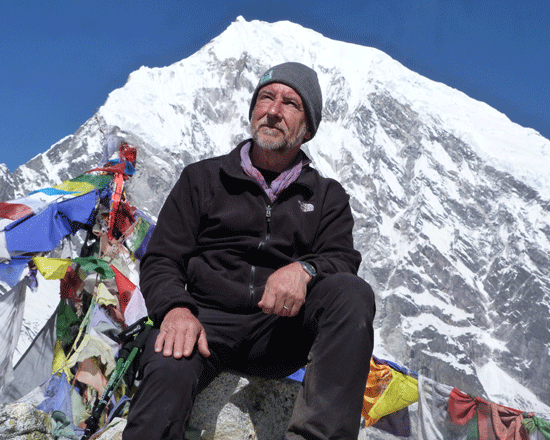
Trekking is essentially day hiking and doesn't require any special training. However, good physical condition, a love of walking, and a desire to enjoy mountain views and village life are essential.
These treks are suitable for walkers looking for something more challenging and energetic. Hill-walking experience is desirable, with longer days and higher elevations.
Since the terrain can be hard and the days long, hikers should be in good physical condition and have previous mountain walking experience. High passes and extended trekking days may be involved.
This is challenging and technical trekking or climbing in Nepal. Participants should be physically fit, mentally prepared, and ready for off-the-beaten-trail routes, camping, or high passes.
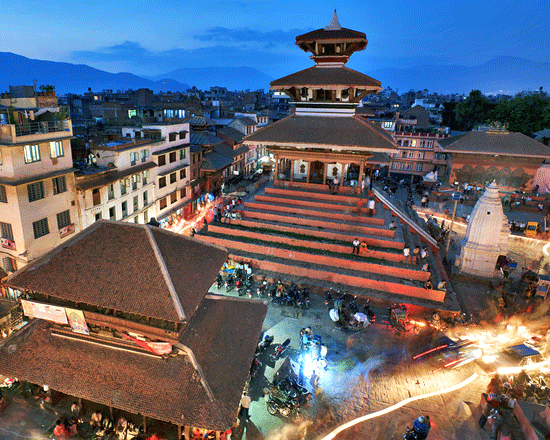
Trekking is essentially day hiking and doesn't require any special training. However, good physical condition, a love of walking, and a desire to enjoy mountain views and village life are essential.
These treks are suitable for walkers looking for something more challenging and energetic. Hill-walking experience is desirable, with longer days and higher elevations.