Everest Panorama Trek – A Short Journey into the Everest Region
The Everest Panorama Trek is a short and scenic journey into the heart of Nepal’s Everest region, offering an excellent opportunity to experience spectacular Himalayan landscapes, Sherpa culture, and Buddhist heritage in just 7 days. This trek is ideal for travelers who want to see Mount Everest and explore the Khumbu region without committing to the longer Everest Base Camp Trek.
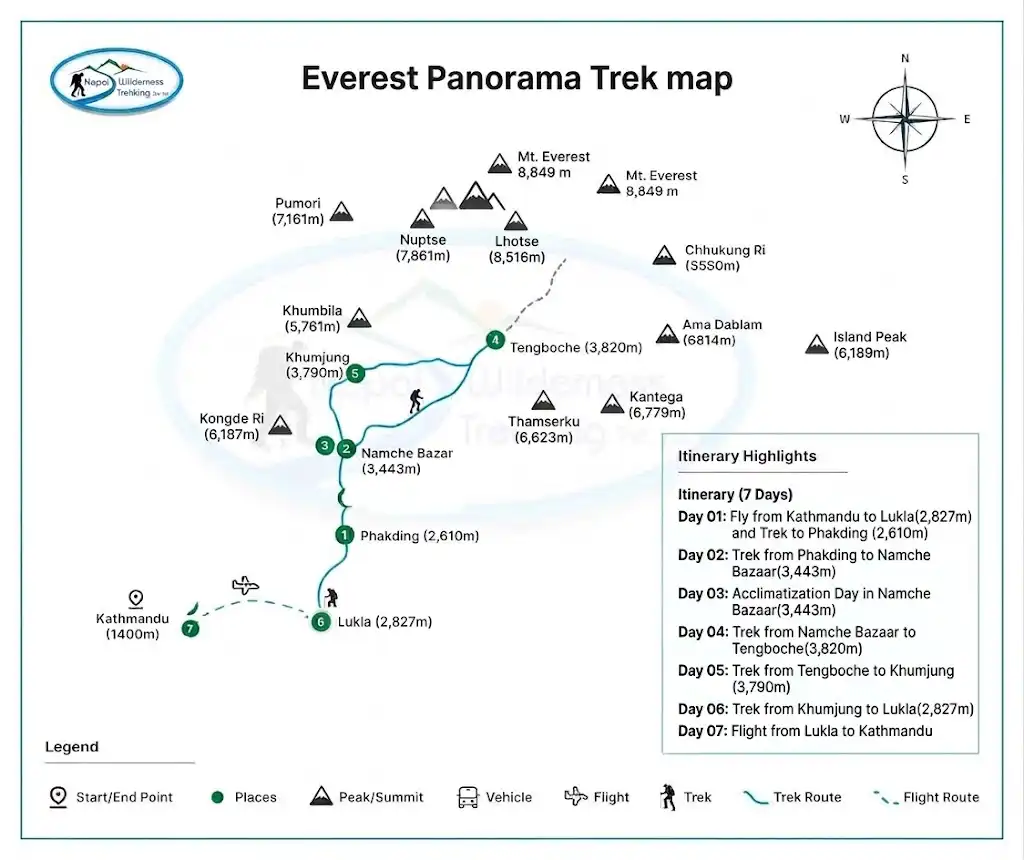
The adventure begins with a scenic flight from Kathmandu to Lukla, followed by a gradual trek through the beautiful Dudh Koshi Valley toward Namche Bazaar. Along the trail, you pass through traditional Sherpa villages, lush mountain forests, suspension bridges, and the protected landscapes of Sagarmatha National Park.
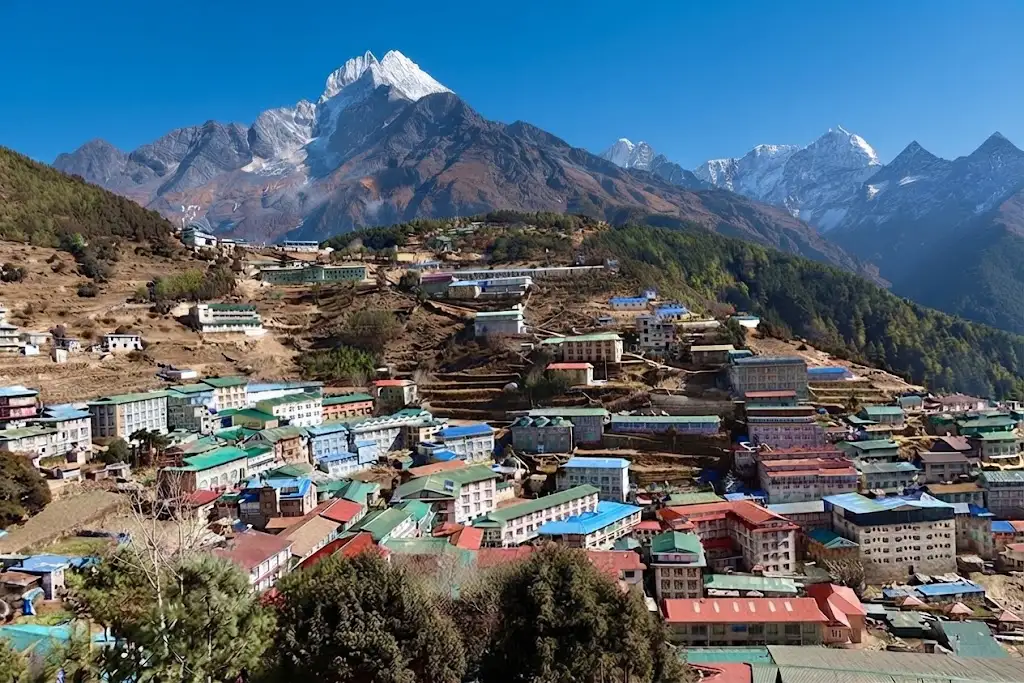
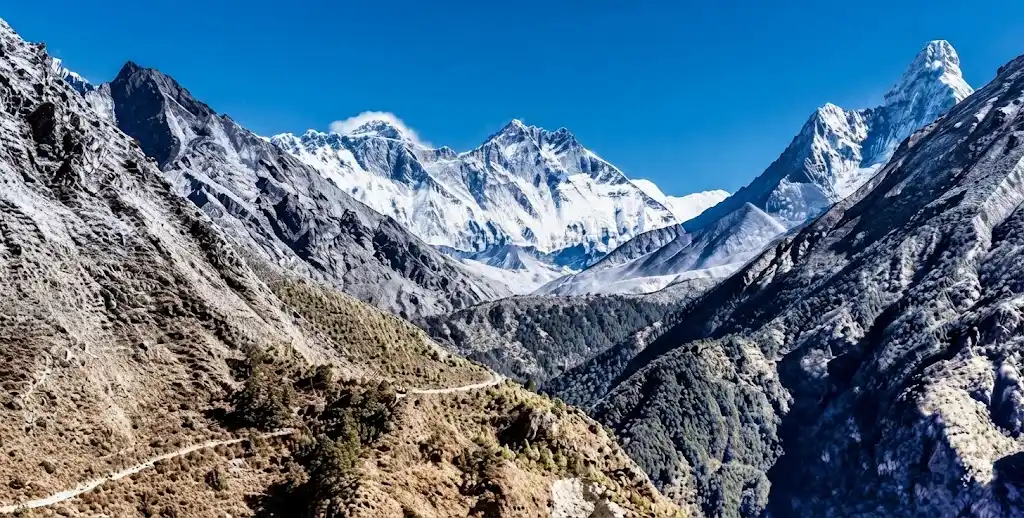
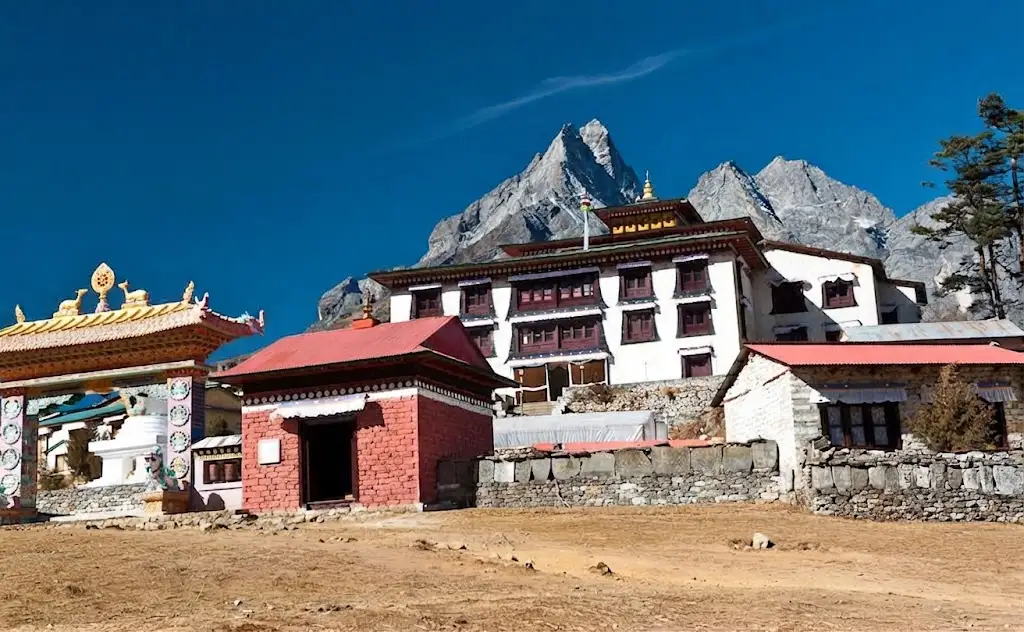
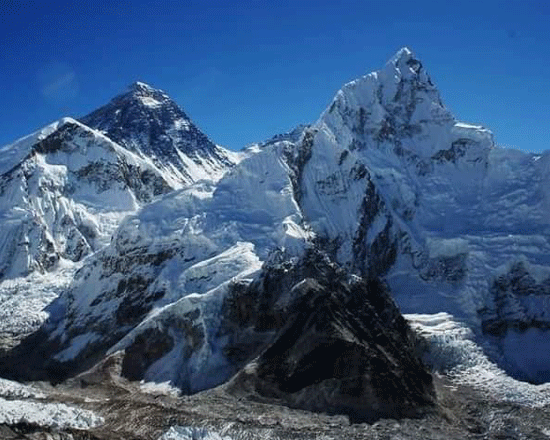
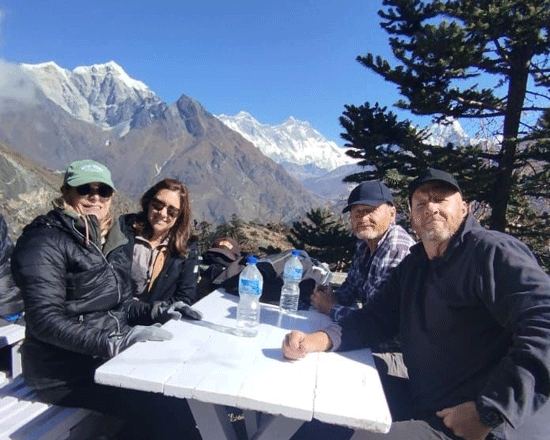
After reaching Namche Bazaar, an acclimatization day allows you to explore the surrounding area and enjoy impressive views of Mount Everest, Ama Dablam, Lhotse, Nuptse, Thamserku, and Kongde. The journey then continues to Tengboche, famous for its historic Buddhist monastery and spectacular Himalayan setting, before passing through the traditional Sherpa village of Khumjung on the return journey to Lukla.
With a carefully planned itinerary, moderate walking distances, and a dedicated acclimatization day, the Everest Panorama Trek provides a rewarding introduction to the Everest region. It is an excellent choice for first-time Himalayan trekkers, couples, families, and travelers with limited time who want a genuine Everest experience without trekking all the way to Everest Base Camp.
Everest Panorama Trek Route and Experience
The Everest Panorama Trek follows one of the most scenic trekking routes in the Khumbu region, combining dramatic mountain scenery with authentic Sherpa villages and important Buddhist landmarks. The trail begins at Lukla and gradually follows the Dudh Koshi Valley toward Namche Bazaar before heading deeper into the Everest region.
After reaching Namche, the itinerary includes an acclimatization day with an optional hike toward the Everest View Hotel and surrounding viewpoints. This provides both time to adjust to the increasing altitude and an opportunity to enjoy some of the finest mountain panoramas on the trek.
From Namche, the trail continues toward Tengboche, passing through forests and open mountain landscapes with views of Ama Dablam and the surrounding peaks. Tengboche is particularly memorable for its monastery and spectacular Himalayan setting.
The return journey passes through Khumjung, a traditional Sherpa village, before descending toward Lukla. Although the trek is shorter than the Everest Base Camp route, it provides a meaningful experience of the Khumbu’s natural scenery, mountain communities, and cultural heritage.
What Makes This Route Special?
The route is carefully designed for travelers who want to experience the Everest region within a limited timeframe. Rather than focusing only on reaching a particular destination, the trek combines several highlights of the Khumbu:
- Mountain views from the Namche and Syangboche area
- Sherpa culture and traditional Himalayan villages
- Tengboche Monastery
- Views of Mount Everest and Ama Dablam
- Sagarmatha National Park
- Scenic suspension bridges and mountain trails
- A gradual ascent with an acclimatization day in Namche
This combination makes the Everest Panorama Trek an excellent short alternative to longer Everest-region adventures.
Everest Panorama Trek Difficulty
The Everest Panorama Trek is a moderate-level trek that does not require previous technical trekking or mountaineering experience. However, trekkers should be prepared for several hours of walking each day on varied Himalayan terrain, including stone steps, uphill and downhill sections, suspension bridges, and uneven mountain trails.
The highest overnight point on this itinerary is Tengboche at 3,860 meters (12,664 feet). Although this is considerably lower than Everest Base Camp, altitude can still affect some travelers. For this reason, the itinerary includes an acclimatization day in Namche Bazaar before ascending toward Tengboche.
Walking and Physical Fitness
Most trekking days involve approximately 4–7 hours of walking. The trail is not technically difficult, but the combination of altitude, long walking days, and frequent ascents and descents requires a reasonable level of fitness.
How to prepare for trekking at High Altitude?
- Walking or hiking regularly before your trip
- Including uphill and downhill walking in your training
- Building your cardiovascular endurance
- Practicing with your trekking boots and daypack
- Maintaining a comfortable and steady walking pace
You do not need to be an experienced mountaineer to complete the Everest Panorama Trek. Good preparation, gradual acclimatization, proper hydration, and a steady pace are more important than speed.
Is Everest Panorama Trek Suitable for Beginners?
Yes. The trek is suitable for many first-time Himalayan trekkers who are reasonably fit and prepared for walking at altitude. Our experienced guide will accompany you throughout the journey and help manage the walking pace, route, and acclimatization.
Travelers who have limited trekking experience should allow themselves enough time to prepare physically before arriving in Nepal.
Altitude on the Everest Panorama Trek
The gradual increase in elevation is an important part of the itinerary:
- Lukla: 2,860 m
- Phakding: 2,610 m
- Namche Bazaar: 3,440 m
- Tengboche: 3,860 m
- Khumjung: 3,780 m
- Lukla: 2,860 m
The acclimatization day in Namche provides an opportunity to gain some additional elevation during the day while returning to Namche to sleep, helping your body adjust before continuing higher.
Best Time for Everest Panorama Trek
The best time for the Everest Panorama Trek is during spring (March to May) and autumn (September to November). These seasons generally offer favorable trekking conditions, clearer mountain views, and comfortable daytime temperatures.
Spring – March to May
Spring is one of the most beautiful seasons for trekking in the Everest region. The weather gradually becomes warmer, the trails become more comfortable, and the hillsides are decorated with blooming rhododendrons, Nepal’s national flower.
March can still be cold at higher elevations, while April and May generally offer warmer conditions and excellent mountain scenery.
Spring is particularly suitable for travelers who want to combine clear Himalayan views with colorful mountain landscapes.
Autumn – September to November
Autumn is widely considered one of the best seasons for trekking in the Everest region.
After the monsoon, the atmosphere is often clearer, providing excellent visibility of the Himalayan peaks. October and November are especially popular for trekking, with generally stable weather and comfortable daytime temperatures.
This is an excellent season for enjoying views of Mount Everest, Ama Dablam, Lhotse, Nuptse, and Thamserku.
Winter – December to February
Winter trekking is possible, particularly for experienced and well-prepared trekkers. The trails are generally quieter, and clear days can provide excellent mountain views.
However, temperatures can become very cold, especially at night, and snowfall may affect higher sections of the route. Trekkers should bring appropriate cold-weather clothing and be prepared for changing conditions.
The advantage of winter is fewer trekkers and peaceful mountain trails.
Monsoon – June to August
The monsoon season brings frequent rainfall, cloudy conditions, and wet or slippery trails in the lower sections of the route. Mountain visibility can also be limited.
However, the Everest region can still be trekked during this period, particularly by travelers who are flexible with their schedule. Weather conditions can affect flights to and from Lukla, so additional flexibility is recommended.
Which Months Are Best?
For the best combination of weather, mountain visibility, and trekking conditions, we recommend:
October – November → Excellent overall conditions
April – May → Clear mountain views and rhododendron blooms
March & September → Good alternatives with fewer trekkers
December – February → Cold but quieter
June – August → Wet season and less predictable mountain views
Everest Panorama Trek Accommodation
Accommodation during the Trek is provided in comfortable local teahouses and mountain lodges along the trekking route. These family-run lodges provide a warm and welcoming environment where trekkers can rest, eat, and experience the hospitality of the local mountain communities.
The teahouses are located in villages such as Phakding, Namche Bazaar, Tengboche, Khumjung, and Lukla. The standard of accommodation varies from one village to another because of the remote Himalayan environment.
Rooms During the Trek
Most teahouses provide twin-sharing rooms with two separate beds, mattresses, pillows, and blankets. Rooms are generally simple and clean, but facilities become more basic as you travel further into the mountains.
Private rooms are available, particularly in larger settlements such as Namche Bazaar, but availability cannot always be guaranteed, especially during the busy trekking seasons.
For solo travelers, accommodation is generally arranged on a single or twin-sharing basis depending on availability and the package selected.
Dining and Common Areas
Most teahouses have a communal dining room where trekkers gather for meals and relaxation. The dining area is usually heated by a central stove, creating a warm place to spend the evening after trekking.
You can enjoy a variety of meals, including Nepali, Indian, Chinese, Tibetan, Italian, and other international dishes, depending on the teahouse.
Bathroom and Shower Facilities
Bathrooms are generally shared at the teahouses, although some lodges offer attached bathrooms in selected rooms.
Hot showers are available at an additional cost in many places, but availability can vary depending on the location and weather conditions.
As you travel higher into the Everest region, facilities become increasingly basic, so trekkers should be prepared for a more traditional mountain-lodge experience.
Electricity, Charging and Wi-Fi
Electricity is available at most teahouses along the route, although charging electronic devices may require an additional payment.
Wi-Fi or mobile network connectivity may also be available in some villages, but the connection can be slower and less reliable than in Kathmandu.
We recommend bringing a power bank so that you can keep your phone, camera, and other essential devices charged.
Sleeping Bag
A warm sleeping bag is provided by Nepal Wilderness Trekking for the duration of the trek. This provides additional warmth during cold nights and is particularly useful at higher elevations.
We recommend using the provided sleeping bag together with the teahouse bedding and blankets when necessary.
A Genuine Himalayan Experience
Teahouse accommodation is an important part of the short Everest Trek. Rather than staying in conventional hotels, you stay in local tea house lodges and share the dining areas with fellow trekkers.
This provides a wonderful opportunity to experience Sherpa hospitality, Himalayan village life, and the unique atmosphere of trekking in the Everest region.
Breakfast
Breakfast is usually served before starting the day’s trek. Common options include:
- Tibetan or local bread
- Toast with eggs
- Porridge
- Pancakes
- Muesli or cereal
- Eggs prepared in different styles
- Tea, coffee, or hot chocolate
Lunch
Lunch is generally served at a teahouse along the trail. Popular choices include:
- Dal Bhat (rice, lentils, and vegetables)
- Noodles
- Fried rice
- Pasta
- Sherpa or Tibetan-style dishes
- Soups
- Momos
Dinner
Dinner is served at the teahouse where you stay overnight. You can choose from the available menu, with Dal Bhat being one of the most popular and filling choices for trekkers. Vegetarian meals are widely available throughout the Everest region.
Drinking Water
Drinking water is available at teahouses and local water stations along the trekking route. Bottled/mineral water can be purchased, while treated or filtered water is another practical option.
We recommend carrying a reusable water bottle and using appropriate water purification methods during the trek.
Everest Panorama Trek Packing List
For a 7-day trek, it is important to pack light while carrying everything necessary for changing Himalayan weather and varying temperatures.
- Comfortable trekking boots
- Trekking trousers and lightweight clothing
- Thermal base layers
- Fleece and warm down jacket
- Waterproof jacket and trousers
- Warm hat, gloves, and socks
- Sunglasses and sunscreen
- Comfortable daypack
- Duffel bag
- Water bottle
- Headlamp
- Trekking poles
- Personal toiletries
- Personal medication and basic first-aid supplies
Nepal Wilderness Trekking provides a sleeping bag and kitbag/duffel bag as specified in the package, helping you reduce the amount of equipment you need to bring from home.
Everest Panorama Trek Permits
Two main permits are required for the Everest Panorama Trek.
- Sagarmatha National Park Entry Permit
The trekking route passes through Sagarmatha National Park, a protected Himalayan area known for its spectacular mountains, forests, wildlife, and cultural heritage.
- Khumbu Pasang Lhamu Rural Municipality Permit
A local entry permit is also required to trek through the Khumbu region. Nepal Wilderness Trekking arranges the necessary permits and paperwork on your behalf.
You do not need to arrange these permits yourself before starting the trek.
Everest Panorama Trek Safety and Acclimatization
Safety is a priority throughout the short Everest Trek. Although the maximum elevation on this itinerary is lower than Everest Base Camp, the trek still reaches approximately 3,860 meters at Tengboche, where altitude can affect some travelers.
The itinerary includes an acclimatization day in Namche Bazaar before ascending to Tengboche. Our experienced guide monitors the group throughout the trek and helps maintain a suitable pace.
Trekkers should stay hydrated, walk at a comfortable pace, eat regularly, and immediately inform the guide if they experience symptoms such as headache, dizziness, unusual fatigue, nausea, or difficulty breathing.
Comprehensive travel insurance covering high-altitude trekking and emergency evacuation is strongly recommended.
Why Trek with Nepal Wilderness Trekking?
Nepal Wilderness Trekking is a locally operated trekking company specializing in trekking and adventure travel throughout Nepal. Our experienced local guides provide practical support from the beginning of your journey until you return to Kathmandu.
- Experienced, government-licensed trekking guides
- Local knowledge of the Everest region
- Private and customized trekking options
- Permit and documentation arrangements
- Accommodation and transportation coordination
- Porter services
- Trekking equipment such as sleeping bags and kitbags
- Support before, during, and after your trek
We can customize the Short on time? Join our 7-day Everest Panorama Trek according to your preferred departure date, group size, walking pace, accommodation preferences, and available time.
Book Your Everest Panorama Trek
Experience the spectacular Everest region, Sherpa culture, Tengboche Monastery, Namche Bazaar, Khumjung, and panoramic Himalayan views on our carefully designed 7-day Everest Panorama Trek.
Whether you are traveling alone, as a couple, with family, or as a group, Nepal Wilderness Trekking can arrange a safe and personalized journey according to your schedule.
Contact us today for the latest cost, available departure dates, and a customized Everest Panorama Trek itinerary.
Departure Note
All published departure dates listed below are 100% guaranteed to operate for Everest Panorama Trek.
If the departure dates do not align with your trekking plans, we would be pleased to organize a private trek on your preferred dates at the same cost. Whether you are traveling solo, with family, friends, or as part of a group, we can customize the itinerary to suit your schedule, interests, and trekking experience.
Our team will be delighted to design a personalized itinerary and help you create an unforgettable trekking experience in Nepal.