
October 18, 2026
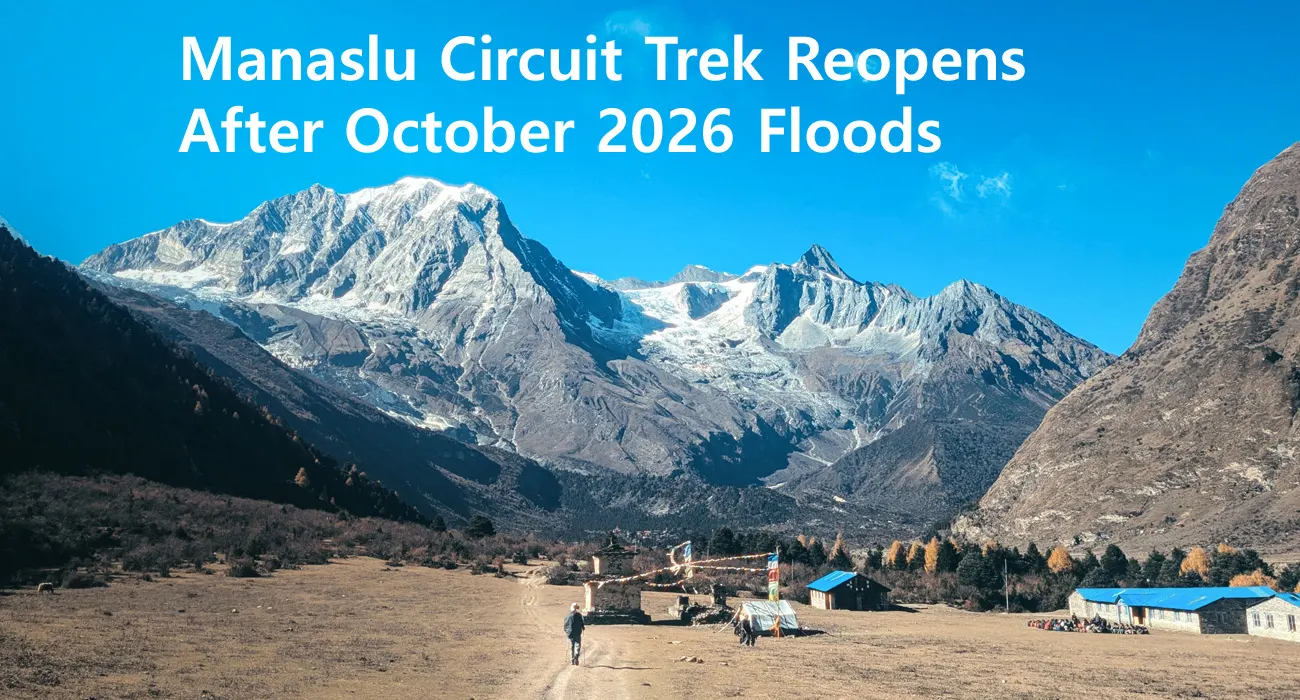
Manaslu Circuit Trek Reopens After October 2026
 By admin
Manaslu Circuit Trek Reopens After October 2026 Floods: Latest Trail Update
Last updated: 18 October 2026
The Manaslu Circuit Trek is reported to have reopened following the devastating floods that struck the Budhi Gandaki River valley in Gorkha district on 11 October 2026. According to a direct conversation with Sane Bahadur Gurung, a local tourism representative and president of the Dharche Manaslu Tourism Development Committee, trekking trails are reopening from 18 October as local villagers and tea-house committees work together to rebuild damaged sections.
The October floods caused extensive damage to villages, bridges, trekking trails and other infrastructure along the lower Manaslu route. The disaster disrupted the autumn trekking season and left trekkers and local trekking staff stranded in several locations.
The latest information from local tourism representatives offers renewed hope for trekking businesses, guides, porters, tea-house owners and communities that depend on tourism.
However, reopening does not mean that all damaged infrastructure has been fully restored. Trekkers should confirm the condition of individual trail sections and river crossings before beginning their journey.
What happened during the October 2026 floods?
On 11 October 2026, a devastating flash flood swept through the Budhi Gandaki valley in northern Gorkha district. Reports indicated that a landslide had temporarily blocked the river near Chumchure, close to the entrance to Tsum Valley. When the blockage gave way, floodwaters rushed downstream and damaged settlements and infrastructure.
According to reports published by The Kathmandu Post and the Associated Press, the flooding destroyed homes and bridges and severely affected the region’s transport and trekking infrastructure. The affected locations included areas around Soti, Machha Khola, Khorlabesi, Dobhan, Jagat, Salleri and the lower Budhi Gandaki valley.
The damage was particularly serious because the river corridor forms the main approach to the Manaslu Circuit and Tsum Valley. Several bridges and sections of the walking trail were washed away, making it difficult or impossible to continue along the normal route. The disaster also affected local accommodation providers and families who rely on trekking tourism for their income.
Manaslu Circuit reopening update from 18 October
Following reports of severe trail damage earlier in October, we contacted Sane Bahadur Gurung, a local tourism representative associated with the Dharche Manaslu Tourism Development Committee, for an update on conditions in the region.
According to the information he provided directly on 18 October 2026, the trails have reopened, and local villagers and tea-house committees are rebuilding the damaged sections. This is an important development for the Manaslu trekking community. Local residents are working to restore access and help tourism activities resume after the disaster.
Earlier reports had described the lower route as severely damaged and inaccessible. For example, reporting by The Kathmandu Post on 14 October highlighted the destruction between Filim and Jagat, while a trail-status update published by Himalayan360 on 17 October still listed the circuit as closed.
The information received from Sane Bahadur Gurung on 18 October is more recent than those reports. However, we have not independently verified the condition of every bridge, crossing and trail section or located a new official notice confirming that the entire route is fully restored. Trekkers should therefore treat this as a positive local reopening report while checking the latest conditions before departure.
Which sections of the Manaslu Circuit were affected?
The October floods mainly affected the lower approach to the Manaslu Circuit, where the trekking trail follows the Budhi Gandaki River through narrow valleys and remote settlements.
1. Machha Khola to Jagat
The section between Machha Khola and Jagat was among the areas most seriously affected. Floodwaters damaged trails, bridges, accommodation facilities and other infrastructure around several riverside settlements.
This section is important because most standard Manaslu Circuit itineraries begin trekking from Machha Khola and continue through the river valley towards Jagat.
With local communities now reportedly rebuilding the trails, trekkers should check whether temporary crossings, alternative paths or other restrictions remain in place.
2. Jagat to Philim
The trail around Jagat, Salleri and Philim also suffered significant damage. Reports published immediately after the floods described washed-out bridges and sections of trail that could no longer be used normally.
This section is particularly important for trekkers heading towards Deng, Namrung and the upper Manaslu region. Although local reconstruction is reportedly underway, travellers should not assume that every damaged section has returned to its original condition.
3. Philim towards Deng and Namrung
The upper route beyond Philim was reported to be in better condition than the lower river corridor during the immediate aftermath of the floods. Trekkers who had already crossed Filim and entered the Nubri area were reported to be continuing their journeys.
However, the condition of the upper trail does not resolve the access problems in the lower valley. Anyone starting a new trek must first confirm that the approach from Machha Khola through Jagat and Philim is passable.
4. Samagaun and Larkya La Pass
Samagaun, the villages farther up the valley and Larkya La Pass form part of the higher Manaslu Circuit trek. Reports following the October floods indicated that some trekkers already in the upper region were safe and able to continue.
The situation can change with weather, snowfall and trail conditions. Trekkers should confirm the current condition of Larkya La and the descent towards Bimthang before setting out.
Local communities are rebuilding the Manaslu trekking trails
The reopening report highlights the importance of local communities in restoring trekking routes after natural disasters. Villagers, tea-house committees, guides, porters and local tourism representatives have a direct interest in restoring access because trekking supports employment, accommodation, food supplies, transport and other services throughout the region.
According to the update received from Sane Bahadur Gurung, local villagers and tea-house committees are working together to rebuild the damaged trails.
Community-led restoration can help reconnect affected settlements and allow tourism businesses to begin operating again. Nevertheless, rebuilding a trail is only one part of recovery. Bridges, river crossings, retaining structures and landslide-prone sections must also be checked before they can be considered safe for regular trekking. We appreciate the efforts of the local communities working to restore access to the Manaslu region after this difficult period.
Are Manaslu trekking permits available?
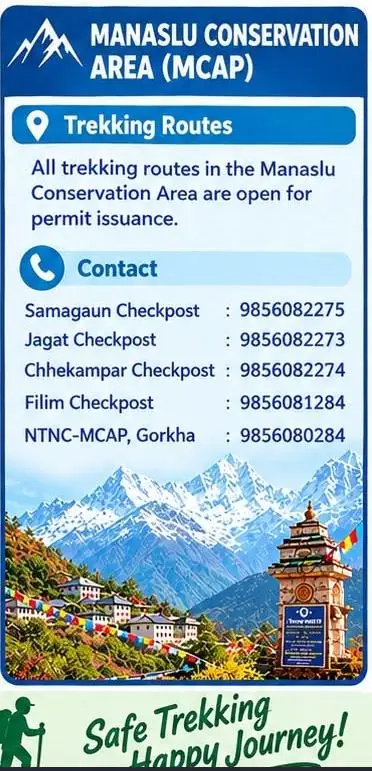
Information provided for this update states that the Manaslu Conservation Area Project (MCAP) is accepting permit applications for trekking routes within the conservation area.
However, permit availability and trail access are separate matters. The availability of a permit does not automatically confirm that a particular trail is open or safe.
Trekkers should confirm the latest permit requirements, route restrictions and access arrangements with their trekking agency and the relevant authorities before travelling.
For travellers whose original Manaslu plans were interrupted by the floods, it is also worth asking the relevant authorities about any special arrangements for existing permits.
MCAP and local checkpost contacts
The following contact numbers have been provided for checking conditions in the Manaslu Conservation Area:
| Office or checkpost | Contact number |
|---|---|
| Samagaun Checkpost | 9856082275 |
| Jagat Checkpost | 9856082273 |
| Chhekampar Checkpost | 9856082274 |
| Filim Checkpost | 9856081284 |
| NTNC–MCAP, Gorkha | 9856080284 |
Contact details should be verified if a call does not connect. For broader regional updates, trekkers can also consult the Nepal Tourism Board’s Manaslu trekking route situation update. Note that this particular official notice concerns the earlier September trail damage, not the subsequent October floods.
Is it safe to trek the Manaslu Circuit now?
The local reopening report is encouraging, but the safety of an individual trek depends on the actual condition of the trail when the group travels.
Before departure, trekkers and trekking agencies should confirm the following:
- Bridge and river crossings: Check that the crossings on the lower route are restored or that an authorised, safe alternative is available.
- Trail reconstruction: Ask which sections have been repaired and whether any temporary detours remain.
- Road access: Confirm transport arrangements to the trailhead, including the road conditions around Arughat, Soti Khola and Machha Khola.
- Weather and landslides: Check the latest forecasts and local warnings, particularly after heavy rain.
- Upper-route conditions: Confirm the status of the trail from Deng through Namrung and Samagaun, and the current conditions at Larkya La Pass.
- Local guidance: Obtain updated information from MCAP, the relevant checkposts and experienced local guides.
Do not attempt to cross damaged bridges, unstable riverbanks or flooded sections simply because trekking has reportedly resumed elsewhere on the circuit.
Should you book the Manaslu Circuit Trek for October and November 2026?
The Manaslu Circuit is a major trekking destination in Nepal, and the October floods have created uncertainty for travellers planning to visit during the autumn season.
The reopening information received on 18 October provides a reason to check the route again rather than assuming that the entire season has been lost. However, the decision to depart should depend on verified trail conditions, not only on a general reopening announcement.
Travellers with existing bookings should contact their trekking agency to review their departure date and itinerary. Those planning a new trip should request an up-to-date assessment of the lower trail and confirm that the full route can be completed safely.
If some sections remain inaccessible, your agency may need to adjust the itinerary, delay the departure or discuss alternative treks.
Frequently asked questions
Is the Manaslu Circuit Trek open now?
According to Sane Bahadur Gurung’s direct update on 18 October 2026, the trails have reopened, with local villagers and tea-house committees rebuilding damaged sections. The condition of every section has not been independently verified, so trekkers should confirm the latest situation before departure.
When did the Manaslu Circuit reopen after the October floods?
The local update received on 18 October 2026 reported that trekking trails had reopened from that date. This is a local report rather than an independently verified, comprehensive official reopening notice.
Can I start the Manaslu Circuit from Machha Khola?
Check the current road and trail access before travelling. Machha Khola and the lower Budhi Gandaki corridor were heavily affected by the October floods, so confirmation is needed that the approach and crossings are passable.
Are the trails towards Larkya La Pass open?
Some trekkers already in the upper Manaslu region were reported to be continuing after the floods. The current condition of the full route, including Larkya La Pass and the descent to Bimthang, should be checked before departure.
Are trekking permits available for Manaslu?
The information supplied for this update indicates that MCAP is accepting permit applications. Trekkers should confirm current permit requirements and route restrictions directly with their agency or the relevant authorities.
Who can provide the latest Manaslu trail information?
The Manaslu Conservation Area Project, its local checkposts, local tourism representatives and experienced trekking guides are useful sources of current information. Their advice should be checked against the actual condition of the route before a trek begins.
Plan your Manaslu Circuit Trek with local experts
Nepal Wilderness Trekking continues to monitor trail conditions and local updates following the October 2026 floods. Our priority is to provide accurate information and help trekkers make informed decisions before travelling to the Manaslu region.
We recognise the hard work of local villagers, guides, porters and tea-house committees who are helping restore the trekking routes and tourism services.
If you are planning the Manaslu Circuit trek in October or November 2026, contact Nepal Wilderness Trekking before departure for the latest available information on access, trail conditions and itinerary arrangements.
Trekking in Nepal with Local Experts — Safety and Satisfaction First.