
Uncategorized
February 5, 2026
Buddha Jayanti
 By admin
Buddha Jayanti: History, Spiritual Meaning, and Its Living Presence in Nepal
Buddha Jayanti, also known as Buddha Purnima or Vesak, is one of the most sacred days in the Buddhist calendar. It commemorates the birth, enlightenment, and Mahaparinirvana of Lord Gautama Buddha, one of humanity’s greatest spiritual teachers. Observed on the full moon day of Baishakh, this occasion represents peace, reflection, and compassion rather than celebration in the conventional sense.
In Nepal, the importance of this day goes far beyond ritual observance. As the birthplace of Lord Buddha, the country holds a unique spiritual responsibility to preserve and honor his teachings. From the sacred gardens of Lumbini to the quiet monasteries of the Himalayan highlands, the festival is experienced as a living tradition rooted in daily life.
Unlike many festivals marked by sound and spectacle, Buddha Jayanti is gentle and introspective. It invites people to slow down, reflect on their actions, and reconnect with values such as kindness, non-violence, and mindfulness, principles that feel increasingly relevant in today’s fast-paced world.
The Birth of Lord Buddha and the Origin of the Festival
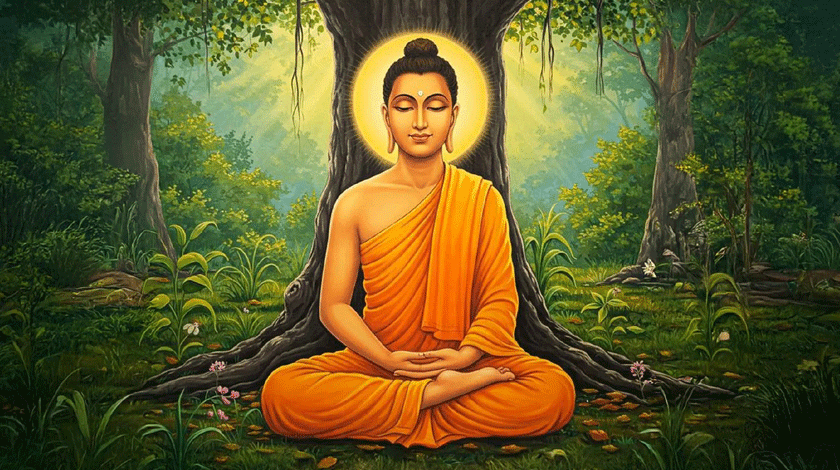
Lord Buddha was born as Siddhartha Gautama in Lumbini, in present-day southern Nepal, around the 6th century BCE. Born into the royal Shakya family, he lived a life of comfort and privilege. Despite this, Siddhartha became deeply aware of human suffering after witnessing aging, illness, and death.
This realization led him to renounce palace life in search of truth. After years of meditation and spiritual discipline, he attained enlightenment under the Bodhi Tree in Bodh Gaya, becoming the Buddha, “the Enlightened One.”
The observance of Buddha Jayanti marks not only his birth, but also his enlightenment and final liberation. The belief that all three events occurred on the same full moon day gives the occasion its profound spiritual depth, symbolizing the complete journey from human existence to ultimate awakening.
The Spiritual Meaning Behind the Observance
At its core, Buddha Jayanti is not about worship in the traditional sense. Buddhism emphasizes self-awareness and ethical living rather than devotion to a creator deity. This makes the day one of reflection rather than festivity.
The occasion encourages people to look inward, observe their thoughts, and cultivate compassion for all beings. Many Buddhists believe that actions performed on this day carry special significance, making it an ideal time for generosity, forgiveness, and mindful living.
In Nepal, the day is marked through quiet rituals, lighting butter lamps, chanting sutras, meditating, and offering prayers for peace. These acts symbolize the light of wisdom dispelling the darkness of ignorance, a central theme in Buddha’s teachings.
Nepal’s Spiritual Identity and Buddhist Heritage
Nepal’s connection to Buddha Jayanti is deeply woven into its national and cultural identity. As the birthplace of Buddha, the country is not only a geographical origin point but also a spiritual guardian of Buddhist heritage.
Lumbini stands at the heart of this identity. Recognized as a UNESCO World Heritage Site, it attracts pilgrims, monks, and spiritual seekers from around the world during this sacred time. The atmosphere remains calm and contemplative, marked by prayer, meditation, and a sense of shared humanity.
Beyond Lumbini, Buddhist culture thrives across Nepal. In regions influenced by Tibetan Buddhism, spiritual practice is not limited to festivals but integrated into everyday life, where Buddhist philosophy is lived rather than occasionally observed.
How the Day Is Observed Across Nepal
The observance of Buddha Jayanti in Nepal is characterized by simplicity and sincerity. People visit monasteries early in the morning, offer flowers and lamps, and participate in prayer ceremonies. Monks chant scriptures emphasizing peace, wisdom, and compassion.
Many families choose to practice non-violence on this day by refraining from killing animals or consuming alcohol. Acts of charity are encouraged, reflecting the belief that generosity purifies the mind and reduces attachment.
In urban areas, peaceful processions may take place, while in rural and mountain communities, the observance remains deeply personal and community-centered. There is no pressure to display devotion—only to practice awareness and kindness.
The Presence of the Festival in the Himalayan Regions
In Nepal’s Himalayan regions, Buddha Jayanti takes on a uniquely quiet and profound character. These areas, shaped by Tibetan Buddhist traditions, observe the day in monasteries that have served as spiritual centers for centuries.
Regions such as Khumbu, Annapurna, Langtang, and Mustang are deeply influenced by Buddhist philosophy. Here, the day is marked through extended prayer sessions and meditation rather than large gatherings. The silence of high mountains and simple lifestyles naturally reflects Buddha’s teachings on mindfulness and detachment.
Travelers trekking during this period may notice subtle signs of the occasion—renewed prayer flags, monks chanting, and villagers gathering quietly for blessings.
Monasteries Along Himalayan Routes
Some of Nepal’s most respected monasteries lie along Himalayan trekking routes. During Buddha Jayanti, these spiritual centers observe the day with sincere devotion rather than ceremony.
In the Khumbu region, monasteries such as Tengboche mark the day through prayer and meditation. Particularly in the Annapurna region of Manang, monks chant and teach according to Tibetan traditions. In Langtang Valley, monasteries reflect the deep spiritual heritage of the Tamang community.
Visitors present during this time may witness butter lamps glowing softly or monks engaged in prayer, offering an authentic glimpse into Nepal’s living spiritual culture.
A Cultural Experience for Visitors
For visitors, Buddha Jayanti provides insight into Nepal beyond landscapes and monuments. It reveals how spirituality shapes social values, daily life, and community relationships.
Many travelers describe a sense of calm during this period, even without participating in rituals. This reflects the universal nature of Buddha’s teachings, which transcend religious identity and speak to shared human values.
In this way, the observance becomes a cultural bridge, connecting locals and visitors through peace, awareness, and mutual respect.
Teachings Remembered on This Sacred Day
The occasion brings renewed attention to the core teachings of Buddhism, understanding suffering, recognizing its causes, and following a path toward liberation.
Rather than doctrine, Buddha emphasized personal experience, ethical conduct, and awareness. These teachings encourage conscious living, truthful speech, and compassionate action.
In Nepal, these principles are reflected in social harmony, respect for nature, and strong community bonds, especially in traditional villages.
Relevance in the Modern World
In a world marked by stress, conflict, and disconnection, Buddha Jayanti offers an alternative approach grounded in balance and compassion. Buddha’s message does not reject progress but questions attachment and excess.
It encourages peace through understanding rather than accumulation—a philosophy that resonates with those seeking mindful living, meaningful travel, and sustainable choices.
Nepal’s quiet observance reflects this wisdom, showing that spiritual depth does not require grand expression.
A Living Spiritual Tradition
Buddha Jayanti is more than a historical remembrance; it is a living tradition that continues to shape Nepal’s spiritual and cultural landscape. Observed with humility and mindfulness, it reflects timeless teachings through silence, compassion, and awareness.
For those who experience this day in Nepal, whether locals, pilgrims, or travelers, it serves as a gentle reminder that true peace begins within. In a world searching for balance, the quiet wisdom of Buddha Jayanti remains as relevant today as it was over two thousand years ago.
Trek Grade
Grade 1
Tap outside to close
Trekking is essentially day hiking and doesn't require any special training. However, good physical condition, a love of walking, and a desire to enjoy mountain views and village life are essential.
Grade 2
Tap outside to close
These treks are suitable for walkers looking for something more challenging and energetic. Hill-walking experience is desirable, with longer days and higher elevations.
Grade 3
Tap outside to close
Since the terrain can be hard and the days long, hikers should be in good physical condition and have previous mountain walking experience. High passes and extended trekking days may be involved.
Trek Grade
Grade 1
Tap outside to close
Trekking is essentially day hiking and doesn't require any special training. However, good physical condition, a love of walking, and a desire to enjoy mountain views and village life are essential.
Grade 2
Tap outside to close
These treks are suitable for walkers looking for something more challenging and energetic. Hill-walking experience is desirable, with longer days and higher elevations.
Grade 3
Tap outside to close
Since the terrain can be hard and the days long, hikers should be in good physical condition and have previous mountain walking experience. High passes and extended trekking days may be involved.