Uncategorized
September 26, 2025
Everest Advanced Base Camp Trek
 By admin
Everest Advanced Base Camp Trek vs. Everest Base Camp Trek – What’s the Difference?
Mount Everest, the tallest mountain, has captured the imagination of explorers, trekkers, and dreamers for generations. Towering at 8,848.86 meters (29,031 feet), it remains the ultimate symbol of adventure and challenge. Since Sir Edmund Hillary of New Zealand and Tenzing Norgay Sherpa of Nepal first reached its summit in 1953, the mountain has become a legendary destination, drawing thousands each year who wish to walk in the footsteps of these pioneers.
In Nepal, Everest is revered as Sagarmatha, meaning “The Head of the Sky”. In Tibet, it is known as Chomolungma, or “Goddess Mother of the World”. These names reflect the deep spiritual and cultural reverence local people hold for the mountain. Beyond being a geographical wonder, Everest is a sacred landmark in Buddhist and Hindu traditions.
Geographically, Everest stands as a natural border between Nepal and Tibet (China), creating two distinct approaches to its slopes. The southern route in Nepal leads to the world-renowned Everest Base Camp, a dream trek for adventure seekers. On the other hand, the northern route in Tibet offers access to the Advanced Base Camp, a higher and more remote staging point. Both routes promise unmatched scenery, unique cultures, and life-changing experiences.
- The South Face (Nepal) – leading to the world-famous Everest Base Camp (EBC).
- The North Face (Tibet) – leading to the lesser-visited but higher Everest Advanced Base Camp (ABC).
Both routes offer spectacular experiences, but they differ in accessibility, cultural immersion, altitude, and trekking style. So, when it comes to Everest Base Camp vs. Advanced Base Camp – what’s the difference? Let’s break it down.
What is Everest Advanced Base Camp?
Everest Advanced Base Camp is one of the most remarkable trekking destinations in the world, located on the northern side of Mount Everest in Tibet. While most trekkers are familiar with the classic Everest Base Camp in Nepal, few know that the Tibet side offers an even more extreme and adventurous journey. At an altitude of 6,340 meters (20,800 feet), Everest Advanced Base Camp is the highest point in the world accessible to trekkers without requiring mountaineering permits.
Unlike the traditional Everest Base Camp trek in Nepal that begins with a flight to Lukla, the journey to Everest Advanced Base Camp combines a road adventure across the Tibetan plateau with a high-altitude trek from the Rongbuk Monastery area. The path leads through breathtaking landscapes of glaciers, rocky moraines, and the stunning north face of Mount Everest — the very route taken by legendary climbers like George Mallory in the early 20th century.
Trekking to Everest Advanced Base Camp is not just a physical challenge; it is an expedition into history, culture, and some of the harshest yet most rewarding environments on earth. For adventure lovers, Everest Advanced Base Camp offers a rare opportunity to see Everest up close from the north while experiencing Tibetan culture, Buddhist monasteries, and the vast plateau, “the roof of the world.”
Everest Advanced Base Camp vs. Everest Base Camp
When comparing the Nepal side trek to Everest Base Camp with the Tibet side journey to Everest Advanced Base Camp, several important differences stand out:
-
Altitude
-
Everest Base Camp in Nepal sits at 5,364 meters (17,598 feet).
-
Everest Advanced Base Camp in Tibet reaches 6,340 meters (20,800 feet).
-
This makes Everest Advanced Base Camp significantly higher, requiring better acclimatization and greater physical preparation.
-
-
Accessibility
-
In Nepal, trekkers fly to Lukla and trek for about 12–14 days through Sherpa villages to reach base camp.
-
In Tibet, trekkers usually fly or drive to Lhasa, then travel overland across Shigatse and Tingri before reaching the Everest North Base Camp by vehicle. From there, the trekking route continues to Interim Camp and Everest Advanced Base Camp.
-
-
Cultural Experience
-
Nepal’s Everest Base Camp trek offers a deeply engaged experience in Sherpa culture, monasteries like Tengboche, and bustling villages such as Namche Bazaar.
-
Everest Advanced Base Camp offers Tibetan culture, the history of Rongbuk Monastery, ancient prayer walls, and Tibetan plateau life.
-
-
Scenery
-
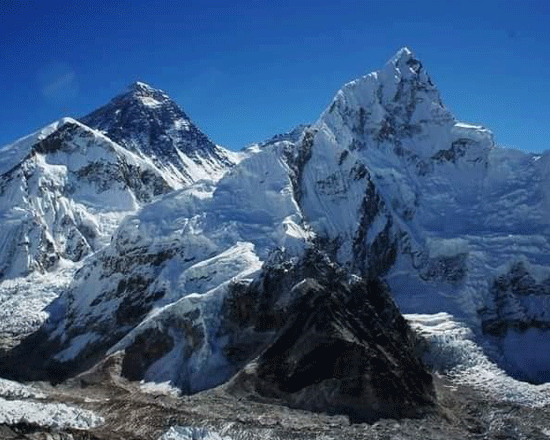
From the Nepal side, trekkers enjoy views of Everest only from certain vantage points like Kala Patthar.
-
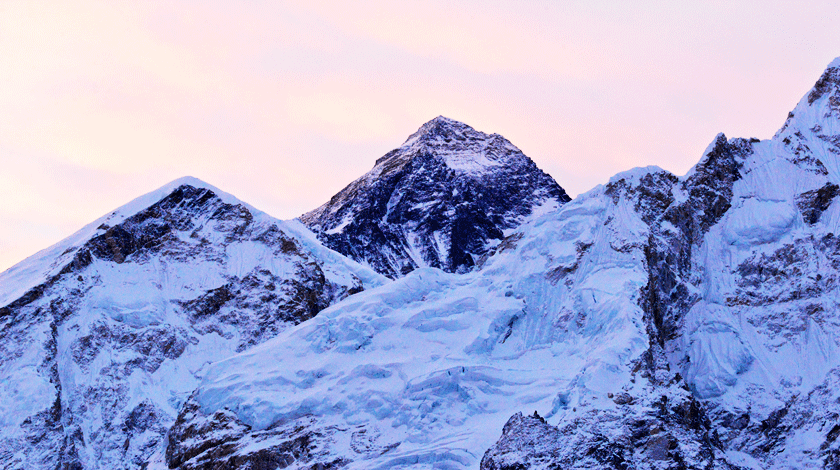
On the Tibet side, Everest Advanced Base Camp lies directly beneath the north face of Everest, giving an uninterrupted, towering view of the mountain.
-
-
Trekking Challenge
-
The Nepal side is challenging but achievable for most fit trekkers.
-
Everest Advanced Base Camp is more demanding due to the extreme altitude, colder climate, and restricted logistics.
-
In short, Everest Base Camp in Nepal is the more popular option, while Everest Advanced Base Camp is for trekkers seeking the ultimate high-altitude adventure.
History & Significance of Everest Advanced Base Camp
Everest Advanced Base Camp is not just a trekking destination; it is an important part of mountaineering history. In the early 1920s, British expeditions led by George Mallory and Andrew Irvine attempted to climb Everest via the north side because Nepal was closed to foreign visitors at the time. These expeditions used the route to the Everest Advanced Base Camp as their staging point for higher climbs.
Even today, Everest Advanced Base Camp remains technically challenging for expeditions attempting Everest from the north. Climbers establish Advanced Base Camp at 6,340 meters before pushing toward the North Col and higher camps. This camp acts as a logistical hub, where climbers rest, acclimatize, and prepare for the technical sections of the climb.
For trekkers, Everest Advanced Base Camp offers a rare chance to walk in the footsteps of legendary mountaineers without committing to the full Everest climb. Standing at Advanced Base Camp provides not only an awe-inspiring view of the north face of Everest but also a direct connection to the history of human ambition on the world’s highest peak.
Everest Base Camp vs. Advanced Base Camp – Location
- Everest Base Camp (Nepal, 5,364m): Reached via the legendary Khumbu Valley, this trek begins with a short flight from Kathmandu to Lukla. Along the trail, trekkers pass through famous Sherpa villages, like Namche Bazaar, Tengboche, Dingboche, Lobuche, and Gorak Shep, before reaching EBC.
- Everest Advanced Base Camp (Tibet, 6,400m): Located higher on the northern side of Everest, ABC is accessed via Rongbuk Glacier. The journey begins in Lhasa, followed by a scenic drive across the Tibetan Plateau, monasteries, and passes en route. From Rongbuk Monastery, trekkers hike to Everest Base Camp (North) and continue further to Advanced Base Camp at 6,400m.
Everest Base Camp vs Advanced Base Camp – Trekking Experience and Difficulty
- EBC (Nepal): A classic trekking journey through lush valleys, high-altitude Sherpa settlements, and rhododendron forests. The route requires about 12–14 days round-trip, with gradual acclimatization and daily trekking.
- ABC (Tibet): The Tibetan side offers easier road access—vehicles can reach close to base camp. However, the trek to Advanced Base Camp is far more demanding due to the extreme altitude, rough terrain, and thin air. Unlike Nepal’s teahouse trek, this side often involves tented camps with fewer comforts.
- EBC (Nepal): Considered moderate to challenging, suitable for trekkers with good fitness levels. No technical climbing gear is needed, but altitude acclimatization is essential.
- ABC (Tibet): Significantly more challenging, as trekkers ascend to 6,400m (21,000 ft). The risk of altitude sickness is very high, and strong physical conditioning is required. This trek is often done by climbers preparing for the Everest’s North Col Route.
Best Time for Trekking
- Nepal (EBC):
- Spring (March–May) – Clear skies, blooming rhododendrons, and lively trails.
- Autumn (September–November) – Best visibility, stable weather, and ideal trekking conditions.
- Tibet (ABC):
- Spring (April–June) – Best for stable conditions before monsoon.
- Autumn (September–October) – Clear skies and dry weather.
- Winter is not suitable due to heavy snowfall and extreme cold.
Cultural and Natural Highlights
- Nepal (EBC):
- Rich Sherpa culture and traditions.
- Trekking through Sagarmatha National Park (UNESCO World Heritage Site).
- Visit to Tengboche Monastery, spiritual heart of the Khumbu.
- Stunning viewpoint of Kala Patthar (5,545m) – offering one of the best close-up panoramas of Everest.
- Tibet (ABC):
- Deep dive into Tibetan Buddhist culture.
- Visits to Lhasa, Shigatse, and Gyantse with highlights, Jokhang Temple, Norbulingka Palace, and Sera Monastery.
- Views of Everest’s North Face, stark landscapes of the Rongbuk Glacier, and nomadic Tibetan settlements.
-
What makes the Everest Advanced Base Camp trek unforgettable?
-
Direct view of Everest’s north face: Standing at Everest Advanced Base Camp, you see the raw vertical scale of the mountain in a way not visible from the Nepal side. The north face towers above the moraine, and climbers’ routes are visible in close detail.
-
Rongbuk Monastery: A spiritual and photographic highlight near the base camp, Rongbuk sits with a direct line of sight to Everest and provides cultural context to the trip.
-
High-altitude desert & Tibetan plateau: Broad vistas, yak caravans (in season), and a distinct ecological zone that’s both stark and beautiful.
-
Mountaineering history: You’re walking the historical approaches used by early expeditions. Everest Advanced Base Camp sits on a route with a century of human stories.
-
Permits, regulations, and travel logistics
Travel to Everest Advanced Base Camp requires more paperwork than the Nepal EBC trek because you enter the Tibet Autonomous Region of China. Key items:
-
Tibet Travel Permit / Alien’s Travel Permit: Required for restricted areas, including Mount Everest/Rongbuk. Foreign travelers must apply through a registered Tibetan travel agency; independent travel is typically not permitted.
-
Chinese visa: You must secure a Chinese visa in advance; your tour operator will then apply for the necessary local permits.
-
Guided tours: Most visitors to Everest Advanced Base Camp travel on a guided tour led by a Tibetan-licensed operator; solo independent access is restricted.
Because permits are route-specific, plan well in advance and work with a reputable operator to avoid delays.
Altitude, acclimatization, and safety
Because Everest Advanced Base Camp is at a high altitude of 6,340 m, altitude management is the single most important safety consideration. The risks of Acute Mountain Sickness (AMS), HAPE, and HACE increase at these elevations. Practical points:
-
Acclimatize slowly: Construct rest days into the itinerary around Lhasa, Tingri, and Rongbuk.
-
Listen to your body: Headache, nausea, dizziness are warning signs; descend if symptoms are severe.
-
Use experienced operators and guides: Groups traveling to Everest Advanced Base Camp should have high-altitude experience and the ability to evacuate immediately.
-
Equipment: Warm clothing, high-quality sleeping bag, crampons/ice-ax for icy approaches (if needed), and satellite communication for emergencies.
A well-run Everest Advanced Base Camp trek prioritizes acclimatization and safety over schedule — this is non-negotiable at these elevations.
Everest Base Camp (EBC) vs. Advanced Base Camp (ABC)
| Feature | Everest Base Camp (Nepal) | Everest Advanced Base Camp (Tibet) |
| Location | Nepal (South Face) | Tibet (North Face) |
| Elevation | 5,364m (17,598 ft) | 6,400m (21,000 ft) |
| Accessibility | 30-minute flight to Lukla + trek (12–14 days) | Drive from Lhasa to Rongbuk + trek |
| Permits | Sagarmatha National Park & Khumbu Permits | Tibet Travel Permit & Mountaineering Permit |
| Best Season | Spring & Autumn | Spring & Autumn |
| Difficulty | Moderate–Challenging | Very Challenging (extreme altitude) |
| Scenery | Everest, Lhotse, Nuptse, Ama Dablam | Everest North Face, Rongbuk Glacier |
| Facilities | Teahouses, lodges, medical posts | Tented camps only |
| Climbing Route | South Col Route | North Col Route |
| Popularity | Very popular, thousands trek yearly | Less visited, mostly for climbers |
Final Thoughts
So, which side of Everest calls to you?
- If you dream of a classic trekking adventure with rich Sherpa culture, cozy teahouses, and gradual acclimatization, then the Everest Base Camp Trek in Nepal is perfect.
- If you seek an extreme high-altitude challenge, remote landscapes, and a closer view of the North Face of Everest, then the Advanced Base Camp Trek in Tibet may be for you.
Whichever route you choose, standing in the shadows of Mount Everest is a once-in-a-lifetime experience. At Nepal Wilderness Trekking Pvt. Ltd., we ensure your journey, whether in Nepal or Tibet, is safe, well-organized, and unforgettable.
Why is the Everest trek and expedition with peak climbing from Nepal more popular than the Advanced base camp from Tibet?
The Everest region of Nepal (Khumbu Valley) is far more popular for trekking, expeditions, and peak climbing compared to the Tibet (North) side. The reasons are:
1. Nepal offers more than 10 trekking routes and Flexibility in the Everest region, such as;
- Everest Base Camp Trek (EBC)
- Gokyo Valley Trek
- Three Passes Trek (Kongma La, Cho La, Renjo La)
- Everest Panorama Trek (short trek up to Tengboche)
- Pikey Peak Trek (lower Khumbu)
- Jiri to Everest Base Camp (classical route)
- Salleri to Everest Base Camp
- Gokyo–EBC combined trek
- Arun Valley to EBC
- Rolwaling to Everest (via Tashi Lapcha)
- Tibet has only one direct trekking route to Everest Advanced Base Camp (ABC), and it is mostly a road journey with limited walking.
2. Trekking Peaks for Acclimatization
-
Nepal Mountaineering Association (NMA) designates 6 trekking peaks in the Everest region, which provide perfect acclimatization climbs for mountaineers preparing for higher expeditions. Moreover, from Nepal, trekkers can see Everest and other Himalayan giants at close view.
-
Island Peak (Imja Tse) – 6,189m
-
Mera Peak – 6,476m (the highest trekking peak in Nepal)
-
Lobuche East – 6,119m
-
Pokalde Peak – 5,806m
-
Kwangde Ri (Kongde) – 6,011m
-
Pharchamo Peak – 6,187m (Rolwaling–Everest link)
-
-
Tibet does not have trekking peaks open for climbers near Everest; expeditions go straight to higher altitudes, which increases the risk of altitude sickness.
3. Better Acclimatization for Expeditions
-
Climbers on the Nepal side can spend weeks trekking through villages at 2,600–5,500m, gradually gaining altitude before reaching Everest Base Camp.
-
On the Tibet side, vehicles take you close to 5,200m at once, giving little opportunity for natural acclimatization.
4. Expedition Peaks in the Everest Region
These are 8,000m and 7,000m peaks that require a full expedition permit from the Nepal government.
8,000m peaks (4 in the Everest region):
-
Lhotse – 8,516m
-
Cho Oyu – 8,188m
Other major expedition peaks (7,000–7,999m):
-
Ama Dablam (6,812m – technically not 7,000m but treated as an expedition peak due to difficulty)
-
Pumori (7,161m)
-
Nuptse (7,861m)
-
Thamserku (6,623m, also technical)
-
Kangtega (6,782m)
-
Gyachung Kang (7,952m – highest peak between Cho Oyu & Everest)