

Uncategorized
May 18, 2026
How Difficult is the Annapurna Base Camp Trek
 By admin
How Difficult is the Annapurna Base Camp Trek? Fitness and Training Guide
The Annapurna Base Camp (ABC) Trek is one of Nepal’s most iconic Himalayan adventures. Each year, thousands of trekkers from around the world journey through lush rhododendron forests, traditional Gurung villages, and steep stone stairways before reaching the breathtaking Annapurna Sanctuary at 4,130 meters.
One of the most frequently asked questions before booking is:
“How difficult is the Annapurna Base Camp Trek?”
The short answer is moderate difficulty—but that does not mean it is easy. The trek demands good stamina, mental resilience, and a reasonable level of physical preparation. While it is achievable for beginners, success depends on proper training and an understanding of the trail’s challenges.
In this detailed guide, we break down the ABC Trek’s actual difficulty level, explain what makes it challenging, and provide a practical fitness and training plan to help you prepare effectively.
Overview of Annapurna Base Camp Trek Difficulty
The Annapurna Base Camp (ABC) Trek is officially classified as a moderate-level trek in Nepal. It does not require any technical climbing skills such as ropes, ice axes, or prior mountaineering experience, making it accessible to a wide range of trekkers. However, it should not be underestimated, as it involves sustained physical effort, significant altitude gain, and varied mountain terrain.
Throughout the journey, trekkers experience a steady combination of long walking days, steep ascents, and high-altitude conditions that gradually become more demanding as the trail progresses toward the Annapurna Sanctuary.
Typical trekking conditions include:
- 5 to 7 hours of walking per day on average
- Continuous uphill and downhill sections, often in the form of long stone staircases
- Gradual altitude gain reaching up to 4,130 meters at Annapurna Base Camp
- Trek duration of approximately 7 to 12 days, depending on itinerary and pace
- A diverse range of terrain, including dense rhododendron forests, terraced farmlands, river valleys, and alpine landscapes
Although the ABC Trek is generally considered easier than high-altitude expeditions such as the Everest Base Camp Trek or the Manaslu Circuit Trek, it is still noticeably more challenging than shorter hikes like the Poon Hill Trek. The main difficulty lies not in technical climbing, but in physical endurance, repetitive elevation changes, and the cumulative effect of altitude over multiple days.
In particular, the constant ascent and descent on stone staircases can be surprisingly demanding on the knees and thighs, especially for trekkers who are not accustomed to long-distance hiking. As the altitude increases, reduced oxygen levels also add layer of difficulty, making even moderate climbs feel more strenuous.
Overall, while the Annapurna Base Camp Trek is achievable for most reasonably fit individuals, it requires consistent stamina, proper pacing, and good preparation to complete comfortably and safely.
What Makes the ABC Trek Challenging?
Although the Annapurna Base Camp (ABC) Trek is often described as a “beginner-friendly Himalayan trek,” there are several important factors that increase its overall difficulty. The route may not require technical climbing skills, but it still demands consistent physical effort, mental resilience, and the ability to handle sustained mountain terrain over multiple days.
1. Long Daily Walking Hours
Most trekking days on the ABC route involve 5–7 hours of continuous walking, and on some longer sections, it can extend even further depending on pace, weather conditions, and trail conditions. Even experienced hikers can begin to feel fatigue because the trekking is done day after day, with limited full rest days in between.
Unlike short hikes where recovery is quick, the body in the ABC Trek is under constant physical demand for many consecutive days. This leads to cumulative fatigue, where tiredness builds up gradually rather than appearing all at once. As a result, trekkers often feel more exhausted on day 4, 5, or 6 than they do at the beginning, even if individual days seem manageable.
The continuous nature of walking—combined with uneven terrain and frequent elevation changes—means the body is always working. Proper pacing, hydration, and energy management become essential to avoid burnout and maintain steady performance throughout the trek.
2. Thousands of Stone Steps
One of the biggest surprises for trekkers on the Annapurna Base Camp route is the sheer number of stone staircases. While the trail is scenic and culturally rich, it also includes long, steep, and sometimes relentless stone steps carved into the mountainside.
Sections such as Ulleri, Chhomrong, and Sinuwa are particularly demanding, with continuous ascents that can feel never-ending. These climbs require strong leg muscles and steady pacing, especially when carrying a backpack. For many trekkers, these uphill sections are more exhausting than expected, even if they are physically fit.
The descent can be just as challenging. Walking downhill on stone steps places significant pressure on the knees, ankles, and thigh muscles, often leading to soreness or fatigue if proper technique is not used. Trekking poles become especially helpful in these sections for balance and joint protection.
Because of this repetitive stair climbing—both up and down—many trekkers find the ABC route harder than they initially imagined.
3. Altitude (Up to 4,130m)
Although the Annapurna Base Camp Trek does not reach extreme altitudes compared to treks like Everest Base Camp, altitude still plays an important role in overall difficulty.
Once trekkers go above 3,000 meters, oxygen levels gradually decrease, making physical activity more demanding. As the trail progresses toward higher points such as Machapuchare Base Camp (3,700m) and finally Annapurna Base Camp (4,130m), the air becomes noticeably thinner.
At these elevations, trekkers may experience:
- Shortness of breath during normal walking
- Increased fatigue even on moderate climbs
- Mild headaches or dizziness
- Reduced appetite and slower digestion
These symptoms are usually mild and temporary, but they can affect performance if trekkers walk too fast or skip proper rest. The key to managing altitude is slow ascent, steady pacing, hydration, and allowing the body time to adapt naturally.
4. Continuous Up and Down Terrain
Unlike flat or gently rolling hiking routes, the ABC Trek is characterized by constant uphill and downhill movement. There are very few long sections of level ground where the body can fully recover.
This repeated “up–down–up” pattern puts continuous stress on different muscle groups. Uphill sections challenge cardiovascular endurance and leg strength, while downhill sections demand control, balance, and joint stability.
Over time, this alternating terrain creates cumulative fatigue, especially in the quads, calves, and knees. Even if individual sections are not extremely difficult, the repetition across multiple trekking days makes the overall journey physically demanding.
5. Weather Conditions
Weather in the Annapurna region can change quickly and often without warning, which adds another layer of difficulty to the trek. Conditions may vary significantly depending on the season, altitude, and time of day.
Early mornings are often cold, while afternoons can bring sudden rain or strong winds. In winter months, snowfall is also possible at higher elevations, which can make the trail more challenging and slower to navigate.
Wet or icy trails increase difficulty, especially on stone staircases, where surfaces become slippery and require extra caution. Poor weather can also reduce visibility and make walking more tiring and mentally draining.
Because of these unpredictable conditions, proper clothing, layering, and preparation for all weather scenarios are essential for a safe and comfortable trek.
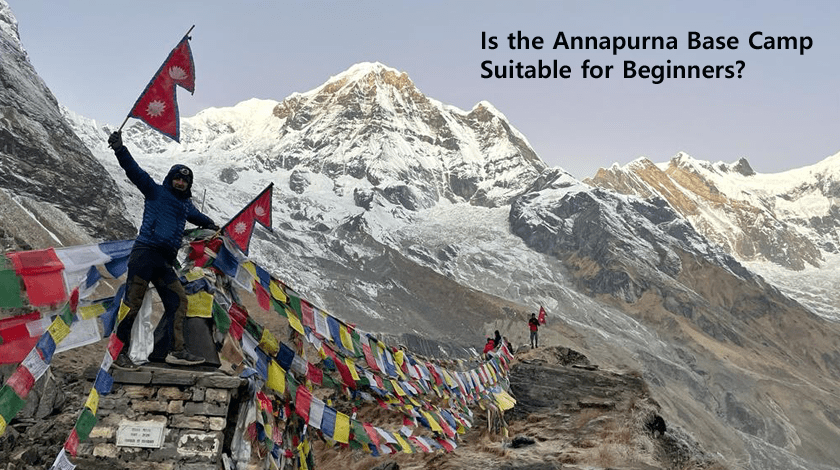
Is the Annapurna Base Camp Suitable for Beginners?
Yes, the Annapurna Base Camp (ABC) Trek is suitable for beginners, but it requires proper preparation and a realistic understanding of the trail conditions.
Beginners can complete the ABC Trek if they:
- Train for at least 6–8 weeks before the trek
- Maintain a good basic level of fitness
- Walk or hike regularly in their daily routine
- Understand and adapt to a slow and steady trekking pace
You do not need to be an athlete or have previous high-altitude trekking experience. However, you should be comfortable walking for several hours per day on uneven terrain, stone steps, and continuous uphill sections.
One of the key factors for beginners is pacing. Many first-time trekkers struggle not because the trek is too technical, but because they start too fast and tire themselves out early. A steady, controlled pace makes a significant difference in comfort and success.
Every year, thousands of first-time trekkers complete the ABC route successfully with proper guidance, good preparation, and sensible walking habits. With the right mindset and training, it is one of the most rewarding beginner-friendly Himalayan treks in Nepal.
Fitness Level Required for ABC Trek
To complete the Annapurna Base Camp Trek comfortably and enjoy the experience, it is important to meet a reasonable level of overall fitness. While the trek is achievable for beginners, having a solid physical foundation will make the journey significantly easier and reduce fatigue during long trekking days.
Cardiovascular Fitness
Good cardiovascular endurance is essential, as the trek involves several hours of continuous walking each day at varying altitudes.
You should ideally be able to:
- Walk continuously for 5–7 hours at a steady pace
- Jog, cycle, or swim for 30–60 minutes without excessive fatigue
- Perform stair climbing for 30–60 minutes, as much of the trail involves uphill stone steps
Strong cardiovascular fitness helps your body use oxygen more efficiently, especially as altitude increases.
Strength Requirement
Lower body and core strength play a major role in trekking comfort and injury prevention.
You should focus on building:
- Strong leg muscles to handle long uphill climbs and steep ascents
- Knee stability and joint strength for long downhill sections, which can be demanding on the joints
- Core strength and balance to support your posture while carrying a backpack on uneven terrain
Strong muscles reduce strain and help maintain stability on rough mountain trails.
Endurance Ability
Endurance is the ability to sustain physical effort over several consecutive days, which is one of the most important factors for the ABC Trek.
You should be able to:
- Walk for multiple days in a row without excessive exhaustion
- Recover overnight and continue trekking the next day with manageable fatigue
- Maintain a consistent pace without needing long breaks every short interval
This ability is what truly determines how comfortable your trek will feel over time.
Simple Fitness Test
A practical way to assess your readiness for the ABC Trek is this simple benchmark:
If you can complete a hike of 10–12 km with moderate elevation gain and still feel reasonably comfortable the next day, you are generally well-prepared for the trek.
This indicates that your body can handle sustained walking, recovery, and the physical demands of multi-day trekking in the Himalayas.
How to Train for Annapurna Base Camp Trek
Proper training is one of the most important factors in making the Annapurna Base Camp (ABC) Trek feel easier, safer, and far more enjoyable. While the trek is considered moderate, good preparation significantly reduces fatigue and helps your body adapt to long days of walking, elevation gain, and high-altitude conditions.
1. Cardio Training (3–5 Days per Week)
Cardiovascular training is the foundation of your preparation, as it improves stamina, breathing efficiency, and overall endurance at higher altitudes.
Regular cardio helps your body use oxygen more effectively, which becomes especially important as you ascend above 3,000 meters in the Annapurna region.
Best cardio exercises include:
- Brisk uphill walking or hiking
- Jogging or light running
- Cycling (outdoor or stationary)
- Swimming for full-body endurance
- Stair climbing or stair machine workouts
The goal is to gradually build your ability to sustain physical effort for long durations without exhaustion. Over time, you should be able to maintain steady activity for at least one hour without needing frequent breaks.
Consistent cardio training will make long trekking days on the ABC route feel much more manageable and less tiring.
2. Strength Training (2–3 Days per Week)
Strength training is essential for building the muscles that are heavily used during the Annapurna Base Camp Trek, especially the legs, core, and stabilizing muscles. A stronger body reduces fatigue, improves balance on uneven terrain, and helps protect your joints during long descents.
Recommended exercises include:
- Squats for overall leg strength and endurance
- Lunges to improve balance and single-leg stability
- Step-ups to simulate uphill trekking movements
- Calf raises to strengthen lower legs for steep ascents
- Plank holds to build core stability and posture control
These exercises prepare your body for the continuous uphill climbs and long downhill sections that are common on the ABC route.
3. Stair Climbing Practice (Most Important)
Stair climbing is one of the most effective ways to prepare for the ABC Trek because the trail includes countless stone staircases, especially in areas like Ulleri and Chhomrong.
Training on stairs builds both strength and endurance in the exact muscles used on the trek.
Start gradually:
- Begin with 10–15 minutes of stair climbing daily
Then increase intensity over time:
- Progress to 45–60 minute sessions as your fitness improves
This type of training strengthens your knees, thighs, and cardiovascular system, helping you handle steep ascents more comfortably and with less fatigue.
4. Weekend Hiking (Real Simulation)
Weekend hiking is one of the best ways to simulate real trekking conditions and prepare your body for consecutive days of walking in the Himalayas.
Aim to do at least one long hike every week:
- 3 to 5 hours of continuous walking
- Carry a light backpack (around 5–7 kg)
- Choose hilly or uneven terrain whenever possible
This practice helps your body adapt to real trail conditions, including elevation changes, uneven surfaces, and carrying extra weight. It also builds mental endurance, which is just as important as physical fitness.
5. Back-to-Back Walking Training
Back-to-back hiking on consecutive days is extremely effective for preparing your body for the daily rhythm of the ABC Trek via Poon Hill, where there is little time for full recovery between trekking days.
Example training plan:
- Day 1: 4–5 hour hike
- Day 2: 3–4 hour hike
This type of training helps your body adapt to fatigue accumulation and teaches you how to continue walking even when your muscles are already tired. It closely simulates real trekking conditions in the Himalayas and improves both endurance and recovery capacity.
Mental Challenges of the ABC Trek
Physical fitness is only part of the challenge on the Annapurna Base Camp Trek. Mental strength and patience play an equally important role in completing the journey.
Common mental challenges include:
- Repetitive stone stair sections that can feel endless
- Cold early mornings and changing weather conditions
- A slower walking pace than many trekkers are used to
- Accumulated fatigue over multiple trekking days
- Sudden weather changes that may affect comfort and motivation
The most important factor is patience. Many trekkers struggle not because they lack fitness, but because they start too fast, ignore their body’s signals, and burn out early in the trek.
Maintaining a slow, steady, and consistent pace is the key to enjoying the ABC Trek and reaching Annapurna Base Camp safely and comfortably.
Altitude Sickness Risk
Altitude sickness (Acute Mountain Sickness) can become a concern once trekkers ascend above 3,000 meters, and although the Annapurna Base Camp (ABC) Trek is generally considered safe, the risk still exists and should not be ignored. The trek gradually climbs to 4,130 meters at Annapurna Base Camp, where oxygen levels are noticeably lower than at lower elevations.
Most trekkers complete the route without serious issues when they follow a sensible itinerary and maintain proper trekking habits. The key is slow and steady acclimatization, allowing the body enough time to adjust to reduced oxygen levels.
To minimize the risk of altitude sickness, it is important to follow a few simple but effective precautions:
- Walk at a slow, consistent pace and avoid rushing uphill sections
- Stay well hydrated by drinking water regularly throughout the day
- Avoid alcohol and smoking during the trek, as they can worsen dehydration and symptoms
- Take frequent rest breaks to allow your breathing and heart rate to stabilize
- Do not rush the ascent schedule; gradual elevation gain is essential for safety
Even with proper precautions, it is important to recognize early symptoms of altitude sickness. If you experience any warning signs such as headache, dizziness, nausea, loss of appetite, or unusual fatigue, it is crucial to stop immediately, rest, and avoid further ascent until symptoms improve.
In most cases, early action and proper rest are enough to prevent the condition from becoming serious. Listening to your body is the most important rule when trekking at high altitude.
How to Make the ABC Trek Easier
There are several proven ways to reduce the overall difficulty of the Annapurna Base Camp Trek and make the experience more comfortable and enjoyable. Small adjustments in preparation and trekking style can significantly reduce fatigue and physical strain on the trail.
- Hiring a porter to carry your main backpack and reduce your daily load
- Using trekking poles to improve balance and protect knees during steep ascents and descents
- Walking slowly and maintaining a steady rhythm, especially on uphill sections
- Staying well hydrated throughout the day to support energy levels and acclimatization
- Choosing a longer itinerary of 9–12 days instead of rushing the trek in fewer days
- Wearing well broken-in trekking boots to prevent blisters and foot discomfort
These simple measures make a noticeable difference in reducing exhaustion and improving overall trekking comfort.
Is the Annapurna Base Camp Trek Hard? Final Verdict
The Annapurna Base Camp Trek is moderately difficult, but it is highly achievable for most people with a reasonable level of fitness and proper preparation.
Summary:
- Not a technical climbing route
- Physically demanding due to long walking hours and steep terrain
- Stair-heavy with frequent ascents and descents
- Suitable for beginners with training and preparation
- Requires good stamina, endurance, and consistent pacing
With the right preparation and mindset, the ABC Trek is not just a physical challenge but also a deeply rewarding Himalayan experience.
Final Thoughts
The Annapurna Base Camp Trek offers a perfect balance of challenge and natural beauty. It pushes your physical limits just enough to make the achievement meaningful, while remaining accessible without any mountaineering experience.
With proper training, steady pacing, and a positive mindset, almost anyone with a basic level of fitness can complete this iconic Himalayan journey and enjoy one of the most rewarding trekking experiences in Nepal.

Trek Grade
Grade 1
Tap outside to close
*
Grade 2
Tap outside to close
**
Grade 3
Tap outside to close
The Annapurna Base Camp Trek is graded 3 out of 5 (Moderate to Challenging). It is suitable for trekkers with reasonable fitness who can walk for 5–7 hours daily. The trail passes through traditional villages, rhododendron forests, and steep stone staircases before reaching Annapurna Base Camp at 4,130 metres (13,550 feet). No technical climbing skills are required, but the long ascents, steep descents, and high altitude can be challenging. Previous hiking experience is helpful but not essential. Regular walking, stair climbing, and good preparation will help you enjoy this rewarding Himalayan adventure.
Trek Grade
Grade 1
Tap outside to close
Trekking is essentially day hiking and doesn't require any special training. However, good physical condition, a love of walking, and a desire to enjoy mountain views and village life are essential.
Grade 2
Tap outside to close
These treks are suitable for walkers looking for something more challenging and energetic. Hill-walking experience is desirable, with longer days and higher elevations.
Grade 3
Tap outside to close
Since the terrain can be hard and the days long, hikers should be in good physical condition and have previous mountain walking experience. High passes and extended trekking days may be involved.