August 21, 2026
Nepal Restricted Area Trekking Permit
 By admin
Nepal Restricted Area Trekking Permit – Requirements, Fees, Documents & Complete Guide
Nepal is home to some of the world’s most spectacular and remote trekking destinations. While many Himalayan trails are open to independent travelers, several strategically important and culturally sensitive areas are designated as Restricted Areas by the Government of Nepal. Foreign travelers who wish to trek in these regions must obtain a Restricted Area Trekking Permit from the Department of Immigration before entering the designated trekking zone.
Restricted-area trekking permits are different from ordinary national park, conservation area, or TIMS requirements. Depending on the destination, trekkers may need a special permit, a licensed trekking agency, a registered guide, insurance documentation, and an approved trekking itinerary.
The most well-known restricted trekking destinations include Manaslu, Tsum Valley, Upper Mustang, Nar Phu, Upper Dolpo, Humla, Kanchenjunga, Mugu, and several remote areas of eastern and western Nepal. The exact permit fee, covered area, permitted route, and duration vary by destination and season. (Nepal Tourism Board)
What Is a Restricted Area Trekking Permit in Nepal?
A Restricted Area Trekking Permit is a special authorization issued by the Department of Immigration, Government of Nepal, for foreign trekkers entering designated restricted or controlled areas.
These areas have additional regulations because of their remote location, sensitive border geography, cultural importance, environmental considerations, or limited infrastructure.
According to the Nepal Tourism Board, trekkers entering areas designated as restricted by the Government of Nepal must obtain a special trekking permit from the Department of Immigration in Kathmandu. (Nepal Tourism Board)
A restricted-area permit normally specifies:
- The trekker’s personal details
- The permitted trekking region or route
- The approved trekking dates
- The number of trekking days
- The authorized trekking agency
- The applicable permit fee
Trekkers must carry the permit during the trek and present it to immigration officials or police when requested. Trekking outside the permitted area or route can constitute a violation of Nepalese regulations. (Nepal Tourism Board)
Which Trekking Areas in Nepal Require a Restricted Area Permit?
The Government of Nepal designates specific municipalities, wards, valleys, and trekking routes as restricted areas. The boundaries and permit fees can change, so travelers should always check the latest government information before departure.
Major restricted trekking regions include:
-
- Upper Mustang
Upper Mustang is one of Nepal’s most famous restricted trekking destinations. The permit covers designated areas of Lomanthang Rural Municipality, Lo-Ghekar Damodarkunda Rural Municipality, and parts of Baragung Muktichetra Rural Municipality. (Immigration Department of Nepal)
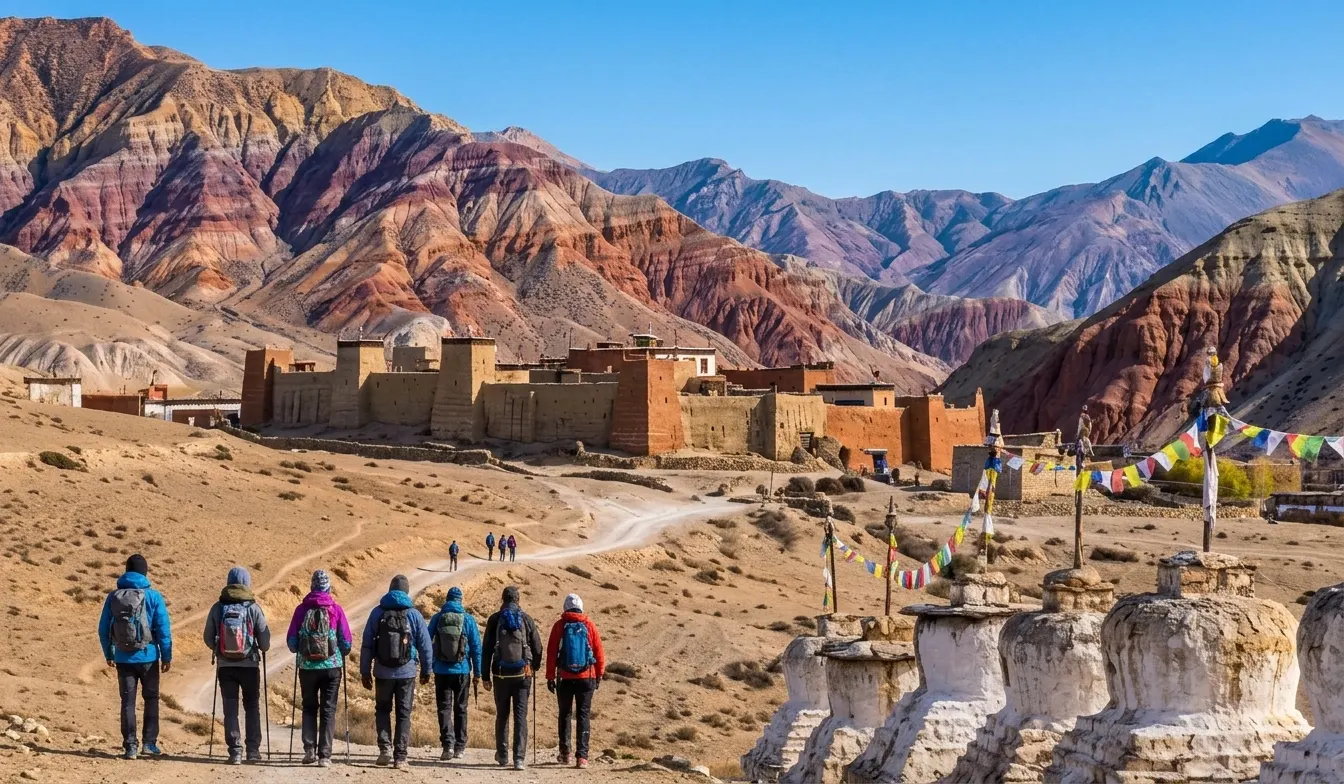
Upper Mustang is famous for its Tibetan-influenced culture, ancient monasteries, dramatic desert-like landscapes, caves, traditional villages, and the historic walled settlement of Lo Manthang.
The Nepal Tourism Board confirms that Upper Mustang requires a special trekking permit because it is classified as a restricted area. (Nepal Tourism Board)
-
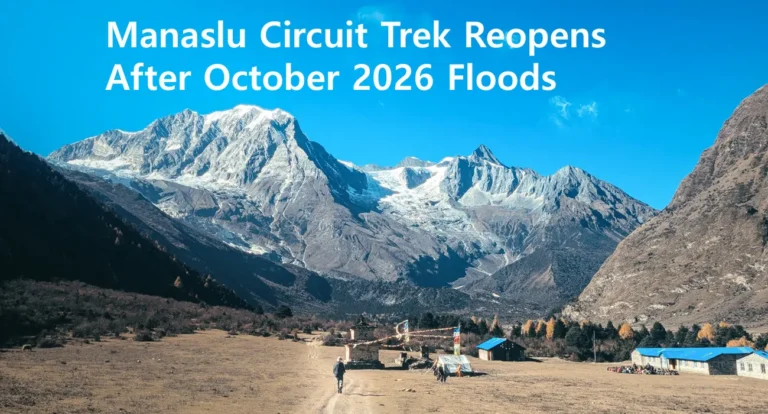
- Manaslu Restricted Area
The restricted section of the Manaslu region lies within Chumnubri Rural Municipality, Gorkha, covering wards 1, 2, 3, and 4 according to the current Department of Immigration route information. (Immigration Department of Nepal)
The Manaslu Circuit Trek is one of Nepal’s most rewarding long-distance Himalayan treks. The trail passes through Tibetan-influenced villages, the Budhi Gandaki valley, high mountain landscapes, and Larkya La before joining the Annapurna region.
The Manaslu restricted permit is seasonal, and the fee is calculated according to the number of days spent in the restricted area.
-
- Tsum Valley
Tsum Valley in northern Gorkha is another restricted trekking destination. Known for its Tibetan Buddhist heritage, ancient monasteries, traditional villages, and dramatic Himalayan scenery, Tsum Valley can be combined with the Manaslu Circuit.
Trekkers entering the designated restricted area require the appropriate special permit.
-
- Nar Phu Valley
Nar Phu Valley in the Manang district is a remote and culturally distinctive trekking area. The trail leads into the hidden valleys of Nar and Phu, where travelers can experience traditional Tibetan-influenced villages and high Himalayan landscapes.
A special restricted-area permit is required for the designated Nar Phu area.
-
- Upper Dolpo
Upper Dolpo is among Nepal’s most remote trekking destinations. The restricted area includes designated parts of Dolpo Buddha Rural Municipality, Shey Phoksundo Rural Municipality, and Chharka Tangsong Rural Municipality. (Immigration Department of Nepal)
The region is famous for Phoksundo Lake, high-altitude landscapes, ancient Buddhist culture, and remote Himalayan settlements.
-
- Kanchenjunga
Parts of the Kanchenjunga region are also designated as restricted areas. The region offers exceptional mountain scenery and remote trekking experiences in eastern Nepal.
The Kanchenjunga area is also subject to trekking-guide and TIMS requirements under Nepal’s current trekking regulations. (Nepal Tourism Board)
-
- Humla
Designated areas of Humla, including parts of Simikot, Namkha, and Changkheli rural municipalities, require a special trekking permit. (Immigration Department of Nepal)
Humla is particularly attractive to travelers looking for remote Himalayan culture, ancient Buddhist traditions, and landscapes close to the Tibetan border.
-
- Other Restricted Areas
Depending on current government regulations, restricted trekking zones also include designated areas of:
- Mugu
- Darchula
- Bajhang
- Taplejung
- Dolakha
- Rasuwa
- Sankhuwasabha
- Solukhumbu
- Other officially designated remote areas
Because the list, boundaries, and fees can be revised by the Government of Nepal, trekkers should verify the latest Department of Immigration information before booking their trek. (Immigration Department of Nepal)
Restricted Area Trekking Permit Requirements
Foreign trekkers generally cannot obtain these permits independently at the trailhead. The Department of Immigration states that restricted-area trekking permits are issued through registered trekking agencies. (Immigration Department of Nepal)
A trekking agency normally prepares and submits the required documentation to the Department of Immigration.
Documents Required from the Trekker
The exact documents may vary according to the destination and current government procedures, but travelers should generally provide:
- Valid passport
- Valid Nepal visa
- Recent passport-size photograph
- Passport copy
- Trekking itinerary
- Travel insurance document
- Personal details required for the permit application
- Emergency contact information where required
The passport should be valid for the trekking period and contain sufficient validity for travel to Nepal.
Documents Required from the Trekking Agency
The Department of Immigration’s current service information lists several agency-side documents for restricted-area permit applications, including:
- Online permit application receipt
- Trekking agency license
- Trekking program schedule
- Trekker name list
- Agency guarantee letter
- Agency agreement
- PAN registration certificate
- Relevant tax-clearance documentation
- Foreign-currency transaction/exchange authorization where applicable
- Bank payment voucher
- Trekker application form and photograph
- Insurance documentation for foreign trekkers and accompanying Nepalese staff
- Other documents required under the current application procedure (Immigration Department of Nepal)
The agency handles the administrative process so that trekkers do not have to deal with the permit application themselves.
Restricted Area Permit Fees in Nepal
Restricted-area permit fees depend on the destination, season, and number of trekking days.
The following are examples based on the current Department of Immigration trekking-route information:
|
Restricted Area |
Current Permit Structure |
|
Upper Mustang |
USD 50 per person per day |
|
Upper Dolpa |
USD 500 per person for the first 10 days; USD 50 per person per day thereafter |
|
Manaslu |
Sep–Nov: USD 100 per person/week; USD 15/day beyond one week. Dec–Aug: USD 75/week; USD 10/day beyond one week |
|
Humla |
USD 50 per person/week; USD 10/day beyond one week |
|
Taplejung |
USD 20/week for the first four weeks; USD 25/week thereafter |
|
Bajhang |
USD 90/week; USD 15/day beyond one week |
|
Mugu |
USD 100/week; USD 15/day beyond one week |
|
Darchula |
USD 90/week; USD 15/day beyond one week |
These rates apply to the designated areas listed by the Department of Immigration and should not be confused with conservation-area entrance fees, national park fees, TIMS fees, or other trekking costs. (Immigration Department of Nepal)
Important: Permit fees and regulations can change. Always confirm the current rate with the Department of Immigration or your registered trekking agency before making a booking.
Restricted Area Permit vs. TIMS vs. Conservation Area Permit
One of the most common questions among trekkers is whether the restricted-area permit is the same as a TIMS card or conservation-area permit.
It is not.
Restricted Area Trekking Permit
This is a special permit issued for designated government-controlled trekking areas.
TIMS Card
TIMS stands for Trekkers’ Information Management System. Nepal’s current trekking regulations require licensed guides and agency-issued TIMS cards on specified trekking routes. (Nepal Tourism Board)
Conservation Area Entry Permit
Some restricted trekking destinations are also located within conservation areas. For example, parts of the Manaslu and Annapurna regions have separate conservation-area requirements.
Therefore, a trekker may need more than one permit or authorization for a single trek.
For example, a Manaslu Circuit trek may involve:
- Restricted Area Trekking Permit
- Manaslu Conservation Area entry permit
- TIMS card
- Local government entry requirements where applicable
Your trekking agency should confirm exactly which permits apply to your itinerary.
Can I Trek in a Restricted Area Without a Guide?
Restricted-area regulations are different from ordinary trekking regulations.
The Government of Nepal requires restricted-area permits to be processed through authorized trekking agencies. In addition, several trekking regions are covered by current guide and TIMS requirements. (Immigration Department of Nepal)
For this reason, travelers planning a restricted-area trek should arrange the trek through a registered Nepal trekking agency and confirm the current guide, group, permit, and TIMS requirements before departure.
Do not assume that rules applying to independent trekking in one region also apply to a restricted area.
Why Are Some Areas of Nepal Restricted?
Nepal’s restricted areas are not simply destinations that are difficult to access.
Many are located close to sensitive international borders or contain culturally and environmentally sensitive communities. The permit system helps the government manage tourism, monitor visitors, protect sensitive areas, and support responsible tourism development.
The system also helps authorities maintain accurate trekking records in remote regions where rescue and emergency infrastructure may be limited.
How to Obtain a Restricted Area Trekking Permit
The process is generally straightforward when arranged through a registered trekking company.
Step 1: Choose Your Trek
Decide whether you want to trek in Manaslu, Upper Mustang, Tsum Valley, Nar Phu, Upper Dolpo, Kanchenjunga, Humla, or another restricted destination.
Step 2: Provide Your Documents
Important Documents Required for Trekking Permit Processing
Before we process your trekking permits, please provide the following documents:
- Valid Passport Copy – Clear, straight scan showing the full photo/information page and all four corners.
- Recent Passport-Size Photograph – Clear, unedited photo with both ears visible.
- Travel Insurance Certificate – Valid insurance covering the entire trekking period.
- Nepal Visa Details – A copy of your valid Nepal visa, if already issued.
- Emergency Contact Details – Name, relationship, and contact number of an emergency contact.
Important: All documents must be clear, valid, and free from glare, blur, or cropped edges. Incomplete or unclear documents may delay the permit application.
Step 3: Confirm the Trekking Itinerary
The agency prepares the official trekking schedule and identifies the restricted areas and number of permit days.
Step 4: Agency Submits the Application
The registered trekking agency submits the required application and supporting documents to the Department of Immigration.
Step 5: Pay the Permit Fee
The applicable permit fee is paid according to the official government rate.
Step 6: Receive the Permit
Once issued, the permit is kept with the trekking team throughout the trek.
Step 7: Follow the Authorized Route
Trekkers must remain within the route and dates specified on the permit. The Nepal Tourism Board specifically states that trekking outside the specified area or route is considered a violation of the regulations. (Nepal Tourism Board)
How Long Does It Take to Get a Restricted Area Permit?
The Department of Immigration currently lists same-day processing for trekking permit services when applications are submitted before the stated daily deadline. (Immigration Department of Nepal)
However, trekkers should not leave the permit application until the last minute. Passport details, photographs, insurance documents, itinerary information, payment documentation, and agency paperwork should be checked carefully before submission.
For a smooth trek, we recommend arranging the permit before the trekking departure date.
Travel Insurance for Restricted Area Trekking
Travel insurance is particularly important for remote Himalayan trekking.
The Department of Immigration’s current documentation requirements include insurance documents for foreign trekkers and accompanying Nepalese staff for restricted-area permit applications. (Immigration Department of Nepal)
Your insurance should be appropriate for the altitude and activities included in your itinerary. For high-altitude treks, travelers should carefully check whether their policy covers:
- High-altitude trekking
- Emergency medical treatment
- Helicopter evacuation
- Mountain rescue
- Trip interruption
- Trip cancellation
- Emergency repatriation
Always read the policy conditions rather than assuming that a standard travel insurance policy covers high-altitude trekking.
What Happens If You Trek Without the Required Permit?
Travelers should not enter a designated restricted area without the appropriate permit.
The Nepal Tourism Board states that the permit must be carried by the trekker and shown to immigration officials or police upon request. Trekking outside the specified route or area can be considered a violation of the law. (Nepal Tourism Board)
Apart from potential legal and administrative problems, entering remote areas without the correct documentation can create complications during checkpoints, emergencies, rescue operations, or itinerary changes.
Can a Restricted Area Permit Be Extended?
Permit validity and extension procedures depend on the destination and the circumstances.
Because restricted permits are issued for specified routes and dates, trekkers should inform their agency immediately if they expect changes to their itinerary.
Do not simply continue trekking beyond the approved permit period without confirming the appropriate procedure with your trekking agency and the relevant authorities.
Best Restricted Area Treks in Nepal
Manaslu Circuit Trek
The Manaslu Circuit Trek is ideal for trekkers looking for a challenging Himalayan journey combining dramatic mountain scenery, Tibetan-influenced culture, traditional villages, and the Larkya La Pass.
It is one of the most popular restricted-area trekking experiences in Nepal.
Upper Mustang Trek
The Upper Mustang Trek offers a completely different landscape from the greener trekking regions of Nepal. Its attractions include ancient monasteries, cliff caves, traditional Tibetan-style villages, and the historic Lo Manthang area.
Upper Mustang is also particularly attractive during the monsoon because it lies in the Himalayan rain shadow. (Nepal Tourism Board)
Tsum Valley Trek
Tsum Valley is an excellent choice for travelers interested in Buddhist culture, traditional Himalayan communities, monasteries, and a quieter trekking environment.
Nar Phu Valley Trek
Nar Phu provides an opportunity to explore one of the most culturally distinctive valleys of the Annapurna region before crossing high mountain passes or continuing toward the Annapurna Circuit.
Upper Dolpo Trek
Upper Dolpo is best suited to experienced trekkers seeking a remote wilderness experience. The region combines high passes, dramatic landscapes, Buddhist culture, and some of Nepal’s most isolated settlements.
Kanchenjunga Trek
Kanchenjunga offers an exceptional combination of wilderness, mountain scenery, traditional villages, and close views of the world’s third-highest mountain.
Best Time for Restricted Area Trekking
The best trekking season depends on the destination.
For many high-altitude Himalayan routes, spring (March–May) and autumn (September–November) provide favorable trekking conditions.
However, Upper Mustang is an important exception. Because it lies in the Himalayan rain shadow, it can be suitable for trekking during the summer monsoon months as well. (Nepal Tourism Board)
Winter can bring heavy snow and difficult conditions in high mountain areas, while summer weather can affect access to some lower-altitude trailheads and mountain passes.
Important Tips Before Applying for a Restricted Area Permit
Before traveling to a restricted area, make sure you:
- Use a registered trekking agency.
- Check that your passport details are correct.
- Provide a clear passport copy.
- Provide a recent passport-size photograph.
- Purchase appropriate travel insurance.
- Confirm the exact trekking itinerary.
- Check the number of permit days.
- Confirm the current government permit fee.
- Ask which additional permits are required.
- Carry the original passport during the trek.
- Keep the permit safely with your trekking team.
- Stay on the authorized trekking route.
- Allow sufficient time for permit processing.
- Keep emergency and insurance information accessible.
Frequently Asked Questions
Do I need a special permit for Upper Mustang?
Yes. Upper Mustang is a designated restricted area, and foreign trekkers require a special trekking permit from the Department of Immigration. (Nepal Tourism Board)
Is Manaslu a restricted trekking area?
Yes. Designated parts of the Manaslu region within Chumnubri Rural Municipality are classified as restricted areas and require the applicable restricted-area trekking permit. (Immigration Department of Nepal)
Can I apply for the restricted permit myself?
Restricted-area trekking permits are issued through registered trekking agencies, so travelers should arrange them through an authorized agency. (Immigration Department of Nepal)
Is the restricted-area permit the same as TIMS?
No. They are separate requirements. Depending on the trek, you may need a restricted-area permit, TIMS, conservation-area or national-park entry permit, and other local permits.
Do I need travel insurance?
Insurance documentation is part of the current documentation requirements for restricted-area trekking permit applications. (Immigration Department of Nepal)
Can I change my trekking route after obtaining the permit?
You should not change the approved route without consulting your trekking agency and confirming the requirements with the relevant authorities. Restricted permits are issued for specific areas and routes.
How much does a restricted-area permit cost?
The fee depends on the region, season, and number of days. For example, the current Department of Immigration information lists Upper Mustang at USD 50 per person per day and Manaslu at seasonal weekly rates with additional daily charges. (Immigration Department of Nepal)
Why Book Your Restricted Area Trek With a Local Trekking Agency?
Restricted-area trekking involves more administration than many standard Nepal trekking routes.
A reliable local trekking company can help with:
- Restricted-area permit applications
- TIMS arrangements
- Conservation-area and national-park permits
- Travel insurance documentation
- Trekking itinerary preparation
- Licensed trekking guides
- Domestic transportation
- Accommodation
- Porters
- Trekking equipment
- Emergency support
- Route and weather updates
This allows travelers to concentrate on enjoying the Himalayan experience instead of dealing with government paperwork.
Final Thoughts
Restricted-area trekking is one of the best ways to experience the quieter, culturally rich, and more remote side of Nepal. From the ancient villages of Upper Mustang and Tsum Valley to the dramatic landscapes of Manaslu and Upper Dolpo, these journeys offer experiences that are difficult to find on Nepal’s more developed trekking routes.
However, restricted-area trekking comes with additional regulations. Permits, routes, guide requirements, TIMS, insurance, and other documentation must be checked carefully before departure.
Because government regulations and permit fees can change, travelers should always verify the latest requirements with the Department of Immigration, Nepal Tourism Board, or a registered trekking agency before starting their trek. (Immigration Department of Nepal)
For travelers planning a restricted-area trek, Nepal Wilderness Trekking can arrange the necessary permits, guides, transportation, accommodation, and other trekking logistics as part of a customized Himalayan trekking program.