Island Peak Climbing with Everest Base Camp Trek via Three Passes
Island Peak Climbing with Everest Base Camp Trek is an exciting Himalayan adventure. It combines the classic journey to Everest Base Camp with the challenge of climbing Island Peak (6,189 m). You will experience stunning mountain views, Sherpa culture, and high-altitude trails in the Khumbu region.
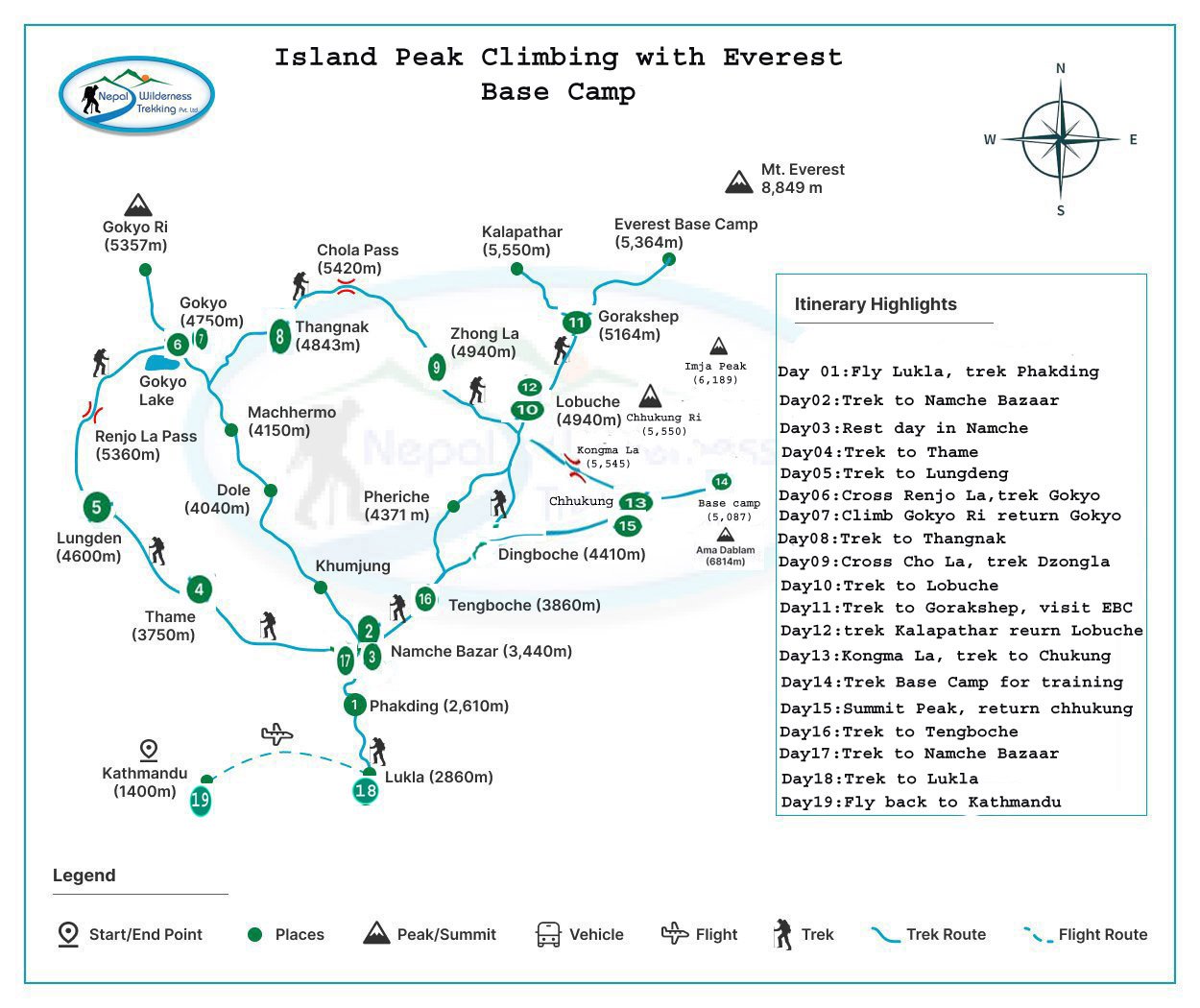
The trek follows the classic Everest Base Camp route. You pass through Namche Bazaar, Tengboche, Dingboche, and Lobuche. You then reach Everest Base Camp and climb Kala Patthar for spectacular mountain views.
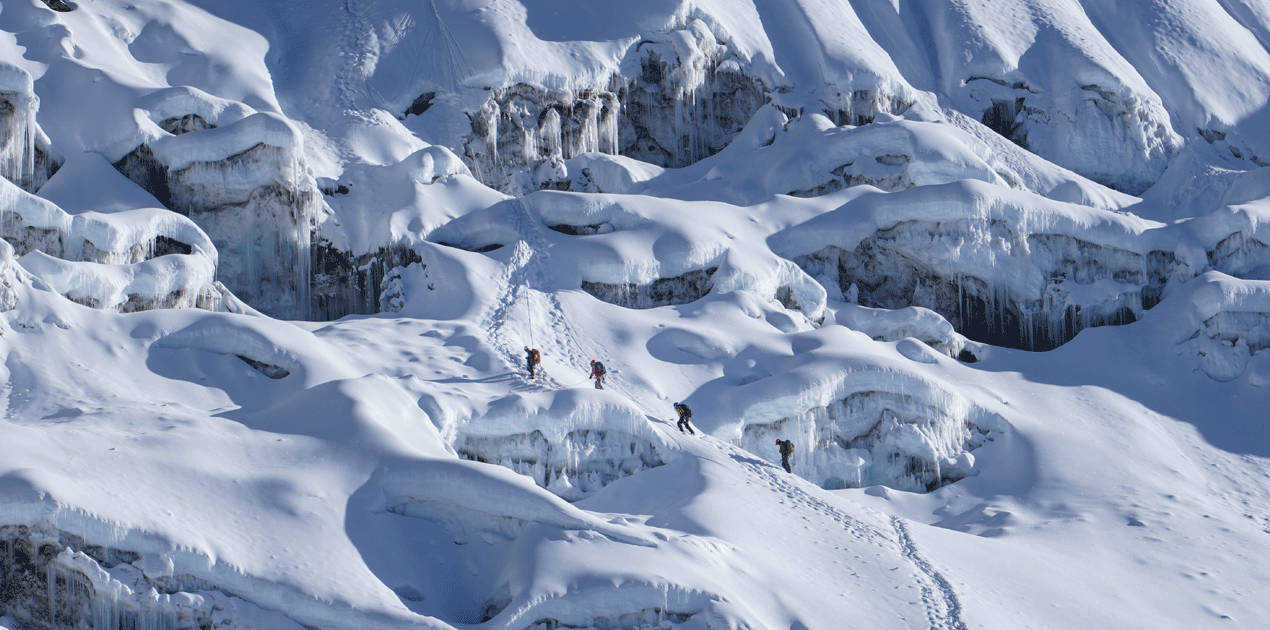
The journey continues to Chhukung and Island Peak Base Camp. Here, you prepare for the summit climb with an experienced climbing guide. The climb includes glacial terrain, snow, and ice. From the summit, you can enjoy views of Lhotse, Nuptse, Ama Dablam, Makalu, and other Himalayan peaks.
This Island Peak Climbing with Everest Base Camp Trek is ideal for experienced trekkers. It is a great way to add a Himalayan peak climb to your Everest Base Camp adventure. Previous high-altitude trekking experience is recommended. Good physical fitness and proper preparation are also important for the climb.
Island Peak Climb with Everest Base Camp Trek
Get ready for a big challenge as you aim to conquer Island Peak via three tough high mountain passes: Renjo La (5,360m), Cho La (5,420m), and Kongma La (5,545m). These passes are popular for the views of Mt. Everest, making this trek known as the Three Passes Trek. Each pass is like a doorway to stunning natural beauty and will test your strength for the mountain adventure journey. Get set to be amazed as you cross these tough passes and see the breathtaking scenery waiting for you in the Himalayas.
Island Peak Climbing Group cost with the package
The cost per person decreases as the group size increases, making it more affordable for larger teams. The price of the package depends on the number of days spent, but we have crafted a 19–day full package (including the Everest Base Camp trek and the Island Peak climb).
-
For a solo climber (1 person), the price is USD 2,670.
-
For 2 people, the rate is USD 2,580 per person.
-
For 3 to 4 people, the cost is USD 2,570 per person.
-
For 5 to 6 people, the price is USD 2,560 per person.
-
For 7 to 15 people, the rate drops to USD 2,550 per person.
-
For 16 people above, the cost is USD 2,550 per person.
The cost of the Island Peak climb covers all the essential logistics, gear, and staff support needed for a safe and successful expedition. A shorter 3-day climb from Chhukung costs around USD 900 (guide, permits, camping, climbing gear).
Island Peak Distance from Chhukung
The Chhukung Valley lies east of Dingboche in the upper Imja Valley of the Everest region. At an altitude of around 4,730 m (15,518 ft), it serves as a quiet and scenic side valley surrounded by dramatic Himalayan peaks. The valley is flanked by Lhotse, Nuptse, Ama Dablam, and Baruntse, with the massive south face of Lhotse dominating the skyline.
Chhukung is often used as an acclimatization stop for trekkers heading to Island Peak (Imja Tse), Kongma La Pass, the three passes trek, or those exploring side hikes such as Chhukung Ri (5,550 m), which offers spectacular panoramic views of Makalu, Lhotse, and the Imja Glacier.
Unlike busier villages like Dingboche or Namche, Chhukung is smaller, with a handful of lodges that offer basic but comfortable accommodation. Its peaceful setting makes it an excellent base for preparing for high passes and climbing adventures.
Chhukung (4,730m) to Island Peak Base Camp (5,100m):
-
- Approx. 3–4-hour trek
-
Distance: ~4.5 km / 2.8 miles
-
Trail: Gradual ascent through rocky trails along the Imja River, with stunning views of Lhotse, Ama Dablam, and the Imja Glacier.
A Journey Through Chhukung to Island Peak Climbing
- Island Peak Climbing From Chhukung: trekkers hike to Island Peak Base Camp (5,200m), which takes 3-4 hours.
- The summit push typically starts very early in the morning (around 2 AM) to take advantage of stable weather conditions and to ensure a return to Base Camp by afternoon.
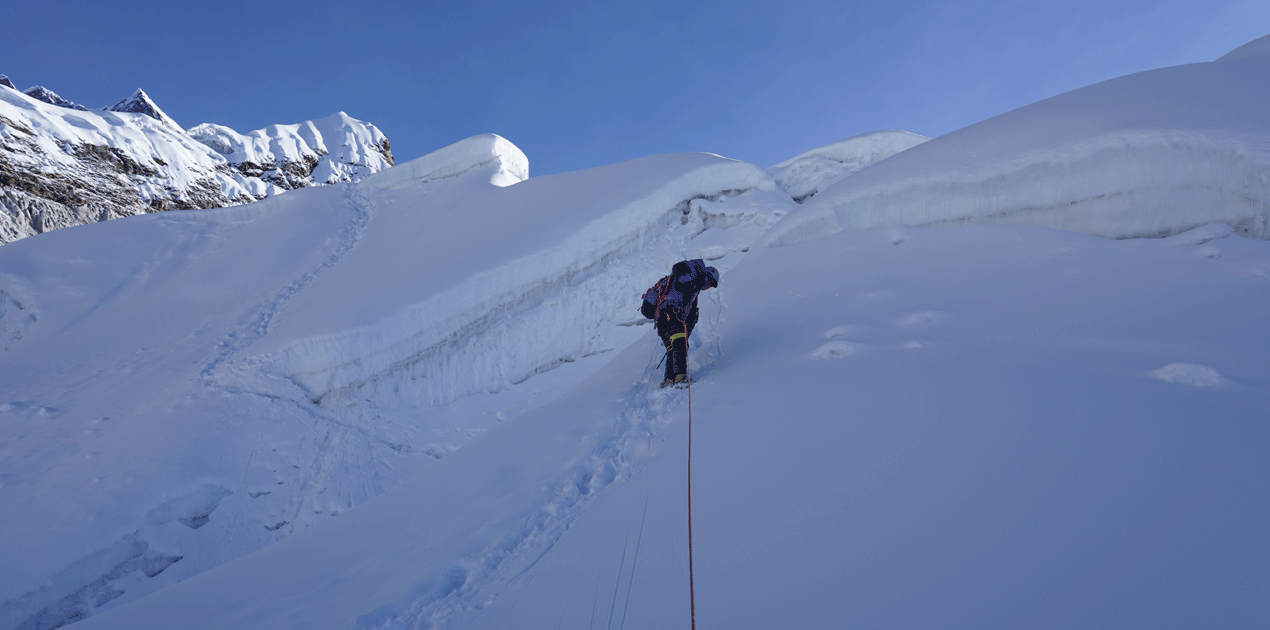
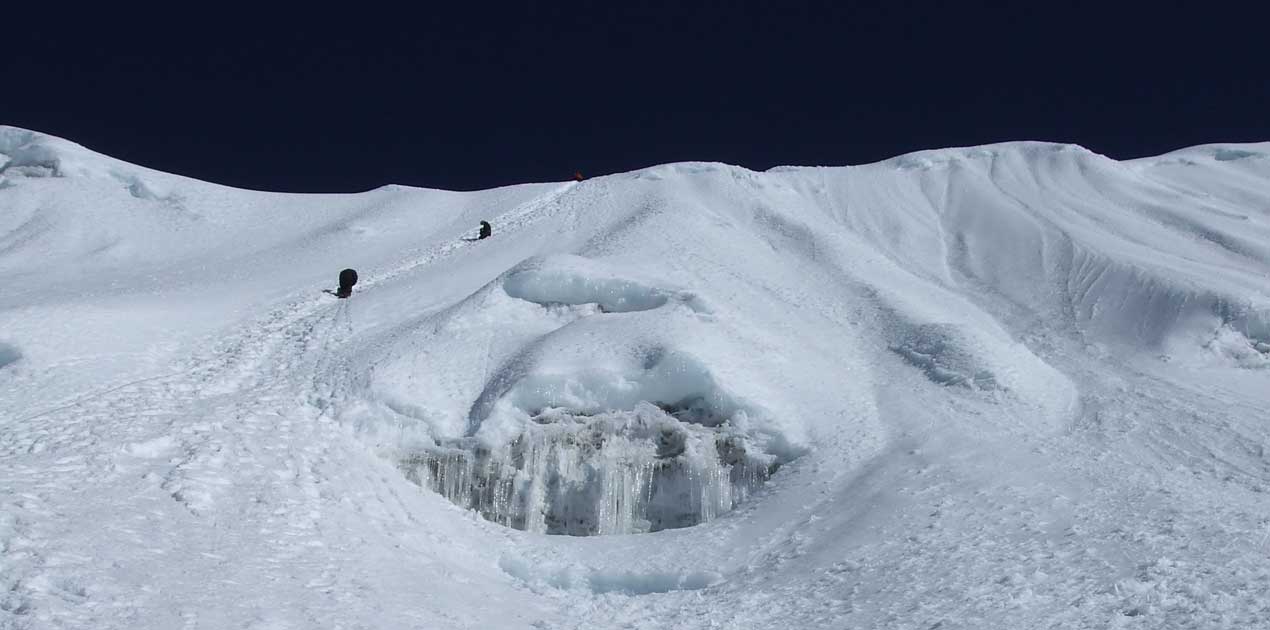
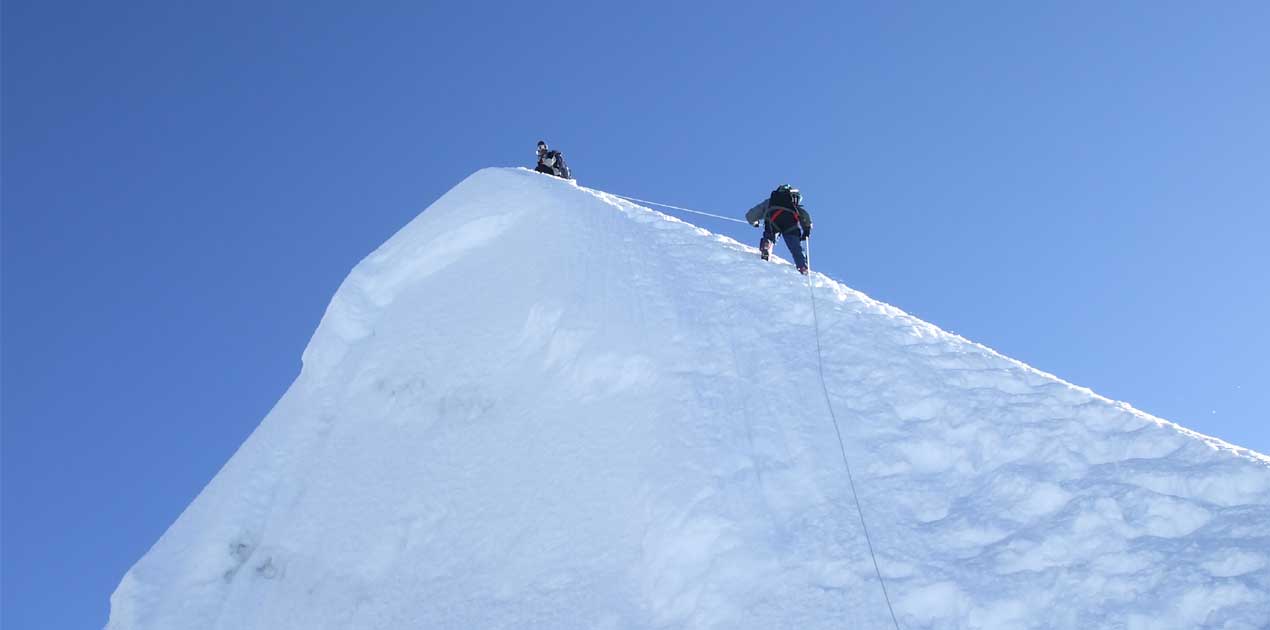
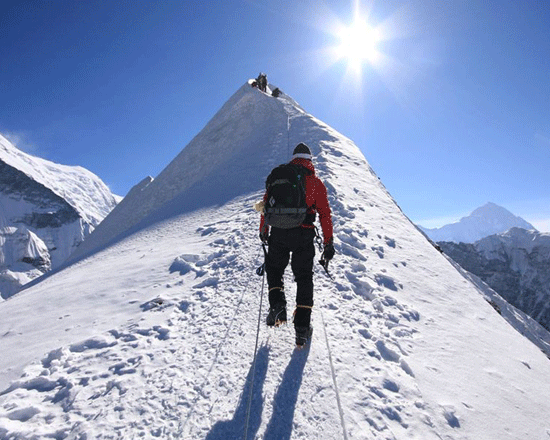
- The climb involves crossing glaciers, climbing a steep snow wall, and finally, ascending a narrow ridge to the summit.
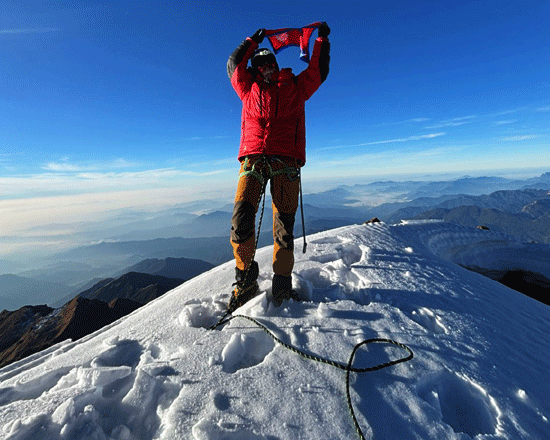
- The summit of Island Peak is at 6,189m (20,305ft), offering spectacular views of the surrounding peaks, including Lhotse, Nuptse, and Makalu.
- After summiting, climbers descend back to Base Camp and then retrace their steps to Chhukung, Dingboche, Tengboche, and Namche Bazaar before reaching Lukla, where they catch a flight back to Kathmandu.
Physical Fitness Preparation for Island Peak Climbing
- Hiking and Trekking: Start with moderate hikes and gradually increase the distance and elevation gain. Carry a backpack to simulate climbing conditions.
- Running and Jogging: Include interval training and long-distance runs to build aerobic capacity and endurance.
- Cycling: Both road biking and mountain biking are excellent forms of exercise for building leg strength and cardiovascular fitness.
- Swimming: Great for overall cardiovascular conditioning and low-impact exercise.
- Frequency: Aim for 3-5 sessions per week, each lasting 30-60 minutes.
Strength Training
- Legs: Squats, lunges, deadlifts, and step-ups to build strength in your quadriceps, hamstrings, calves, and glutes.
- Core: Planks, Russian twists, leg raises, and mountain climbers strengthen your core muscles, which are crucial for stability and balance.
- Upper Body: Pull-ups, push-ups, bench presses, and rows to develop arm, shoulder, and back strength needed for climbing and handling ropes.
Frequency: Aim for 2-3 strength training sessions per week, focusing on different muscle groups.
Mental Training
- Visualization: Practice visualizing successful climbs and overcoming obstacles.
- Meditation: Incorporate mindfulness and meditation techniques to improve mental clarity and stress management.
- Goal Setting: Set realistic, incremental goals to keep motivated and track progress.
Island Peak Base Camp
-
Elevation: 5,100 m (16,732 ft)
-
Location: Southeast of Chhukung, in the Imja Valley
-
Climbing Route:
-
From Base Camp, climbers ascend steep grassy slopes and scree to reach High Camp (5,600 m).
-
The final climb involves a glacier crossing, fixed rope sections on a headwall, and a thrilling summit ridge.
Preparation for Higher Mountains
Many climbers use Island Peak as training for higher expeditions, i.e, Mount Everest, Ama Dablam, or other 7000m and 8000m peaks. Climbing Island Peak helps them:
Your Experienced Guides
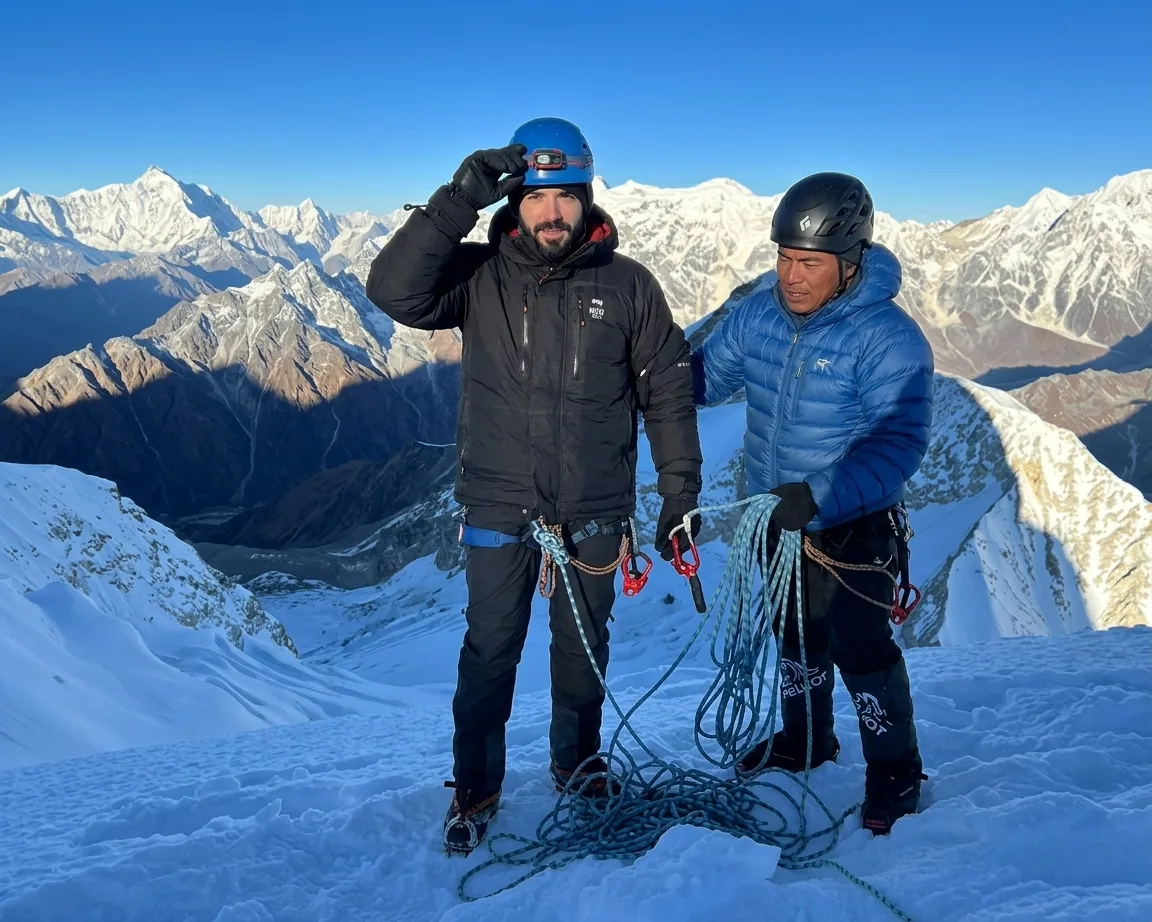
When you join the Nepal Wilderness Trekking team for this extraordinary adventure, you’re in the hands of seasoned experts. Our experienced climbing guides are ready to lead you through the heart of the Himalayas on this exhilarating journey. With years of experience, they possess the necessary expertise to ensure your safety and success on this technical ascent.
An Unforgettable Adventure
The Three Passes trek with Island Peak climbing offers not only the thrill of scaling Island
Peak but also the challenge of conquering three high mountain passes. With excellent acclimatization opportunities, your attempt at Island Peak Climbing becomes more achievable.
Comprehensive Support
The Nepal Wilderness Trekking team leads the Island Peak Climbing with exceptional services and unwavering support for our valued clients. Our dedicated team of seasoned porters and support staff is committed to ensuring that your trek and climb are not only adventurous but also marked by seamless and unforgettable experiences. Our experienced and passionate team makes your journey memorable and full of adventure. You can trust us to guide you safely and reliably through the mountains.
Conclusion: A Journey to Cherish Forever
Join us on the Island Peak Everest Base Camp trek for an unparalleled adventure. You’ll fulfill your dream of summiting a technical 6000-meter peak and create lifelong memories of the Himalayan wilderness. Embrace the spirit of adventure as our expert team guides you to the pinnacle of Island Peak, an achievement to cherish forever.
Island Peak Climbing Permit Costs
Obtaining permits for Island Peak climbing is a crucial part of the process. The Nepal Mountaineering Association (NMA) issues permits for various peaks, with Island Peak categorized as a Group B trekking peak. Permit costs vary based on the season:
- Spring (March to May): USD 250 per person
- Autumn (September to November): USD 125 per person
- Winter (December to February): USD 70 per person
- Summer (June to August): USD 70 per person.
Best time for the Island Peak Climbing with Everest Base Camp Trek
The best time for Island Peak Climbing with Everest Base Camp Trek is spring (March to May) and autumn (October to November). These months generally offer stable weather, clear mountain views, and good conditions for trekking and climbing. Nepal Tourism Board also identifies October–November and March–May as the best seasons for the Everest region.
Autumn (October–November) is the most popular season. The skies are usually clear after the monsoon, with excellent views of Everest, Lhotse, Nuptse, and Ama Dablam. October is especially good for combining EBC with an Island Peak summit attempt.
Spring (March–May) is another excellent period. April and May are particularly suitable for high-altitude climbing, with generally favorable conditions for mountaineering.
Winter (December–February) is possible but much colder, with shorter days and a greater chance of snow at higher elevations. June–September is monsoon season, making trekking and climbing less predictable.
Departure Note
All published departure dates listed below are 100% guaranteed to operate.
If the departure dates do not align with your travel plans, we would be pleased to arrange a private trek on your preferred dates at the same cost. Whether you are traveling solo, with family, friends, or as part of a group, we can customize the itinerary at your flexible date, interests, and trekking experience.
Our team will be delighted to design a personalized itinerary and help you create an unforgettable trekking experience in Nepal.