
Uncategorized
November 26, 2025
Sagarmatha Pollution Control Committee
 By admin
Sagarmatha Pollution Control Committee: Safeguarding the Everest Region Through Sustainable Tourism and Environmental Stewardship
The Everest region, known locally as Khumbu Valley, is one of the world’s most iconic trekking and mountaineering destinations. Every year, tens of thousands of trekkers, climbers, porters, guides, and support staff venture into the high Himalayas to experience the majesty of Sagarmatha National Park, a UNESCO World Heritage Site. While tourism has brought immense economic opportunities for the Sherpa community, and caused a rise in environmental pressures: waste generation, trail erosion, deforestation, and stress on fragile alpine ecosystems.
At the centre of the effort to manage these challenges stands a remarkable local organisation: the Sagarmatha Pollution Control Committee. Since its establishment, this community-based institution has played a vital role in waste management, trail maintenance, climbing regulation, porter welfare, environmental education, and ensuring that tourism in the Everest region remains safe, clean, and sustainable.
Why Environmental Protection Matters in the Everest Region
The Everest region is a unique ecological zone home to snow leopards, red pandas, Himalayan thar, musk deer, and dozens of high-altitude bird species. Its glaciers feed the major rivers of Nepal, making it one of the most important water sources in South Asia. Tourism, however, brings significant environmental challenges:
-
High levels of non-biodegradable waste, such as plastic bottles, cans, and packaging
-
Increasing amounts of human waste, especially at high camps
-
Deforestation from fuelwood use
-
Overloaded trails are causing soil erosion
-
Growing numbers of visitors are demanding more food, lodging, and infrastructure
-
Abandoned climbing gear, oxygen bottles, and tents on high-altitude routes
Without a system in place, the Everest region could have become one of the world’s most polluted mountain environments. Fortunately, the establishment of the Sagarmatha Pollution Control Committee (SPCC) brought structured waste management and community-based conservation to the Khumbu.
The SPCC remains the backbone of environmental protection in the Everest region today.
What Is the Sagarmatha Pollution Control Committee?
The Sagarmatha Pollution Control Committee is a non-governmental, non-profit organisation founded in 1991 by local Sherpa leaders and environmental advocates. It was created in direct response to growing waste problems along the Everest trekking trails and at major climbing sites.
The SPCC operates in close coordination with:
-
Sagarmatha National Park
-
Local communities
-
Trekking and mountaineering agencies
-
International mountaineering organisations
-
Expedition operators
Its work covers nearly the entire trekking corridor from Lukla to Everest Base Camp, as well as routes toward Gokyo, Chhukung, Ama Dablam Base Camp, and other high-altitude destinations of the Khumbu.
Core Mission of SPCC
The Sagarmatha Pollution Control Centre is committed to:
-
Managing solid waste along trekking trails and villages
-
Ensuring safe, environmentally responsible mountaineering
-
Building local awareness about conservation
-
Maintaining waste collection points and disposal systems
-
Training and monitoring mountain guides, porters, and support staff
-
Ensuring expedition teams follow regulations
-
Protecting the overall ecosystem of the Everest region
Over the years, SPCC has grown into the most respected environmental management institution in the entire Everest region.
History of the Sagarmatha Pollution Control Committee
The Birth of a Conservation Movement
By the late 1980s, the Everest trail was suffering from severe littering. Trekkers left behind plastic wrappers, cans, bottles, old clothing, and broken gear. Expeditions dumped oxygen bottles, ropes, tents, and fuel containers at Base Camp and above. Helicopters were not widely available to fly out waste.
Local Sherpa leaders recognised that without grassroots action, the beauty of Khumbu would deteriorate.
In 1991, a group of Sherpa conservationists founded the Sagarmatha Pollution Control Committee in Namche Bazaar.
The initial goals were simple:
-
Install dustbins along the trail
-
Collect rubbish weekly
-
Educate visitors
-
Coordinate waste collection with tea houses
The movement quickly gained international support. Many clean-up expeditions, environmental volunteers, and organisations contributed to the cause.
Growth and Expansion
During the 1990s and early 2000s, SPCC expanded its operations to:
-
Pinning ladders and fixing ropes on climbing routes such as Island Peak and Ama Dablam
-
Certifying expedition liaison officers
-
Managing waste collection in Tengboche, Dingboche, Pheriche, Pangboche, and Lobuche
-
Establishing Porter Shelters
-
Creating a standardised climbing permit compliance system
Today, SPCC is recognised globally as a model for community-based conservation in mountain tourism.
How the Sagarmatha Pollution Control Committee Operates
The Sagarmatha Pollution Control Committee runs an efficient, multi-level environmental management system across the Everest region. Its operations include:
Waste Management System
SPCC operates one of the most complex waste management networks in the Himalayas.
The system includes:
-
Trash bins at major rest points
-
Segregation units in Namche, Lukla, Dingboche, and other villages
-
Recycling programs for plastics, metals, and glass
-
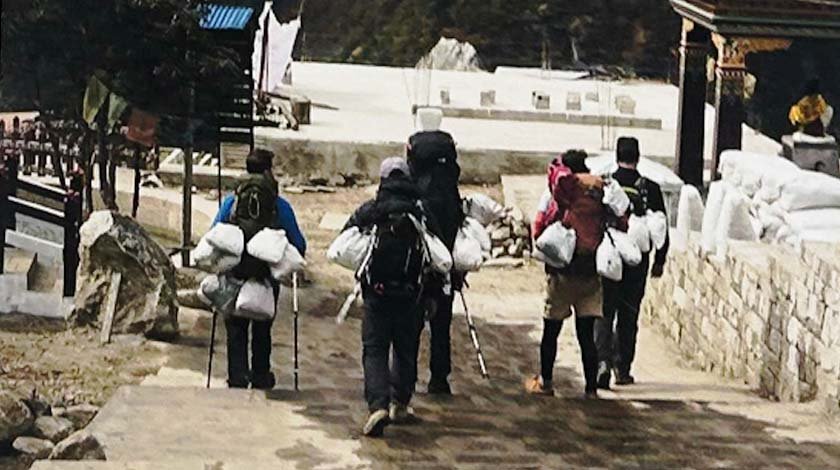
Waste carrier programs where porters and yaks transport waste down to Lukla
-
Incineration facilities for paper and combustible materials
-
Expedition waste protocols
Trekkers are encouraged to carry out all non-biodegradable waste.
Expedition groups must submit:
-
A waste deposit
-
A detailed waste management plan
-
Proof of waste return
-
A record of a deposit withdrawal
This ensures that climbing teams are held accountable for the waste they generate at Base Camp and higher camps.
Trail Maintenance
SPCC plays a vital role in maintaining trekking trails by:
-
Repairing landslide-affected sections
-
Building and reinforcing stone steps
-
Installing signboards
-
Maintaining bridges
-
Clearing seasonal blockages
The trail from Lukla to Everest Base Camp remains in excellent condition, largely thanks to SPCC workers.
Climbing Route Management
The Sagarmatha Pollution Control Centre manages climbing operations on:
-
Ama Dablam
-
Mera Peak (in coordination with local authorities)
SPCC handles:
-
Fixing ropes
-
Installing ladders
-
Ensuring climber safety
-
Regulating the number of climbers at certain times
Their rope-fixing team includes highly experienced Sherpa climbers.
Porter Welfare and Support
Porters play a crucial role in the trekking economy. SPCC ensures their safety through:
-
Porter shelters at several high-altitude villages
-
Safety training
-
Awareness education
-
Monitoring to prevent overloading
-
Providing emergency assistance
Environmental Awareness Programs
SPCC regularly organises:
-
School awareness workshops
-
Clean-up campaigns
-
Training for lodge owners
-
Information sessions for guides and trekking agencies
These programs aim to build a culture of responsible tourism.
Importance of the Sagarmatha Pollution Control Committee
Protecting a Fragile High-Altitude Ecosystem
High-altitude ecosystems are incredibly vulnerable:
-
Thin soil
-
Slow plant regeneration
-
Limited water resources
-
High climate sensitivity
SPCC prevents long-lasting environmental damage by managing waste and monitoring ecological threats.
Ensuring Sustainable Tourism Growth
Everest attracts more visitors every year. Without proper management, the region would face:
-
Overcrowding
-
Water contamination
-
Massive waste accumulation
-
Loss of scenic value
The Sagarmatha Pollution Control Centre helps balance tourism and sustainability.
Supporting Local Communities
SPCC creates employment opportunities:
-
Waste collectors
-
Trail maintenance workers
-
Rope fixers
-
Porter support staff
-
Environmental educators
Income stays within the Sherpa community.
Promoting Nepal’s Global Reputation
Nepal’s tourism reputation depends on the health and cleanliness of its trekking routes. Thanks to SPCC, the Everest region remains one of the cleanest major trekking destinations worldwide.
Key Activities of the Sagarmatha Pollution Control Committee
Base Camp Waste Management
At Everest Base Camp, the SPCC enforces strict waste management rules. Expedition teams must:
-
Separate waste into categories
-
Store waste in designated containers
-
Return all waste to Namche or Kathmandu
-
Pay a waste deposit
High-altitude waste oxygen bottles, ropes, and tents are a special concern. SPCC enforces accountability at all levels.
Trekking Trail Clean-Up
Throughout the year, SPCC organises clean-up campaigns involving:
-
Residents
-
Students
-
Trekking guides
-
International volunteers
These campaigns maintain the beauty of the Everest region.
Annual Mountaineering Safety Inspection
Before each climbing season, SPCC checks:
-
Condition of ladders
-
Rope-fixing requirements
-
Icefall route safety (in coordination with the Icefall Doctors)
Signage and Information Systems
SPCC places educational signage across the trail network, including:
-
Altitude sickness warnings
-
Wildlife conservation messages
-
Trail directions
-
Waste disposal reminders
Community Recycling Programs
SPCC operates local recycling centres that sort:
-
Tin
-
Plastic
-
Aluminum
-
Paper
-
Glass
Recyclables are brought down to Lukla or flown out to Kathmandu.
Funding and Financial Structure
The Sagarmatha Pollution Control Centre is funded through:
-
Trekker entrance fees
-
Expedition waste deposits
-
Donations
-
Support from international NGOs
-
Grants for conservation programs
-
Partnership contributions from trekking companies
SPCC remains accountable to local communities through transparent financial reporting.
Collaboration with National and International Stakeholders
SPCC collaborates with:
-
Department of Tourism
-
Sagarmatha National Park
-
Khumbu Pasang Lhamu Rural Municipality
-
Nepal Mountaineering Association
-
Rescue agencies
-
International trekking associations
-
Non-profit partners
These partnerships strengthen conservation efforts.
Challenges Faced by the Sagarmatha Pollution Control Committee
Despite its success, SPCC continues to face challenges:
Increasing Tourism Pressure
Over 60,000 trekkers and climbers visit the region annually. More visitors mean more waste, more pressure on resources, and more trail damage.
Human Waste Management at High Altitude
Managing human waste at high camps remains one of the most difficult tasks.
Funding Limitations
As demand for environmental services grows, SPCC needs greater financial resources.
Lack of Plastic Alternatives
Disposable plastics remain a major source of pollution.
Role of Trekkers in Supporting SPCC
Trekkers can support the Sagarmatha Pollution Control Centre by:
-
Carrying reusable water bottles
-
Avoiding single-use plastics
-
Supporting eco-friendly lodges
-
Following waste disposal guidelines
-
Respecting wildlife
-
Staying on marked trails
-
Donating to SPCC projects
Every trekker plays a role in conservation.
How Trekking Agencies Support SPCC
Responsible trekking companies help by:
-
Training guides and porters in sustainability
-
Educating clients
-
Paying waste fees responsibly
-
Supporting community programs
-
Encouraging Leave No Trace principles
Many agencies promote SPCC’s mission directly on their websites.
Future Plans of the Sagarmatha Pollution Control Committee
SPCC has ambitious plans for the coming years:
High-Altitude Biodegradable Bag System
Addressing human waste at high camps is a top priority.
Expanded Recycling Facilities
Plans include:
-
Plastic shredding units
-
Glass recycling
-
Metal compaction machines
Improved Porter Shelters
Enhancing safety and comfort for porters is a key goal.
Community Energy Projects
These include:
-
Solar energy systems
-
Micro-hydro units
-
Efficient cookstoves
Increased Collaboration with Researchers
SPCC seeks to partner with universities and climate scientists to monitor glacier retreat and biodiversity changes.
Why the Sagarmatha Pollution Control Committee Matters More Than Ever
As global tourism grows and climate change accelerates, the Everest region needs strong environmental leadership. The Sagarmatha Pollution Control Centre is the frontline defender of:
-
Ecological health
-
Cultural values
-
Safe mountaineering
-
Sustainable tourism
Without SPCC, the Khumbu region would face severe environmental degradation.
What is “Carry Me Back”
-
Carry Me Back (CMB) is a crowdsourced waste‑removal scheme launched by SPCC in collaboration with Sagarmatha Next, with support from several partners, including local municipalities, private airlines, and recycling enterprises.
-
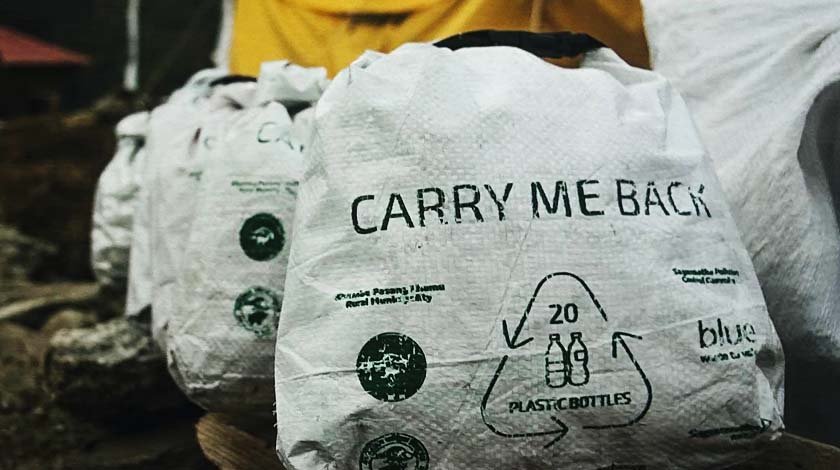
The idea is simple yet powerful: recyclable waste (PET bottles, aluminium cans, tins, glass, etc.) collected from remote settlements and trekking trails in the upper Khumbu, where recycling infrastructure is almost non‑existent, is segregated, shredded/compacted, and packaged into 1‑kg “Carry Me Back” bags.
-
Trekkers, guides, and locals are invited to carry these bags from pick-up stations (for example, in villages like Namche Bazaar or Pangboche) down to the drop-off station at Lukla Airport. From Lukla, the waste bags are flown to Kathmandu by partner airlines, then handed over to a recycling social enterprise (Blue Waste to Value, or BW2V) for proper recycling.
How Carry Me Back Started and Initial Pilot
-
The program was first tested in Autumn 2019. In that pilot, about 2,500 trekkers and guides participated, carrying down waste from Namche to Lukla; a total of around 4,000 kg (4 tons) of waste was transported to Kathmandu for recycling.
-
As part of this pilot, SPCC even installed a shredding machine at their waste‑management facility in Namche to pre-process recyclable material (PET bottles, cans, etc.) to make it easier to package and transport.
-
The pilot demonstrated that with minimal extra effort by trekkers and guides (just carrying a small bag), significant amounts of waste could be removed, making CMB an efficient, low-cost, participatory waste-removal model for high-altitude trekking zones.
How SPCC Adapted
-
Unfortunately, like many services, Carry Me Back was disrupted by the COVID‑19 pandemic. The program was paused in 2020 and 2021, when trekking dropped sharply.
-
But after trekking resumed, SPCC, together with Sagarmatha Next and donors, revived CMB in Spring 2022.
-
Since the restart, the program has not only resumed but expanded: new pick-up stations have been added (for example, at Pangboche) so more trekkers and guides can participate.
What Carry Me Back Has Achieved to Date
The results of CMB over time show that this kind of participatory waste management can make a real difference:
-
As of 2024, more than 19,000 volunteers (trekkers, guides, locals) have participated in Carry Me Back.
-
Through those efforts, 27,481 bags of recyclable waste have been transported from upper Khumbu to Lukla, then flown to Kathmandu for recycling. After a restart in 2022, in just the last few seasons, a substantial number of recyclables have been diverted: for example, in the 2022/23 fiscal year, SPCC reported that thousands of kilograms of PET bottles, cans, and other materials were transported via CMB from Namche to Lukla.
-
The program has also generated green jobs and income for local and migrant communities, in waste‑processing, bag production (by local women’s groups), and logistics.
What Makes Carry Me Back Work
-
Use of existing human flows: Rather than relying solely on hired porters or expensive logistics, CMB uses the fact that there are already many people travelling down from the mountains (trekkers, guides, porters). Asking them to carry an extra 1 kg bag is minimal and cost‑efficient.
-
Pre‑processing waste at source: By shredding PET bottles and cans and packing them into small bags, SPCC reduces volume and makes transport more practical and affordable. This also helps to maximise the number of recyclables carried per trip.
-
Strong collaboration and partnerships: The program works because of coordination among multiple stakeholders, SPCC, Sagarmatha Next, local municipalities, airlines (for airlift), recycling enterprises, local women’s groups (for bag production), trekkers, guides, all cooperating toward a common goal.
-
Flexibility and adaptability: CMB proved resilient despite suspension during COVID‑19, SPCC restarted the program quickly once trekking resumed, expanded pick‑up points, and scaled operations.
-
Creating local value and awareness: Beyond waste removal, CMB helps raise environmental awareness among locals, trekkers, and the global trekking community. It also creates employment opportunities (waste sorting, bag production, logistics).
Challenges and Limitations
While Carry Me Back has made significant gains, some challenges remain:
-
Scaling coverage: So far, pick-up stations are available in certain key villages (e.g., Namche Bazaar, Pangboche), but CMB needs broader coverage across more settlements and trekking routes to maximise impact. SPCC plans to expand pick-up stations, but that will require resources, coordination, and monitoring.
-
Dependence on voluntary participation: CMB largely depends on volunteer trekkers, guides, and locals to carry waste. Not all trekkers may be willing or able to participate, and during off‑peak seasons, volunteer numbers may be low.
-
Logistics and cost: Even shredded recyclables need airlift from Lukla to Kathmandu. That needs reliable airline cooperation, proper packaging, safe transportation any disruption (weather, cancellations) can delay or halt the process. Although airlines like Tara Air (and partner airlines) have supported CMB, sustaining such logistics consistently is a challenge.
-
Handling non-recyclable or hazardous waste: CMB focuses on recyclable waste (PET, cans, glass, tins). Other waste types like human waste, contaminated waste, non-recyclable plastics, or old equipment still require separate systems. CMB does not, by itself, solve all waste issues in the region.
-
Awareness and compliance: To succeed long-term, CMB needs sustained awareness among all stakeholders, lodges, locals, trekkers, guides, and porters about proper segregation, participation, and environmental responsibility.
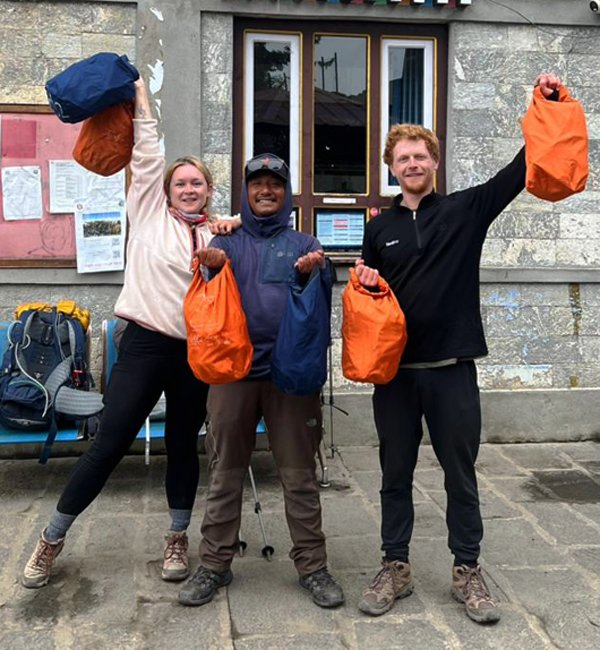
How Carry Me Back Has Advanced Over Time
Since its origin in 2019, Carry Me Back has gradually matured. Key improvements over time include:
-
Expansion of pick-up stations: Initially, only at Namche, now there are pick-up points reaching further along the trekking corridor. For example, in 2024, a new pick-up station was added at Pangboche.
-
Better partnerships and recycling chain integration: CMB now involves a complete recycling chain from waste collection, shredding/compaction, transport to Kathmandu, to processing by recycling enterprises (e.g., Blue Waste to Value, and plastics processed into rPET pellets for reuse).
-
More volunteer participation and waste volume carried: By 2024, tens of thousands of volunteers (trekkers, guides, locals) will have carried more than 27,000 waste bags down from Khumbu. This is orders of magnitude larger than the 2019 pilot.
-
Green‑job creation and local empowerment: The program supports local women’s groups who produce the Carry‑Me‑Back bags; supports waste‑processing jobs; and builds local capacity for environmental stewardship.
-
Diversification and scaling up of waste‑management beyond recyclables: While CMB originally focused on recyclables, SPCC has sustained a wider waste‑management program including waste bins along trekking trails, door-to-door waste collection in villages, non-burnable waste transport from base camps, human‑waste management, materials recovery facility (MRF) development, and preparation for larger climate/resilience projects.
These developments show that Carry Me Back has transitioned from a pilot, voluntary initiative into a core, institutionalised part of SPCC’s waste‑management system with real impact and growing sustainability.
Why Carry Me Back Matters For Trekkers, Local Communities, and the Global Environment
From a broader perspective, Carry Me Back has significance beyond simply “cleaning up litter.” It represents a new model of responsible mountain tourism and community-based conservation.
-
For trekkers and climbers, participating in CMB is an easy, meaningful way to contribute, taking responsibility for waste, reducing plastic pollution, and helping preserve the natural beauty of the mountains they explore.
-
For local communities, it creates jobs, builds capacity, and strengthens ownership of conservation. Waste management is no longer only the responsibility of outside agencies but a community-driven system.
-
For the environment and ecosystem, CMB helps prevent non-biodegradable waste from accumulating in fragile alpine environments where degradation is slow, soils are thin, and water sources are vulnerable.
-
On a global scale, such initiatives set a precedent showing how sustainable tourism and recycling can work even in remote, high-
What Could Be Next Opportunities for Further Improvement
-
Expand pick-up stations and coverage across more villages, high-altitude trails, and entry/exit points. This will make it more convenient for more trekkers and locals to participate.
-
Incorporate other waste types beyond recyclables into the CMB or similar programs. For instance, non-recyclable plastic, old climbing gear, cooking fuel containers, or even proper disposal of human waste in remote areas.
-
Promote pre-trek awareness among trekking companies and clients, including CMB participation as part of trek briefing; encourage clients to carry reusable bottles, and reduce plastic use.
-
Develop stronger back‑end recycling and up‑cycling support local recycling enterprises, up‑cycling projects (e.g., reuse plastic bottles for building materials, souvenirs, eco‑products).
-
Monitor and report impact, transparently track how much waste is diverted, recycled, up‑cycled; show data to trekking clients and communities. Transparency builds trust and encourages more participation.
-
Scale the model beyond Khumbu, replicate Carry Me Back (or similar crowdsourced waste‑removal) in other trekking/conservation zones across Nepal (Annapurna, Langtang, Dolpo, Mustang, etc.).
Conclusion
The Carry Me Back program by SPCC, though still relatively young, has already emerged as a game‑changer in Himalayan waste management. From a simple pilot in 2019 to a major, multi‑stakeholder initiative by 2024, it has shown how collective responsibility, smart logistics, and local engagement can make a big difference even in remote, high‑altitude landscapes.
As Nepal’s trekking industry continues to grow and as environmental awareness rises, initiatives like Carry Me Back will be essential to maintain the beauty, health, and sustainability of our mountains.
Trekking is essentially day hiking and doesn't require any special training. However, good physical condition, a love of walking, and a desire to enjoy mountain views and village life are essential. These treks are suitable for walkers looking for something more challenging and energetic. Hill-walking experience is desirable, with longer days and higher elevations. Since the terrain can be hard and the days long, hikers should be in good physical condition and have previous mountain walking experience. High passes and extended trekking days may be involved. Trekking is essentially day hiking and doesn't require any special training. However, good physical condition, a love of walking, and a desire to enjoy mountain views and village life are essential. These treks are suitable for walkers looking for something more challenging and energetic. Hill-walking experience is desirable, with longer days and higher elevations.
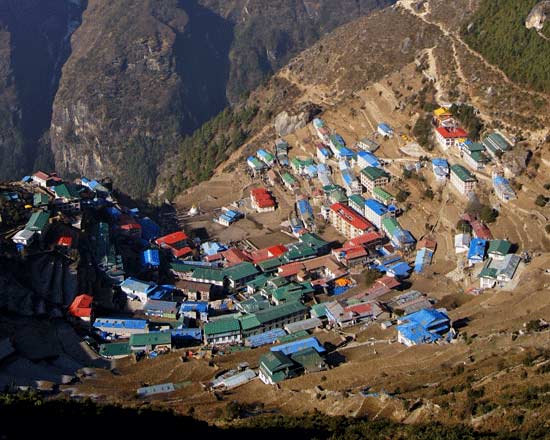 Namche Bazaar Trek
Trek Grade
Grade 1
Tap outside to close
Grade 2
Tap outside to close
Grade 3
Tap outside to close
Namche Bazaar Trek
Trek Grade
Grade 1
Tap outside to close
Grade 2
Tap outside to close
Grade 3
Tap outside to close
 Namche Trekking for kids
Trek Grade
Grade 1
Tap outside to close
Grade 2
Tap outside to close
Namche Trekking for kids
Trek Grade
Grade 1
Tap outside to close
Grade 2
Tap outside to close