
Uncategorized
February 14, 2026
Tibetan Flags
 By admin
Tibetan Flags: Prayer Flags
High in the mountains, where the wind moves freely across snowy passes and silent valleys, colorful cloth banners flutter gently between trees, rooftops, monasteries, and rocky ridges. People call these Tibetan flags—more widely known as Tibetan prayer flags—one of the most recognizable spiritual symbols of Himalayan Buddhist culture. At first glance, they seem simple: bright squares of fabric display mantras, prayers, and sacred images. Yet they carry centuries of faith, compassion, and connection with nature within their threads.
Unlike ordinary flags that represent territory or ownership, Tibetan prayer flags aim to give rather than claim. People raise them not to mark boundaries but to spread blessings. With every gust of wind, the prayers printed on the cloth travel across the landscape, carrying wishes of peace, harmony, health, and wisdom to all living beings. In this way, the wind itself becomes a messenger of compassion.
Across Tibet, Nepal, Bhutan, and the Himalayan regions, communities hang these flags on monasteries, stupas, mountain passes, homes, and sacred trails. Whether they stretch them across a quiet village courtyard or suspend them dramatically over a high-altitude ridge, they create a bridge between the human world and the spiritual realm. More than decorative objects, Tibetan flags express a way of life—one that values balance, kindness, and respect for nature. They remind people each day that spirituality can live in simple acts, such as letting the wind carry prayers into the world.
History of Tibetan Flags
The history of Tibetan flags dates back to ancient Himalayan traditions, blending elements of indigenous beliefs and later Buddhist philosophy. Before Buddhism arrived in Tibet, the native Bon religion already used colored cloth banners and symbols to honor nature spirits, mountains, rivers, and sky deities. These early flags were believed to protect people from misfortune and to maintain harmony between humans and the natural world. When Buddhism entered Tibet in the 7th and 8th centuries, particularly during the reign of King Songtsen Gampo and later under Guru Rinpoche (Padmasambhava), these local traditions merged with Buddhist teachings. The protective banners gradually transformed into prayer flags inscribed with sacred mantras, sutras, and symbolic images. Instead of focusing only on protection, the purpose expanded to spreading compassion and universal blessings. By the medieval period, monasteries began printing prayers and images using woodblock techniques. This made it easier to produce large numbers of flags, allowing them to become part of daily life. Families hung them at their homes, travelers tied them at mountain passes, and monks raised them during religious ceremonies and festivals. Over centuries, the practice remained largely unchanged. Despite political and social shifts, Tibetan communities continued to preserve the tradition. The flags became not only spiritual tools but also markers of cultural identity, reflecting resilience and faith. Each strand carries echoes of ancient beliefs, Buddhist wisdom, and generations of devotion. When they flutter in the wind, they connect the present moment with centuries of spiritual heritage.
Difference Between Tibetan Flags and Prayer Flags
Many people use the terms Tibetan flags and prayer flags interchangeably, but there is a slight difference in meaning between the two. While they are closely related, the distinction lies mainly in context, purpose, and usage rather than physical appearance.
The term Tibetan flags is a broad cultural expression. It simply refers to any type of flag connected to Tibetan heritage, identity, or tradition. This can include decorative banners, monastery flags, ceremonial flags, and even the Tibetan national flag. In other words, “Tibetan flags” describes flags based on their origin and culture. It highlights that these flags come from Tibet or Tibetan Buddhist regions such as Nepal, Bhutan, and the Himalayas. The phrase does not automatically mean the flags have a religious or spiritual function; it may simply describe something symbolic or cultural.
By contrast, people use the term prayer flags in a more specific and spiritual sense. They create these sacred cloth banners and print them with mantras, prayers, and religious images. They design them not for decoration or identification but to spread blessings, peace, and compassion. According to Tibetan Buddhist belief, when the wind blows through the flags, it carries the prayers into the world and benefits all living beings. In this way, prayer flags serve as spiritual tools rather than ordinary flags.
In simple terms, all Tibetan prayer flags are Tibetan flags because they come from Tibetan culture, but not all Tibetan flags are prayer flags, since some may serve political, decorative, or ceremonial purposes instead of spiritual ones. Today, most people casually say “Tibetan flags” when referring to prayer flags because they are the most recognizable. However, understanding the difference helps us appreciate both their cultural background and their deeper spiritual meaning.
Types of Tibetan Flags
Tibetan flags appear in different forms, and each form serves a specific purpose. According to tradition, people place them in particular locations to reflect their meaning. The two most common types are Lungta and Darchor, though several other variations also exist.
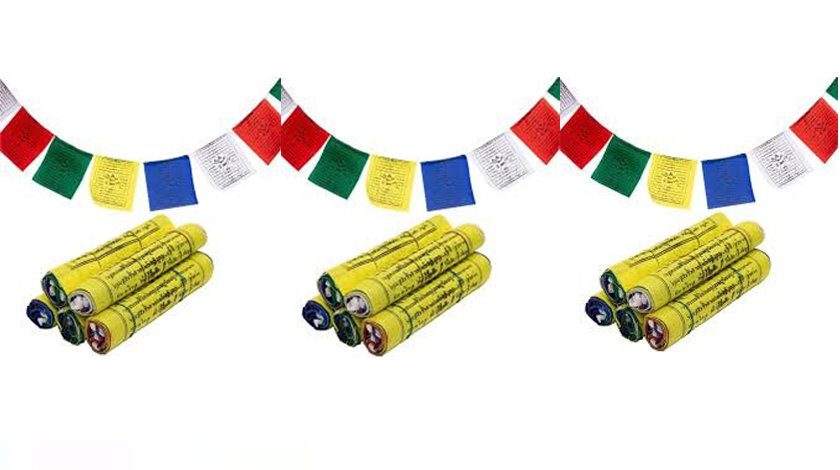
Lungta, which means “wind horse,” refers to the familiar horizontal flags that people string along a line. They attach five colored squares—blue, white, red, green, and yellow—and tie them between trees, poles, or rooftops. Trekkers and villagers often stretch them across mountain trails or hang them over monasteries. At the center, the wind horse symbol represents strength, energy, and good fortune. As the wind moves through them, Lungta flags quickly spread blessings in all directions.
Darchor flags stand vertically on tall poles. Unlike Lungta, they hang straight down and usually rise in open spaces near homes, temples, or stupas. These flags symbolize stability, prosperity, and long life. Because they stand upright, people believe they send prayers upward toward the heavens.
In addition, communities use special ceremonial flags during festivals, funerals, and religious rituals. Some display longer sacred texts for protection, while others focus on particular deities or intentions, such as healing or safe travel.
Each type expresses a different aspect of life—movement, protection, strength, or blessing—yet all share the same purpose: spreading goodwill. Together, they bring color, meaning, and spiritual presence to the Himalayan landscape.
Spiritual Meaning
Tibetan flags express their true essence through spiritual symbolism. People do not worship them as objects; instead, they use them as tools to cultivate compassion, mindfulness, and positive energy. Every detail—from the colors to the printed mantras—carries deep meaning.
The five colors represent the five natural elements: blue stands for sky or space, white for air, red for fire, green for water, and yellow for earth. Together, these elements reflect balance in nature and harmony in life. When people maintain this balance, they invite health and peace into their lives.
Many flags display sacred mantras such as “Om Mani Padme Hum.” This powerful mantra embodies compassion and expresses the wish to relieve suffering. As the wind touches the fabric, it activates the prayers and carries their blessings outward to all living beings—not just the person who hung the flags.
These flags also teach selflessness. They offer their benefits to everyone—neighbors, strangers, animals, and the natural world. In doing so, they reflect a core Buddhist teaching: happiness grows when people share it.
Over time, the sun fades the colors, the wind frays the edges, and the fabric slowly returns to the earth. This natural process reminds people of impermanence and encourages acceptance and spiritual awareness. Through their quiet, constant movement, Tibetan flags gently teach life’s deeper truths.
Modern Usage and Significance
In modern times, Tibetan prayer flags continue to shape both spiritual practice and daily life. In Himalayan communities, families hang new flags during New Year celebrations, house blessings, births, and other important life events. They believe the flags bring protection, success, and peace to their homes. Monasteries display them during religious ceremonies and festivals, keeping ancient traditions alive.
Beyond the mountains, prayer flags have reached new audiences. Travelers, trekkers, and spiritual seekers encounter them while visiting Nepal, Tibet, and Bhutan, and many feel drawn to their beauty and symbolism. Today, people also hang these flags in gardens, meditation rooms, yoga centers, and private homes around the world. Some use them as decoration, while others embrace them as reminders of mindfulness and compassion.
Although commercial markets now produce and sell them widely, their deeper meaning still endures. They continue to represent hope, harmony, and the belief that small acts of kindness can travel far—just as the wind carries prayers across the landscape. In contemporary life, Tibetan flags remain timeless symbols of spiritual connection and shared humanity.
Where to See the Tibetan Flag
Tibetan prayer flags can be seen throughout the Himalayan region, especially in areas influenced by Tibetan Buddhism. In Nepal, they are common in Kathmandu Valley around Boudhanath Stupa and Swayambhunath Stupa, where thousands of flags circle the sacred monuments and flutter above temple courtyards.
In mountainous regions such as Solukhumbu, Mustang, Manang, and Langtang, prayer flags are tied across suspension bridges, mountain passes, and village homes. High passes often display large clusters of flags placed by travelers seeking blessings for safe journeys. These spots create breathtaking scenes where bright colors contrast against snow peaks and blue skies. Monasteries and gompas are also ideal places to see them. During festivals and ceremonies, fresh flags are raised, filling the air with movement and color. Even small rural villages often have flags hanging near chortens or mani walls.
Beyond Nepal, they are widespread in Tibet and Bhutan, especially around sacred lakes, temples, and pilgrimage routes. Each location offers a unique experience, yet the sight of fluttering flags remains universally calming and inspiring. For visitors, these places provide not only visual beauty but also insight into local culture and spirituality.
Tips for Visitors
- When visiting places with Tibetan flags, it is important to show respect for their spiritual significance. Although they are beautiful and photogenic, they are sacred objects, not decorations.
- Avoid touching or stepping over flags that are placed low or tied along paths. Do not remove or take them as souvenirs. If you wish to hang your own flags, learn the proper way to do so—traditionally on auspicious days and with good intentions.
- Walk clockwise around stupas and monasteries, following local custom. Dress modestly and behave quietly in religious areas. These simple actions show appreciation for the culture.
- Most importantly, understand their meaning. Viewing them with awareness and respect will deepen your experience and connection to the place.
Global Influence and Use in the Everest Region
Over the past few decades, Tibetan prayer flags have gained worldwide recognition. Their bright colors and peaceful symbolism appear in yoga studios, meditation centers, gardens, and homes across Europe, North America, and beyond. People connect with their universal messages of compassion, harmony, and interconnectedness. Artists and environmental groups also use their imagery to promote unity and responsibility for the planet. Even as they spread globally, prayer flags continue to represent ancient Himalayan wisdom.
Prayer Flags in the Everest Area
In the Everest region, prayer flags form an essential part of the landscape and spiritual life. Along the Everest Base Camp Trek and the Gokyo–Three Passes Trek, trekkers see them hanging across trails, villages, chortens, and high mountain passes.
One of the most important spiritual sites is Tengboche Monastery, where prayer flags surround the monastery and viewpoints. Monks perform puja ceremonies here to bless trekkers and climbers.
Further along the trail, Pangboche Monastery displays many flags, reflecting its role as one of the oldest monasteries in the region.
In the Gokyo and Three Passes area, Thame Monastery also features prayer flags that symbolize protection, strength, and long life.
Trekkers also find large clusters of flags at high passes like Renjo La, Cho La, and Kongma La. These flags mark sacred points of transition and are believed to offer safe passage. Throughout the Everest region, prayer flags remain powerful symbols of Sherpa faith, protection, and respect for the mountains.
Conclusion
Tibetan flags, also known as prayer flags, are far more than colorful cloth fluttering in the mountain wind. They represent living expressions of faith, compassion, and Himalayan heritage that have endured for centuries. Rooted in ancient traditions, they continue to share a simple yet powerful message: blessings and positive intentions should flow freely to all beings.
Rather than keeping prayers for oneself, people allow the wind to carry them outward—spreading peace, harmony, and goodwill. This selfless philosophy remains deeply meaningful today, reminding us that kindness can travel as naturally as the breeze.
Trekkers witness this spiritual presence throughout Nepal’s great Himalayan routes. Along the Everest Base Camp Trek and the Gokyo Three Passes Trek, prayer flags decorate monasteries, stupas, and high passes. They also appear throughout the Manaslu Circuit and the Annapurna Circuit, where they bless remote villages and dramatic mountain crossings. In each region, they transform landscapes into spaces of reflection and connection.
As the sun fades their colors and the wind slowly wears the fabric, the flags quietly teach impermanence and renewal. Even so, their purpose never disappears. Their growing presence around the world shows that their message reaches far beyond the Himalayas.
Ultimately, prayer flags do not seek attention—they inspire awareness. With every gentle flutter, they release ancient wishes for happiness, health, and compassion, continuing to bless the world in silence and grace.
Trek Grade
Grade 1
Tap outside to close
Trekking is essentially day hiking and doesn't require any special training. However, good physical condition, a love of walking, and a desire to enjoy mountain views and village life are essential.
Grade 2
Tap outside to close
These treks are suitable for walkers looking for something more challenging and energetic. Hill-walking experience is desirable, with longer days and higher elevations.
Trek Grade
Grade 1
Tap outside to close
Trekking is essentially day hiking and doesn't require any special training. However, good physical condition, a love of walking, and a desire to enjoy mountain views and village life are essential.
Grade 2
Tap outside to close
These treks are suitable for walkers looking for something more challenging and energetic. Hill-walking experience is desirable, with longer days and higher elevations.
Grade 3
Tap outside to close
Since the terrain can be hard and the days long, hikers should be in good physical condition and have previous mountain walking experience. High passes and extended trekking days may be involved.