
August 2, 2026
Nims Dai
 By admin
Nirmal purja biography
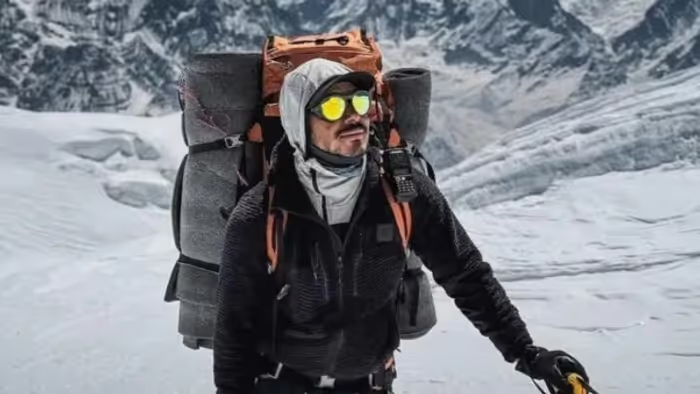
Nims Dai, whose full name was Nirmal Purja MBE, was one of the greatest mountaineers in history and a national hero of Nepal. Known for his extraordinary physical endurance, determination, and fearless approach to high-altitude climbing, he transformed what many believed was impossible into reality. Although he began mountaineering later than most professional climbers, Nims Dai went on to achieve world records that forever changed Himalayan climbing.
His name became internationally famous in 2019 after completing Project Possible, an ambitious expedition to climb all 14 of the world’s 8,000-meter mountains in just 189 days. Before his achievement, the previous record stood at nearly eight years. His remarkable success captured worldwide attention and demonstrated the exceptional skills, resilience, and professionalism of Nepali mountaineers on the global stage.
Beyond his record-breaking climbs, Nims Dai inspired millions through his leadership, rescue missions, and unwavering belief that “nothing is impossible.” He played a key role in the historic first winter ascent of K2, the world’s second-highest mountain, alongside an all-Nepali team. His achievements were further celebrated in the acclaimed Netflix documentary 14 Peaks: Nothing Is Impossible, introducing his story to audiences around the world.
Before becoming a world-renowned mountaineer, Nirmal Purja served with distinction in the British Army’s Brigade of Gurkhas and later became the first Gurkha to join the elite Special Boat Service (SBS), one of the United Kingdom’s most demanding special forces units. The discipline, endurance, and mental strength he developed during his military career became the foundation of his success in the mountains.
In 2026, the mountaineering community suffered a profound loss when Nims Dai tragically died during an expedition on Broad Peak (8,051 m) in Pakistan’s Karakoram Range after a devastating avalanche. His passing deeply affected climbers, adventurers, and admirers across the world, leading many people to search for his life story, achievements, and lasting contributions to mountaineering.
This comprehensive biography explores Nims Dai’s journey from his humble beginnings in Nepal to becoming one of the most accomplished high-altitude climbers of all time. You’ll discover his early life, military career, remarkable mountaineering achievements, Project Possible, Everest expeditions, rescue missions, world records, and the legacy he leaves for future generations of climbers.
Whether you are a trekking enthusiast, aspiring mountaineer, or simply inspired by stories of courage and determination, Nirmal Purja’s life is a powerful reminder that with vision, preparation, and perseverance, extraordinary goals can become reality.
Who Was Nims Dai?
Nims Dai, born Nirmal Purja MBE, was a legendary Nepali mountaineer, former British Gurkha, Special Boat Service (SBS) soldier, entrepreneur, and one of the most accomplished high-altitude climbers in history. He earned worldwide recognition after completing the seemingly impossible challenge of climbing all 14 mountains above 8,000 meters in just 189 days, shattering the previous world record and inspiring millions around the globe.
In Nepal, he was affectionately known as “Nims Dai.” In the Nepali language, “Dai” means elder brother, a title given to someone who is respected, trusted, and admired. Friends, fellow climbers, expedition members, and supporters commonly called him Nims Dai because of his approachable personality, leadership, and willingness to help others both on and off the mountain.
Although many people discovered him through the Netflix documentary 14 Peaks: Nothing Is Impossible, his journey to international fame began long before. His remarkable achievements were built on years of military service, relentless training, and an unwavering belief that determination could overcome even the greatest challenges.
Unlike many elite mountaineers who begin climbing in their teenage years, Nirmal Purja did not start serious mountaineering until he was around 29 years old. Despite this late start, he progressed at an astonishing pace. Within just a few years, he was climbing some of the world’s most dangerous peaks, leading complex expeditions, and participating in difficult rescue missions that saved the lives of stranded climbers.
His climbing philosophy was different from that of many record-seekers. Rather than focusing only on personal achievements, Nims Dai frequently risked his own summit ambitions to assist others in distress. Throughout his career, he became known not only for setting world records but also for demonstrating exceptional courage, teamwork, and compassion in the harshest environments on Earth.
Nims Dai also transformed global perceptions of Nepali climbers. For decades, many international expeditions relied heavily on the expertise of Nepali Sherpas and mountain guides, yet their contributions often received limited international recognition. Through his achievements, interviews, books, films, and expeditions, Nirmal Purja helped showcase the extraordinary skill, professionalism, and leadership of Nepali mountaineers on the world stage.
His influence extended far beyond mountaineering. He became a symbol of perseverance, national pride, and the belief that limits exist mainly in the mind. His famous motto—“Nothing Is Impossible”—became an inspiration for athletes, adventurers, entrepreneurs, and people pursuing ambitious goals in every field.
Today, Nims Dai is remembered not only for the mountains he climbed but also for the lives he inspired, the barriers he broke, and the lasting legacy he created for Nepal and the global mountaineering community.
Early Life and Family
Nirmal Purja, affectionately known around the world as Nims Dai, was born on 25 July 1983 in Chitwan District, Nepal. Although he was born in the lowlands of southern Nepal, his family’s roots trace back to the mountain district of Myagdi, a region well known for its deep connection to the Himalayas and the proud tradition of Gurkha soldiers.
Nims Dai grew up in a humble family where discipline, hard work, and resilience were part of everyday life. His father served as a Gurkha soldier in the British Army, while his mother worked tirelessly to support the family and raise their children. From an early age, he learned the importance of perseverance, respect, and never giving up, values that would later define both his military and mountaineering careers.
Unlike many famous climbers born in the shadow of the Himalayas, Nirmal Purja did not spend his childhood dreaming of climbing Mount Everest. His early ambitions were different. Inspired by his father’s military service, he wanted to become a Gurkha soldier. The discipline, physical fitness, and mental toughness required for military life appealed to him far more than mountaineering.
As a child, he enjoyed sports and outdoor activities and developed exceptional physical endurance. Friends and family remember him as energetic, competitive, and determined to excel in everything he pursued. Even at a young age, he displayed the confidence and resilience that would later help him overcome some of the world’s most dangerous climbing challenges.
Growing up in Nepal also gave him a deep appreciation for the country’s diverse landscapes, cultures, and mountains. Although he did not begin technical mountaineering until adulthood, the Himalayan environment was always an important part of his identity. Nepal’s rugged terrain, combined with his family’s military background, helped shape the mindset that would eventually make him one of the world’s greatest high-altitude climbers.
Financial resources were limited, and like many Nepali families, opportunities did not come easily. Nims Dai understood that success would require dedication and sacrifice. Rather than allowing these challenges to limit his ambitions, he used them as motivation to work harder and pursue opportunities beyond what many thought possible.
After completing his education, his determination led him to follow in his father’s footsteps by joining the British Army’s Brigade of Gurkhas. This decision marked a turning point in his life. The military provided world-class training, leadership experience, and the mental resilience that later enabled him to perform extraordinary feats in the Himalayas.
Looking back, it is remarkable that one of the greatest mountaineers in history did not begin his journey in climbing at all. His story began with a simple dream of becoming a soldier, proving that greatness often comes from unexpected paths. The discipline and courage he developed during his early years laid the foundation for achievements that would eventually inspire millions around the world.
From Gurkha Soldier to the Elite Special Boat Service (SBS)
Long before he became known as Nims Dai, Nirmal Purja built his reputation in one of the world’s most demanding military environments. His journey to becoming a legendary mountaineer began not on the slopes of the Himalayas but in the disciplined ranks of the British Army’s Brigade of Gurkhas.
Following his dream of serving like his father, Nirmal Purja joined the Brigade of Gurkhas in 2003. The Gurkhas have earned a worldwide reputation for courage, loyalty, and professionalism, serving the British Army for more than two centuries. Competition to join the Gurkhas is extremely fierce, with thousands of young Nepalis applying each year for a limited number of places. Successfully earning a place is considered a remarkable achievement in itself.
During his military service, Nims Dai quickly demonstrated exceptional physical fitness, determination, and leadership. He embraced the demanding lifestyle of a professional soldier and consistently pushed himself beyond his limits. His performance earned the respect of fellow soldiers and commanders alike.
However, Nirmal Purja wanted to challenge himself even further. He set his sights on joining the Special Boat Service (SBS), the United Kingdom’s elite special forces unit specializing in counter-terrorism, special reconnaissance, hostage rescue, and covert operations. The SBS is regarded as one of the most difficult special forces organizations to enter, with an extremely high failure rate during its rigorous selection process.
After successfully completing the demanding selection and training, Nirmal Purja made history by becoming the first Gurkha to join the Special Boat Service. This achievement was not only a personal milestone but also a proud moment for Nepal and the Gurkha community, demonstrating that Nepali soldiers could excel at the very highest levels of military service.
Serving in the SBS required extraordinary endurance, mental resilience, precision, and the ability to make life-or-death decisions under intense pressure. These experiences proved invaluable when Nims Dai later transitioned into high-altitude mountaineering. Many of the qualities that made him an exceptional special forces operator—discipline, teamwork, adaptability, risk management, and calm decision-making—also became defining characteristics of his climbing career.
His military background gave him a unique advantage in expedition planning and execution. Whether leading climbers through dangerous icefalls, navigating severe storms, or organizing complex rescue operations, Nims Dai approached every challenge with the meticulous preparation and decisive leadership expected of an elite special forces soldier.
After serving with distinction for several years, Nirmal Purja made a life-changing decision. He left the military to pursue a new dream: becoming a professional mountaineer. It was a bold choice, especially considering he had only recently begun climbing. Yet the same determination that had carried him through one of the world’s toughest military selection courses would soon propel him to the summit of the world’s highest mountains.
Looking back, it is clear that Nims Dai’s military career was the foundation of his later success. The discipline he developed as a Gurkha and the resilience he forged in the Special Boat Service enabled him to redefine what was thought possible in Himalayan mountaineering. His transition from elite soldier to record-breaking climber remains one of the most extraordinary career transformations in modern adventure history.
How Nims Dai Started Mountaineering
One of the most remarkable aspects of Nims Dai’s story is that he did not grow up as a mountaineer. Unlike many famous Himalayan climbers who spent years learning technical climbing from a young age, Nirmal Purja only began serious mountaineering in his late twenties. In just a few years, he progressed from a beginner to one of the world’s elite high-altitude climbers—an achievement that remains almost unprecedented.
Discovering a New Passion
While serving in the Special Boat Service (SBS), Nirmal Purja was introduced to mountaineering through military adventure training and expeditions. The demanding environment of the mountains immediately appealed to him. He enjoyed the combination of physical endurance, technical skill, careful planning, and mental strength required to climb safely at high altitude.
What began as a new challenge quickly developed into a lifelong passion. The more time he spent in the mountains, the more determined he became to push his limits and explore the world’s highest peaks.
His First Major Climb
In 2012, at around 29 years of age, Nims Dai completed his first significant Himalayan climb on Lobuche East (6,119 m) in Nepal. Although Lobuche East is classified as a trekking peak, it requires technical climbing skills, glacier travel, and the ability to operate safely in high-altitude conditions.
For someone with virtually no previous mountaineering experience, it was an impressive achievement. More importantly, the climb gave him confidence that he could pursue far greater ambitions.
Unlike many new climbers who gradually gain experience over decades, Nims Dai advanced with exceptional speed. His military background had already prepared him physically and mentally for extreme environments, allowing him to learn technical mountaineering much faster than most beginners.
Leaving the Military
Despite enjoying a successful military career, Nirmal Purja realized that his true passion lay in the mountains. Leaving one of the world’s most respected special forces units was a difficult decision, but he believed that life was too short not to pursue his greatest ambitions.
Many people questioned his choice. At that point, he was relatively unknown in the mountaineering world and had only recently started climbing. Choosing to leave a secure military career for the uncertain life of a professional climber involved significant personal and financial risk.
However, Nims Dai believed that success belongs to those willing to take calculated risks. His confidence, discipline, and relentless work ethic convinced him that he could achieve something extraordinary.
First 8,000-Meter Summit
After gaining experience on several Himalayan peaks, Nims Dai reached an important milestone in 2014 when he successfully summited Dhaulagiri (8,167 m), his first mountain above 8,000 meters.
Standing on the summit of Dhaulagiri changed everything.
Climbing an 8,000-meter peak—often called entering the “Death Zone”—requires exceptional endurance, technical ability, and careful acclimatization. Oxygen levels above 8,000 meters are only about one-third of those at sea level, making every step physically exhausting and increasing the risk of altitude illness, frostbite, avalanches, and sudden weather changes.
For Nims Dai, Dhaulagiri was not simply another summit. It proved that he had the ability to compete among the world’s strongest high-altitude climbers.
Building a Reputation
Following his success on Dhaulagiri, Nirmal Purja quickly became known for his incredible fitness, speed, and willingness to take on difficult challenges. Expedition leaders and fellow climbers recognized his ability to perform under extreme conditions while remaining calm, focused, and supportive of others.
His military training gave him an advantage that few climbers possessed. He excelled in planning complex expeditions, making quick decisions under pressure, and maintaining physical performance in dangerous environments.
These qualities soon earned him opportunities to join expeditions on several of the world’s highest mountains. Within only a few years of beginning mountaineering, he had established himself as one of Nepal’s rising climbing stars.
Looking back today, it is astonishing how quickly Nims Dai progressed. From his first serious climb in 2012 to standing on his first 8,000-meter summit in 2014, he demonstrated a level of determination and talent rarely seen in modern mountaineering. This rapid rise laid the foundation for the historic achievements that would soon capture the world’s attention.
Mount Everest: The Mountain That Shaped Nims Dai’s Legacy
After successfully climbing his first 8,000-meter mountain, Dhaulagiri, Nirmal Purja continued to challenge himself on increasingly difficult expeditions across the Himalayas. However, it was Mount Everest (8,848.86 m)—the highest mountain on Earth—that became the stage where he demonstrated his extraordinary strength, leadership, and determination to the international mountaineering community.
For most climbers, reaching the summit of Everest even once is the achievement of a lifetime. Nims Dai, however, viewed Everest as both a personal challenge and an opportunity to gain valuable experience for even greater ambitions.
First Summit of Mount Everest
In 2016, Nirmal Purja successfully reached the summit of Mount Everest for the first time. Standing on the highest point on Earth marked a significant milestone in his rapidly developing mountaineering career.
Unlike many climbers who focus solely on reaching the summit, Nims Dai paid close attention to every aspect of high-altitude expeditions. He studied weather patterns, acclimatization strategies, rope fixing, logistics, and emergency decision-making. These experiences would later prove essential during his record-breaking Himalayan expeditions.
Climbing Everest Multiple Times
Following his first successful ascent, Nims Dai returned to Everest on several occasions. Over the years, he completed multiple successful Everest summits, gaining extensive experience in one of the world’s most demanding alpine environments.
Each expedition presented different challenges. Climbers faced dangerous sections such as the Khumbu Icefall, the steep Lhotse Face, the exposed Southeast Ridge, and the oxygen-deprived Death Zone above 8,000 meters. Changing weather, avalanches, falling ice, and extreme altitude required constant focus and sound judgment.
Repeated success on Everest earned Nims Dai a reputation as one of Nepal’s strongest high-altitude climbers.
Leadership in the Himalayas
As his experience grew, Nims Dai became known not only for his climbing ability but also for his leadership. Expedition members respected his calm decision-making, positive attitude, and willingness to help others in difficult situations.
During several Himalayan expeditions, he participated in rescue operations, assisting climbers suffering from exhaustion, altitude sickness, or other emergencies. On more than one occasion, he delayed or sacrificed his own summit plans to prioritize the safety of fellow mountaineers.
These actions reflected the values he had developed during his years in the British Army and Special Boat Service. For Nims Dai, reaching the summit was important, but returning safely with the team always came first.
A Historic Achievement on Everest
In 2019, while carrying out Project Possible, Nims Dai accomplished one of the most extraordinary feats ever seen on Mount Everest.
Within 48 hours, he successfully climbed:
- Mount Everest (8,848.86 m)
- Lhotse (8,516 m)
- Makalu (8,485 m)
Completing three 8,000-meter summits in such a short period amazed the global mountaineering community and demonstrated an exceptional level of physical endurance, acclimatization, and logistical planning. This achievement became one of the defining moments of Project Possible and highlighted Nims Dai’s ability to perform at the highest level under extreme conditions.
More Than a Summit
For Nirmal Purja, Mount Everest represented far more than the world’s highest peak. It became a classroom where he refined his skills, developed his leadership, and built the confidence needed to pursue goals that many experts considered impossible.
The experience gained on Everest prepared him for the immense challenges of climbing all 14 of the world’s 8,000-meter mountains in record time. It also reinforced his belief that success comes from preparation, teamwork, and the courage to challenge conventional limits.
Today, Nims Dai’s legacy on Mount Everest extends beyond the number of summits he achieved. He is remembered for his professionalism, his commitment to helping others, and his determination to showcase the extraordinary capabilities of Nepali mountaineers on the world stage.
Project Possible: The Dream That Changed Mountaineering Forever
By 2018, Nirmal Purja had already established himself as one of Nepal’s strongest high-altitude climbers. He had successfully climbed several of the world’s highest mountains and gained valuable experience leading expeditions in the Himalayas. Yet he believed that the limits of human endurance—and the global perception of Nepali mountaineers—could be pushed much further.
At the time, the world record for climbing all 14 mountains higher than 8,000 meters belonged to South Korean mountaineer Kim Chang-ho, who completed the challenge in 7 years, 10 months, and 6 days. The mountaineering community widely accepted that even this remarkable record represented the practical limit of what was possible.
Nirmal Purja disagreed.
He believed that, with meticulous planning, a highly skilled team, favorable weather, and exceptional physical conditioning, the world’s 14 highest mountains could be climbed in less than one year. Many people considered the idea unrealistic. Some dismissed it as impossible, while others questioned whether the logistics alone could ever be managed.
Rather than allowing skepticism to discourage him, Nims Dai used it as motivation.
A Mission Beyond Personal Glory
Project Possible was never intended to be just another record attempt. Nirmal Purja wanted to demonstrate that Nepali climbers possessed the leadership, technical ability, and decision-making skills to lead the world’s most ambitious Himalayan expeditions.
For decades, Nepali mountaineers had played an essential role in the success of international expeditions. They fixed ropes, carried supplies, guided climbers through dangerous terrain, and performed countless rescues. Despite these contributions, global recognition often focused on foreign climbers rather than the Nepali professionals who made many expeditions possible.
Project Possible became an opportunity to change that narrative.
Nims Dai often explained that the expedition represented not only his personal ambition but also a chance to showcase Nepal’s mountaineering expertise to the world. Every successful summit would highlight the extraordinary capabilities of Nepali climbers and inspire future generations to dream bigger.
Funding an “Impossible” Dream
Although Nirmal Purja possessed the skills and determination needed for Project Possible, securing financial support proved to be one of his greatest obstacles.
The expedition required enormous funding for permits, international flights, logistics, climbing equipment, oxygen systems, insurance, expedition staff, and transportation between Nepal, Pakistan, and China. Sponsorship opportunities were limited because many companies doubted that such an ambitious project could succeed.
Instead of abandoning his dream, Nims Dai made an extraordinary personal sacrifice. He reportedly mortgaged his own house to help finance the expedition, demonstrating the level of confidence he had in his vision. Friends, supporters, and sponsors also contributed to making the project possible.
His willingness to risk everything reflected a mindset that had defined his life since his military career: if you truly believe in a goal, commitment must come before comfort.
Building the Right Team
Nims Dai understood that success in the Himalayas depends on teamwork as much as individual strength. He assembled an experienced team of Nepali climbers and expedition professionals who shared his determination and understood the complexity of climbing multiple 8,000-meter peaks within a single season.
Every aspect of the project required careful coordination. Weather forecasts, helicopter transfers, international travel, permit approvals, acclimatization schedules, equipment logistics, and recovery periods all had to align perfectly. A single delay caused by storms or illness could jeopardize the entire mission.
Months of preparation went into planning each stage of the expedition, ensuring that the team could move efficiently between mountain ranges while maintaining the highest possible safety standards.
The Beginning of a Historic Expedition
In the spring of 2019, Nirmal Purja officially launched Project Possible.
His objective was simple to describe but incredibly difficult to achieve:
Climb all 14 of the world’s 8,000-meter mountains in less than seven months.
Few people believed it could be done.
Within only a few months, however, Nims Dai would prove that what many considered impossible was simply a challenge waiting to be conquered. Project Possible was about to become one of the greatest achievements in the history of mountaineering and a defining moment for Nepal’s place in the world of high-altitude climbing.
The Complete Timeline of Project Possible
On 23 April 2019, Nirmal Purja officially began Project Possible, one of the most ambitious expeditions in mountaineering history. His mission was clear: climb all 14 mountains above 8,000 meters in a single climbing season—something many experts believed was impossible.
Over the next 189 days, Nims Dai crossed Nepal, India, Pakistan, and China multiple times, adapting to different mountain ranges, weather systems, and climbing conditions. Every expedition required careful planning, permits, transportation, weather forecasting, acclimatization, and exceptional teamwork.
When he finally stood on the summit of Shishapangma on 29 October 2019, he had rewritten mountaineering history forever.
All 14 Mountains Climbed During Project Possible
| No. | Mountain | Height | Country | Summit Date |
|---|---|---|---|---|
| 1 | Annapurna I | 8,091 m | Nepal | 23 April 2019 |
| 2 | Dhaulagiri I | 8,167 m | Nepal | 12 May 2019 |
| 3 | Kangchenjunga | 8,586 m | Nepal / India | 15 May 2019 |
| 4 | Mount Everest | 8,848.86 m | Nepal / Tibet | 22 May 2019 |
| 5 | Lhotse | 8,516 m | Nepal / Tibet | 22 May 2019 |
| 6 | Makalu | 8,485 m | Nepal / Tibet | 24 May 2019 |
| 7 | Nanga Parbat | 8,126 m | Pakistan | 3 July 2019 |
| 8 | Gasherbrum I | 8,080 m | Pakistan / China | 15 July 2019 |
| 9 | Gasherbrum II | 8,035 m | Pakistan / China | 18 July 2019 |
| 10 | K2 | 8,611 m | Pakistan / China | 24 July 2019 |
| 11 | Broad Peak | 8,051 m | Pakistan / China | 26 July 2019 |
| 12 | Cho Oyu | 8,188 m | Nepal / Tibet | 23 September 2019 |
| 13 | Manaslu | 8,163 m | Nepal | 27 September 2019 |
| 14 | Shishapangma | 8,027 m | Tibet (China) | 29 October 2019 |
Breaking a World Record
Nims Dai completed all 14 eight-thousanders in 189 days—approximately 6 months and 6 days.
Before Project Possible, the world record stood at 7 years, 10 months, and 6 days. Reducing that timeline from nearly eight years to just over six months was considered one of the most extraordinary achievements in modern mountaineering.
The accomplishment amazed climbers, expedition leaders, and sports scientists worldwide. It demonstrated not only exceptional physical endurance but also meticulous logistics, efficient acclimatization, strong teamwork, and the ability to make sound decisions under extreme pressure.
The Everest, Lhotse, and Makalu Triple
One of the defining moments of Project Possible came in May 2019 when Nims Dai climbed Everest, Lhotse, and Makalu within approximately 48 hours.
While each of these mountains is among the highest and most demanding in the world, climbing all three in such a short period required outstanding fitness, careful planning, favorable weather, and seamless support from his expedition team.
This feat alone would have secured Nims Dai a place in mountaineering history. Combined with the rest of Project Possible, it became one of the greatest endurance performances ever recorded in the Himalayas.
Challenges Along the Way
Project Possible was far from straightforward. Throughout the expedition, Nims Dai and his team faced numerous challenges, including:
- Unpredictable Himalayan weather.
- Dangerous avalanches and unstable snow conditions.
- Long international travel between climbing regions.
- Strict permit requirements and logistical hurdles.
- Physical exhaustion from repeated climbs above 8,000 meters.
- The constant risk of altitude-related illness.
Despite these obstacles, Nims Dai remained focused on his goal. His military discipline, extensive preparation, and confidence in his team enabled him to overcome setbacks that might have ended most expeditions.
A Victory for Nepal
Project Possible was more than a personal record. It became a landmark achievement for Nepal.
Nims Dai consistently emphasized that the expedition showcased the strength, professionalism, and leadership of Nepali climbers. Around the world, the success of Project Possible helped change perceptions of Nepal’s mountaineering community, highlighting the expertise and resilience that Nepali climbers bring to the world’s highest peaks.
For many young Nepalis, Nims Dai became a symbol of ambition and determination—proving that with vision, preparation, and perseverance, seemingly impossible goals can become reality.
How Project Possible Changed Mountaineering Forever
When Nirmal Purja announced Project Possible in 2019, many experienced climbers believed the challenge could not be completed. Climbing all 14 mountains above 8,000 meters had traditionally taken years because of limited weather windows, complex logistics, and the immense physical demands of high-altitude mountaineering.
By completing the challenge in just 189 days, Nims Dai did far more than break a world record—he changed the way people viewed what was possible in Himalayan climbing.
Redefining Human Endurance
Before Project Possible, the accepted approach to climbing the world’s highest mountains involved spreading expeditions over many years. Climbers needed multiple seasons to recover physically, secure funding, obtain permits, and wait for suitable weather.
Nims Dai demonstrated that, with exceptional preparation, strategic planning, strong teamwork, and excellent physical conditioning, multiple 8,000-meter expeditions could be completed within a single climbing cycle.
His achievement attracted attention not only from the mountaineering community but also from sports scientists, endurance athletes, military professionals, and adventurers worldwide.
Bringing Recognition to Nepali Climbers
Perhaps Nims Dai’s greatest contribution was changing the global perception of Nepali mountaineers.
For decades, Nepali climbers had been the backbone of Himalayan expeditions. They fixed ropes, carried equipment, guided clients through dangerous terrain, established high camps, and performed countless rescue missions. Yet international recognition often focused on the foreign climbers who reached the summit.
Throughout Project Possible, Nims Dai consistently emphasized that the success belonged not only to him but also to his Nepali climbing team.
His expedition highlighted the world-class skills, leadership, and professionalism of Nepali mountaineers. It encouraged the international climbing community to recognize Nepal’s climbers as expedition leaders, decision-makers, and elite athletes—not simply support staff.
Inspiring a New Generation
Project Possible inspired thousands of young Nepalis to dream beyond traditional expectations.
Nims Dai often encouraged people to believe that limitations are frequently created by fear rather than ability. His message resonated with students, athletes, entrepreneurs, soldiers, and outdoor enthusiasts across Nepal and around the world.
His famous philosophy, “Nothing Is Impossible,” became more than a slogan. It represented a mindset built on preparation, discipline, resilience, and the courage to pursue ambitious goals.
Global Media Attention
The extraordinary success of Project Possible attracted worldwide media coverage.
International newspapers, television networks, and mountaineering publications followed his progress throughout 2019. His achievement was celebrated as one of the greatest endurance performances in modern adventure history.
The story reached an even larger audience in 2021 with the release of the Netflix documentary 14 Peaks: Nothing Is Impossible. The film introduced millions of viewers to Nims Dai’s journey and showcased both the beauty and dangers of the Himalayas.
As a result, people who had never previously followed mountaineering became interested in Nepal, the world’s highest mountains, and the remarkable achievements of Nepali climbers.
More Than a World Record
Although the record itself was extraordinary, Project Possible represented something much larger.
It challenged long-held assumptions about human performance, highlighted the importance of teamwork over individual achievement, and brought international recognition to Nepal’s mountaineering community.
Years after its completion, Project Possible continues to inspire climbers, explorers, and adventurers around the world. It remains one of the defining achievements in the history of high-altitude mountaineering and a lasting symbol of Nepal’s contribution to global adventure.
Looking back today, it is clear that Nims Dai did not simply climb mountains—he changed the history of mountaineering itself.
The Historic First Winter Ascent of K2 (2021)
After rewriting mountaineering history with Project Possible in 2019, Nirmal Purja continued to pursue challenges that many of the world’s best climbers believed were nearly impossible. His next great objective was K2 (8,611 m)—the world’s second-highest mountain and widely regarded as one of the most difficult and dangerous peaks on Earth.
While K2 had been climbed many times during the summer, no one had ever reached its summit in winter. Decades of attempts by some of the world’s strongest mountaineers had ended in failure because of extreme weather, hurricane-force winds, deep snow, and temperatures that could fall below -50°C.
For the global climbing community, winter K2 had become the last great unsolved challenge among the world’s 8,000-meter mountains.
A Proud Nepali Expedition
In the winter of 2020–2021, several international teams gathered at the base of K2 with the shared goal of making history. Nims Dai joined forces with some of Nepal’s finest high-altitude climbers, choosing collaboration over competition.
Rather than racing each other to the summit, the Nepali climbers worked together to fix ropes, break trail through deep snow, and overcome the mountain’s dangerous conditions as one united team. Their cooperation reflected the strong sense of teamwork that has long defined Nepal’s mountaineering tradition.
Making History on 16 January 2021
On 16 January 2021, history was made.
A team of 10 Nepali climbers, including Nirmal Purja, successfully reached the summit of K2, completing the first winter ascent of the mountain.
Just below the summit, the team paused, gathered together, and sang Nepal’s national anthem before taking their final steps to the top. The moment became one of the most emotional and memorable scenes in modern mountaineering, symbolizing national pride and the remarkable achievements of Nepali climbers.
For many people in Nepal, it was far more than a mountaineering success—it was a historic moment that demonstrated Nepal’s leadership in high-altitude climbing.
Leadership Under Extreme Conditions
Throughout the expedition, Nims Dai played an important leadership role. His experience from Project Possible, military background, and ability to make calm decisions under pressure contributed significantly to the team’s success.
Winter climbing on K2 required exceptional physical endurance and mental strength. Climbers faced:
- Temperatures below -50°C
- Powerful jet-stream winds
- Heavy snowfall
- High avalanche risk
- Thin air with only about one-third of normal oxygen
Every movement required careful judgment, teamwork, and trust.
Why Winter K2 Was So Important
The first winter ascent of K2 ended one of the greatest remaining challenges in Himalayan mountaineering.
It also transformed international recognition of Nepali climbers. Rather than being viewed primarily as support staff on foreign expeditions, Nepali mountaineers demonstrated that they could successfully lead, organize, and complete one of the most demanding climbing achievements ever attempted.
The expedition became a powerful symbol of Nepal’s expertise, resilience, and unity.
A Legacy Beyond the Summit
For Nims Dai, the success of the winter K2 expedition represented another step toward his lifelong mission of showcasing the extraordinary capabilities of Nepali climbers.
Although he had already earned worldwide recognition through Project Possible, the first winter ascent of K2 further cemented his place among the greatest mountaineers in history.
Today, the achievement remains one of the defining moments of modern Himalayan climbing and a source of immense pride for Nepal. It continues to inspire climbers around the world and stands as a lasting reminder of what can be achieved through courage, preparation, and teamwork.
Rescue Missions: The Mountaineer Who Chose Lives Over Records
Although Nirmal Purja became famous for breaking world records, those who climbed with him often admired him most for something else—his willingness to risk his own safety to help others.
Throughout his mountaineering career, Nims Dai participated in numerous high-altitude rescue operations on some of the world’s most dangerous mountains. Whether assisting exhausted climbers, supporting evacuation efforts, or helping stranded mountaineers descend safely, he repeatedly demonstrated that reaching the summit was never more important than saving a human life.
His military training, combined with years of experience in the Himalayas, made him exceptionally calm under pressure. In situations where every second mattered, he was known for making quick decisions while remaining focused on the safety of everyone around him.
The Famous Rescue on Annapurna
One of Nims Dai’s most widely reported rescues took place on Annapurna I in April 2019 during Project Possible.
French climber Élisabeth Revol was attempting to descend the mountain after her climbing partner, Tomasz Mackiewicz, had died during a separate winter expedition months earlier. During the spring season, Revol became seriously ill at high altitude and was unable to descend safely without assistance.
Although Nims Dai was in the middle of his own ambitious challenge to climb all 14 eight-thousanders, he joined the rescue effort without hesitation.
Working with other experienced climbers and helicopter support where conditions allowed, the team successfully brought Revol to safety. The rescue highlighted Nims Dai’s belief that no record was more valuable than a human life.
Helping Fellow Climbers on Everest
Mount Everest presents many dangers beyond the climb itself. Every season, climbers face altitude sickness, exhaustion, frostbite, severe weather, and accidents in the Khumbu Icefall and the Death Zone.
During several Everest expeditions, Nims Dai assisted climbers who were struggling in extreme conditions. Fellow mountaineers often described him as someone who remained calm even during emergencies and who was always willing to share oxygen, equipment, advice, or physical assistance when needed.
His leadership earned the respect of guides, Sherpas, clients, and international expedition leaders alike.
Leadership During Emergencies
Rescue operations above 8,000 meters are among the most difficult tasks in mountaineering.
At these extreme altitudes, every additional minute increases the risk to both the injured climber and the rescuers. Carrying or assisting another person through steep snow, ice, and thin air requires enormous physical effort and careful teamwork.
Nims Dai’s background in the British Army and Special Boat Service (SBS) prepared him well for these situations. Years of military training taught him to stay focused, assess risks quickly, and work effectively as part of a team under life-threatening conditions.
These qualities made him not only an outstanding climber but also a trusted leader during emergencies.
A Philosophy of Service
Throughout his career, Nims Dai often emphasized that mountaineering was about more than personal achievement.
He believed that climbers share a responsibility to help one another whenever possible. This philosophy guided many of his decisions in the mountains, even when offering assistance meant delaying his own progress or increasing his personal risk.
His actions inspired many younger climbers to place teamwork, compassion, and responsibility alongside ambition and success.
Remembered for More Than Records
Today, Nims Dai’s legacy extends far beyond the summits he reached.
He is remembered as a mountaineer who combined extraordinary physical ability with genuine concern for others. His courage was measured not only by the mountains he climbed but also by the lives he helped protect.
For many people, this balance of determination, humility, and compassion is what truly made Nirmal Purja one of the greatest mountaineers of his generation.
Netflix Documentary: 14 Peaks – Nothing Is Impossible
Although Nirmal Purja had already earned immense respect within the mountaineering community, his name became known to millions of people worldwide after the release of the Netflix documentary 14 Peaks: Nothing Is Impossible in 2021. The film transformed Nims Dai from a respected high-altitude climber into an internationally recognized adventurer and inspirational figure.
Directed by Torquil Jones and released globally on 29 November 2021, the documentary follows Nims Dai and his Nepali climbing team during Project Possible, their extraordinary mission to summit all 14 of the world’s mountains above 8,000 meters in less than seven months. At the time, many experts believed the challenge was impossible, making the story even more compelling.
Bringing Nepal’s Mountaineers to the World
Unlike many mountaineering films that focus on a single climber, 14 Peaks highlights the teamwork, courage, and professionalism of the entire Nepali expedition team.
Throughout the documentary, viewers witness not only the physical challenges of climbing the world’s highest mountains but also the trust, friendship, and unity that made Project Possible a success. The film emphasizes that such achievements are never accomplished alone and celebrates the vital role of Nepali climbers in modern Himalayan mountaineering.
Behind the Scenes of Project Possible
The documentary features spectacular footage captured during the expedition itself, placing viewers on steep ice slopes, exposed ridges, and windswept summits across Nepal, Pakistan, and Tibet. It also explores the logistical complexity of Project Possible, showing how careful planning, weather forecasting, travel coordination, and teamwork allowed the expedition to move rapidly between mountains. More than 100 hours of footage recorded by Nims Dai and his team were used to tell the story.
Beyond the climbing, the film presents a more personal side of Nirmal Purja. It shows the sacrifices required to pursue such an ambitious goal, including the emotional challenges of balancing family life with life-threatening expeditions. These moments helped audiences connect with him not only as a record-breaking climber but also as a husband, son, friend, and leader.
Global Recognition
Following its release, 14 Peaks: Nothing Is Impossible reached audiences in countries around the world and became one of the most talked-about adventure documentaries on Netflix. Viewers who had never previously followed mountaineering discovered the beauty of the Himalayas, the remarkable achievements of Nepali climbers, and the story of Project Possible.
The documentary also inspired many people to visit Nepal for trekking and mountaineering. Interest in iconic destinations such as Everest Base Camp, the Annapurna, and other Himalayan trekking routes grew as viewers experienced the breathtaking landscapes featured in the film.
Changing Perceptions of Nepali Climbers
One of the documentary’s greatest achievements was helping change international perceptions of Nepali mountaineers.
For decades, Nepali climbers had played a central role in Himalayan expeditions, yet they often received less recognition than the foreign climbers they supported. Through Project Possible and its global release on Netflix, millions of viewers witnessed the leadership, technical expertise, and resilience of Nepal’s climbing community.
Nims Dai repeatedly emphasized that Project Possible was never just about breaking records. It was also about ensuring that Nepali climbers received the respect and recognition they had long deserved.
An Inspiration for Future Generations
Today, 14 Peaks: Nothing Is Impossible is regarded as one of the most influential mountaineering documentaries ever produced. Schools, outdoor clubs, military organizations, and adventure enthusiasts continue to watch the film as a story of perseverance, teamwork, and determination.
Even after Nims Dai’s tragic death during the 2026 Broad Peak expedition, the documentary remains a lasting record of his vision, leadership, and belief that extraordinary goals can be achieved through preparation, courage, and unwavering commitment. It continues to inspire climbers and dreamers around the world, ensuring that his legacy will endure for generations to come.
Awards, Records, and Achievements
Nirmal Purja, widely known as Nims Dai, built one of the most extraordinary careers in the history of high-altitude mountaineering. In little more than a decade, he progressed from a newcomer to one of the world’s most accomplished climbers, setting records that inspired millions and changed global perceptions of Nepali mountaineers.
His achievements extend far beyond the number of mountains he climbed. They include military excellence, world-record expeditions, historic first ascents, leadership in extreme environments, and a lasting contribution to Nepal’s international reputation.
Major Mountaineering Achievements
Project Possible – 14 Peaks in 189 Days
Nims Dai’s greatest achievement came in 2019, when he completed Project Possible by climbing all 14 of the world’s 8,000-meter mountains in just 189 days.
The previous record had taken nearly eight years. Completing the challenge in just over six months is widely regarded as one of the greatest endurance achievements in modern mountaineering.
The expedition required exceptional physical fitness, meticulous planning, rapid international logistics, and outstanding teamwork.
First Winter Ascent of K2
On 16 January 2021, Nims Dai joined an all-Nepali team that successfully completed the first winter ascent of K2 (8,611 m).
The expedition ended one of the greatest remaining challenges in Himalayan climbing and demonstrated the world-class leadership and technical ability of Nepali mountaineers.
The team’s decision to gather below the summit and sing Nepal’s national anthem before reaching the top became one of the defining moments in the history of mountaineering.
Multiple Mount Everest Summits
Throughout his climbing career, Nims Dai successfully reached the summit of Mount Everest five times.
Beyond his own ascents, he became known for guiding expeditions, supporting fellow climbers, and participating in rescue efforts in the Everest region.
His experience on Everest played a crucial role in preparing him for the logistical challenges of Project Possible.
Leadership Beyond the Summit
One of Nims Dai’s defining characteristics was his leadership.
Whether coordinating complex expeditions, making critical decisions in dangerous conditions, or assisting climbers in distress, he consistently demonstrated professionalism, calm judgment, and teamwork.
These qualities earned him respect throughout the international mountaineering community.
Military Achievements
Before becoming a professional mountaineer, Nirmal Purja served in the British Army’s Brigade of Gurkhas.
He later became the first Gurkha to join the United Kingdom’s elite Special Boat Service (SBS), one of the world’s most demanding special forces units.
The discipline, resilience, and leadership he developed during his military career became the foundation of his success in high-altitude mountaineering.
International Recognition
Following Project Possible and the release of the Netflix documentary 14 Peaks: Nothing Is Impossible, Nims Dai became one of Nepal’s most internationally recognized adventurers.
He was invited to speak at leadership conferences, adventure events, military organizations, and mountaineering forums around the world, where he shared lessons on resilience, teamwork, and overcoming challenges.
His autobiography, Beyond Possible, also became widely read among climbers, athletes, and readers interested in personal development.
Selected Career Highlights
| Achievement | Year |
|---|---|
| Joined the British Army’s Brigade of Gurkhas | 2003 |
| Became the first Gurkha in the Special Boat Service (SBS) | During his military career |
| Started serious mountaineering | 2012 |
| First 8,000-meter summit (Dhaulagiri) | 2014 |
| First Mount Everest summit | 2016 |
| Completed Project Possible (14 peaks in 189 days) | 2019 |
| First winter ascent of K2 (with the all-Nepali team) | 2021 |
| Released autobiography Beyond Possible | 2022 |
A Legacy of Excellence
While records are often broken over time, Nims Dai’s influence extends far beyond statistics.
He inspired a new generation of climbers to dream bigger, encouraged greater international recognition for Nepali mountaineers, and demonstrated that extraordinary achievements are built through preparation, teamwork, discipline, and determination.
His career remains one of the most remarkable stories in the history of Himalayan mountaineering, and his achievements continue to inspire adventurers around the world.
Legacy: A Mountaineer Who Changed the Impossible
Nirmal “Nims Dai” Purja’s life was defined by courage, determination, and an unwavering belief that limits exist to be challenged. In little more than a decade, he transformed himself from a Gurkha soldier into one of the greatest high-altitude mountaineers in history, proving that extraordinary achievements are possible through preparation, discipline, and teamwork.
His accomplishments—including completing all 14 of the world’s 8,000-meter peaks in just 189 days and helping achieve the first winter ascent of K2 with an all-Nepali team—reshaped modern mountaineering. More importantly, they brought long-overdue international recognition to the skill, leadership, and professionalism of Nepali climbers.
Beyond the records and summits, Nims Dai inspired millions through his actions. Whether leading expeditions, supporting rescue efforts, encouraging young climbers, or sharing his experiences through his book and documentary, he consistently promoted the values of resilience, humility, and service.
His final expedition to Broad Peak in 2026 ended in tragedy, reminding the world that even the most experienced mountaineers face the unpredictable power of the Himalayas. Yet his legacy is not defined by that final expedition. It is defined by a lifetime of extraordinary achievements, by the people he inspired, and by the barriers he broke for future generations.
Today, Nims Dai’s story continues to motivate climbers, adventurers, soldiers, athletes, and dreamers around the world. His belief that “Nothing Is Impossible” remains a powerful message—not because success is guaranteed, but because remarkable goals become possible through courage, commitment, and perseverance.
As long as people continue to explore the world’s highest mountains, the name Nirmal “Nims Dai” Purja will remain an enduring symbol of Nepal’s contribution to global mountaineering. His achievements will be remembered not only in record books but also in the hearts of those who believe that determination and teamwork can overcome even the greatest challenges.