Why Choose the 10-Day Annapurna Circuit Trek?
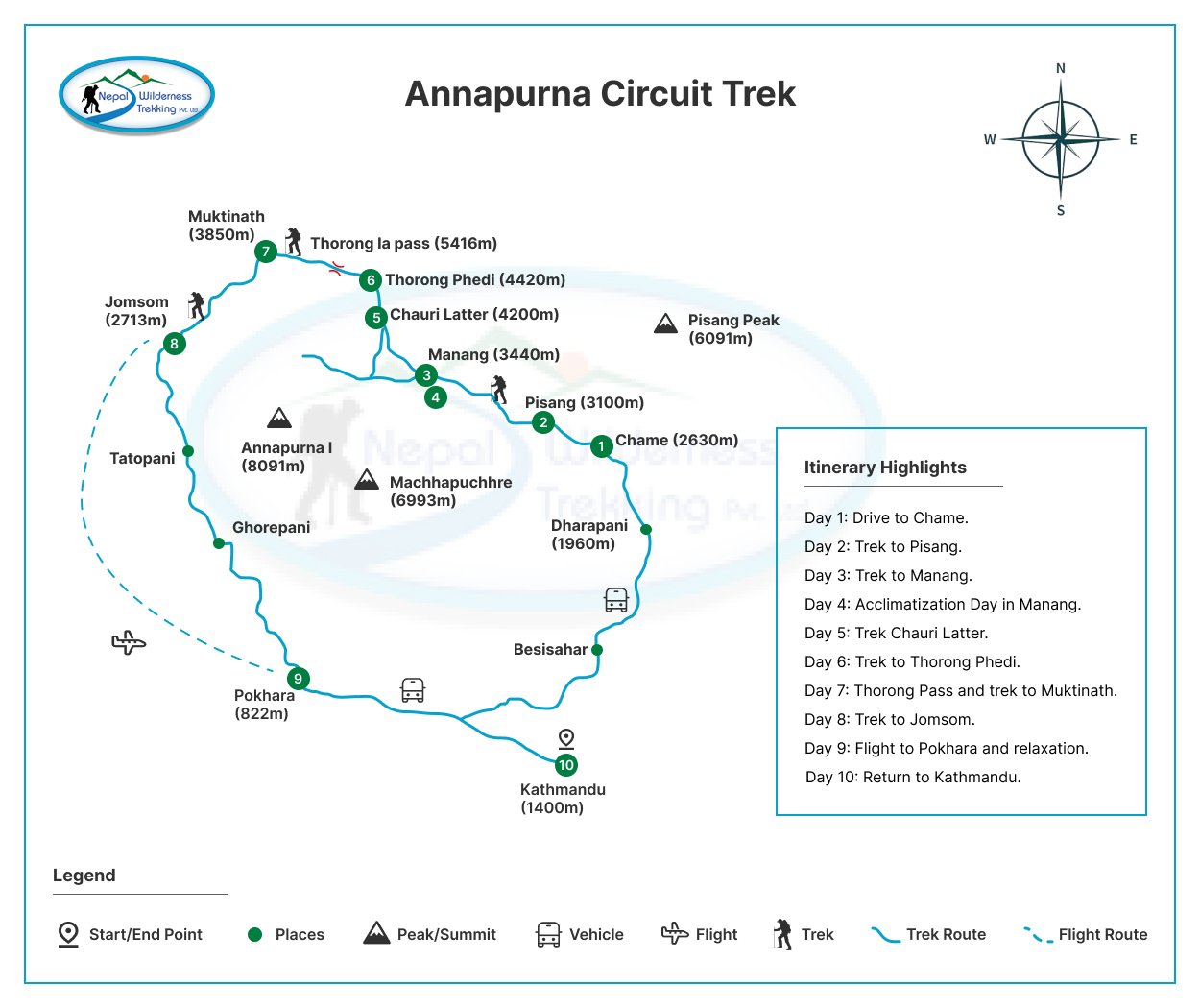
We designed our 10-Day Annapurna Circuit Trek for travelers with limited time who still want to experience the highlights of this iconic Himalayan journey. While the traditional Annapurna Circuit Trek takes 14 to 18 days, our shorter itinerary covers the most spectacular section of the route and leads you across the legendary Thorong La Pass (5,416 m), one of the highest trekking passes in the world. This itinerary allows you to enjoy breathtaking mountain scenery, diverse landscapes, and authentic Himalayan culture without missing the trek’s most rewarding experiences.
Instead of trekking along lower sections where roads now follow much of the original trail, this itinerary begins with a scenic drive to Chame. This allows you to spend more time exploring the most rewarding parts of the Annapurna region, including Upper Pisang, Manang, Thorong La Pass, and the sacred pilgrimage site of Muktinath.
Although the itinerary is shorter, it still requires a good level of fitness due to the rapid altitude gain. To help minimize the risk of altitude sickness, the trek includes an important acclimatization day in Manang, allowing your body to adjust before ascending toward Thorong La Pass. Throughout the journey, our experienced local guides monitor your pace, health, and acclimatization to ensure a safe and enjoyable trekking experience.
If you are looking for an unforgettable Himalayan adventure within a limited holiday schedule, the 10-Day Annapurna Circuit Trek offers the perfect combination of spectacular mountain scenery, authentic local culture, high-altitude adventure, and efficient travel logistics.
Why Trekkers Choose This Itinerary
- Complete one of Nepal’s most iconic treks in just 10 days.
- Cross the legendary Thorong La Pass (5,416 m).
- Explore the traditional villages of Upper Pisang, Manang, and Muktinath.
- Experience dramatic landscapes ranging from lush valleys to alpine deserts.
- Minimize road walking by driving directly to Chame.
- Stay in locally operated teahouses while enjoying authentic Himalayan hospitality.
- Perfect for fit beginners and experienced trekkers with limited time.
Annapurna Circuit – Nepal’s Ultimate Himalayan Adventure
The Annapurna Circuit Trek is widely regarded as one of the world’s greatest trekking adventures. Circling the Annapurna Massif, the trail passes through lush subtropical forests, traditional mountain villages, alpine meadows, dramatic river gorges, and the high-altitude landscapes of the Tibetan Plateau.
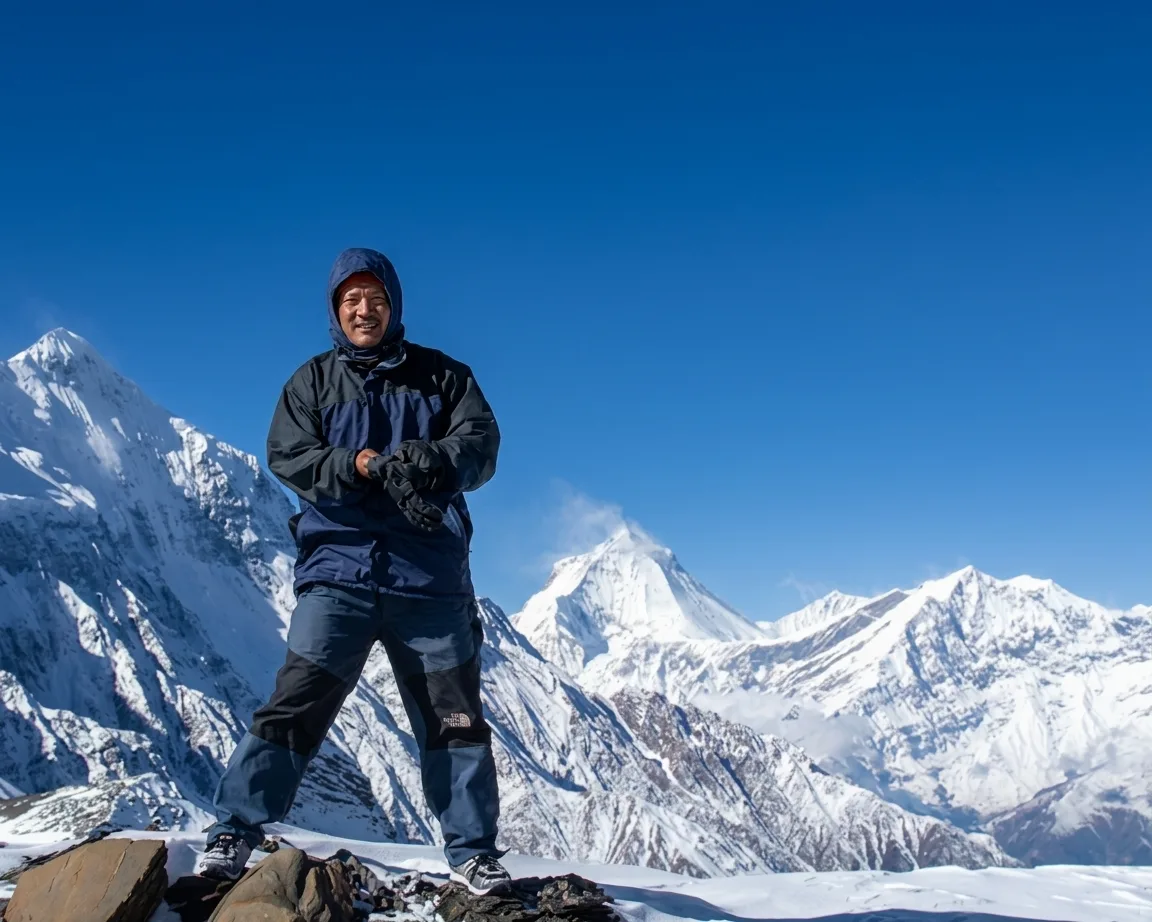
One of the trek’s greatest highlights is crossing Thorong La Pass (5,416 m), where trekkers are rewarded with breathtaking panoramic views of the Annapurna and Dhaulagiri mountain ranges. Along the journey, you’ll experience the rich traditions of the Gurung, Manangi, and Thakali communities, visit centuries-old monasteries, and explore the sacred temple of Muktinath, an important pilgrimage site for both Hindus and Buddhists.
The Annapurna Circuit is more than a mountain trek—it is a journey through Nepal’s remarkable natural beauty, cultural diversity, and Himalayan heritage.
Geography and Landscape of the Annapurna Circuit
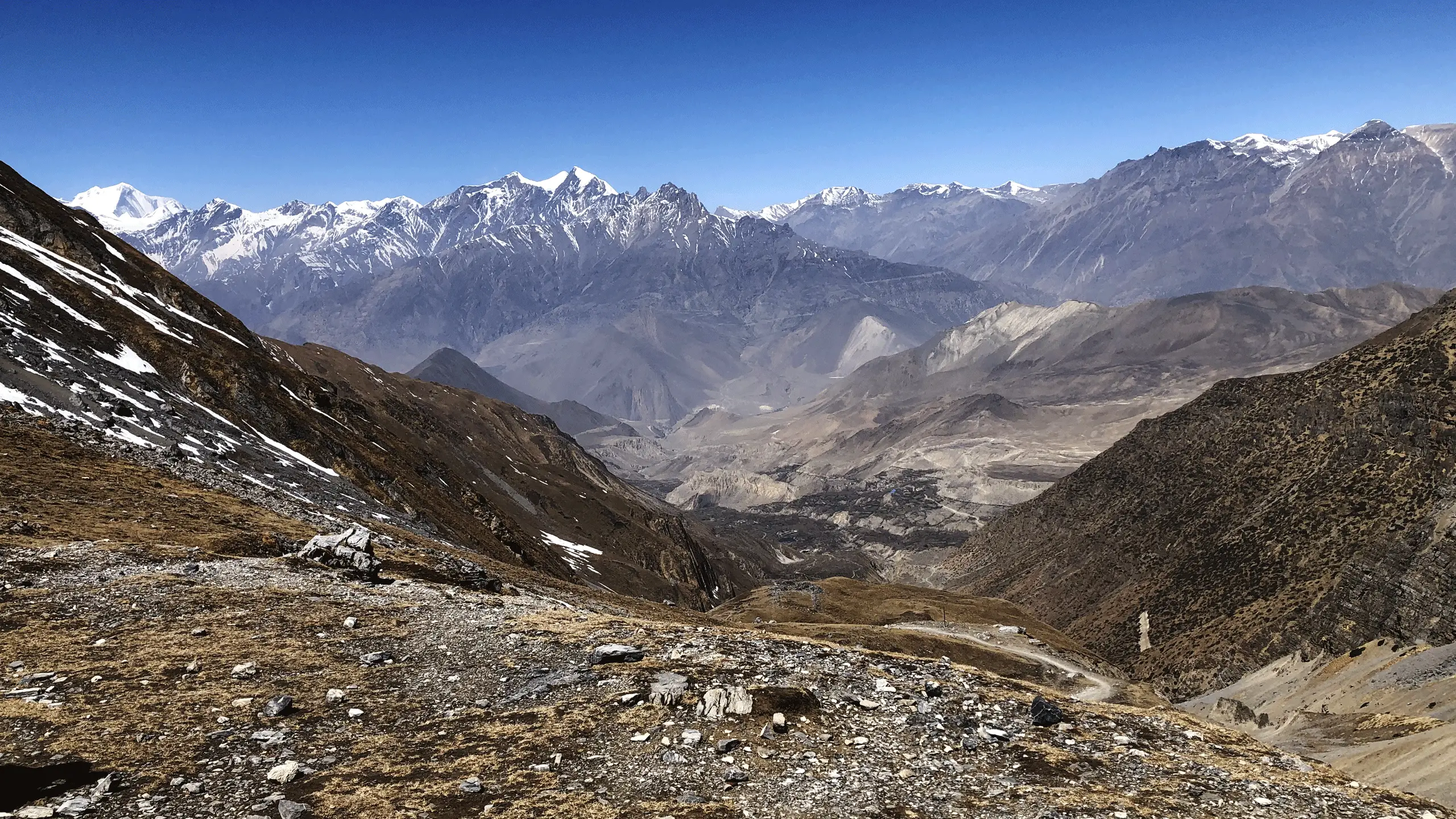
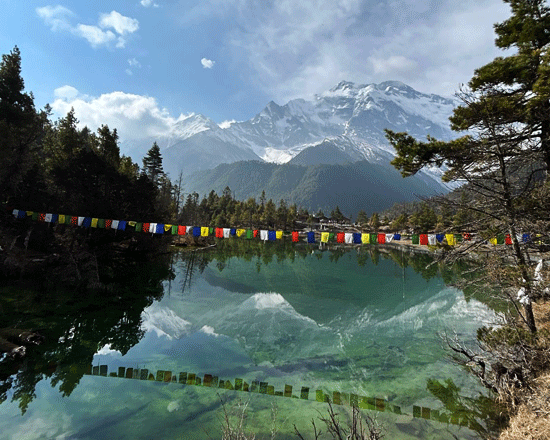
The Annapurna Circuit showcases one of the most diverse mountain landscapes in Nepal. Beginning in the lush Marsyangdi Valley, the trail gradually ascends through terraced farmland, rhododendron and pine forests, waterfalls, and traditional Himalayan villages before reaching the dry, windswept valleys of Manang.
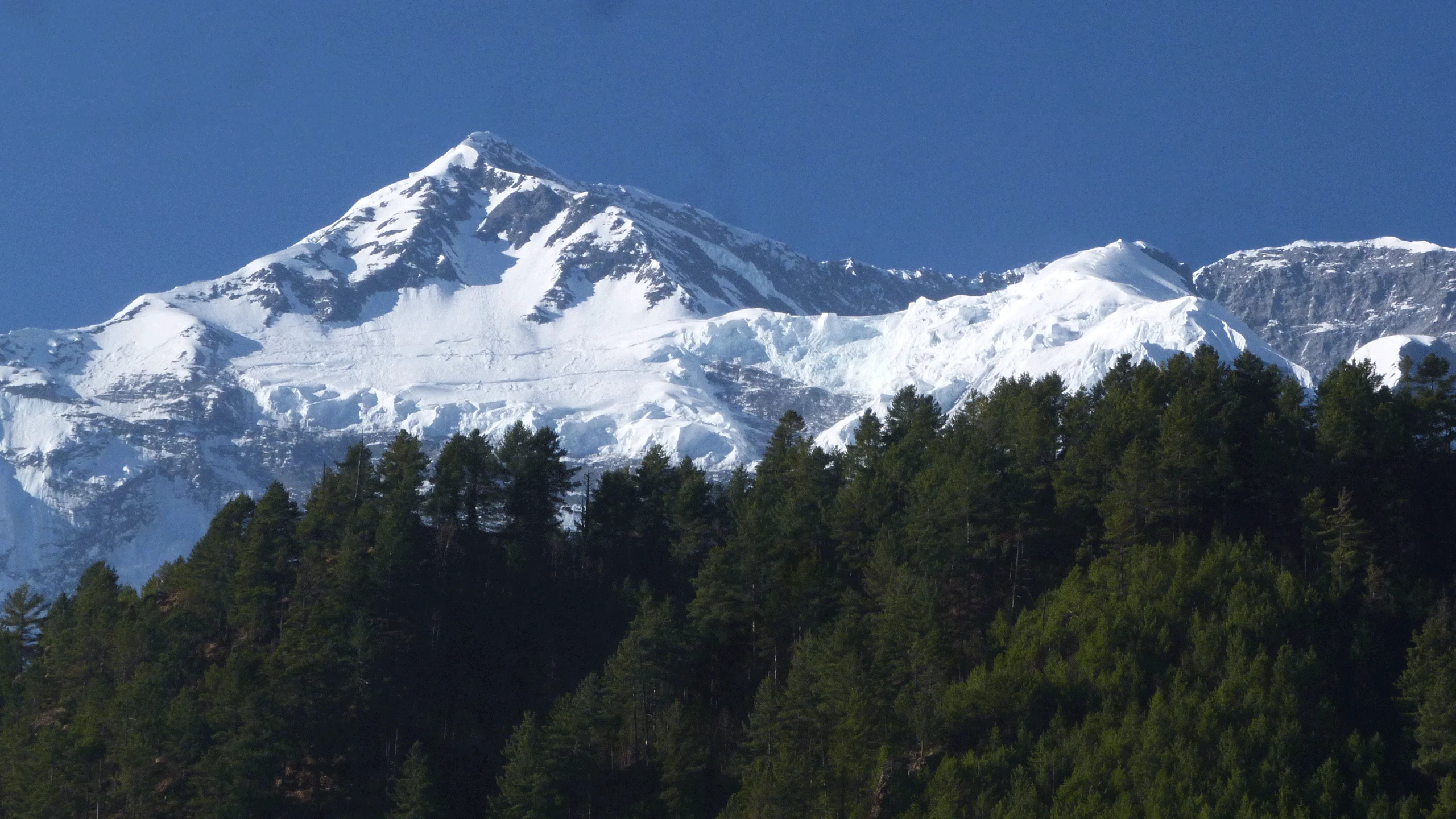
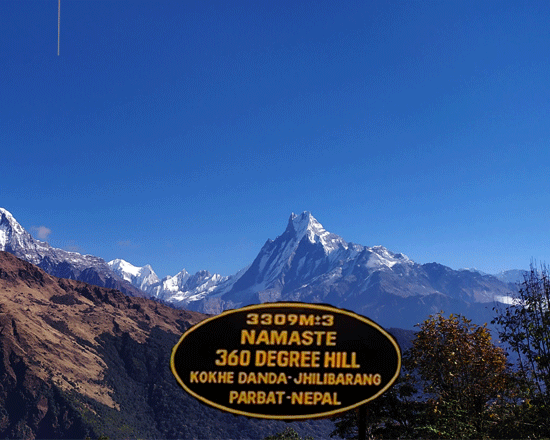
As the elevation increases, the scenery changes dramatically into alpine meadows, glacial rivers, rocky cliffs, and snow-covered peaks. Trekkers enjoy spectacular views of Annapurna I (8,091 m), Annapurna II (7,937 m), Gangapurna (7,455 m), Tilicho Peak (7,134 m), Manaslu (8,163 m), and Dhaulagiri (8,167 m).
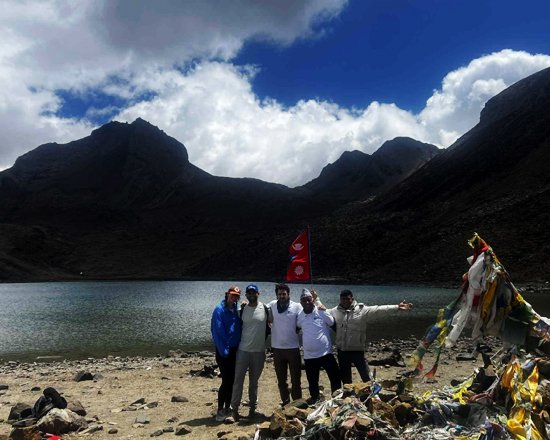
The route also follows sections of the Kali Gandaki Gorge, often regarded as one of the deepest river gorges in the world. For trekkers seeking an additional adventure, a side trip to Tilicho Lake (4,919 m) offers an unforgettable experience surrounded by glaciers and towering Himalayan peaks.
Cultural Diversity Along the Circuit
The Annapurna Circuit is not only famous for its mountain scenery but also for its rich cultural heritage. As you travel through the region, you’ll experience the unique traditions, architecture, languages, and lifestyles of several ethnic communities, each contributing to the area’s cultural richness. The Tibetan Buddhist traditions found in Manang continue into the remote Nar Phu Valley Trek, where ancient monasteries, traditional stone villages, and centuries-old Himalayan culture have remained remarkably well preserved.
In the lower hills, the welcoming Gurung communities are known for their traditional stone houses, warm hospitality, and vibrant festivals such as Tamu Lhosar. As the trail climbs higher into the Kali Gandaki Valley, you’ll encounter the Thakali people, historically renowned as traders along the ancient salt route between Nepal and Tibet. Their villages are famous for their beautifully built stone homes, Buddhist monuments, and delicious Thakali cuisine.
Further north, around Manang, Tibetan Buddhist traditions become increasingly prominent. Ancient monasteries, prayer wheels, mani walls, colorful prayer flags, and centuries-old chortens reflect the region’s deep spiritual heritage. Visitors can observe traditional Himalayan lifestyles that have remained largely unchanged for generations, making the Annapurna Circuit one of Nepal’s most culturally rewarding trekking experiences.
Religious and Spiritual Significance
The Annapurna Circuit Trek is not only a journey through spectacular mountain landscapes but also a pilgrimage through regions rich in spiritual heritage. Along the trail, trekkers encounter ancient monasteries, Buddhist chortens, prayer wheels, mani walls, and sacred temples that reflect the deep religious traditions of the Himalayas.
One of the most important spiritual landmarks is Muktinath Temple (3,760 m), a revered pilgrimage site for both Hindus and Buddhists. Hindu devotees believe that bathing beneath the temple’s 108 sacred water spouts washes away sins and brings spiritual purification. Buddhists regard Muktinath as a place of compassion and enlightenment, making it a unique destination where two great religions peacefully coexist.
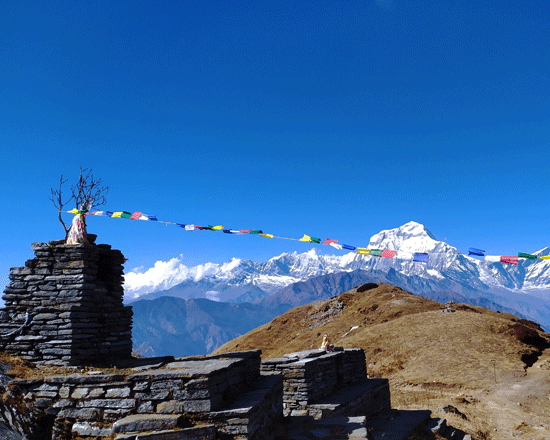
Throughout the trek, you’ll also pass centuries-old monasteries in villages such as Manang, Braga, and Pisang. Colorful prayer flags flutter across mountain passes, while carved mani stones and spinning prayer wheels remind visitors of the region’s enduring Tibetan Buddhist traditions. These sacred sites offer a fascinating insight into the spiritual life of the local communities and add a meaningful cultural dimension to the trekking experience.
Flora and Fauna of the Annapurna Circuit
The Annapurna Conservation Area showcases Nepal’s richest biodiversity and protects the country’s largest conservation area. As you trek higher into the Himalayas, you’ll experience dramatic changes in landscapes and ecosystems that support an incredible variety of plants and wildlife.
The lower valleys feature lush forests of rhododendron, oak, pine, bamboo, and maple. During spring, thousands of blooming rhododendrons paint the hillsides in vibrant shades of red, pink, and white, creating one of the most colorful trekking experiences in Nepal.
As you gain elevation, alpine meadows, juniper shrubs, rocky slopes, and glacial valleys gradually replace the dense forests. Along the trail, you may spot Himalayan tahr, blue sheep, musk deer, Himalayan marmots, and numerous high-altitude birds, including the colorful Himalayan monal, Nepal’s national bird. If you’re especially fortunate, you might even catch a glimpse of the elusive snow leopard, which inhabits the remote high mountains of the Annapurna Conservation Area.
The AC Trek lets you experience this remarkable biodiversity firsthand. Combined with its breathtaking mountain scenery and rich cultural heritage, the region offers one of the world’s finest trekking adventures.
History and Ancient Trade Routes
For centuries, the Annapurna Circuit served as an important trade route connecting Nepal with Tibet. Long before trekking became popular, merchants transported salt, wool, grains, livestock, and other goods across the high Himalayan passes, creating thriving trade networks between mountain communities.
Historic villages such as Kagbeni, Manang, and the Thakali settlements played an essential role in this commerce. Many of the traditional stone houses, monasteries, and narrow alleyways visible today reflect this rich trading history and remain remarkably well preserved.
Walking these ancient trails allows trekkers to experience not only breathtaking Himalayan scenery but also a living cultural landscape shaped by generations of traders, pilgrims, and local communities whose traditions continue to thrive today.
Acclimatization Day in Manang and Ice Lake Hike
The acclimatization day in Manang (3,540 m) is one of the most important parts of the Annapurna Circuit Trek. Rather than taking a complete rest, trekkers spend the day hiking to higher elevations before returning to sleep in Manang, following the well-known mountaineering principle of “climb high, sleep low.”
One of the most popular acclimatization hikes leads to Ice Lake (Kicho Tal), situated at approximately 4,600 meters. The trail rewards trekkers with spectacular panoramic views of Annapurna III, Gangapurna, Tilicho Peak, Chulu East, and the surrounding snow-covered mountains.
Besides offering unforgettable scenery, this hike helps your body gradually adapt to the increasing altitude, significantly improving your chances of crossing Thorong La Pass (5,416 m) safely. Our experienced guides carefully monitor each trekker’s health and pace during the acclimatization day, ensuring everyone is well prepared for the higher elevations ahead.
Annapurna Circuit Trek Elevation Profile & Altitude Gain
One of the biggest challenges of the Annapurna Circuit Trek is the gradual increase in altitude. Although the trekking distances are moderate, the higher elevation means your body needs time to adapt to the thinner air. Our 10-day itinerary is carefully designed to reduce the risk of altitude sickness by allowing a gradual ascent to Manang before continuing towards Thorong La Pass.
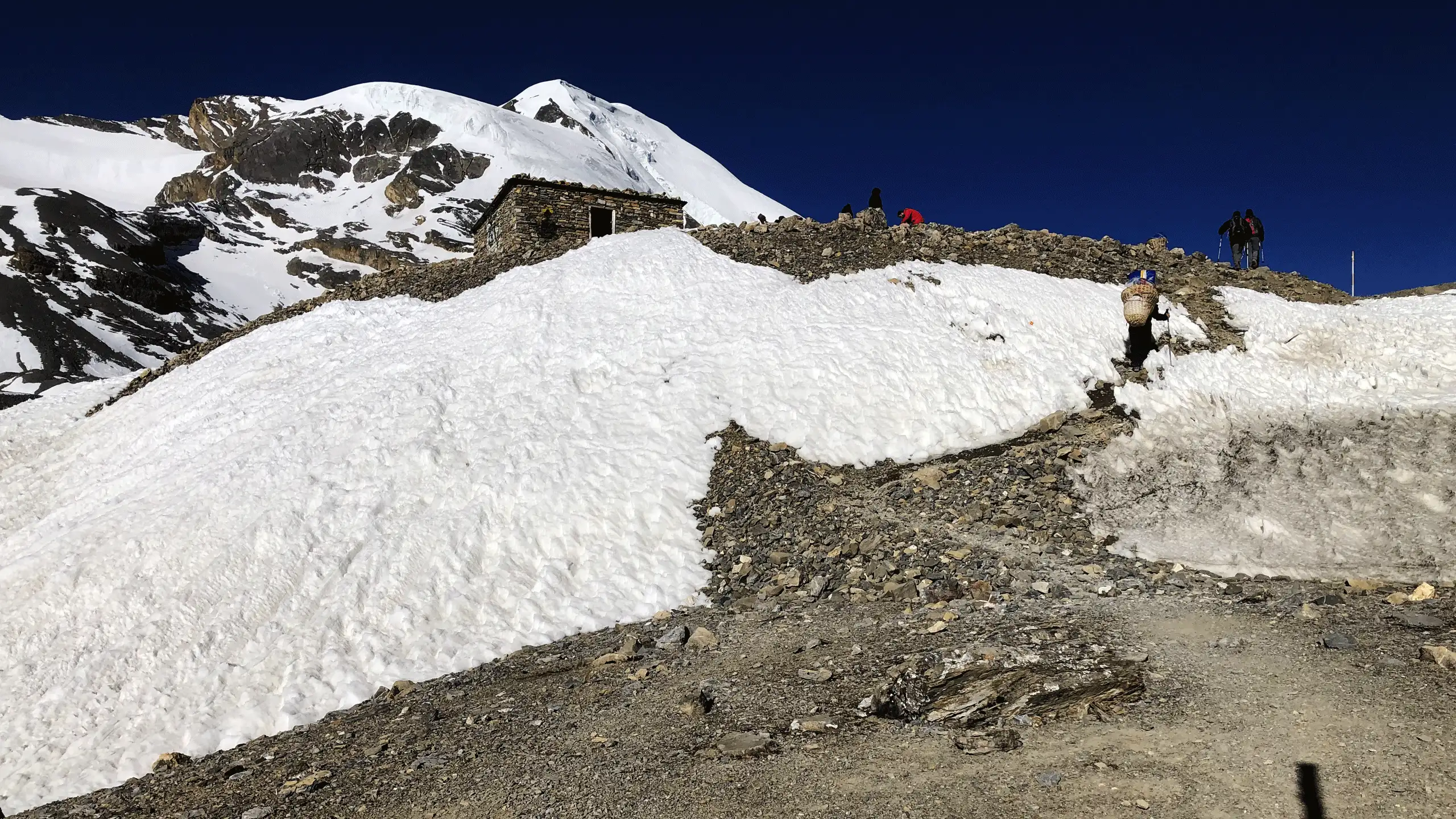
The highest point of the trek is Thorong La Pass (5,416 m / 17,769 ft), one of the highest trekking passes in the world. Crossing the pass is physically demanding, but with proper acclimatization, a steady walking pace, regular hydration, and guidance from our experienced trekking guides, most healthy trekkers complete it successfully.
The overnight stop at Manang (3,519 m) gives your body valuable time to acclimatize before ascending further. From Manang, the trail climbs gradually through Yak Kharka and Thorong Phedi, allowing your body to adjust before the early morning ascent to Thorong La Pass.
Annapurna Circuit Elevation Chart
| Day |
Destination |
Elevation |
| Day 1 |
Drive to Chame |
2,650 m |
| Day 2 |
Trek to Upper Pisang |
3,300 m |
| Day 3 |
Trek to Manang |
3,519 m |
| Day 4 |
Acclimatization Day in Manang |
3,519 m |
| Day 5 |
Trek to Yak Kharka |
4,050 m |
| Day 6 |
Trek to Thorong Phedi |
4,450 m |
| Day 7 |
Thorong La Pass – Muktinath |
5,416 m → 3,760 m |
| Day 8 |
Trek to Jomsom |
2,720 m |
Tips for Safe Acclimatization
- Walk at a slow and steady pace, especially above 3,000 metres.
- Drink at least 3–4 litres of water each day to stay well hydrated.
- Avoid alcohol and smoking while gaining altitude.
- Eat regular meals, even if your appetite decreases at higher elevations.
- Listen to your guide if you experience symptoms such as headache, nausea, dizziness, or unusual fatigue.
- If symptoms become severe, descend immediately to a lower altitude and seek medical assistance if necessary.
Our experienced local guides are trained to recognize the early signs of altitude sickness and monitor trekkers throughout the journey. Your safety is always our highest priority, and the itinerary can be adjusted if weather or health conditions require additional acclimatization.
Best Seasons for the Circuit Trek
The Annapurna Circuit Trek can be completed throughout much of the year, but the experience varies significantly with the seasons. Choosing the right time to trek will help you enjoy better weather, clearer mountain views, and more comfortable trekking conditions.
Spring (March to May)
Spring is one of the most popular seasons for the Annapurna Circuit. The weather is generally stable, temperatures are comfortable, and the hillsides come alive with blooming rhododendron forests. Clear mornings offer magnificent views of Annapurna, Dhaulagiri, Manaslu, and other surrounding peaks. This season is ideal for photographers and nature lovers.
Autumn (September to November)
Autumn is widely considered the best time to trek the Annapurna Circuit. After the monsoon, the skies become exceptionally clear, providing spectacular mountain panoramas. Dry trails, pleasant daytime temperatures, and excellent visibility make this the busiest trekking season in Nepal.
Winter (December to February)
Winter offers peaceful trails and beautiful snow-covered landscapes. However, temperatures can drop well below freezing at higher elevations, especially around Thorong La Pass. Heavy snowfall may occasionally close the pass, so trekkers should be prepared for cold conditions and possible itinerary adjustments.
Monsoon (June to August)
During the monsoon, lower sections of the trail receive regular rainfall, making some paths muddy and slippery. Fortunately, much of the Manang region lies within the Himalayan rain shadow and receives considerably less rainfall than other trekking regions. Trekkers who choose this season should expect occasional weather-related delays while enjoying quieter trails and lush green landscapes.
| Month |
Trekking Conditions |
Recommendation |
| January |
Cold, possible snow |
Good for experienced trekkers |
| February |
Cold, clear skies |
Good |
| March |
Spring, blooming forests |
⭐ Excellent |
| April |
Warm, stable weather |
⭐ Excellent |
| May |
Pleasant, occasional clouds |
⭐ Excellent |
| June |
Beginning of monsoon |
Fair |
| July |
Rainy, fewer crowds |
Fair |
| August |
Monsoon, lush scenery |
Fair |
| September |
Improving weather |
⭐ Very Good |
| October |
Clear skies, best conditions |
⭐ Excellent |
| November |
Dry and stable |
⭐ Excellent |
| December |
Cold but clear |
Very Good |
Local Life and Traditions
One of the most rewarding aspects of the Annapurna Circuit Trek is the opportunity to experience authentic Himalayan culture. The trail passes through villages where traditional lifestyles have been preserved for generations, allowing visitors to connect with local communities and learn about their customs.
Most families depend on farming, yak and sheep herding, tourism, and small local businesses. Daily life follows the rhythm of the seasons, with agriculture, religious ceremonies, and community gatherings playing an important role throughout the year.
The region celebrates many traditional festivals, including Dashain, Tihar, Lhosar, and other local Buddhist celebrations. During these festivals, villages come alive with colorful decorations, traditional music, cultural dances, and religious ceremonies that offer visitors a unique insight into Himalayan life.
Staying in family-run teahouses also provides an excellent opportunity to experience local hospitality, enjoy traditional Nepali and Tibetan cuisine, and learn about the customs that have shaped mountain communities for centuries.
Natural Wonders and Highlights Along the Trail
The Annapurna Circuit is renowned for its extraordinary variety of natural attractions, each offering unforgettable scenery and memorable experiences.
Thorong La Pass (5,416 m)
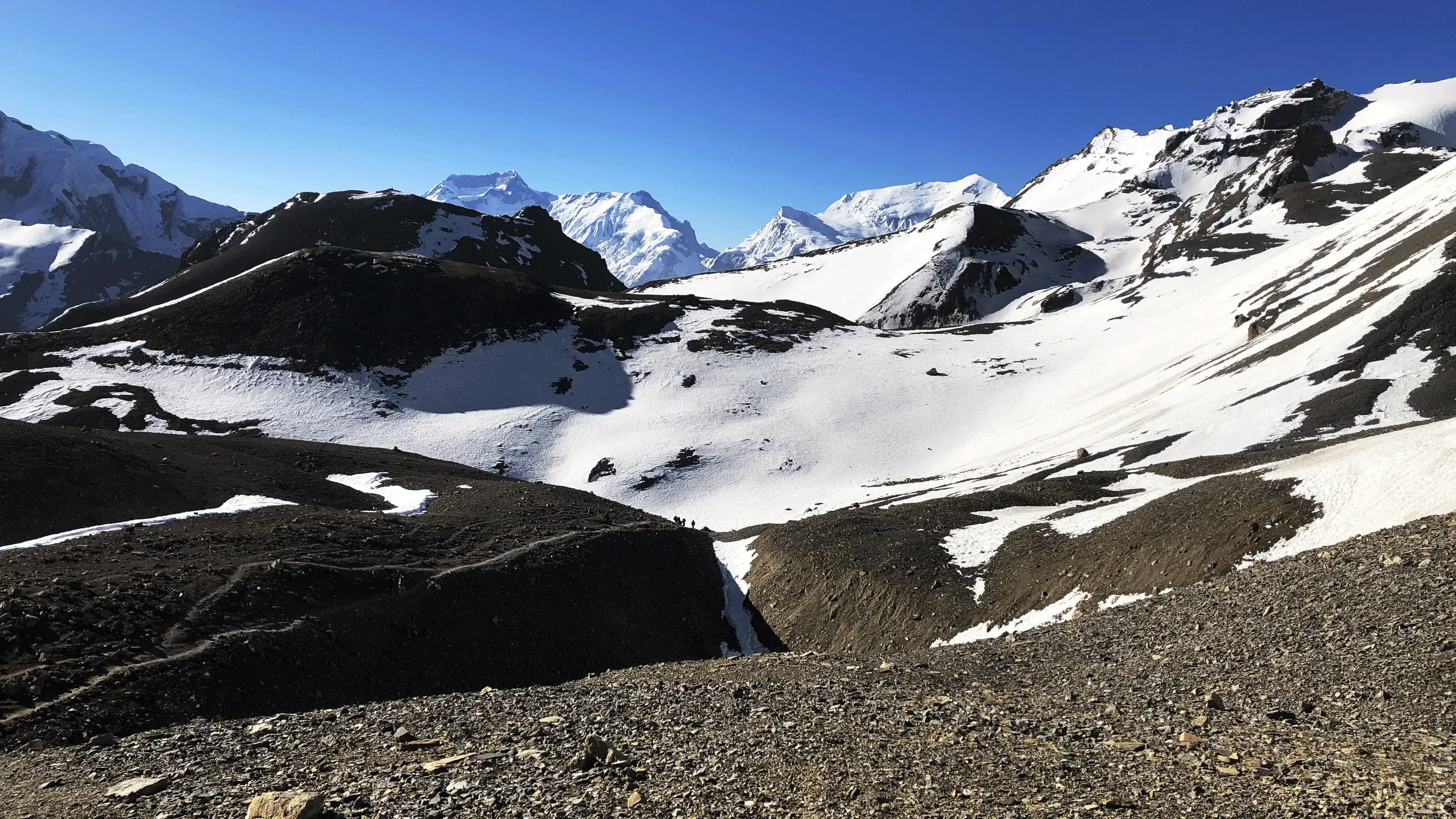
The highest point of the trek and one of Nepal’s most famous mountain passes. Reaching the summit rewards trekkers with breathtaking panoramic views of the Annapurna and Dhaulagiri ranges.
Kali Gandaki Gorge
The trail follows sections of the legendary Kali Gandaki Gorge, often recognized as one of the deepest river gorges in the world. Towering peaks rise dramatically on both sides, creating one of the Himalayas’ most impressive landscapes.
Muktinath
After crossing Thorong La Pass, trekkers descend to the sacred pilgrimage town of Muktinath, where ancient temples, monasteries, and natural springs create a peaceful spiritual atmosphere.
Tilicho Lake (Optional Side Trip)
Trekkers with additional time can extend their journey to Tilicho Lake (4,919 m), one of Nepal’s highest alpine lakes. Surrounded by rugged cliffs and snow-covered peaks, it is considered one of the most beautiful side trips in the Annapurna region.
Trekking Experience and Challenges
The Annapurna Circuit Trek combines adventure, rich cultural experiences, and some of the most spectacular mountain scenery in the Himalayas. Although you don’t need technical climbing skills, you should prepare for a physically demanding journey. The trek challenges you with long walking days, high altitude, and the crossing of Thorong La Pass (5,416 m).
You will typically hike for 5 to 8 hours each day, while crossing Thorong La Pass usually takes 8 to 10 hours. To reduce the risk of altitude sickness and enjoy the trek safely, you should acclimatize properly and maintain a slow, steady pace throughout the journey.
Anyone with good physical fitness, proper preparation, and a positive attitude can complete the Annapurna Circuit Trek. Our experienced local guides set a comfortable pace, monitor your health, and help you adapt to changing weather, trail conditions, and altitude along the way.
Completing the Annapurna Circuit trail Trek rewards you with far more than a sense of achievement. You’ll witness breathtaking Himalayan landscapes, experience the warm hospitality of local communities, and create unforgettable memories that will stay with you long after your adventure ends.
Conservation and Sustainable Tourism
The Annapurna round Trek passes through the Annapurna Conservation Area (ACA), Nepal’s largest protected area, covering more than 7,600 square kilometers. The conservation area was established to protect the region’s unique biodiversity while supporting the livelihoods of local communities through sustainable tourism.
The permit fees collected from trekkers contribute directly to conservation projects, trail maintenance, waste management, environmental education, and community development. These efforts help preserve the region’s forests, wildlife habitats, traditional villages, and cultural heritage for future generations.
As responsible trekkers, we encourage all visitors to follow Leave No Trace principles by carrying reusable water bottles, minimizing plastic waste, respecting local customs, and disposing of rubbish responsibly. Choosing locally owned teahouses and hiring licensed local guides also helps support mountain communities and ensures tourism benefits the people who call the Annapurna region home.
At Nepalwilderness trekking Guide team, we believe that responsible trekking not only protects the Himalayas but also creates more meaningful experiences for every traveler.
Why Choose the Annapurna Circuit Trek?
The Annapurna Circuit Trek remains one of Nepal’s most iconic trekking adventures because it offers an extraordinary combination of mountain scenery, cultural diversity, wildlife, history, and high-altitude adventure—all in a single journey.
Unlike many treks that focus solely on reaching a viewpoint or base camp, the Annapurna Circuit takes you through constantly changing landscapes, from lush subtropical forests and terraced farmland to alpine valleys, glacial rivers, and the dramatic Himalayan rain-shadow region of Manang and Mustang. Every day presents a different environment, making the trek feel like several adventures in one.
Crossing the legendary Thorong La Pass (5,416 m) is an unforgettable achievement, while visits to ancient monasteries, traditional Gurung, Manangi, and Thakali villages, and the sacred temple of Muktinath provide a deeper understanding of Nepal’s rich cultural and spiritual heritage.
Whether you are an experienced trekker or a well-prepared first-time adventurer, the Annapurna Circuit offers breathtaking Himalayan scenery, authentic cultural experiences, comfortable teahouse accommodation, and memories that will stay with you for a lifetime.
Departure Information
We guarantee all departure date for the Annapurna Circuit Trek. Our experienced guides and support team lead every confirmed departure and ensure your trek follows the planned itinerary safely and smoothly.
If our scheduled departure dates don’t fit your travel plans, we will organize a private trek on your preferred dates at no extra cost. Whether you are traveling alone, with a partner, with your family, or in a larger group, we customize the itinerary to suit your schedule, fitness level, and travel preferences.
Our local team assists you with every aspect of your journey, including trekking permits, transportation, accommodation, equipment rental, and any additional travel arrangements before or after your trek. From your first inquiry until you complete the Annapurna Circuit Trek, we provide reliable support and personalized service to ensure a safe, enjoyable, and unforgettable Himalayan adventure.
Accommodation, Food, WiFi & Electricity on the Annapurna Circuit Trek
The Annapurna Circuit is one of Nepal’s most established trekking routes, offering comfortable teahouse accommodation and a wide variety of meals throughout the journey. While facilities become more basic at higher elevations, trekkers can still expect warm hospitality and essential services.
Accommodation
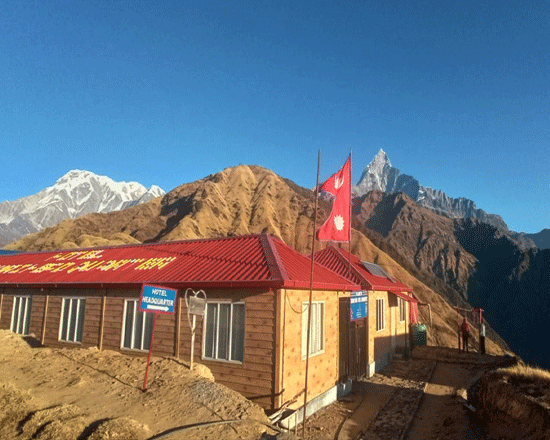
Accommodation is provided in traditional mountain teahouses run by local families. Most rooms are simple but clean, usually with two single beds, mattresses, pillows, and blankets. During the trekking season, rooms are generally available, although booking in advance is recommended, especially in October and November.
Private attached bathrooms are available in some lower villages such as Chame and Manang, but above Yak Kharka and Thorong Phedi, shared toilets and bathrooms are the norm due to the remote mountain environment.
Food
The teahouses offer a surprisingly varied menu. The most popular meal is Dal Bhat, Nepal’s traditional dish of rice, lentil soup, vegetables, and curry, which often comes with free refills. Other common options include:
- Fried rice
- Noodles
- Momos (dumplings)
- Pasta
- Pizza
- Soups
- Pancakes
- Eggs and toast
- Tibetan bread
- Porridge
- Tea, coffee, and hot chocolate
As you gain altitude, food prices gradually increase because supplies must be transported by porters, mules, or yaks.
WiFi and Mobile Network
WiFi is available in many teahouses along the Annapurna Circuit, although connection speeds can vary depending on the location and weather conditions. Some lodges provide free WiFi, while others charge a small fee.
Nepal Telecom (NTC) generally offers better mobile coverage than Ncell in the Manang region, but signal strength becomes weaker at higher elevations. Many trekkers purchase a local SIM card before starting the trek to stay connected where coverage is available.
Electricity and Charging
Electricity is available in nearly all villages along the route. Charging mobile phones, cameras, and power banks is usually possible, although many teahouses charge a small fee for this service, particularly above Manang. Carrying a fully charged power bank is highly recommended, especially if you use your phone for photography or navigation.
Local Tip
We recommend bringing a reusable water bottle, water purification tablets or a filter bottle, a 10,000–20,000 mAh power bank, and a universal travel adapter. These small items make your trek more comfortable while helping reduce plastic waste in the mountains.
AC Trek Packing List
Packing the right gear is essential for a safe and comfortable Annapurna Circuit Trek. Temperatures vary greatly between the lower valleys and Thorong La Pass (5,416 m), so dressing in layers is the best approach. Your daypack should contain everything you need while walking, while your duffel bag can be carried by a porter if included in your trek.
Essential Clothing
- Moisture-wicking base layers
- Fleece jacket or warm mid-layer
- Insulated down jacket
- Waterproof and windproof jacket
- Waterproof trekking trousers
- Comfortable trekking trousers or hiking shorts
- Thermal underwear for cold nights
- Warm hat or beanie
- Sun hat or cap
- Lightweight gloves and insulated gloves
- Several pairs of trekking socks
Footwear
- Well-broken-in waterproof trekking boots
- Lightweight sandals or camp shoes
- Gaiters (recommended during winter or snowy conditions)
Daypack Essentials
- Reusable water bottles or hydration bladder (2–3 litres)
- Water purification tablets or filter bottle
- Sunglasses with UV protection
- Sunscreen (SPF 50+)
- Lip balm
- Headlamp with spare batteries
- Power bank (10,000–20,000 mAh)
- Camera and spare memory card
- Snacks or energy bars
- Personal medications
- Passport and permits
- Cash in Nepalese Rupees
Toiletries
- Toothbrush and toothpaste
- Biodegradable soap
- Small quick-dry towel
- Wet wipes
- Hand sanitiser
- Toilet paper
- Nail clippers
- Moisturiser
Recommended Accessories
- Trekking poles
- Rain cover for your backpack
- Dry bags or waterproof packing cubes
- Buff or neck gaiter
- Small first-aid kit
- Reusable coffee cup (optional)
Winter Trekking (December to February)
If you plan to trek during winter, we also recommend bringing:
- Microspikes for icy trails
- Extra thermal layers
- Thick insulated gloves
- Hand warmers (optional)
- Additional warm socks
Equipment Provided by Nepal Wilderness Trekking
To make your trek easier, we provide the following equipment free of charge for our clients:
- Four-season sleeping bag
- Down jacket (on request)
- Duffel bag for porter use during the trek
If you have any questions about equipment, our team will be happy to advise you before your arrival in Nepal.