April 10, 2026
Where is Everest Located
 By admin
If you’ve ever wondered where Everest is located, you’re not alone. This question is the most searched by trekkers, climbers, and adventure lovers worldwide. Understanding where Everest is located is the first step to exploring the world’s highest mountain and the legendary Everest region of Nepal.
In this complete guide, you will learn where Everest is located, along with detailed insights into the geography, culture, trekking routes, and the full Everest expedition experience.
Where is Everest Located?
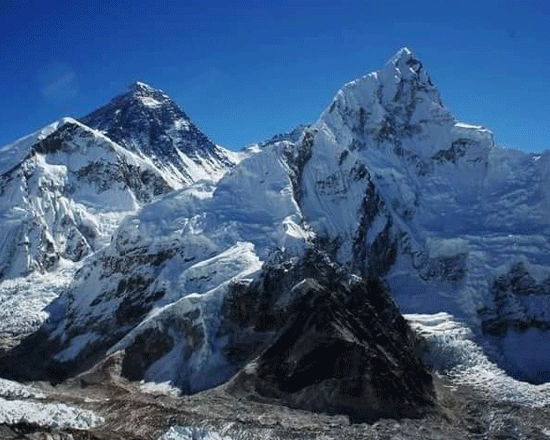
To answer clearly, where is Everest located? Mount Everest lies on the border between Nepal and China (Tibet Autonomous Region). The mountain stands in the Mahalangur Himal sub-range of the Himalayas.
- Elevation: 8,848.86 meters (29,031.7 ft)
- Coordinates: 27.9881° N, 86.9250° E
- Nepali Name: Sagarmatha
- Tibetan Name: Chomolungma
So, when someone asks where Everest is located, the simplest answer is: in the Himalayas, on the border of Nepal and Tibet (China).
Geographic Location of the Everest Region
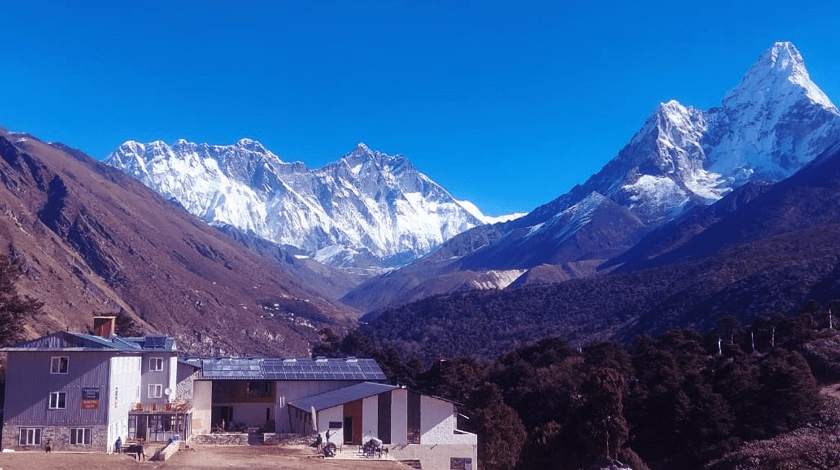
Understanding where Everest is located also means understanding the broader Everest region, known as the Khumbu region in northeastern Nepal.
History of Mount Everest
Early Recognition and Naming
Mount Everest, the world’s highest mountain at 8,848.86 meters, has been known to local people for centuries. In Nepal, it is called Sagarmatha (“Goddess of the Sky”), while in Tibet it is known as Chomolungma (“Mother Goddess of the World”).
The mountain gained global recognition during the 19th century through the Great Trigonometrical Survey of India, led by British surveyors. In 1856, it was officially identified as the highest peak on Earth and named after Sir George Everest, although he himself never saw the mountain.
Early Exploration Attempts (1920s–1930s)
The first serious attempts to climb Everest began in the 1920s from the Tibetan (north) side.
- 1921: A British reconnaissance expedition mapped possible routes.
- 1922: The first attempt to reach the summit failed, but climbers reached over 8,300 meters—a record at the time.
- 1924: The famous expedition involving George Mallory and Andrew Irvine ended in mystery when both disappeared near the summit. To this day, it is unknown if they reached the top before they died.
These early expeditions were limited by primitive equipment and harsh weather conditions.
First Successful Ascent (1953)
The greatest milestone in Everest’s history came on May 29, 1953.
Sir Edmund Hillary of New Zealand and Tenzing Norgay successfully reached the summit via the South Col route from Nepal.
This historic achievement:
- Marked the first confirmed ascent of Everest
- Made both climbers international legends
- Highlighted the crucial role of Sherpa climbers in Himalayan expeditions
Growth of Expeditions (1960s–1980s)
After 1953, Everest became a major goal for climbers worldwide.
- 1960: A Chinese team claimed the first ascent from the north (Tibet) side.
- 1963: The first American expedition succeeded, including the first ascent of the West Ridge.
- 1975: Junko Tabei from Japan became the first woman to reach the summit.
- 1978: Reinhold Messner and Peter Habeler made the first ascent without supplemental oxygen, once thought impossible.
Commercial Era and Popularity (1990s–Present)
Since the 1990s, Everest has become increasingly commercialized.
- Guided expeditions now allow climbers with less technical experience to attempt the summit.
- Hundreds of climbers attempt Everest each year, especially in the spring season.
However, this popularity has also led to challenges:
- Overcrowding near the summit
- Environmental issues (waste, pollution)
- Safety risks due to weather and altitude
One of the most tragic events was the 1996 Mount Everest disaster, where multiple climbers lost their lives in a sudden storm.
Modern Everest
Today, Mount Everest stands not only as the highest peak but also as:
- A symbol of human endurance and ambition
- A major part of Nepal’s trekking and tourism industry
- A sacred mountain deeply respected by local communities
Climbing Everest remains a serious challenge despite modern equipment, requiring proper acclimatization, experience, and respect for the mountain.
People and their lifestyle in the Everest region
Before tourism, people in the Khumbu region depended mainly on farming and livestock. With the growth of trekking and expeditions:
- Many locals now work as guides, porters, cooks, and climbing Sherpas
- Families run teahouses, lodges, and small businesses
- Income levels have increased significantly compared to the past
Tourism has become the main source of livelihood, improving overall living standards.
Better Infrastructure and Facilities
The popularity of Everest has led to improved infrastructure:
- Better trails, bridges, and communication systems
- Development of schools, health posts, and hospitals (like in Namche Bazaar)
- Access to electricity, internet, and modern amenities in many villages
These improvements have made life easier and more connected.
Education and Global Exposure
With increased income and international interaction:
- Families can afford to send children to better schools in Kathmandu or abroad
- Locals are exposed to different cultures, languages, and ideas
- Many young people are now educated, multilingual, and business-oriented
Cultural Changes
Tourism has influenced traditional Sherpa culture:
- Greater interaction with foreigners has modernized lifestyles
- Some traditions and customs are slowly fading, especially among younger generations
- At the same time, there is also an effort to preserve culture through monasteries, festivals, and local practices
Environmental Impact
The increase in trekkers and climbers has also created challenges:
- Waste management issues along trekking routes and base camps
- Pressure on natural resources like firewood and water
- Climate change effects are becoming more visible in the Himalayas
However, there are growing efforts toward sustainable and eco-friendly tourism.
Increased Risks and Dependency
While tourism brings income, it also comes with risks:
- Many Sherpas work in high-risk climbing roles during expeditions
- Income depends heavily on the tourism season
- Events like natural disasters or global crises (e.g., pandemics) can severely impact livelihoods
Key Locations in the Everest Region
- Sagarmatha National Park
- Khumbu Region
- Lukla
- Namche Bazaar
- Everest Base Camp
This entire region lies in the Solukhumbu District of Nepal and is protected under Sagarmatha National Park.
How to Reach the Everest Region
To fully understand where Everest is located, it’s important to know how people actually get there.
1. Flight to Lukla
Most travelers take a short but thrilling flight from Kathmandu to Lukla (2,860 m), often considered one of the most scenic flights in the world.
2. Trekking Route
From Lukla, trekkers follow a classic route:
- Lukla → Phakding
- Phakding → Namche Bazaar
- Namche → Tengboche
- Tengboche → Dingboche
- Dingboche → Lobuche
- Lobuche → Everest Base Camp
Climate and Best Time to Visit
If you’re researching where Everest is located, climate plays a huge role in planning your trip.
Best Seasons
- Spring (March–May): Best for expeditions and trekking
- Autumn (September–November): Clear skies and stable weather
Temperature
- Base Camp: -5°C to -15°C
- Summit: Can drop below -30°C
Culture of the Everest Region
Knowing where Everest is located also means understanding the people who live there.
Sherpa Community
The Everest region is home to the Sherpa people, famous for their mountaineering skills and deep Buddhist traditions.
The Everest (Khumbu) region, home to Mount Everest, is rich in Sherpa culture and Tibetan Buddhist traditions. Festivals here are deeply spiritual and are celebrated in monasteries and villages with prayer ceremonies, masked dances, and community gatherings.
Festivals celebrated in the Everest region
1. Mani Rimdu Festival
- The most important festival in the Khumbu region
- Celebrated at famous monasteries like Tengboche Monastery and Chiwong Monastery
- Usually held in October or November
Highlights:
- Masked dances (Cham dances) performed by monks
- Rituals symbolizing the victory of Buddhism over evil
- Blessings for peace, health, and prosperity
This festival attracts both locals and trekkers.
2. Dumji Festival
- A major Sherpa community festival is celebrated in villages like Namche Bazaar and Khumjung
- Usually held in June or July
Highlights:
- Community feasts, dances, and prayers
- Celebration of Guru Rinpoche (Padmasambhava)
- Strengthens social bonds within the Sherpa community
3. Lhosar (Tibetan New Year)
- Celebrated widely across the Himalayan region
- In the Everest area, Sherpas mainly celebrate Gyalpo Lhosar
Highlights:
- New Year celebrations with family gatherings
- Traditional food, music, and dancing
- Visiting monasteries and making offerings
4. Saga Dawa
- A sacred Buddhist festival marking the birth, enlightenment, and death of Buddha
Highlights:
- Pilgrimages, prayers, and lighting butter lamps
- Acts of kindness and charity
- Observed with great devotion in monasteries across the region
The festivals celebrated by all Nepalese is Dashain and Tihar.
5. Buddha Jayanti
- Celebrates the birth of Gautama Buddha
- Usually falls in April or May
Highlights:
- Prayer ceremonies and offerings in monasteries
- Peaceful gatherings and religious rituals
Important Cultural Sites
- Tengboche Monastery
- Mani walls, prayer flags, and chortens along the trails
Sherpa hospitality and culture are a major highlight of any Everest journey.
Flora and Fauna
The Everest region is part of Sagarmatha National Park and features diverse ecosystems.
Wildlife
- Snow Leopard
- Himalayan Tahr
- Danphe
Vegetation
- Rhododendron forests
- Pine and fir trees
- Alpine meadows
Everest Base Camp Trek
When discussing where Everest is located, most people are actually interested in trekking to Everest Base Camp.
Trek Highlights
- Stunning views of Mount Everest
- Walk through Sherpa villages
- Cross suspension bridges over the Dudh Koshi River
- Experience high-altitude landscapes
Duration
- 12–14 days round trip
Everest Expedition: The Ultimate Challenge
Understanding where Everest is located naturally leads to the question: how do climbers reach the summit?
Expedition Overview
Climbing Everest is a serious high-altitude expedition requiring:
- 6–9 weeks duration
- Technical climbing skills
- Physical and endurance
Route (South Col Route – Nepal Side)
- Everest Base Camp (5,364 m)
- Khumbu Icefall
- Camp I (6,065 m)
- Camp II (6,400 m)
- Camp III (7,200 m)
- Camp IV (South Col – 7,900 m)
- Summit Push (8,848.86 m)
Challenges of Climbing Everest
Even after knowing where Everest is located, climbing it is extremely difficult.
Major Risks
- Altitude sickness
- Extreme cold
- Avalanches
- Crevasses
“Death Zone”
Above 8,000 meters, oxygen levels are critically low, making survival extremely difficult.
Permits and Costs
To explore where Everest is located in person, permits are required.
Trekking Permits
- Sagarmatha National Park Entry Permit
- Khumbu Pasang Lhamu Rural Municipality Permit
Expedition Cost
- USD 35,000 to USD 100,000+, depending on services
Why is Everest so famous?
Understanding where Everest is located also explains why it attracts global attention.
Key Reasons
- The highest mountain in the world
- Iconic climbing history
- Cultural and natural beauty
The first successful summit was achieved in 1953 by Sir Edmund Hillary and Tenzing Norgay.
Alternative Treks in the Everest Region
If you’re exploring where Everest is located, you might also consider these routes:
Each offers a unique perspective of the Everest region.
Best time for the Everest Base Camp Trek
Spring Season (March – May) — Best Overall
This is the most popular and ideal time.
- Clear skies with excellent mountain views, including Mount Everest
- Comfortable temperatures for trekking
- Rhododendron forests in bloom
- Lively atmosphere with climbers heading for expeditions
Temperature:
- Day: 5°C to 15°C
- Night: -5°C to -10°C
Perfect for both trekkers and Everest expeditions.
Autumn Season (September – November) — Second Best
Another excellent season with stable weather.
- Crystal-clear views after the monsoon
- Dry trails and comfortable trekking conditions
- Major Nepali festivals like Dashain and Tihar
Temperature:
- Day: 5°C to 12°C
- Night: -5°C to -12°C
Best for photography and panoramic Himalayan views.
Winter (December – February) — Cold but Quiet
- Fewer trekkers, peaceful trails
- Clear skies but very cold temperatures
Challenges:
- Freezing nights (below -15°C)
- Some teahouses may close
Suitable for experienced trekkers who can handle cold.
Monsoon (Mid June – Mid August) — Least Recommended
- Heavy rain and cloudy conditions
- Limited mountain views
- Slippery trails and flight delays to Lukla Airport
Not ideal, but possible with flexibility.
1. Everest South Base Camp (Nepal Side)
Location
- Everest South Base Camp is situated in Nepal
- Inside Sagarmatha National Park
Altitude
- 5,364 meters
Trekking Style
- Classic teahouse trek (lodges available)
- No technical climbing required
Route
- Starts with a flight to Lukla Airport
- Trek via Namche Bazaar → Tengboche Monastery → Dingboche → Lobuche
Duration
- 12–14 days round trip
Highlights
- Close-up views of Mount Everest
- Sherpa culture and villages
- Easy logistics and accessibility
Best For
- Trekkers of moderate fitness
- First-time Himalayan trekkers
Everest Advanced Base Camp (Tibet Side)
Location
- Located in Tibet (China), on the north side of Mount Everest
- Above the standard North Base Camp
Altitude
- ~6,400 meters
Trekking Style
- Remote camping trek (no teahouses)
- High-altitude trekking is more demanding
Route
- Drive from Lhasa to the North Base Camp
- Trek via Rongbuk Glacier to ABC
Duration
- 10–14 days (depending on itinerary from the Tibet side)
Highlights
- Much closer and clearer view of Everest’s North Face
- Fewer crowds, raw wilderness experience
Challenges
- Higher altitude → more risk of altitude sickness
- Limited facilities (full camping required)
- Travel permits and logistics are more complex
Best For
- Experienced trekkers
- Those seeking a remote, expedition-style adventure
Final Thoughts
By now, you should clearly understand where Everest is located and why it holds such a legendary status in the world of adventure.
To summarize:
- Everest lies in the Himalayas between Nepal and Tibet
- It is part of the Khumbu region
- It offers world-class trekking and climbing experiences
Whether you dream of trekking to Everest Base Camp or attempting a full expedition, knowing where Everest is located is the first step toward an unforgettable Himalayan journey.